

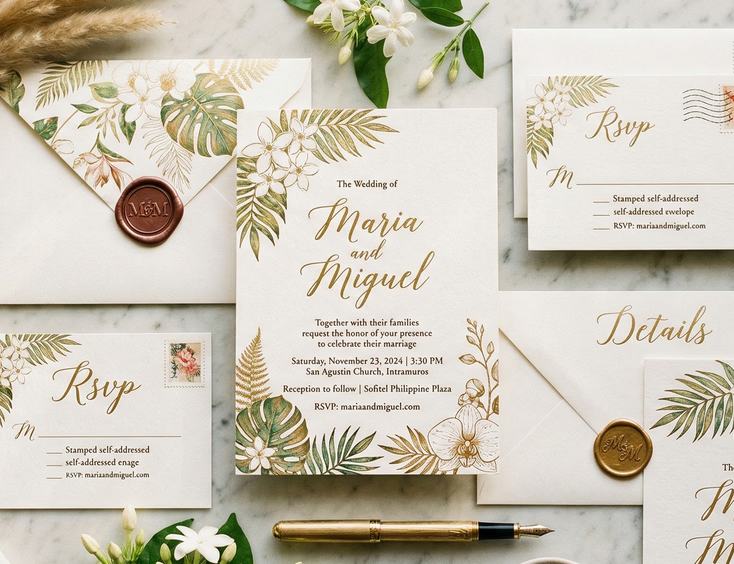
How Many Wedding Invitations Should You Order in the Philippines?

Filipino couples make the same mistake. They count their confirmed guests, match that number to their invitation order, and end up short. Invitations get damaged in transit. Addresses change. A family member your parents forgot to include appears two months before the wedding. A principal sponsor needs a replacement copy because theirs got wet.
Order more than you think you need. The question is how many more.
Start With Households, Not Heads
Wedding invitations go to households, not individuals. A married couple living together receives one invitation. A family of five at the same address receives one invitation. Counting individual guests and ordering one invitation per person wastes money and inflates your order unnecessarily.
Go through your guest list and group everyone by household. That grouped number is your base quantity. For most Filipino weddings, the household count runs 40 to 60 percent of the total guest headcount. A wedding with 200 guests typically needs 90 to 120 invitation suites, not 200.
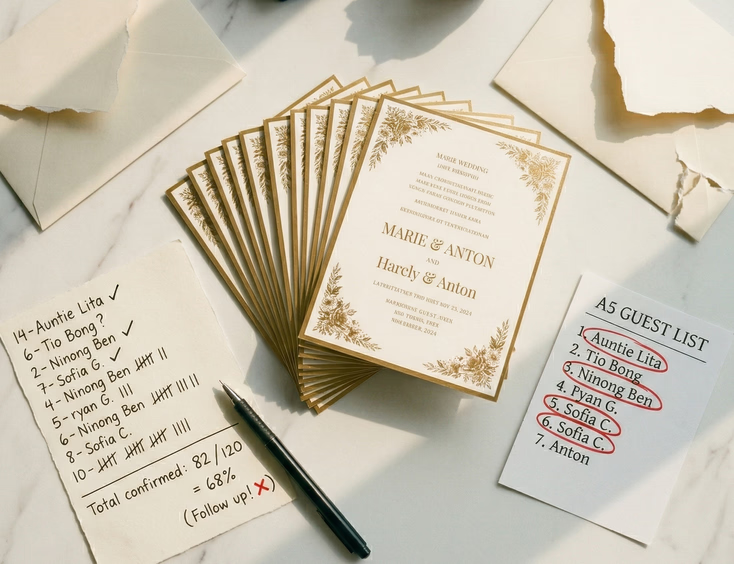
Add Your Buffer on Top of the Base
Once you have your household count, add a buffer. The standard recommendation is 15 to 20 percent above your base quantity.
That buffer covers:
Damaged pieces. Printing errors, envelope tears, and ink smudging happen even with reputable suppliers. A buffer means you do not scramble for reprints.
Address changes. Guests move. An invitation mailed to an old address comes back undelivered. You need a replacement to send to the correct address.
Late additions. Filipino guest lists shift closer to the wedding date. Parents remember a cousin. A work colleague gets added. Your buffer absorbs these additions without a reprint.
Keepsakes. You and your partner each want a copy. Your parents want one. Some couples frame the invitation suite or include one in their wedding album. Budget for at least three to five keepsake copies.
Supplier minimums. Some Philippine stationers set minimum order quantities at 50, 75, or 100 pieces regardless of your actual need. Understand your supplier's minimum before finalizing your count.
A Practical Example
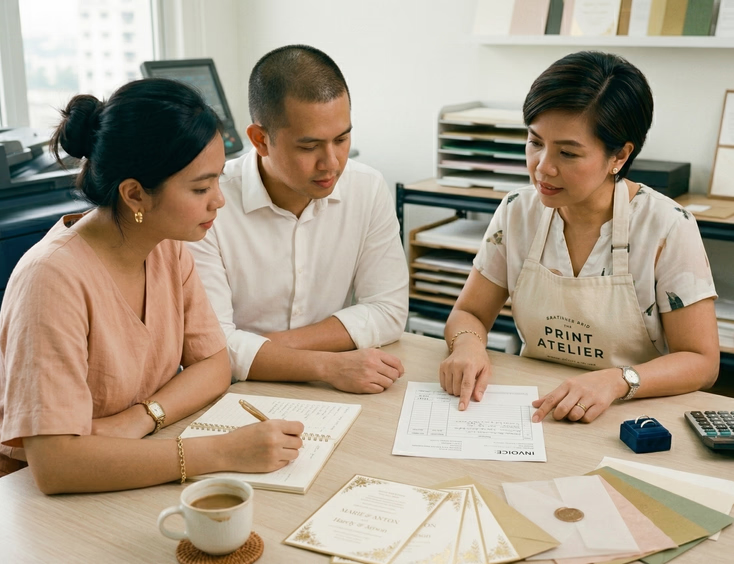
A wedding with 180 guests living across 95 households needs at minimum 95 invitation suites. Add 20 percent as a buffer: 19 additional suites. Add five keepsake copies. Your order quantity is approximately 120 suites.
Ordering 120 instead of 180 saves significant cost, particularly if your invitation suite uses premium materials like foil stamping, vellum overlays, or thick cotton paper where per-unit price is high.
For a full breakdown of how materials and quantities affect total cost, the Filipino wedding invitation cost breakdown covers per-piece pricing across different print methods and supplier tiers.
Account for Principal Sponsor Invitations Separately
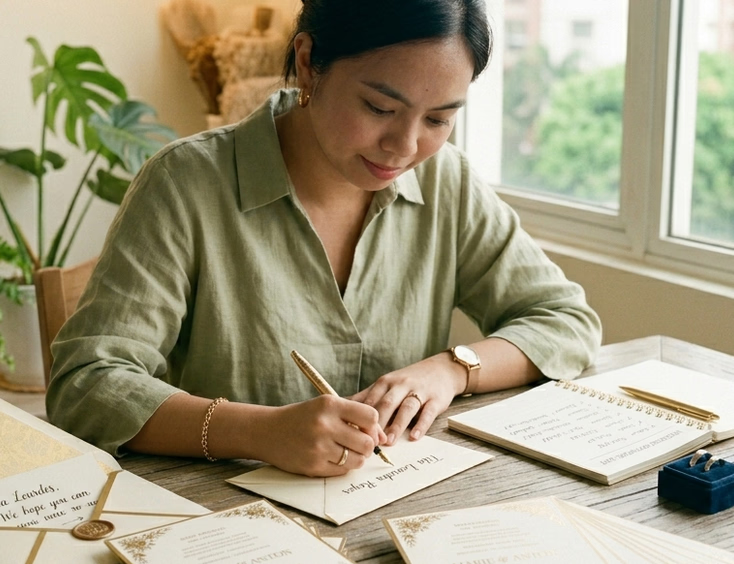
Principal sponsors in Filipino weddings receive their invitations through personal delivery, not post. Some couples prepare a slightly elevated version of their invitation suite for ninongs and ninangs, the same design with a premium envelope or an additional handwritten note tucked inside.
If you go this route, count your principal sponsors separately and factor their invitations into your total order. Most weddings have 10 to 20 principal sponsor pairs. That is 20 to 40 additional suites if you invite both husband and wife as individual sponsors, though many couples send one suite per sponsor couple.
Confirm with your stationer whether they can accommodate a small separate run with slightly different envelope treatment, or whether everything must print identically.
Out-of-Town and International Guests Need Earlier Delivery
Guests outside Metro Manila need their invitations earlier than local guests to allow for postal delivery time. International guests need them earlier still, particularly those flying in from abroad who need to book flights and arrange accommodations.
Your total order quantity does not change based on geography, but your mailing schedule does. Identify out-of-town and international guests during the addressing stage and mail their invitations first, at least two weeks before Metro Manila invitations go out.
The Filipino wedding invitation timeline covers the full mailing schedule so every guest receives their invitation with
For the broader picture of everything your invitations need to cover, the complete guide to Filipino wedding invitations is the place to start.
Still Searching for a Right Match?
Find Your Perfect Wedding Supplier Today!
Discover trusted wedding suppliers across the Philippines in our complete directory. Compare services and connect with the ones that fit your dream celebration.
Browse Wedding SuppliersFeatured Posts


The Complete Filipino Couple's Guide to Wedding Rings & Bands in the Philippines: Traditions, Styles, Budgets & Where to Buy
22 mins readWedding Reception Ideas that Honor Tradition and Wow Your Guests
4 mins readFilipino Wedding Dress Guide for Style Traditions and Smart Shopping
6 mins readFilipino Wedding Cost Guide - Realistic Budgets, Percentages, and Price Drivers by Region
9 mins readPhilippines Honeymoon Guide - Best Islands, Resorts, Costs & 7–14 Day Itineraries
9 mins readFilipino Wedding Games - Traditions, Modern Twists, and Crowd-Pleasers for Every Reception
8 mins read