


Is It Rude to Not Invite Someone to a Filipino Wedding? Understanding Filipino Social Etiquette
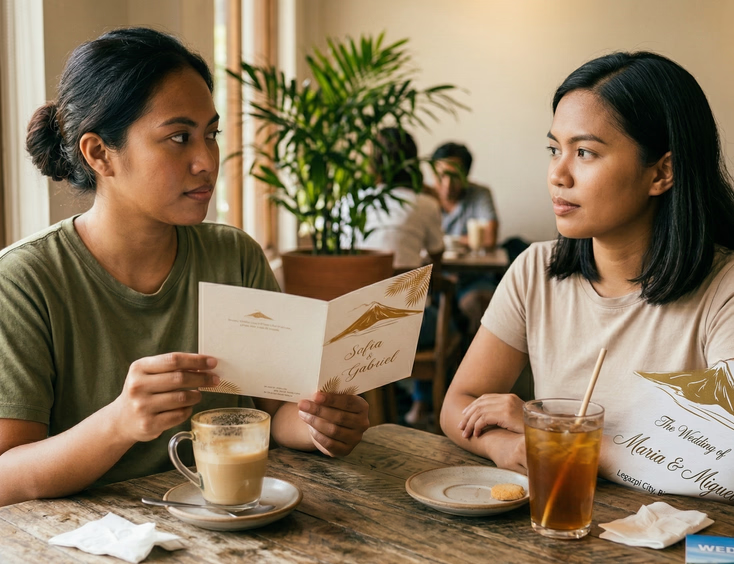
Leaving someone off the guest list is one of the most loaded decisions in Filipino wedding planning. Filipinos place high value on inclusion, pakikisama, and maintaining harmony within family and social circles. Not receiving an invitation can feel like a public statement about where someone stands in your life.
But every couple has a venue limit, a budget ceiling, and a finite number of seats. At some point, someone who expected an invitation won't get one. Knowing how to handle that situation, and understanding which omissions carry social weight and which don't, makes the difference between a manageable situation and lasting tension.
How Filipino Social Culture Shapes Invitation Expectations
Filipino social life runs on reciprocity. If someone invited you to their wedding, they expect an invitation to yours. If your parents are close to another family, that family assumes their children will be on your list. If you've attended a colleague's debut, they may expect the same consideration when you marry.
These expectations aren't unreasonable within Filipino culture. They reflect a relational logic that values continuity and mutual respect. The problem is that following every expectation leads to a guest list that doubles your venue capacity.
Understanding the difference between a genuine social obligation and an assumed one helps you make decisions you can stand behind.
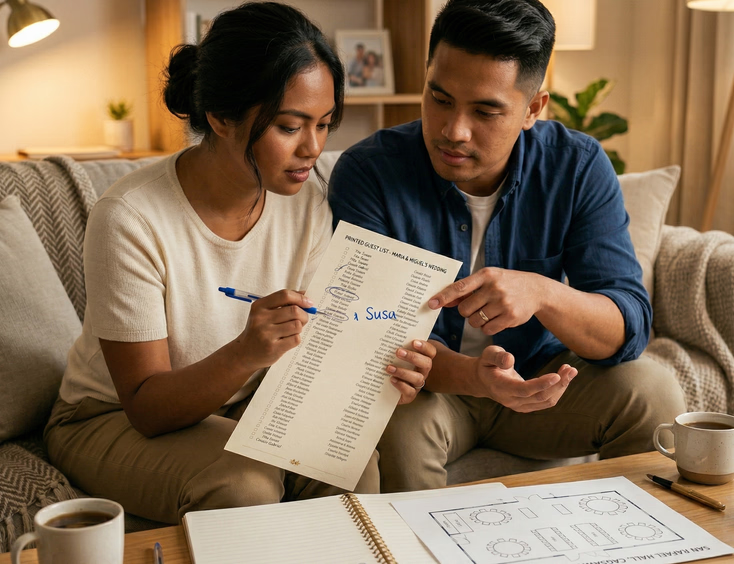
When Not Inviting Someone Is Socially Acceptable
Not every omission causes offense. Context matters.
You've never met them personally. Your parents' officemates, your ninong's extended family, neighbors from three houses down. If you have no direct relationship with the person, the omission is defensible. Your parents may feel the awkwardness, but it doesn't fall on you.
Your wedding is small by design. A civil wedding, an intimate garden ceremony with thirty guests, or a destination wedding naturally limits attendance. Guests understand that scale determines the list. When the wedding is visibly small, exclusions land differently than exclusions from a 300-person reception.
You've lost regular contact. Friendships drift. If you haven't spoken to someone in three or more years outside of social media, an invitation is a courtesy, not an obligation. Some couples extend it anyway. Others don't, and that's a fair call.
The invitation was never implied. Not every social relationship carries wedding invitation expectations. Gym friends, online communities, and casual acquaintances you've never introduced to your family don't have a standing claim on a seat at your reception.
When an Omission Carries Real Social Weight
Some exclusions do cause genuine hurt, and in Filipino culture, that hurt travels. Word moves through families and barkadas faster than most couples expect.
Close family members. Leaving out a first cousin, an aunt, or an uncle your parents see regularly sends a message you may not intend. Even if the relationship is difficult, the omission becomes the story. Weigh the cost of including them against the cost of the conversation that follows if you don't.
Reciprocal wedding guests. If someone invited you to their wedding and you attended, they have a reasonable expectation of the same. Skipping this reciprocity requires either a direct conversation or acceptance that the relationship will carry strain afterward.
People your parents publicly mentioned. If your mother told her barkada that they'd all be at the wedding, and then they don't receive invitations, your mother carries that embarrassment. Keep your parents informed of the final list before they make promises to their own networks.
Close friends of the couple. If someone considers themselves part of your inner circle and doesn't receive an invitation, they will find out. At a 200-person wedding, the absence stings more than at an intimate ceremony. The closer the friendship, the harder the omission lands.
The Reciprocity Rule in Practice
Reciprocity in Filipino culture doesn't operate on a strict ledger, but it does operate. Here's a practical way to think about it.
If you attended their wedding within the last five years, include them unless your wedding is genuinely small or your relationship has significantly changed. A brief explanation, delivered personally before they notice the absence, softens the situation better than silence.
If they invited you but you didn't attend, the obligation weakens. You weren't part of their day. They may still expect inclusion, but the social weight is lighter.
If the invitation was indirect, delivered through a parent or a group, the personal obligation is minimal.
How to Handle the Conversation When You Can't Include Someone
Silence is the worst option. When someone finds out they weren't invited through another guest or a social media post, the absence feels deliberate and pointed. A direct conversation removes that interpretation.
Keep it simple. Tell them your wedding is small and you had to make difficult decisions about the list. You don't need to justify every choice or apologize repeatedly. Acknowledge their importance to you outside of the wedding context. Invite them to a pre-wedding gathering or post-wedding celebration if that fits your plans.
Most people respond better to honesty delivered with warmth than to discovering an omission secondhand.
For situations where someone was left off by accident rather than by choice, What to Do When You Accidentally Left Someone Off the Wedding Invitation List covers the recovery steps.
When Family Pressure Pushes You to Invite Someone You Don't Want To
This is its own category. Sometimes the person isn't unknown or distant. Sometimes it's a family member with a difficult history, an estranged relative, or someone the couple actively chose to exclude.
Filipino family dynamics make these decisions harder. Parents may push back, frame the exclusion as disrespectful, or add names without asking. The pressure is real and it doesn't resolve easily.
A few things worth knowing:
Your wedding is a private event. You set the boundaries. Framing the exclusion around venue limits rather than personal conflict gives parents a neutral reason to repeat to others.
You don't owe an explanation to the excluded person, but you do owe your parents a clear conversation about your decision before they hear about it through someone else.
If the exclusion is about safety or a serious breach of trust, hold the line. No social obligation outweighs your comfort on your wedding day.
The Barkada Dilemma
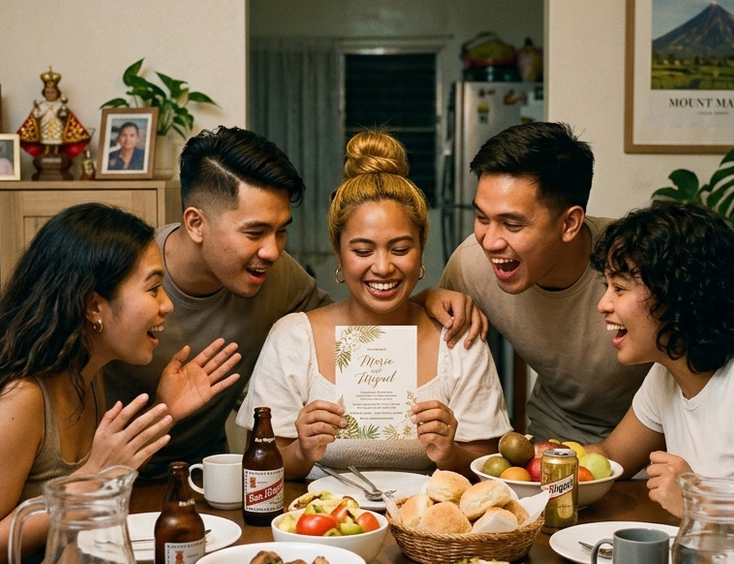
Friend groups create their own version of this problem. Your barkada of ten means ten seats, ten meals, and ten invitations. If your venue fits eight, someone feels the cut.
Inviting part of a tight friend group almost always creates tension. The people who weren't invited find out through the ones who were.
Two approaches work better than a partial invite:
Invite the whole group and adjust elsewhere in the guest list to make room. If the barkada matters to you, treat them as a unit.
Invite none of them to the formal reception and host a separate celebration, a dinner or a party, specifically for that group. This sidesteps the hierarchy entirely.
Social Media and the Visibility Problem
Filipino couples underestimate how quickly wedding photos circulate. Tagged photos, Instagram stories, and Facebook albums make every guest visible to everyone who wasn't there. A friend who didn't receive an invitation sees the reception through your photos the same night.
This doesn't mean you should invite everyone who follows you online. It means you should have the direct conversation with people close enough to notice the absence before they see it on a screen.
How to Handle Uninvited Guests After Sending Wedding Invitations in the Philippines addresses what happens when someone shows up despite not receiving an invitation.
Building the List With This in Mind
The goal isn't to avoid all social discomfort. Some exclusions carry weight regardless of how carefully you handle them. The goal is to make deliberate decisions, communicate them with respect, and not let the fear of offending someone override your venue capacity and budget.
Start your list with the people whose absence would genuinely change the feeling of the day. Build outward from there. When you hit your limit, stop.
Who to Invite to a Filipino Wedding: A Guide to Building Your Guest List Without the Drama gives you the practical framework for working through those decisions ring by ring.
Once your list is final and your invitations are ready to send, The Filipino Wedding Invitation Timeline: When to Order, Print, and Send keeps the logistics on track.
For designers and printers who can handle your invitation suite once the list is confirmed, browse stationery and invitation suppliers in the Philippines.
For everything else your invitations need to cover, the complete guide to Filipino wedding invitations is the place to start.
Still Searching for a Right Match?
Find Your Perfect Wedding Supplier Today!
Discover trusted wedding suppliers across the Philippines in our complete directory. Compare services and connect with the ones that fit your dream celebration.
Browse Wedding SuppliersFeatured Posts



The Complete Filipino Couple's Guide to Wedding Rings & Bands in the Philippines: Traditions, Styles, Budgets & Where to Buy
22 mins readWedding Reception Ideas that Honor Tradition and Wow Your Guests
4 mins readFilipino Wedding Dress Guide for Style Traditions and Smart Shopping
6 mins readFilipino Wedding Cost Guide - Realistic Budgets, Percentages, and Price Drivers by Region
9 mins readPhilippines Honeymoon Guide - Best Islands, Resorts, Costs & 7–14 Day Itineraries
9 mins readFilipino Wedding Games - Traditions, Modern Twists, and Crowd-Pleasers for Every Reception
8 mins read