


How to Handle Uninvited Guests After Sending Wedding Invitations in the Philippines
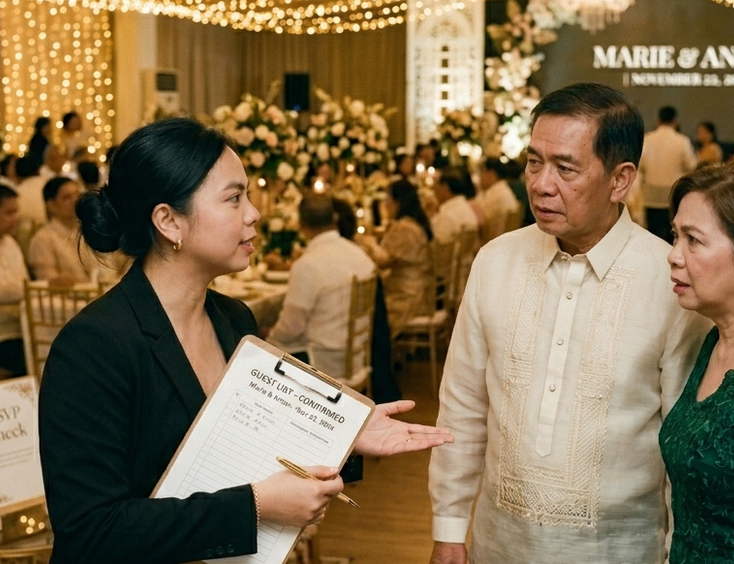
Uninvited guests at Filipino weddings are not an edge case. They are a near-certainty. A cousin brings her boyfriend nobody has met. A ninong shows up with his entire family. A family friend your parents invited verbally assumes their children are included. A coworker hears about the wedding and expects an invitation that was never coming.
Handling this well requires decisions made before the wedding day, not during it.
Understand Why It Happens in Filipino Culture
Uninvited guests at Filipino weddings come from specific social dynamics, not rudeness.
Filipino hospitality culture defaults to inclusion. Turning someone away feels more wrong than accommodating an extra person. Parents and older relatives operate from this framework. They invite people verbally without telling you. They assume their guests fall under their own quota. They tell friends "come, it's fine" without understanding that catering numbers, venue capacity, and seating charts make it not fine.
The concept of hiya complicates your response options. Turning someone away at the door embarrasses them publicly. In Filipino social dynamics, that embarrassment reflects back on you and your family. Even guests who showed up uninvited feel wronged if turned away, and they will say so.
This does not mean uninvited guests have no consequences. It means your strategy for handling them needs to account for the social cost of different responses.
For context on the etiquette behind who expects an invitation and why, the guide to Filipino wedding social etiquette covers the expectations that drive these situations.
Set the Conditions Before the Wedding Day
The best way to handle uninvited guests is to reduce how many arrive in the first place.
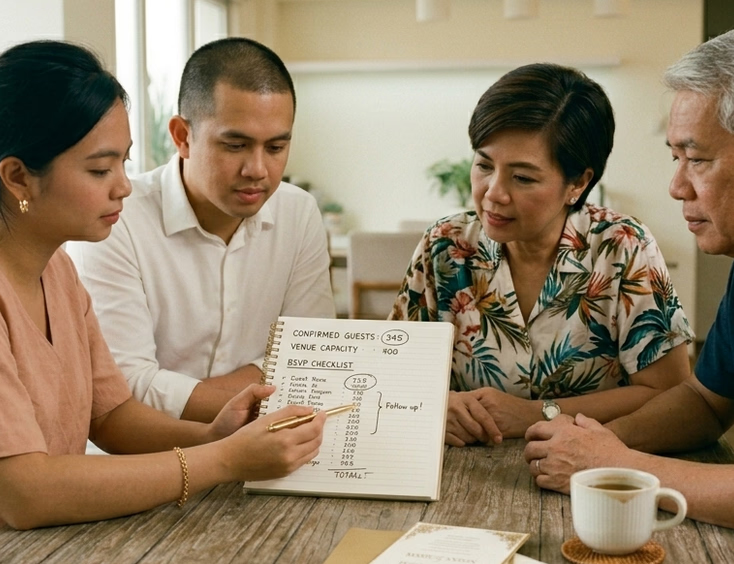
Tell your parents and in-laws the final headcount and why it matters. Not as a complaint, as information. "The venue holds 180 people and catering is confirmed for 180. Every person above that affects the food and seating." When parents understand the specific constraint, they are less likely to extend informal invitations.
Be explicit that children require their own RSVP. Filipino families often assume children are included unless specifically told otherwise. Your invitation wording and your conversations with family should make the policy clear. If children are not invited, say it plainly to the family members most likely to bring them.
Clarify with principal sponsors that their invitation covers them as individuals or as a couple, not their household. A ninong who receives one invitation and brings six family members is not being malicious. He is operating on assumptions nobody corrected.
The guide to wording a Filipino wedding invitation includes language for addressing guest inclusions clearly on the invitation itself.
Build a buffer into your catering count. Tell your caterer your expected headcount plus ten to fifteen percent. Filipino wedding receptions almost always run above confirmed numbers. A buffer means unexpected guests get fed rather than creating a scene.
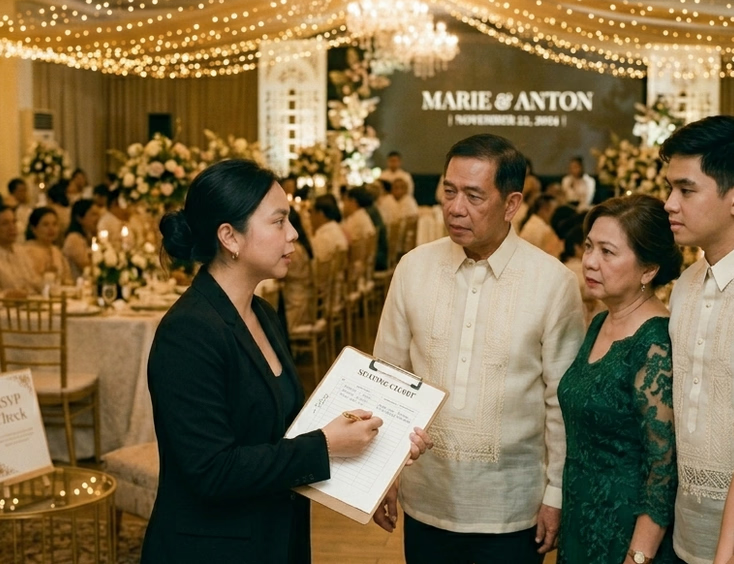
Prepare your on-the-day coordinator. Your coordinator manages the door and the seating chart. Brief them on your policy for unexpected guests and give them authority to make calls without pulling you away from your reception. A good coordinator handles this without it reaching you.
What to Do When They Arrive Anyway
Despite preparation, uninvited guests will still arrive. Your response depends on the situation.
If you have space and food: Seat them. Smile. Move on. The social cost of making an issue of it outweighs any principle involved. Save that conversation for after the honeymoon if it needs to happen at all.
If you are at capacity: Your coordinator steps in, not you. They find a solution, an extra chair at a table, a seat near the back, or a quiet conversation with the guest about the situation. You do not manage this on your wedding day.
If a parent invited them: Do not address it during the reception. Your mother or father made a call that affects your wedding. That conversation happens privately, after the event, when nobody is emotional and the day is already done.
If it's a gate crasher with no connection to either family: Your coordinator and venue staff handle it. This is a venue security situation, not a couple situation.
How to Handle the Headcount Problem With Your Caterer
Confirm with your caterer before the wedding what their process is for guests above the confirmed count. Most Philippine catering suppliers plan for a small overage and can accommodate five to ten additional guests without issue. Beyond that, the kitchen runs short.
Ask your caterer two specific questions. First, what is their maximum overage capacity? Second, what happens if guests exceed that number? Knowing the answers before the wedding means no surprises during the reception.
If you are genuinely concerned about your guest list expanding significantly, order a higher catering count from the start. The cost per head decreases at higher quantities with most suppliers. The difference between catering for 180 and catering for 200 is smaller than the stress of managing a food shortage during your reception.

Dealing With the Aftermath
Some uninvited guest situations leave residue. A relative feels embarrassed about how they were handled. A family friend tells mutual contacts they were turned away. A parent is upset you did not accommodate their verbal invitations more gracefully.
Address these conversations directly and privately. Acknowledge what happened without relitigating every decision. "We were at capacity and had to manage numbers strictly. We're sorry it was uncomfortable" ends most conversations. Getting defensive or explaining every detail of your catering contract does not.
If a parent extended verbal invitations without telling you, the conversation with them is separate. It is not about the uninvited guest. It is about how decisions get made for your wedding. Have that conversation once, clearly, and move past it.
The Guest List Decisions That Prevent This
Most uninvited guest problems trace back to guest list ambiguity early in the planning process. When the list is never clearly finalized, when parents feel they have open-ended authority to invite people, and when no one has an explicit conversation about capacity, the wedding day becomes the first time anyone enforces a limit.
Lock your guest list earlier than feels necessary. Put a number on paper. Share it with both sets of parents with the specific venue and catering constraint attached. Revisit it once, accommodate reasonable additions, then close it.
The complete guide to Filipino wedding invitations covers how guest list decisions connect to every other part of the invitation process, from how many suites to order to how wording affects who shows up.
For couples still working through their guest list before invitations go out, the guide to building your Filipino wedding guest list covers how to navigate family input without losing control of your own wedding.
Finding a coordinator who understands Filipino wedding dynamics and can manage door situations with grace is worth prioritizing. Browse wedding invitation and stationery suppliers in the Philippines for suppliers who work within the full ecosystem of Filipino wedding planning and can point you toward coordinators and vendors who handle these situations regularly.
Still Searching for a Right Match?
Find Your Perfect Wedding Supplier Today!
Discover trusted wedding suppliers across the Philippines in our complete directory. Compare services and connect with the ones that fit your dream celebration.
Browse Wedding SuppliersFeatured Posts




The Complete Filipino Couple's Guide to Wedding Rings & Bands in the Philippines: Traditions, Styles, Budgets & Where to Buy
22 mins readWedding Reception Ideas that Honor Tradition and Wow Your Guests
4 mins readFilipino Wedding Dress Guide for Style Traditions and Smart Shopping
6 mins readFilipino Wedding Cost Guide - Realistic Budgets, Percentages, and Price Drivers by Region
9 mins readPhilippines Honeymoon Guide - Best Islands, Resorts, Costs & 7–14 Day Itineraries
9 mins readFilipino Wedding Games - Traditions, Modern Twists, and Crowd-Pleasers for Every Reception
8 mins read