


Drip Cakes, Geode Cakes, and Sculpted Cakes: Are They Worth It for a Filipino Wedding
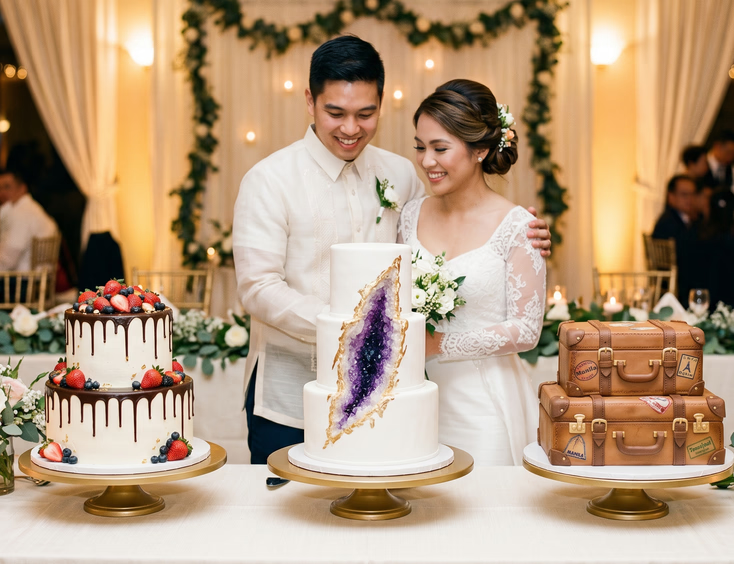
Filipino weddings have long centered on multi-tiered white cakes with fondant finishes and sugar flowers. That formula still works. But couples browsing Pinterest and Instagram now see options that break from tradition: drip cakes with glossy ganache, geode cakes with crystal-like rock candy, and sculpted cakes carved into shapes that have nothing to do with stacked rounds.
Each of these designs delivers a visual punch. Each also carries trade-offs in cost, logistics, and taste that Filipino couples should weigh before committing.
This guide breaks down all three styles so you can decide which one fits your wedding, your venue, and your budget. For a broader overview of cake planning in the Philippines, start with our complete guide to wedding cakes in the Philippines.
Drip Cakes: The Casual-Elegant Crowd Pleaser
A drip cake features a glaze or ganache poured over the top edge, creating streams that run down the sides. The drip design lends a bit of whimsy to a wedding cake, while it doesn't take away from any pretty embellishments like intricate fondant details or fresh blooms.
The base is usually buttercream or a semi-naked finish. The drip itself can be chocolate ganache, caramel, white chocolate, fruit puree, or colored candy melts. One of the most popular ways to do a drip wedding cake is by letting a healthy portion of caramel glaze run down the sides of your dessert. The chocolate ganache drizzle is another favourite drip wedding cake idea that's bound to impress.
You can also go metallic. Give your wedding cake a bit of extra shine by topping it with a metallic drizzle. You can go with a classic gold, silver, copper or rose gold or mix it up and do a shimmery coloured icing, instead.
Why drip cakes work for Filipino weddings:
Filipino receptions tend to be warm. Air-conditioned ballrooms in Makati handle temperature fine, but garden weddings in Tagaytay or beach ceremonies in Boracay push the limits of fondant and sugar decorations. Buttercream-based drip cakes hold up better in moderate heat than fondant-heavy designs. The drip itself, once set, stays intact as long as the cake isn't sitting under direct sun for hours.
The style also suits couples who want something modern without abandoning the tiered structure. A three-tier drip cake with cascading chocolate ganache and fresh flowers reads as both trendy and grounded. You still get the height for the cake cutting ceremony, and guests still recognize it as a wedding cake.
Cost range in the Philippines:
A naked wedding cake with drip starts at around ₱2,800 for a single tier. Two-tier drip cakes from Manila-based bakers typically fall between ₱5,000 and ₱12,000. Three-tier versions with added decorations like macarons, fresh berries, or gold leaf push the total to ₱10,000 to ₱18,000.
Compared to a full fondant cake with sugar flowers, drip cakes cost less because they require fewer labor hours. The baker frosts the cake in buttercream, pours the ganache, and adds toppings. No sculpted sugar petals. No fondant panels.
What to watch out for:
Ganache consistency matters. If your baker pours the drip too thin, it runs off the cake and pools at the base. Too thick, and it clumps instead of streaming. Ask your baker to show you photos of previous drip cakes and, if possible, schedule a tasting that includes the drip finish so you can see it in person.
Timing is also critical. Your baker should apply the drip close to delivery time. Ganache that sits for hours in a warm vehicle during Manila traffic will lose its shape.
Geode Cakes: The Crystal Showpiece
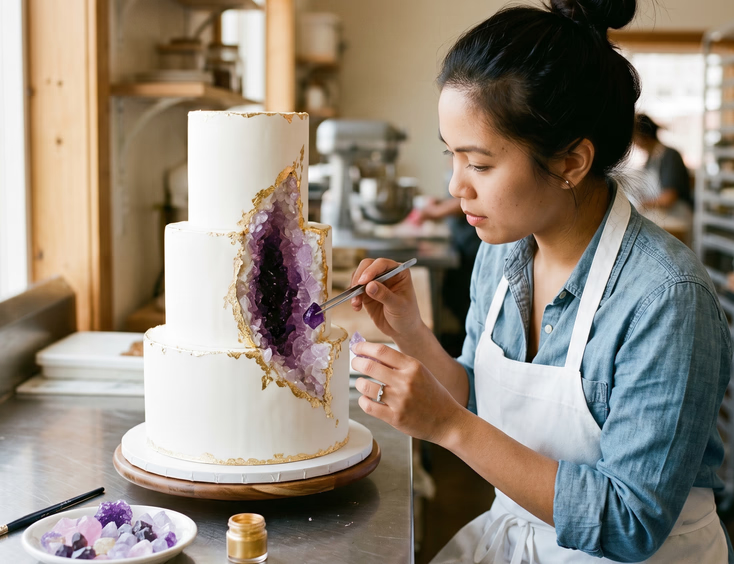
Geode cakes are meant to mimic the natural rock formation, with the baker typically carving out chunks from the cake and filling the cut-outs with edible crystals made out of rock candy or isomalt shards.
This mineral-inspired trend began as an experiment by Denver-based baker Rachael Teufel, owner of Intricate Icings Cake Design, for a friend's opening of a new wedding venue. She posted a photo of the cake on the company's website and gained 60,000 followers overnight. The trend caught on, and bakers across the country began showing off these stunning geode cut-outs.
The technique involves carving an irregular opening into a frosted cake, applying a fresh layer of buttercream inside the cavity, then pressing rock candy or isomalt crystals into the frosting. Bakers paint the crystals with food coloring mixed with vodka or lemon extract, building an ombre effect from dark at the center to light at the edges. The most popular hues include purple amethyst and blue agate, offering the opportunity to create something striking.
One of the most alluring things about the geode design is the ability to inject colour into what is, traditionally speaking, a simple white cake affair. For Filipino couples who want to tie their cake to their wedding color motif, a geode cavity in emerald, amethyst, or rose gold creates a focal point that photographs well under reception lighting.
If you're exploring the broader question of white cakes vs. colored wedding cakes for Filipino celebrations, geode cakes offer a middle path. The exterior stays clean and classic. The crystal cavity brings color without covering the entire cake.
Why geode cakes work for Filipino weddings:
Filipino celebrations value visual spectacle. From elaborate church floral arrangements to reception entrance arches, the aesthetic bar runs high. A geode cake gives guests something to photograph and talk about during cocktail hour. Amethyst geodes are filled with purple crystals and can be used as wedding cake decorations. Amethyst stones are considered to be a symbol of love and protection, making them an ideal choice for a wedding cake.
The design also works on smaller cakes. You don't need five tiers to pull off a geode. A two-tier cake with one dramatic crystal opening delivers impact without requiring a large guest count to justify the size.
Cost range in the Philippines:
Geode cakes require more skilled labor than drip cakes. A geode cake can take up to 2 weeks to complete. The baker carves the cake, prepares the rock candy or isomalt crystals, paints and shades each layer, and finishes with gold leaf or edible metallic accents.
Put the time in, give yourself at least 15 hours to perfect your design. The geode cake takes patience and stamina to create.
In the Philippines, a two-tier geode cake from a skilled baker starts at ₱12,000 and can reach ₱25,000 or more depending on the complexity of the crystal work and the size of the geode opening. Three-tier versions with multiple geode cavities and metallic finishes push past ₱30,000.
The price reflects the artisan nature of the work. You're paying for rock candy, isomalt, edible gold leaf, food-safe paints, and the hours your baker spends creating something with no template. Each geode is one of a kind.
What to watch out for:
Rock candy reacts to humidity. In the Philippines, where humidity stays high year-round, the crystals can start to dissolve or become sticky if the cake sits out too long. Ask your baker about their strategy for handling the local climate. Some bakers apply a thin layer of cocoa butter over the crystals to seal them. Others assemble the geode section at the venue, as close to the reception start as possible.
Also confirm that the baker has done geode cakes before. This is a specialized skill. Ask for photos of previous work, and pay attention to the crystal clarity, color gradation, and edge detail. A rushed geode looks like a hole in the cake with candy glued inside it. A well-executed one looks like a cracked-open gemstone.

Sculpted Cakes: The Conversation Starter
Sculpted cakes break from the round-tiered format. The baker carves the cake into a custom shape, then covers and decorates it in fondant, modeling chocolate, or buttercream. Wedding versions can take any form: a replica of the couple's favorite travel destination, a stack of vintage suitcases, a pair of oversize wedding rings, or an abstract art piece.
Most sculpted 3-D cakes are time-consuming to create. The planning process requires back-and-forth communication with clients to finalize the details, followed by custom sketches and blueprints of the cake to help envision the project before the cake layers have been baked.
There's the specialized equipment needed to create certain structural elements to support the cake. And then there's the actual creation time: mixing, baking, filling, stacking, carving, chilling, decorating, painting, and piping.
Most sculpted cakes use fondant for structure and realism, but flavor and texture remain a priority.
Why sculpted cakes work for Filipino weddings:
Filipino couples value personal touches. If you and your partner met during a hiking trip to Mt. Pulag or bonded over your shared love of coffee, a sculpted cake shaped like a mountain range or a coffee cup tells that story in a way a tiered cake with piped borders cannot.
Sculpted cakes also double as centerpieces and conversation starters. At a 200-guest Filipino reception, where table-hopping and socializing drive the energy, a sculpted cake gives people something to gather around and discuss.
Cost range in the Philippines:
Sculpted cakes carry the highest price tag of the three styles. If you're choosing a design with lots of ornate details, this will cost more than one coated in sheer frosting. Creating a bespoke design will mean the cake maker has to spend much longer piecing together your cake than a more simple design.
A basic sculpted design from a Filipino baker (two tiers, custom shape, fondant finish) starts around ₱15,000. Complex sculpted cakes with internal structural supports, hand-painted details, and modeling chocolate elements range from ₱25,000 to ₱50,000 or more.
Prepare to spend as high as ₱26,000 to ₱30,000 for four- to five-tier wedding cakes, and even more should you require the entire cake to be edible, or if there are real fruits or other special ingredients you want to add. Sculpted cakes push past those numbers because you're paying for engineering, artistry, and risk management.
What to watch out for:
The cake needs to be safely delivered and set up at its final destination, including any damage control to fix cracks or other issues that may have arisen during road transport. In a country where venue locations range from Tagaytay highlands to Palawan beach resorts, delivery logistics matter more than usual. Ask your baker if they deliver and set up personally, or if they hand the cake off to a courier.
Flavor can also suffer. Heavily sculpted cakes rely on dense cake recipes and thick fondant layers to hold their shape. The structural demands can leave you with a cake that looks spectacular but tastes like a sugary brick. Taste-test the actual recipe your baker plans to use for the sculpted design, not a sample from their standard menu.
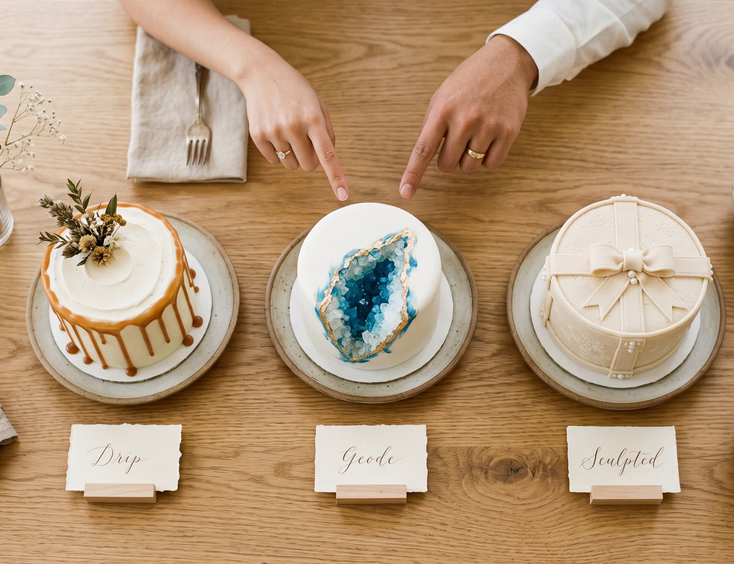
Side-by-Side Comparison: Which Style Fits Your Wedding?
| Factor | Drip Cake | Geode Cake | Sculpted Cake |
|---|---|---|---|
| Price range (PH) | ₱5,000 to ₱18,000 | ₱12,000 to ₱30,000+ | ₱15,000 to ₱50,000+ |
| Prep time | 1 to 2 days | Up to 2 weeks | 1 to 3 weeks |
| Best for | Casual-elegant, modern receptions | Color-focused, visual impact | Highly personal, storytelling |
| Heat tolerance | Moderate (buttercream base) | Low (rock candy dissolves in humidity) | Low (fondant softens in heat) |
| Flavor impact | Minimal (ganache adds flavor) | Minimal (rock candy is sugar) | Moderate to high (dense cake, thick fondant) |
| Guest count fit | Any size | Works on smaller cakes | Best for 100+ guests |
| Baker skill needed | Standard | Specialized | Specialized |
Mixing Styles: You Don't Have to Pick One
Some Filipino couples combine elements. A three-tier cake with a drip finish on the top tier, a geode opening on the middle tier, and floral decorations on the bottom tier gives you variety without committing to a single trend.
Others use a statement cake for display and a simpler sheet cake for serving. Your tiered wedding cake handles the visual role and the cake cutting ceremony, while the kitchen slices a separate cake for 200 guests.
This approach lets you invest in one spectacular design without worrying about whether the sculpted masterpiece yields enough slices.
Questions to Ask Your Baker Before Ordering
Have you made this style before? Ask for a portfolio of previous drip, geode, or sculpted cakes. Photos from styled shoots don't count. You want to see cakes that were delivered to a real event.
How do you handle the Philippine heat? Bakers working in Manila, Cebu, or Davao deal with heat and humidity year-round. A baker who accounts for climate in their recipe and delivery plan gives you more confidence than one who doesn't mention it.
What's the delivery plan? For sculpted and geode cakes, the baker should deliver and assemble on-site. Ask about travel fees if your venue is outside Metro Manila.
Can I taste the exact recipe? Sculpted cakes and geode cakes sometimes use different base recipes than standard tiered cakes. Schedule a tasting with the recipe your baker plans to use for the final product.
What happens if something breaks? Transport damage is a real risk with sculpted designs. Ask your baker about their repair plan and whether they carry a touch-up kit to the venue.
Find a Baker Who Specializes in Statement Wedding Cakes
Drip cakes, geode cakes, and sculpted cakes each require a different skill set. A baker who creates stunning drip finishes may not have the carving experience for a sculpted design. A geode specialist may not work in buttercream.
Browse our directory of wedding cake suppliers in the Philippines to find bakers with portfolios that match the style you want. Compare their work, read reviews, request consultations, and schedule tastings before you sign a contract.
Still Searching for a Right Match?
Find Your Perfect Wedding Supplier Today!
Discover trusted wedding suppliers across the Philippines in our complete directory. Compare services and connect with the ones that fit your dream celebration.
Browse Wedding SuppliersFeatured Blog Posts



Filipino Wedding Entourage - Roles, Order of March, and Modern Etiquette
6 mins readCivil Weddings in the Philippines - Requirements, Costs, and Step-by-Step Process
9 mins readCivil Wedding Requirements in the Philippines - Complete Checklist
6 mins readCost of Wedding in the Philippines - 5 Essential Things You Need to Know
7 mins readPrincipal Sponsors (Ninong/Ninang) - How Many, How to Ask, What They Really Do
4 mins readVeil, Cord, Candle & Coins - Roles, Options, and When They Happen
4 mins readEntourage for a Traditional Pinoy Wedding - Complete Roles and Guide
6 mins readComplete List of Civil Wedding Requirements in the Philippines
8 mins readHow to Choose Wedding Ninongs and Ninangs - Ask Yourself These 3 Important Questions
5 mins read