


Traditional White Wedding Cakes vs Colored Wedding Cakes for Filipino Celebrations
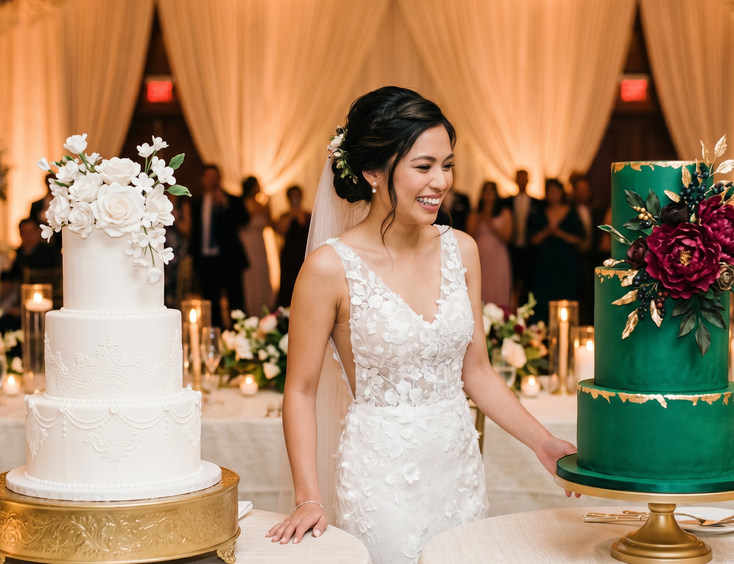
White wedding cakes carry history. The white color has been attached to wedding ceremonies since the Victorian era, when Queen Victoria chose to wear a white lace wedding dress at her wedding to Prince Albert in 1840. The wedding cake was known as the bride's cake, so the color white became common because the cake needed to reflect the bride and the expensive ingredients the family could afford, such as refined white sugar.
That tradition traveled to the Philippines through centuries of Western influence. Traditional white cakes will never go out of style. The color white represents elegance, money, and social importance, and has been used for weddings since the 16th century.
But Filipino couples in 2025 and 2026 have more options than their parents did. Colored fondant, ube-flavored tiers, ombré buttercream, and bold jewel-toned finishes now compete with the classic all-white look. The question is no longer whether colored cakes are acceptable. You need to decide which direction matches your wedding, your venue, and the impression you want to leave on 150 to 300 guests.
This guide walks you through both options so you can choose with confidence. For a broader look at planning your cake, start with our complete guide to wedding cakes in the Philippines.
Why White Wedding Cakes Still Work for Filipino Celebrations
White reads as formal. In a country where most weddings include a Catholic church ceremony, a traditional reception program, and the cake cutting ceremony, a white cake fits the occasion without needing to justify itself.
White wedding cakes are a sophisticated trend amongst more traditional couples. Delicate white details on towering white tiers of white fondant add a subtle touch of drama and sweet romance to any wedding.
White also gives you flexibility in decoration. Details like florals and ruffles add visual interest to the colorless confection. This is perfect for couples who are leaning towards throwing a classic and traditional wedding but want to keep the wedding as interesting as possible.
A white cake pairs with any venue, from a Makati hotel ballroom to a garden reception in Tagaytay. It photographs well under warm reception lighting and cool church interiors. Your florist, coordinator, and photographer will find it easy to work with because white doesn't clash with table settings, centerpieces, or the wedding entourage's attire.
White fondant also forgives imperfections better than colored finishes. Fingerprints, small dents from transport, and humidity-related blemishes show less on a white surface than on a dark or saturated one. In the Philippine climate, where cakes travel through Manila traffic in warm delivery vans, that matters.
The Case for Colored Wedding Cakes
2025 is seeing a rise in daring color choices for wedding cakes. Couples are choosing bold colors like deep jewel tones, black, and even metallics for a dramatic and modern look.
Filipino couples are part of that shift. Social media, Pinterest boards, and Filipino wedding supplier showcases on Instagram expose couples to designs that go far beyond white fondant and piped royal icing.
Color gives you a way to tie the cake to your wedding motif. Gradient coloring remains a fun and sophisticated choice of cake design. Choose the same colors as your motif for the ombré design, and your cake will fit right in with your reception decorations.
Color also tells a story. A deep burgundy cake with gold leaf accents signals a different celebration than a pastel pink tier with blush roses. And a purple ube cake connects to Filipino identity in a way that no imported design trend can replicate.
Ube: The Filipino Colored Cake That Needs No Explanation
In the Philippines, the cake may be a vanilla sponge cake, but it might also be a purple ube cake.
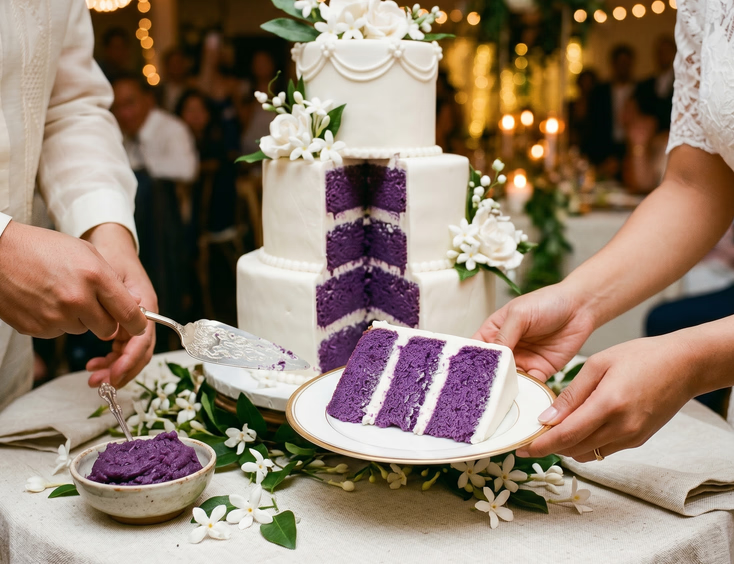
Ube cake is a traditional Filipino chiffon cake or sponge cake made with ube halaya (mashed purple yam). It is vividly purple in color, like most dishes made with ube in the Philippines.
In Filipino culture, ube cake represents celebration and family gatherings. Traditionally served at birthdays, weddings, and Christmas festivities, the vibrant purple color symbolizes prosperity and good fortune.
An ube wedding cake gives you color that carries cultural meaning. Your lola recognizes it. Your titas will appreciate it. International guests at a destination wedding will photograph it and ask what it is. The flavor stands on its own: nutty, sweet, unlike vanilla or chocolate.
Some bakers offer a hybrid approach. They cover an ube cake in white fondant for a traditional exterior, then reveal the purple layers when you slice it during the cake cutting ceremony. You get the best of both worlds: a classic appearance on the cake table and a surprise that gets your guests talking.
Popular Color Directions for Filipino Wedding Cakes
If you're moving beyond white, several color categories work well for Filipino receptions.
Pastels suit romantic and garden-themed weddings. Blush pink, soft lavender, mint green, and pale peach create a gentle contrast against white table linens. These colors work on buttercream, fondant, and even naked cake styles. Filipino brides planning outdoor receptions in Batangas or Tagaytay garden venues lean toward pastels because they complement lush greenery without overwhelming it.
Jewel tones make a bolder statement. Current favorites include emerald green with gold for luxurious elegance, cobalt blue paired with silver for modern refinement, midnight black adorned with metallics for dramatic sophistication, and dusty rose with sage green for romantic softness. In the Philippines, couples planning formal evening receptions in hotel ballrooms gravitate toward jewel tones because they match the mood of dim lighting, candelabras, and rich table runners.
Ombré creates a gradient effect on the cake surface. Ombré cakes are made using variegated colors, usually one color in varying hue or saturation, other times a rainbow of color. You can be creative with the use of color as a theme for a wedding cake. A pink ombré cake that fades from deep rose at the base to pale blush at the top draws attention without clashing with your reception decor.
Metallic accents add color without covering the entire cake. Gold foil looks good on your wedding invites and on your cake. Metallics make a stunning contrast against soft, dainty hues, and will help make your cake stand out from afar. A white cake with hand-painted gold brushstrokes or silver leaf panels straddles the line between traditional and modern.
Earth tones fit rustic or Filipiniana-themed celebrations. Terracotta, sage, dusty olive, and warm taupe echo the natural materials used in Filipino-themed receptions with capiz shell accents, woven abaca table runners, and native floral arrangements.
How Color Affects Your Frosting Options
The frosting you choose determines how the color appears on the cake.
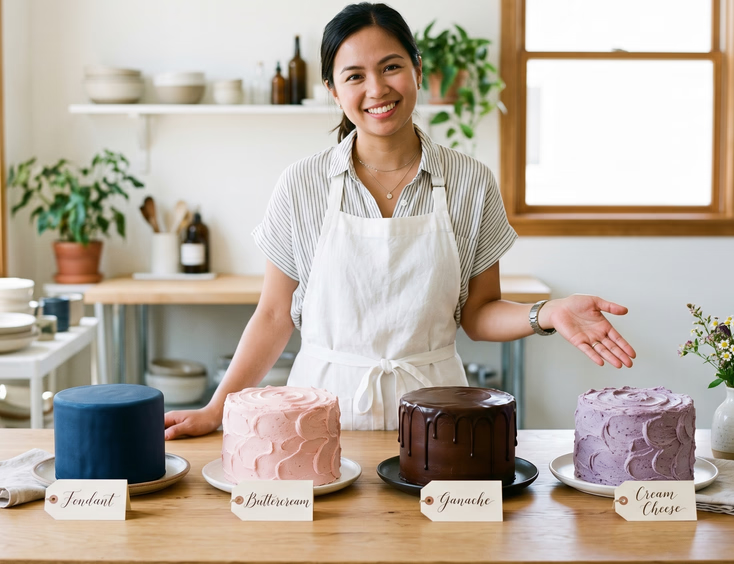
Fondant delivers the most saturated, consistent color. Your baker mixes gel food coloring into the fondant before rolling it, producing an even finish across the entire surface. Deep colors like navy, emerald, and black require fondant because buttercream cannot achieve the same saturation without affecting taste. Fondant is commonly used for wedding cakes, as it's a surefire way of producing a smooth and polished look and can be applied in a multitude of colors.
The tradeoff: Not everyone enjoys the taste of fondant, so many couples opt for other frostings such as buttercream, cream cheese, and ganache. If flavor matters more than finish, consider colored buttercream or a fondant exterior with a buttercream layer underneath.
Buttercream handles pastels and medium tones well. Your baker tints the buttercream with gel coloring, and the result is a softer, more organic appearance than fondant. Buttercream suits ombré designs, textured finishes, and cakes decorated with fresh or sugar flowers. Colors darken over time as the food coloring develops, so ask your baker to mix the shade a step lighter than your target.
Ganache adds color through flavor. White chocolate ganache tinted with food coloring creates a glossy, poured finish. Dark chocolate ganache gives you a rich brown without any added color. For couples considering a drip cake or other statement design, ganache serves as both the color and the design element.
Cream cheese frosting works for lighter colors. Ube cream cheese frosting produces a natural purple. Mango or calamansi cream cheese gives you a pale yellow. The flavor combinations double as the color source.
White vs. Colored: A Side-by-Side Comparison
| Factor | White Cake | Colored Cake |
|---|---|---|
| Formality | Traditional, church-appropriate, universally safe | Modern, expressive, motif-driven |
| Venue flexibility | Works anywhere | May clash with certain backdrops |
| Photography | Clean, bright, reflects light well | Eye-catching, creates contrast, stands out in dim venues |
| Family expectations | Familiar to older Filipino relatives | May need explaining to traditional guests |
| Decoration options | Flowers, piping, and metallic accents pop against white | Decorations need to complement the base color |
| Heat tolerance | White fondant hides minor imperfections | Dark fondant shows fingerprints and moisture marks |
| Cost | Standard pricing | Deep colors may cost more (more food coloring, more precise mixing) |
| Cultural connection | Reflects Western wedding tradition | Ube, pastels, and earth tones reflect Filipino identity |
What Filipino Families Think (and Why It Matters)
Filipino weddings involve extended family. Ninongs and ninangs contribute to the celebration. Parents and grandparents attend with expectations shaped by decades of attending Filipino weddings where white cakes stood at the center of the reception.
A colored cake can spark conversation. Some of it positive, some of it skeptical. If your lola expects a white cake with piped roses and a bride-and-groom topper, a black fondant cake with gold drip and no topper may catch her off guard.
You have two ways to manage this. First, you can involve family in the cake decision. Bring your parents to the tasting. Show them your mood board. Filipino families appreciate inclusion, and giving them a preview reduces surprise on the wedding day.
Second, you can use color selectively. A white cake with colored accents, a single colored tier among white ones, or a white exterior that reveals colored layers inside gives you creative expression without abandoning the familiar framework.
Budget Impact: Does Color Cost More?
Wedding cake prices in the Philippines range between ₱3,000 to ₱25,000. Other factors affect the price, such as whether it's handmade, the complexity of your design, and the flavors you choose.
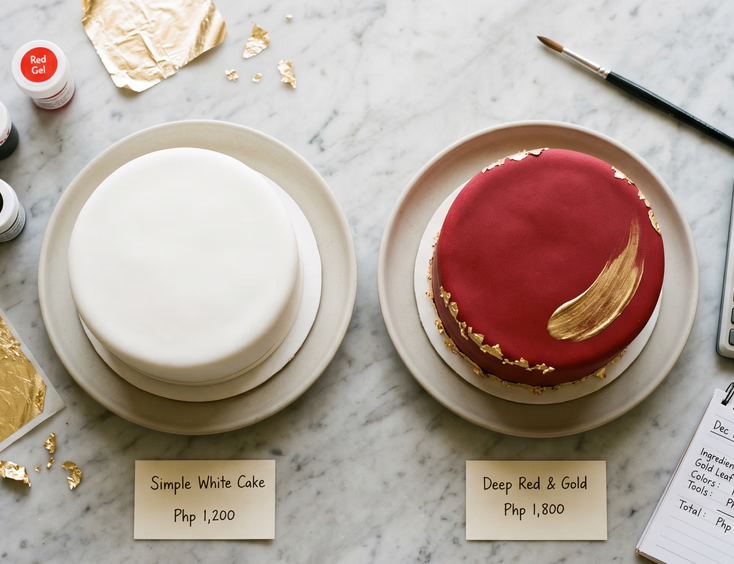
Color can increase your total. Deep shades require more gel food coloring, and some colors (red, black, navy) need several rounds of mixing to reach the right saturation. Your baker may charge ₱500 to ₱2,000 extra for a colored fondant finish compared to white.
Ombré designs require additional labor. Your baker mixes multiple shades and applies them in a gradient, which takes more time than a single-color coat.
Metallic finishes (gold leaf, silver leaf, edible paint) add material costs. A full gold leaf application on a two-tier cake can add ₱1,500 to ₱5,000 depending on coverage.
White cakes with elaborate piping or sugar flowers can cost as much as or more than a colored cake with a simpler design. Color alone does not determine the price. The combination of size, design complexity, flavor, and decorations sets your final number.
Questions to Ask Your Baker
Can I see your portfolio of colored cakes? Some bakers specialize in white and pastel designs. Others have experience with deep jewel tones and hand-painted finishes. Ask for photos of completed cakes in your target color.
How does the food coloring affect flavor? Large amounts of gel coloring (needed for deep reds and blacks) can leave a bitter aftertaste. Ask your baker how they handle this. Some use white chocolate fondant or cocoa-based fondant as a colored base to reduce the amount of added coloring.
How will the color hold up at my venue? Outdoor receptions in the Philippine heat stress colored cakes more than indoor venues. Dark fondant absorbs heat. Buttercream colors can fade in direct sunlight. Your baker should know your venue type before recommending a color approach.
Can I do different colors on different tiers? Mixed-tier designs let you combine white and colored layers. A three-tier cake with two white tiers and one emerald tier creates a focal point without committing fully to color.
What does a tasting look like for a colored cake? If you want an ube tier, a red velvet tier, and a vanilla tier, ask for a tasting that includes all three flavors so you can confirm they work together.
Find the Right Baker for Your White or Colored Wedding Cake
Your baker should have experience with your chosen direction. A baker who produces flawless white fondant work may not have the same skill with deep color mixing or ombré techniques. Ask for references, review their portfolio, and schedule a tasting that matches your design.
Browse our directory of wedding cake suppliers in the Philippines to compare bakers, read reviews, and find one who can deliver the look and flavor you want for your celebration.
Still Searching for a Right Match?
Find Your Perfect Wedding Supplier Today!
Discover trusted wedding suppliers across the Philippines in our complete directory. Compare services and connect with the ones that fit your dream celebration.
Browse Wedding SuppliersFeatured Blog Posts


Filipino Wedding Entourage - Roles, Order of March, and Modern Etiquette
6 mins readCivil Weddings in the Philippines - Requirements, Costs, and Step-by-Step Process
9 mins readCivil Wedding Requirements in the Philippines - Complete Checklist
6 mins readCost of Wedding in the Philippines - 5 Essential Things You Need to Know
7 mins readPrincipal Sponsors (Ninong/Ninang) - How Many, How to Ask, What They Really Do
4 mins readVeil, Cord, Candle & Coins - Roles, Options, and When They Happen
4 mins readEntourage for a Traditional Pinoy Wedding - Complete Roles and Guide
6 mins readComplete List of Civil Wedding Requirements in the Philippines
8 mins readHow to Choose Wedding Ninongs and Ninangs - Ask Yourself These 3 Important Questions
5 mins read