


The Rise of Floral Wedding Cakes Among Filipino Brides
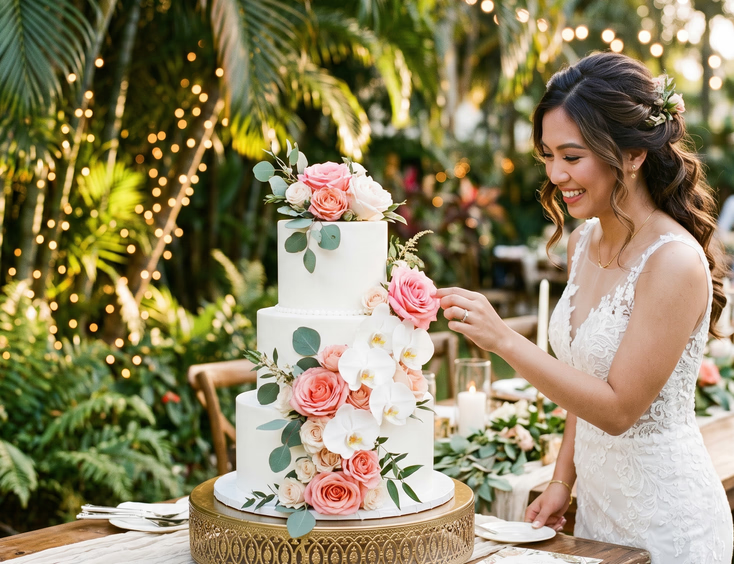
Flowers run through Filipino weddings like a thread. They fill the aisle, weave into venue decor, and land in the hands of a guest after the bouquet toss.
With thousands of flower species native to the Philippines, local weddings reflect the country's tropical biodiversity.
That same love for blooms now shows up on wedding cakes. Filipino brides are asking their bakers for floral designs at a rate that would have surprised couples a decade ago. Petal and flower cakes have become a popular design for wedding cakes because of their elegant appearance. And the options go far beyond a few roses on top.
If you're planning your own wedding cake, this guide covers the types of floral decorations available, the flowers that work best for Filipino celebrations, food safety basics, and the practical details you need before placing your order. For a broader look at cake planning, read our guide on wedding cakes in the Philippines.
Four Ways to Put Flowers on a Wedding Cake
You have four main options. Each carries different costs, visual effects, and safety considerations.
Fresh flowers give your cake an organic, garden-picked look. They create a natural, garden-inspired aesthetic that artificial embellishments can seldom replicate, with vibrant colors and lifelike textures. Compared to intricate sugar flower decorations, fresh flowers are more budget-friendly. Your florist can supply blooms that match your bouquet, creating a cohesive look from the ceremony to the reception table.
Fresh flowers do come with limits. Once out of water and placed on your cake, they start to wilt, and on a sunny day, they may look sad by the time you cut the cake in the evening. In a tropical country like the Philippines, where outdoor receptions and warm venues are the norm, this matters more than you'd expect.
Sugar flowers are handcrafted from gum paste or fondant. Bakers can tailor them to match any wedding theme, color palette, or style. Unlike fresh flowers, sugar flowers are food-safe, with no risk of contaminants, pesticides, or pollen. They can be created weeks or months before the wedding.
The tradeoff is cost. A single flower takes anywhere from one hour to seven hours to make. Your sugar flower artist has spent years perfecting their skill, and you're paying for the time it takes to make each petal, leaf, and bud.
Buttercream flowers offer a middle ground. Bakers pipe them straight onto the cake using buttercream frosting, so they're edible and match the cake's texture. They work well on rustic and semi-naked designs. The look is softer than sugar flowers, with less sculptural precision but more warmth.
Wafer paper flowers add a translucent, delicate quality. They bring a dreamy, delicate look to your cake design. Bakers cut and shape thin sheets of edible wafer paper into petals, giving you something between the realism of sugar flowers and the lightness of pressed blooms.
Flowers That Carry Meaning in Filipino Weddings
Your cake flowers don't need to be random. Many Filipino brides pick blooms that connect to local culture, family memories, or the wedding's color motif.
Orchids, roses, and sampaguita are among the traditional flowers of the Philippines. Orchids stand for grace and reverence, sampaguita for innocence and simplicity, and roses for love and adoration.
The orchid, valued for its resilience, beauty, and elegance, is one of the most popular flowers in the Philippines. Orchids are a popular choice for anniversaries, weddings, and special occasions. Bakers recreate orchid varieties in sugar form for couples who want a Filipiniana-inspired cake.
The sampaguita is the national flower and is considered an icon of peace. Its small, white petals suit minimalist cake designs. Some bakers craft tiny sugar sampaguitas to cascade down tiered cakes, giving the design a local identity without overwhelming the palette.
Roses remain the go-to. The rose conveys feelings and emotions in Filipino culture because of its captivating scent, brilliant colors, and classic elegance. Roses are given on important occasions like weddings, anniversaries, and Valentine's Day. On cakes, full-bloom roses in blush, ivory, or dusty pink are the most requested.
If you're deciding between a traditional white cake or a colored wedding cake, your flower choice will steer the direction. White and ivory blooms reinforce a classic look. Burgundy, peach, or lavender flowers push the design toward something bolder.
Fresh Flowers on Cake: The Food Safety Conversation
Fresh flowers look gorgeous on a wedding cake. They also carry real risks if you skip the safety steps.
Many blooms from large wholesalers are treated with pesticides, fungicides, and preservatives that aren't meant to come in contact with something you'll eat. Many uneducated cake makers use toxic and poisonous varieties of flowers, which is a serious health risk that could result in allergic reaction, serious gastrointestinal upset, or worse.
A few ground rules to follow:
Know which flowers are safe. Flowers that are edible include roses, calendulas, nasturtiums, hibiscus, violets, and sunflowers. Flowers like lilies, daffodils, and foxgloves contain toxic compounds. Wisteria, oleander, and azaleas should never be used on food. Baby's breath is toxic and should never be used as cake decoration.
Source your flowers with care. It's important to know where your flowers come from and choose blooms that are organically grown or safely sourced. Ask your florist or grower about pesticide use. Flowers from Dangwa or your neighborhood flower stall may look fresh, but commercial blooms go through chemical treatments you can't see.
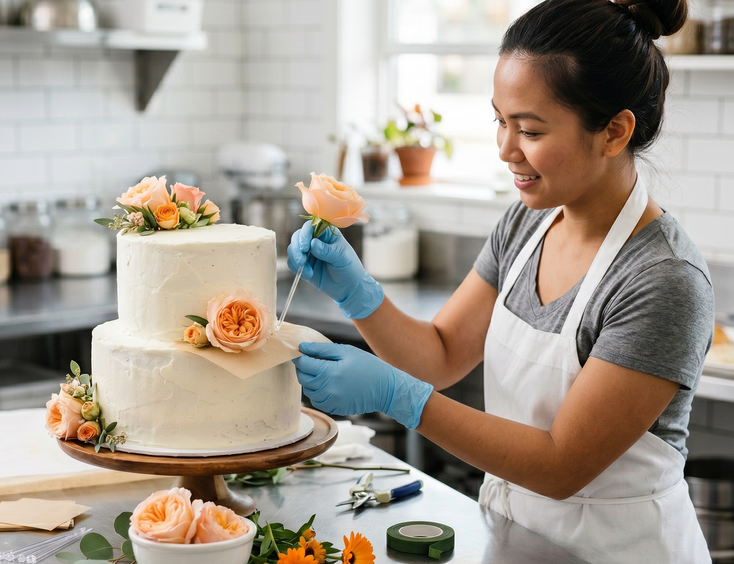
Use barriers between flowers and cake. Place flowers on parchment paper or use food-safe floral picks to prevent direct contact with the cake. Trim the stems, remove excess leaves or thorns, wrap stems in florist tape, and insert into a straw or posy pick. Stems should not go into the cake, even once wrapped.
Talk to your baker and florist together. Run your fresh flower plan by both your baker and your florist, and make sure they have each other's contact information. This coordination prevents the scenario where flowers arrive at the venue and nobody prepared them for the cake.
If food safety feels like too much to manage, sugar flowers remove the concern. They are food-safe, with no risk of contaminants, pesticides, or pollen.
Floral Cakes and Cake Styles: What Pairs Well
The style of your cake affects how flowers look on it.
Naked and semi-naked cakes pair well with fresh flowers. Naked wedding cakes are topped off with fresh decorations like plants, florals, and fruits. The exposed layers and thin frosting let the blooms stand out. If you're weighing this style against a more polished finish, our comparison of naked cakes vs. fondant cakes for Filipino couples breaks down the pros and cons.
Fondant cakes offer a smooth canvas for sugar flowers. Bakers can wire sugar blooms into cascading arrangements that climb from the base tier to the top. The polished surface creates contrast with the organic shape of the flowers.
Buttercream cakes split the difference. The textured frosting gives floral decorations a softer backdrop. Piped buttercream roses or pressed fresh petals both work on this style.
For couples considering more sculptural designs like drip cakes, geode cakes, or sculpted cakes, flowers can serve as the finishing detail that ties an unconventional shape to a romantic theme.
Cascading, Clustered, or Minimal: Choosing a Floral Arrangement Style
How you arrange the flowers matters as much as which flowers you pick.
Cascading arrangements drape flowers from the top tier down one side of the cake. Cascading florals make a wedding cake feel extra elegant. This style works best on tiered cakes with three or more layers, where the vertical space gives the blooms room to flow.
Clustered arrangements group flowers on one tier or between tiers. Bakers place a dense pocket of blooms at the base, between layers, or on top. This approach uses fewer flowers than a cascade while keeping the visual impact focused.
Minimal placements use two or three blooms on the top tier. A single full-bloom peony or a pair of garden roses can anchor the design without competing with other reception elements. This suits couples who want flowers on the cake but prefer an understated look.
Budget Considerations for Floral Wedding Cakes
Your choice of flower type shapes the budget more than the number of blooms.
Wedding cakes in the Philippines can cost anywhere between ₱4,500 and ₱15,000 or more, depending on the baker, flavor, size, and accessories. Floral add-ons shift that range.
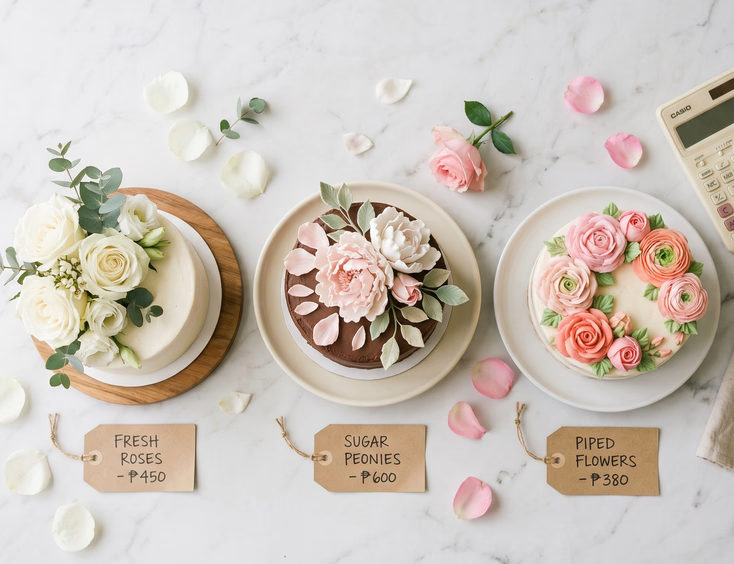
Fresh flowers from your florist are the most affordable option. You may already be paying for wedding flowers. Asking your florist to set aside a few stems for the cake adds minimal cost. Coordinate delivery timing so the flowers stay fresh through the reception.
Sugar flowers raise the price. Each bloom requires hours of handwork. A cascading sugar flower arrangement on a three-tier cake can add ₱3,000 to ₱10,000 or more to your total, depending on the complexity and the artist's rate.
Buttercream flowers fall in between. Your baker pipes them as part of the decorating process. The cost lands somewhere between fresh and sugar, with less labor than sculpted gum paste work.
One way to manage the budget: mix flower types. Use sugar flowers as focal points on the top tier and fill in with fresh greenery or buttercream piping on the lower tiers.
What to Tell Your Baker Before You Order
Walk into your cake consultation with clear answers to these questions:
What is your venue setup? An outdoor garden reception in Tagaytay handles flowers on cake differently than an air-conditioned ballroom in Makati. Heat and humidity affect fresh flowers. Your baker needs to know.
What flowers does your florist carry? If you want fresh flowers on the cake, confirm availability and seasonality with your florist before the cake consultation. Filipino weddings in December and January have access to different blooms than those in June.
How many guests are you serving? The cake size determines how much surface area you have for floral arrangements. A two-tier cake for 50 guests gives you less room than a four-tier cake for 200.
What is your total cake budget? Be upfront. A good baker will adjust the floral approach to fit your number, whether that means fewer sugar roses or a creative mix of fresh and piped flowers.
Do you want to keep the flowers after? Sugar flowers last for years in the right storage conditions. Unlike fresh flowers, you can keep sugar flowers long after your wedding day. They can survive if kept in correct conditions, like avoiding high humidity and direct sunlight. Some couples display them in glass cases as a keepsake.
Find the Right Cake Supplier for Your Floral Wedding Cake
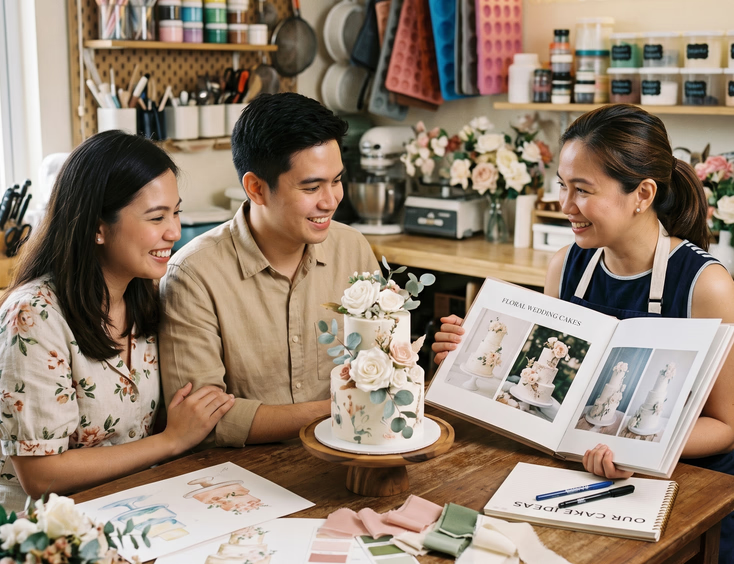
A floral wedding cake requires a baker who understands both cake construction and flower work. Some bakers specialize in sugar flowers. Others collaborate with florists for fresh arrangements. The best ones communicate with your wedding coordinator to align the cake design with your overall theme.
Browse our directory of trusted wedding cake suppliers in the Philippines to find bakers who create floral cake designs for Filipino weddings. Compare portfolios, read reviews, and request tastings before you commit.## Filipino Brides and Flowers: A Pairing That Goes Beyond the Bouquet
Still Searching for a Right Match?
Find Your Perfect Wedding Supplier Today!
Discover trusted wedding suppliers across the Philippines in our complete directory. Compare services and connect with the ones that fit your dream celebration.
Browse Wedding SuppliersFeatured Blog Posts

Filipino Wedding Entourage - Roles, Order of March, and Modern Etiquette
6 mins readCivil Weddings in the Philippines - Requirements, Costs, and Step-by-Step Process
9 mins readCivil Wedding Requirements in the Philippines - Complete Checklist
6 mins readCost of Wedding in the Philippines - 5 Essential Things You Need to Know
7 mins readPrincipal Sponsors (Ninong/Ninang) - How Many, How to Ask, What They Really Do
4 mins readVeil, Cord, Candle & Coins - Roles, Options, and When They Happen
4 mins readEntourage for a Traditional Pinoy Wedding - Complete Roles and Guide
6 mins readComplete List of Civil Wedding Requirements in the Philippines
8 mins readHow to Choose Wedding Ninongs and Ninangs - Ask Yourself These 3 Important Questions
5 mins read