


Wedding Fireworks in the Philippines: Everything Couples Need to Know Before Saying 'I Do' Under the Stars
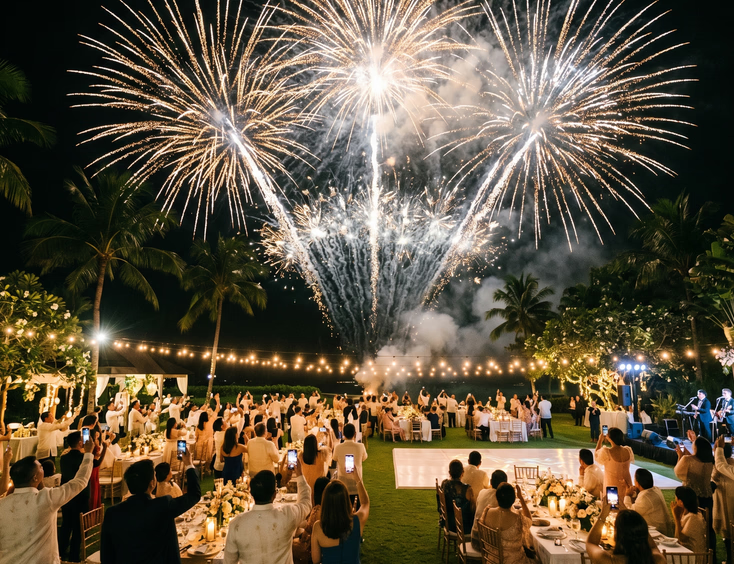
You spent a year planning the ceremony, and the reception runs on schedule. Guests danced, ate, and cried through the speeches. Now the night needs an ending that holds.
Fireworks do that work in a way the last song cannot. Your lola points at the sky. Your titos forget to film and watch the whole set. The cousins who slipped out for a smoke run back across the lawn before the second shell. For ninety seconds, the people you love look up at the same thing.
That shared moment is why Filipino couples keep booking pyrotechnics, even on a tight budget. A wedding fireworks finale tells your guests the night has peaked. Without it, they check Grab fares and drift toward the door while the playlist runs on. With it, they stay through the last set, hug longer at the door, and post the video before they reach the car.
The cultural pull goes past how it looks. Filipinos light paputok at New Year's, at fiestas, at town anniversaries, at election wins. Fire in the sky means something arrived, and a wedding is that same kind of arrival. Your grandparents brought the instinct to the town plaza, fiesta after fiesta; you bring it to a reception lawn. The move from paputok to staged pyrotechnics keeps the meaning and swaps the plaza for a lawn.
The Types of Wedding Fireworks Available in the Philippines
Plenty of wedding displays never leave the ground. Couples picture one effect and book another. Learn the categories before you call a supplier, and you save money and skip the disappointment.
- Aerial fireworks. The classic shells launched from mortar tubes, climbing 50 to 150 meters before they burst into the shapes guests picture when you say the word. They need vertical clearance, a buffer zone from the crowd, and a venue that allows them. Beach weddings, garden estates, and farm venues clear those requirements. Most Metro Manila hotels say no.
- Ground pyrotechnics. Low effects that stay near the floor. Gerbs throw steady fountains two to six meters up, mines pop a single burst at chest height, comets streak across the ground line. You use these for the entrance, the first dance, or the kiss after the vows. With the right ceiling height and ventilation they run indoors, which makes them the standard pick for hotel ballrooms.
- Cold sparklers. The indoor-safe effect. The flame runs cool enough to touch, throws no smoke, and trips no fire alarms. Couples line them beside the aisle, behind the head table, or around the cake. Venues that ban other pyrotechnics approve these, because fire code does not classify them as fireworks.
- Fireworks waterfall. A curtain of sparks dropping from a horizontal frame. Suppliers rig the frame above the dance floor, over the entrance arch, or between two coconut trees on a beach setup. The effect holds 20 to 40 seconds and gives photographers a clean frame.
- Confetti and streamer cannons. Compressed-air effects rather than true pyrotechnics, paired with fireworks for the grand exit. They work in any venue and cost a fraction of aerial shells.
Most couples book a combination. A reception package runs ground pyrotechnics for the entrance, cold sparklers for the cake cutting, and aerial fireworks for the closing. The full breakdown of display types and what each one suits helps you match the effect to the moment.
How Long the Display Should Run
Couples ask for ten minutes and need a third of that.
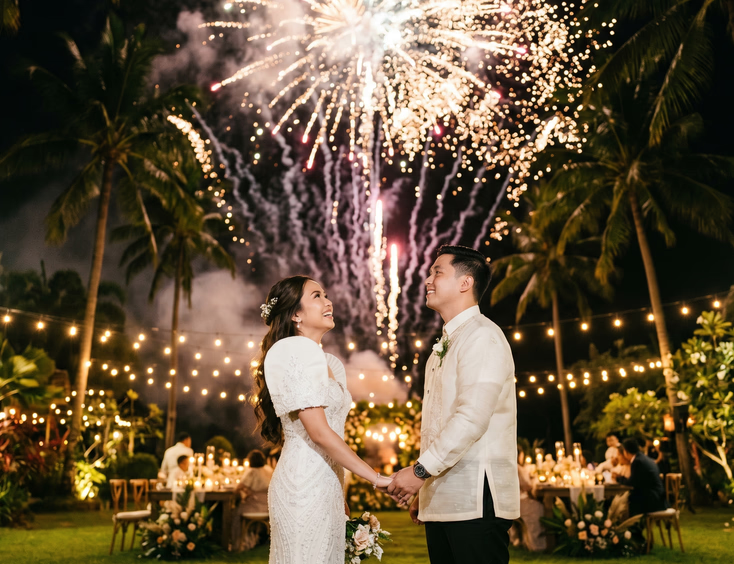
The standard wedding fireworks finale runs 90 seconds to 3 minutes. Past three minutes, guests stop looking up. The first 30 seconds land the impact, the middle holds it, and the last 15 seconds, the grand finale, are what your guests film and remember.
Suppliers price on two things: how many shells fire and how long the show runs. A 90-second show with 150 shells costs less than a 90-second show with 400 shells, and the denser version looks twice as full.
Tip: Compare suppliers on shell count, not minutes. Two companies can both quote a two-minute finale, then one fires 150 shells and the other fires 400. Ask how many shells the price covers, and compare those totals side by side.
The right length for your specific reception flow depends on whether the fireworks close the night or hand off to an afterparty.
Ground pyrotechnics work on a different clock. The entrance burst lasts 8 to 15 seconds. The first-dance setup sparks only through the chorus of one song, and the cake-cutting sparklers run about 45 seconds. These punctuate a moment instead of filling the sky.
When to Schedule the Fireworks
The timing depends on three things: sunset, the program flow, and the venue's noise curfew.
Aerial fireworks need real darkness to read on camera and in person. In the Philippines, sunset falls between 5:30 and 6:30 PM most of the year, with full darkness 30 to 40 minutes later. A 7:00 PM display works in December. The same slot in May still has blue light in the sky, and your colors wash out.
The reception flow matters more than the clock. Fireworks make sense at three points: right after the grand entrance, after the first dance, or as the final send-off. Most couples pick the send-off. Guests have eaten, the bar has slowed, and the night needs a closer.
Venue curfews force the schedule. Many Tagaytay venues cut amplified sound at 10:00 PM. Boracay restricts pyrotechnics by zone and by tide. Hotels in BGC and Makati ban aerial fireworks. Confirm the cut-off time with your coordinator before you lock the program. The best window to schedule the display for your venue and season shifts based on whether you booked a beach, a garden, or a hotel.
The Legal Side: What the Law Actually Says
Republic Act 7183 regulates the manufacture, sale, distribution, and use of firecrackers and pyrotechnic devices in the Philippines. The law allows professional pyrotechnic displays for legitimate events, including weddings, provided the operator holds the right license and the venue permits use.
If something goes wrong on the night, the operator answers for it. As the couple, you carry none of that legal weight, which is exactly why the operator's license matters. A licensed pyrotechnic operator carries a PNP-FED license (Firearms and Explosives Division), barangay clearance, and a Bureau of Fire Protection (BFP) permit for the specific event. Ask to see all three before you pay the deposit. Walk away from any supplier who hesitates or shows you expired papers.
LGUs add their own rules on top. Some cities and municipalities ban all pyrotechnics within city limits. Others require an additional mayor's permit. Provincial venues in Batangas, Cavite, Laguna, and Bulacan permit displays with standard BFP coordination. Metro Manila LGUs keep adding restrictions. The current legal framework around wedding fireworks and how it shapes your venue choice is worth reading before you sign any contract.
Getting the Permit
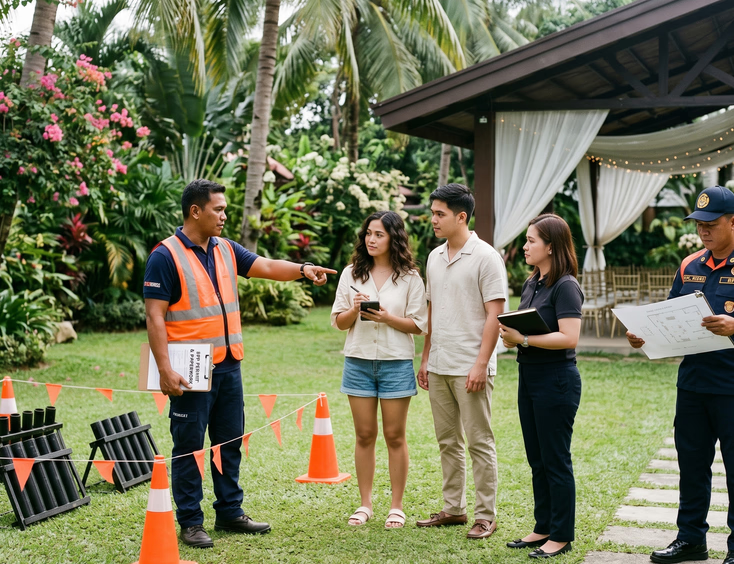
Your supplier runs the permit process. You do not file anything at city hall yourself. A licensed pyrotechnic company handles the BFP coordination, the barangay notification, and the on-site fire safety inspection.
The supplier needs four things from you: the venue name and complete address, the event date and time, your coordinator's contact details, and a signed contract with the down payment. Your job is to confirm the permit exists. Hold the supplier to this timeline:
- 15 to 30 days before the wedding, the supplier files the BFP permit application. Beach venues and protected areas need a longer lead, so confirm the filing date in writing.
- One week before, ask for the permit number. A real application has one by now.
- The day before, ask for a copy of the BFP clearance. A supplier who cannot produce it has not filed.
The step-by-step permit process and what your supplier should handle protects you from a no-show display or a last-minute cancellation by the venue.
Permit fees range from ₱2,000 to ₱8,000 depending on the LGU and the size of the display. Reputable suppliers fold this into the package quote. Cheaper suppliers exclude it and add it later.
Venue Restrictions to Check Before You Book
Some venues advertise pyrotechnics as a feature. Others allow them with conditions, and a surprising number ban them. That last group is bigger than couples expect.
- Metro Manila hotels. Most ban aerial fireworks and approve cold sparklers and contained ground effects with prior sign-off. The big-name chains each keep their own rulebook, and the function manager, not the wedding coordinator, gives the final yes.
- Beach venues. Boracay, Palawan, and Cebu allow displays in designated zones, with limits during turtle-nesting season and red-tide alerts. The DENR works with LGUs to set those windows.
- Garden and farm venues. Sites in Tagaytay, Antipolo, and Silang clear most full displays. Dry-season fire risk can trigger a temporary ban, and the BFP issues advisories the venue manager has to follow.
- Ridge venues. On the Tagaytay ridge, wind is the real concern. Operators refuse to fire aerial shells once sustained wind passes 25 kph, because no one can predict where the debris lands. Put a wind-contingency clause in your contract.
- Heritage and church grounds. These ban pyrotechnics inside the grounds. A separate reception venue sets its own rules.
The list of venues with fireworks bans and the workarounds for restricted areas is the first call to make before you put down a venue deposit.

What a Wedding Fireworks Display Costs
Pricing in the Philippines runs from ₱25,000 to ₱500,000 and beyond. Four things set the price: shell count, duration, choreography, and travel.
| Package | Price range | What it includes | Who books it |
|---|---|---|---|
| Ground entrance | ₱25,000 to ₱40,000 | 6 to 10 gerbs and fountains, a 15 to 20-second sequence, pack-up right after the entrance | Couples who want one spark moment |
| Standard aerial finale | ₱80,000 to ₱150,000 | 150 to 300 shells, a 90-second to 2-minute display, one operator on site | Most provincial weddings |
| Choreographed show | ₱200,000 and up | Shells timed to the beat, a wider effect mix, a larger crew | Couples who want a programmed show |
| Destination add-on | 30% to 50% on top | Shipped materials, crew lodging, extra permit coordination | Boracay, Coron, and Siargao weddings |
The destination row carries the biggest jump, because your supplier ships materials, books the crew's rooms, and handles a remote LGU's permits. The full cost breakdown of what each price tier delivers helps you set a budget before you start calling suppliers.
When the Budget Does Not Stretch
Fireworks land at the bottom of most wedding priority lists for a reason. They last two minutes and cost as much as a year of utilities. Couples who want the moment without the price tag have working alternatives.
Sparkler exits cost ₱500 to ₱2,000 for the whole wedding party. Guests line the doorway, light up, and you walk through the tunnel of sparks. The photo carries the weight of a finale at one percent of the cost.
LED light shows rent for ₱15,000 to ₱40,000. Suppliers set up programmable LED bars or pixel-mapped backdrops that pulse to the music, the effect runs indoors, and it leaves no smoke and needs no permit.
Drone light shows start at ₱150,000 for a 50-drone display, which puts them beside mid-tier fireworks. Drones spell your names, draw shapes, and run for 5 to 8 minutes. Wind and rain ground them, and the operator needs CAAP clearance.
Cold sparkler fountains on their own, with no aerial shells, run ₱8,000 to ₱20,000 for the reception. Couples fire them for the entrance, the first dance, and the cake cutting, and skip the outdoor display.
Confetti and streamer cannons run ₱3,000 to ₱10,000 and close the night with no fire, smoke, or permit. The alternatives that match the impact of fireworks at lower cost suit hotel weddings, indoor receptions, and tight budgets.
What to Ask Suppliers Before You Book
The suppliers worth hiring answer these questions without pausing. The ones to skip improvise or change the subject.
Ask for the PNP-FED license number and BFP accreditation. Ask how many weddings they fire each year, and request video from the last three. Get the on-site operator's name. Then ask what happens to your money if wind, rain, or a curfew kills the display.
Ask about insurance. Reputable suppliers carry public liability coverage between ₱1 million and ₱5 million, and a reputable company hands you the certificate on request.
Ask about debris cleanup. Aerial shells leave fallout. Beach, garden, and rooftop venues each handle that fallout on their own terms, so spell out in the contract who sweeps and who pays for any damage.
Browse the directory of licensed wedding fireworks suppliers across the Philippines and shortlist three. Compare the quotes side by side, and weigh shell count and permit inclusions, not the total price alone.
Cheap quotes tend to skip the license, the insurance, or the right operator. Pay for the company that arrives with permits in hand, fires on cue, and clears the site before the catering crew finishes packing.
You stop thinking about any of this the moment you sign the contract. That is the point. You walk out for the last dance, the music swells, the sky opens, and ninety seconds later your wedding ends on the image your guests carry home.
Still Searching for a Right Match?
Find Your Perfect Wedding Supplier Today!
Discover trusted wedding suppliers across the Philippines in our complete directory. Compare services and connect with the ones that fit your dream celebration.
Browse Wedding SuppliersFeatured Blog Posts


Filipino Wedding Entourage - Roles, Order of March, and Modern Etiquette
6 mins readCivil Weddings in the Philippines - Requirements, Costs, and Step-by-Step Process
9 mins readCivil Wedding Requirements in the Philippines - Complete Checklist
6 mins readCost of Wedding in the Philippines - 5 Essential Things You Need to Know
7 mins readPrincipal Sponsors (Ninong/Ninang) - How Many, How to Ask, What They Really Do
4 mins readVeil, Cord, Candle & Coins - Roles, Options, and When They Happen
4 mins readEntourage for a Traditional Pinoy Wedding - Complete Roles and Guide
6 mins readComplete List of Civil Wedding Requirements in the Philippines
8 mins readHow to Choose Wedding Ninongs and Ninangs - Ask Yourself These 3 Important Questions
5 mins read