


Is It Legal to Have Fireworks at Your Wedding in the Philippines? What Couples Need to Know

Yes, wedding fireworks are legal in the Philippines. The longer answer: legality rests on three things, the supplier holding the right licenses, the venue clearing the local pyrotechnic rules, and the LGU permitting the specific event. Line all three up and your display is fully compliant. Miss one and the BFP cancels the permit a week before the wedding.
You worry about getting in trouble for booking fireworks. You almost never carry the legal liability. The supplier does. Your one job is to verify the supplier holds the right paperwork before you sign, which keeps you clear of a display that gets shut down or fires without legal cover.
The Philippine framework around fireworks took shape over two decades of incremental regulation. Learn what the law says and you clear the confusion and know what to check with the supplier before the deposit changes hands. The complete guide to wedding fireworks in the Philippines covers the types, timing, and cost. This piece handles the legal side.
Republic Act 7183: The Foundational Law
Republic Act 7183, enacted in 1992, regulates the sale, manufacture, distribution, and use of firecrackers and pyrotechnic devices in the Philippines. The law splits them into two categories: consumer firecrackers sold for private use, and professional pyrotechnic displays run by licensed companies.
Consumer firecrackers cover the paputok families buy for New Year's Eve. The law caps the explosive content per piece, restricts types like the Goodbye Philippines and the Super Lolo, and bans the manufacture of unlicensed variants. The DOH publishes injury statistics every January, and lawmakers tighten the rules based on the previous year's count.
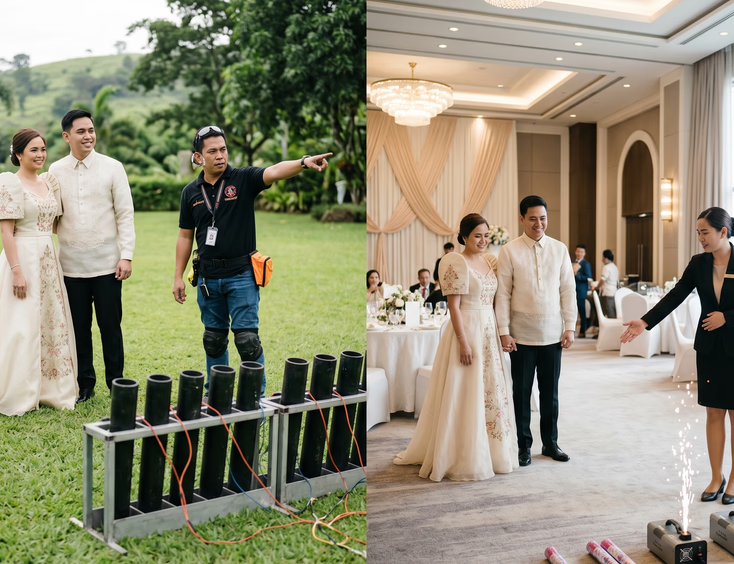
Professional pyrotechnic displays cover wedding fireworks, concert shows, town fiesta finales, and corporate events. The law requires the operating company to hold a license from the PNP Firearms and Explosives Division, and each event requires coordination with the Bureau of Fire Protection. Your wedding supplier works under this professional category.
The law does not ban wedding fireworks. It sets who can run them and how. Book a licensed supplier and you sit inside the legal framework. Book an unlicensed operator or light your own shells and you cross into illegal territory, whatever the occasion.
The Three Licenses Your Supplier Must Hold
A legitimate Filipino wedding fireworks supplier carries three pieces of paperwork. Ask to see all three before you pay the deposit.
- The PNP-FED license. The Firearms and Explosives Division of the Philippine National Police issues operating licenses to companies handling pyrotechnic materials. The number shows up on the company's official documents, business permits, and contracts. Without it, a supplier cannot legally store, transport, or fire shells.
- The BFP permit for the specific event. The Bureau of Fire Protection issues a per-event permit covering the date, time, venue, and approved pyrotechnic types for your wedding. The supplier files it 15 to 30 days out with the BFP office handling the venue's location. Without it, the display cannot legally fire.
- The mayor's permit and barangay clearance. Some LGUs require these on top of the BFP permit, especially cities with stricter policies. The supplier handles the coordination inside the standard package.
Reputable suppliers produce all three on request. They keep digital copies of recent BFP permits in their portfolio and list the operator license number on the website or business card. A supplier who refuses to share the paperwork, calls it confidential, or stalls is working without the licenses or on expired ones. Either way, your display sits 48 hours from cancellation.
The step-by-step permit process and what your supplier should handle covers the full paperwork flow and the checks you can run yourself.
What LGU-Level Rules Add on Top
Local government units stack their own rules on the national framework. The rules vary by region and shift year to year, so a display that is legal at one venue can be illegal at another an hour away.
| Region | What they allow | The catch |
|---|---|---|
| Metro Manila cities | Cold sparklers, mostly | Aerial banned in most cities, citing air quality and noise |
| Provincial Luzon | Most displays, standard BFP coordination | Barangay complaints near homes can pull a permit |
| Visayas and Mindanao | Varies by city | Cebu restricts some districts; Davao runs strict ordinances |
| Boracay, Palawan, Siargao | Zoned and seasonal | DENR clearance on top of the BFP permit |
Metro Manila cities run the strictest rules. Manila, Quezon City, Makati, Pasay, and Pasig have all imposed bans or restrictions, citing air quality, public safety, and noise, and most ban aerial fireworks inside city limits. Cold sparklers usually clear, because fire code classifies them separately.
Provincial Luzon venues permit most displays with standard BFP coordination. Cavite, Batangas, Laguna, Pampanga, Bulacan, and Rizal clear weddings without much LGU friction, except near residential zones, where a barangay complaint can revoke a permit days out.
Visayas and Mindanao rules run by city and province. Cebu City restricts pyrotechnics in certain districts. Davao City has long held one of the strictest ordinances in the country, though enforcement has eased for licensed professional displays at private events. Bohol, Iloilo, and Bacolod permit displays at standard venues.
Boracay, Palawan, and Siargao restrict pyrotechnics by zone and season. Environmental rules, especially during turtle-nesting periods and red-tide alerts, override the standard permit, so suppliers coordinate with the DENR and the LGU to confirm the firing windows and add ecological clearance to the BFP permit.
The patchwork means the same supplier fires a full aerial display in Tagaytay one weekend and only cold sparklers in Makati the next. The supplier knows the rules for each LGU they work in. Your job is to confirm they have fired at your specific venue type, not just somewhere in the same region.
Why Couples Almost Never Face Legal Liability
The liability for an illegal or improperly permitted display lands on the supplier, not you. Republic Act 7183 and the BFP regulations name the licensed operating company as the responsible party for compliance, safety, and permits.
The penalties follow the operator:
- A supplier fires without a BFP permit: the BFP penalizes the supplier.
- An unlicensed operator runs a display: the PNP-FED blocks future license applications and pursues criminal charges against the company principals.
- A display injures someone or damages property: the supplier's public liability insurance covers it, and your written contract with a licensed company shields you from direct liability.
The exception is couples who hire unlicensed operators or light their own shells. Buy paputok from a roadside stall, set it off at the reception, and you become the direct operator, carrying full responsibility for any violation or injury. Modern Filipino weddings rarely go this route, since every directory and coordinator steers couples toward licensed operators, but the risk is worth naming.
Tip: Make the contract your paper trail. A written agreement with a licensed supplier, listing the operator license number, the BFP filing timeline, and a public-liability insurance clause, documents that you hired a compliant operator and acted in good faith. Even if someone questions the permit later, that contract proves you did your due diligence.
Insurance: The Coverage Couples Should Verify
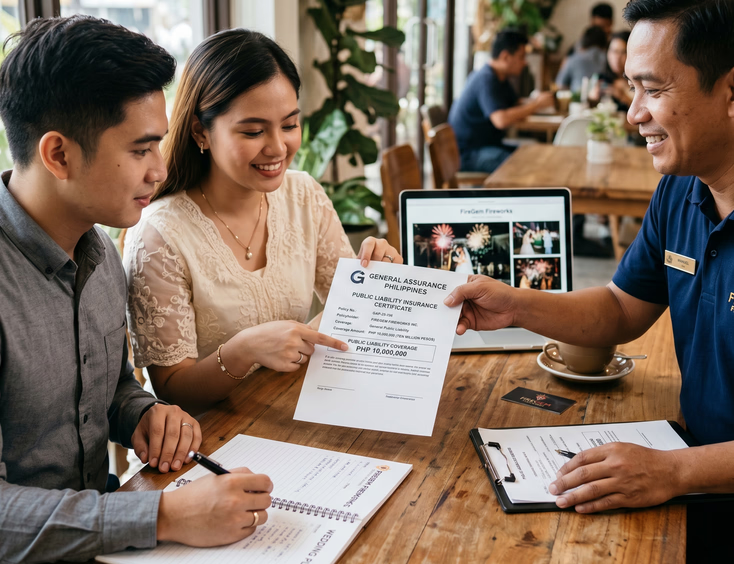
Public liability insurance is the financial backstop in a worst-case scenario. Reputable Filipino suppliers carry ₱1 million to ₱5 million per event, covering guest injury, venue damage, and third-party damage to neighboring property.
Ask for the certificate of insurance during booking. It names the supplier as the insured party, lists the coverage amount, and confirms the policy is active. Some suppliers will name your venue as an additional insured for a small fee, which adds direct coverage for venue-specific claims and earns its premium at high-value venues like hotels and beach resorts.
Insurance does not replace the licenses. A supplier with insurance but no BFP permit is still firing illegally. A supplier with a permit but no insurance fires legally but uninsured, which leaves the supplier personally liable after a major incident and exposes you to secondary claims.
Both need to be in place. A supplier who carries both treats wedding fireworks as a serious professional service. A supplier who carries one or neither is working below the industry standard.
Venue-Specific Legal Considerations
A venue's own contract terms can override the LGU rules and the BFP permit. Some venues add restrictions the national and local laws never required.
- Hotel ballrooms in Metro Manila ban aerial fireworks whatever the LGU allows, because the venue's internal fire-safety policy outranks the local ordinance. The hotel points to the fire suppression system, the guest rooms overhead, and the structural risk. Cold sparklers and confetti cannons usually clear.
- Beach resorts in Boracay, Palawan, and Cebu clear displays only when the resort approves the firing zone. Some charge extra for beach frontage, debris cleanup, and DENR coordination.
- Heritage venues like old churches, ancestral homes, and historical estates ban pyrotechnics outright. The risk to centuries-old buildings outweighs any wedding plan, and the National Commission for Culture and the Arts works with owners to enforce it.
- Government venues like Intramuros, Rizal Park, and some provincial capitol grounds restrict pyrotechnics for public safety and cultural reasons. Their permit process runs through extra national agencies on top of the BFP coordination.
Check the venue contract for the pyrotechnic clause before you book the supplier. It usually sits under prohibited activities or special event provisions. The restrictions and bans that decide which venues clear pyrotechnics cover the rules by venue category and the workarounds couples use when a venue limits the standard display.
What Happens If the Permit Is Denied
Permits get denied, usually for one of four reasons:
- A recent LGU ban the supplier did not see coming.
- A failed venue safety inspection.
- Wind or weather that trips an automatic cancellation.
- A late filing by the supplier.
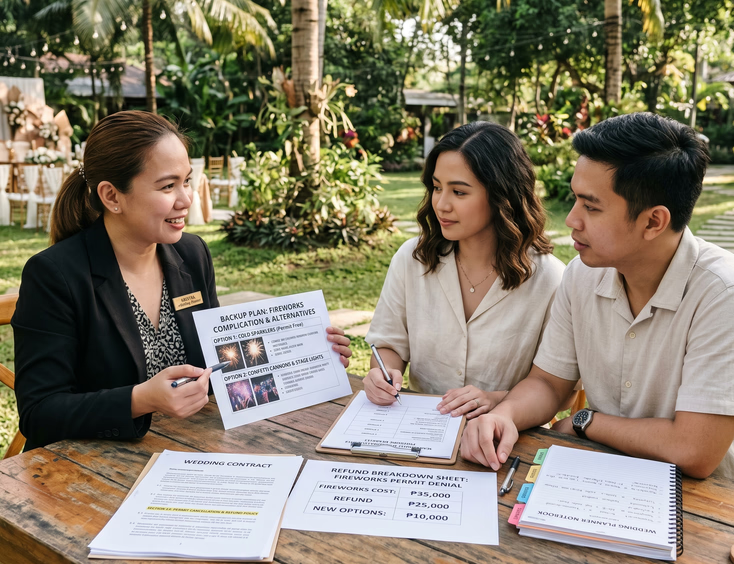
A denied permit cancels the display. The supplier refunds per the contract, usually 80 to 100 percent of the down payment minus the documentation fees already paid to the BFP. Pay the full balance and you get the full refund on the pyrotechnic portion, while the supplier keeps payment for work already done, like the site inspection and the choreography programming.
The contract should spell out the refund terms before you sign. Reputable suppliers write a clear cancellation clause covering permit denial, weather, and force majeure. A supplier who leaves these out of the contract is setting up a dispute you lose by default.
A backup plan helps. Couples booking in stricter LGUs pair the fireworks deposit with a secondary booking for confetti cannons or cold sparklers, which need no permit and can stand in if the BFP says no. The backup adds ₱5,000 to ₱10,000, and the night closes on a strong visual whatever the permit decision. The budget-friendly alternatives Filipino couples book in place of a full aerial display double as that permit-proof fallback.
The Verification Checklist Before Signing
Run this before you sign the contract:
- Confirm the PNP-FED license number and match it to the company name on the contract.
- Ask for a sample BFP permit from a recent event, with the supplier listed as the licensed operator.
- Request the certificate of insurance and check the coverage amount and expiry date.
- Confirm the supplier has fired at your venue or a comparable one in the same LGU.
- Read the contract for the cancellation clause, refund terms, and weather contingency.
- Confirm the supplier files the BFP permit and handles LGU coordination with no extra fee.
- Get the on-site operator's name and credentials.
Browse the directory of licensed wedding fireworks suppliers in the Philippines and shortlist three who clear the checklist. The suppliers who answer the licensing and permit questions in detail are the ones whose displays fire legally and safely on the night.
Your wedding fireworks are legal when the supplier is legal, the venue is cleared, and the LGU permits the event. The framework is straightforward, the paperwork is the supplier's job, and your role is confirming the supplier you hired works inside the law. Spend the extra 30 minutes on verification before signing, and the legal side of the fireworks drops off your wedding-day worry list.
Still Searching for a Right Match?
Find Your Perfect Wedding Supplier Today!
Discover trusted wedding suppliers across the Philippines in our complete directory. Compare services and connect with the ones that fit your dream celebration.
Browse Wedding SuppliersFeatured Blog Posts



Filipino Wedding Entourage - Roles, Order of March, and Modern Etiquette
6 mins readCivil Weddings in the Philippines - Requirements, Costs, and Step-by-Step Process
9 mins readCivil Wedding Requirements in the Philippines - Complete Checklist
6 mins readCost of Wedding in the Philippines - 5 Essential Things You Need to Know
7 mins readPrincipal Sponsors (Ninong/Ninang) - How Many, How to Ask, What They Really Do
4 mins readVeil, Cord, Candle & Coins - Roles, Options, and When They Happen
4 mins readEntourage for a Traditional Pinoy Wedding - Complete Roles and Guide
6 mins readComplete List of Civil Wedding Requirements in the Philippines
8 mins readHow to Choose Wedding Ninongs and Ninangs - Ask Yourself These 3 Important Questions
5 mins read