


Fireworks Bans and Restricted Areas: Can You Have Wedding Fireworks in Your Chosen Venue?
Ask one question before you book the venue, sign the supplier contract, or announce the date in the family group chat: does this venue allow the fireworks you want?
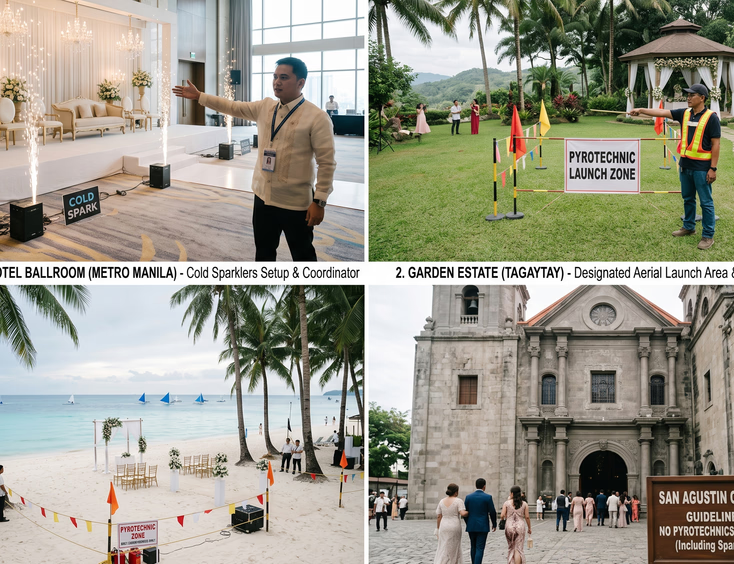
Skip that question and you land in one of two spots. You fall for a Makati hotel ballroom, sign the contract, and learn six months later that the venue bans every pyrotechnic except cold sparklers. Or you book a Tagaytay garden estate sure your supplier can fire a full aerial display, and the venue manager flags an internal restriction the brochure never mentioned.
Both spots end the same way. You accept a downgraded display, switch venues at real cost, or drop the fireworks from the program. None of it is necessary. A 15-minute conversation with the venue coordinator at booking heads off all three.
The venue category and the local rules together set what you can legally fire on the night. The complete guide to wedding fireworks in the Philippines covers the types, timing, permits, and cost. This piece handles the venue, and the patterns run by category:
| Venue type | Aerial | Ground effects | Cold sparklers | Permit lead time |
|---|---|---|---|---|
| Metro Manila hotels | Banned | Low-temp only | Yes | Standard |
| Tagaytay gardens | Wind permitting | Yes | Yes | 15 to 30 days |
| Beach (Boracay, Cebu, Siargao) | Zoned and seasonal | Yes | Yes | 30 to 45 days |
| Provincial gardens and farms | Yes | Yes | Yes | 15 to 30 days |
| Heritage and government | Banned | Rare | Sometimes | Case by case |
The sections below break down each category.
Metro Manila Hotels: The Strictest Category
Hotels in Makati, BGC, Ortigas, Pasay, and Quezon City ban aerial fireworks across the board. The building's fire suppression system cannot risk the trigger. Guest rooms fill the upper floors, and the noise pulls complaints from other paying customers. Pyrotechnic debris near the exterior carries a structural risk the venue will not take on for one wedding.
The same properties that ban aerial shells clear indoor pyrotechnics inside tight specs. Cold sparklers run within the standard package without extra clearance, because fire code treats them separately. Low-temperature ground fountains with minimal smoke sometimes pass the internal review. Confetti cannons and CO2 streamers work in any ballroom without restriction.
The five-star properties enforce the rules harder than the mid-range hotels. The Peninsula, Shangri-La, Fairmont, Conrad, Raffles, and Mandarin Oriental run internal pyrotechnic policies the wedding coordinator cannot override without executive sign-off. Marriott, Sofitel, and Discovery properties apply similar limits. Smaller boutique hotels and reception-only venues show more flexibility, though you still confirm the answer with the function manager, not the wedding coordinator.
Hotel rooftops add restrictions. The rigging load capacity, the neighboring buildings, and the airspace rules near the city center mean even a cold sparkler setup needs extra coordination. Book a rooftop and the pyrotechnic conversation runs longer than a standard ballroom booking.
Tagaytay Garden Venues: The Wind Variable
Tagaytay garden estates clear aerial fireworks more often than any other venue category in Luzon. The elevation, the open lawns, and the distance from homes make a display the default option rather than a special request. Hillcreek Gardens, Casa Rafael, Alta d'Tagaytay, and most major Tagaytay estates approve aerial finales with standard BFP coordination.
Wind is the variable that complicates the schedule. Tagaytay sits at 700 meters, and that elevation throws stronger, less predictable gusts than the coast. Sustained wind above 25 kph grounds aerial fireworks, because the debris drift spreads past the venue's safety buffer.
The wind follows the season:
- December to February: the amihan brings the strongest winds, sometimes holding at 20 to 35 kph through whole evenings.
- March to May: lighter, steadier air makes the dry season the most reliable window for outdoor fireworks.
- June to November: the habagat brings intermittent gusts through the rainy months.
Tagaytay contracts often carry a wind contingency clause. The supplier watches the radar 24 hours out and confirms or postpones 30 minutes before firing time. Book in the rainy season and you carry a 10 to 15 percent chance of a weather delay, with the supplier refunding or rescheduling under the contract.
Tip: Book a March-to-May date if the aerial finale is non-negotiable. The amihan months can ground a display on the night even with a signed permit, and a refund does not put the fireworks back in your sky. The dry season trades a little heat at the cocktail hour for the steadiest air of the year.
Venues with rooftop or balcony pavilions add pyrotechnic restrictions, because the elevated launch zone changes the safety geometry. Suppliers downgrade an aerial package to ground effects when the only launch point sits on a raised platform. The wind and the season both feed into the best time of night to schedule your wedding fireworks display, which weighs sunset, darkness, and curfew alongside the weather.
Beach Venues: The Environmental Layer
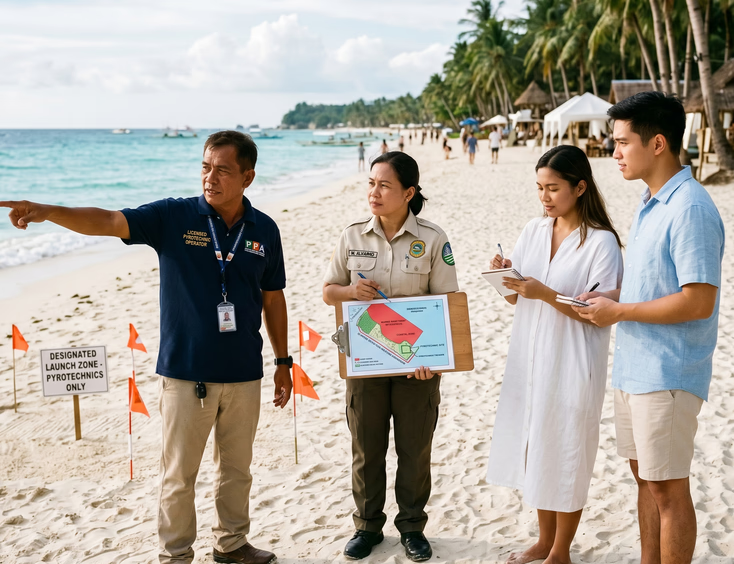
Boracay, Palawan, Cebu, and Siargao venues approve displays in designated zones, with rules that run past the standard BFP framework. Environmental concerns stack on the fire-safety ones, and the DENR works with the local LGU to enforce the extra layer.
- Boracay splits the island into approved and restricted zones. White Beach Station 1 and Station 2 venues clear displays in designated windows. Turtle-nesting season restricts the firing zones near nesting beaches. A red-tide alert can cancel a display on short notice once the LGU activates the protocol.
- Palawan restricts pyrotechnics across most of El Nido and Coron, protecting the limestone karst and the marine reserves. Venues outside the protected zones, mostly the larger Puerto Princesa resorts and the mainland coast, clear standard displays with the usual BFP coordination.
- Cebu venues in Mactan, Bantayan, and Camotes clear aerial displays with standard permits. The northern coast faces Palawan-style seasonal limits, though the rules bite less hard.
- Siargao approves pyrotechnics in designated tourist zones, with environmental clearance for displays near surf breaks and marine sanctuaries. The smaller venues in Cloud 9 and General Luna clear displays through the February-to-May dry season.
The beach conversation runs longer than the garden one. The supplier coordinates with the resort, the LGU, the DENR, and the BFP, and the full clearance stretches to 30 to 45 days. Plan a destination wedding and you build that longer lead time into the supplier engagement.
Provincial Garden and Farm Venues: The Default Approval
Garden and farm venues in Cavite, Batangas, Laguna, Pampanga, Bulacan, and Rizal clear the standard display without much friction. The rural setting limits noise complaints, the open lots meet the safety buffer, and the local BFP offices process standard applications inside the normal 15-to-30-day window.
The venue's own internal policy is the variable, not the LGU rules. Some farm venues hold restrictions to protect livestock, farm structures, or standing vegetation, and the contract spells them out. Most properties clear aerial displays with standard BFP coordination, ground pyrotechnics for the entrance, and cold sparklers across the program.
Dry-season fire alerts are the exception. The BFP posts seasonal fire-risk advisories from March to May, and venues with heavy dry brush or wooden structures may suspend clearances through the high-risk weeks. The supplier confirms the seasonal status during the site inspection, and the contract usually covers the scenario.
Farm venues in Bulacan, Pampanga, and Tarlac carry the loosest curfews, because the rural setting limits complaints. Some clear displays past 11 PM, which buys an extra hour of program over a Tagaytay or Cavite garden.
Heritage and Government Venues: The Outright Ban
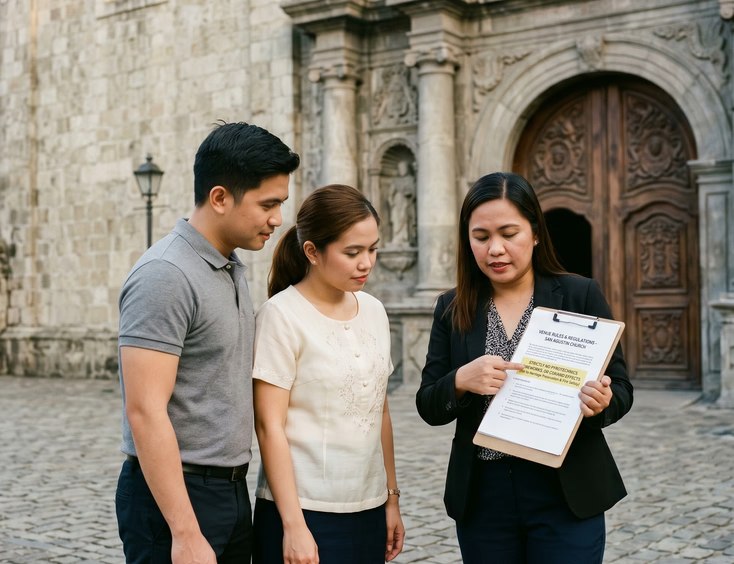
A few venue categories ban pyrotechnics outright, with no workaround whatever the supplier or permit. Plan a wedding at one of these and you drop fireworks from the program at booking rather than holding out for an exception.
- Historical churches and heritage chapels ban pyrotechnics inside the grounds and the area right around them. The risk to centuries-old buildings, the heritage protections the National Commission for Culture and the Arts enforces, and the religious considerations all hold the line. A separate reception venue may still clear a display, but the ceremony site stays off-limits.
- Intramuros and other declared heritage zones restrict pyrotechnics across the whole district. Book a ceremony in Intramuros, Vigan, or a similar area and you plan the reception somewhere else if fireworks matter to the vision.
- Government-owned venues like Rizal Park, certain provincial capitol grounds, and the MOA Bay Area outdoor spaces run varying rules. Some clear pyrotechnics with extra government clearance on top of the BFP coordination. Others ban them for security or maintenance reasons. The venue's events office sorts out the case-by-case answer.
- Indoor convention centers like the SMX, the World Trade Center Manila, and the PICC clear cold sparklers and confetti cannons and ban every aerial and most ground effects. The fire-safety bar for the building category sits above the standard hotel ballroom.
The Workaround for Restricted Venues
A restricted venue still gives you a strong visual close. Couples on venues that ban traditional pyrotechnics build the closing moment from the permitted effects instead.
Cold sparkler tunnels along the aisle or the grand exit run ₱8,000 to ₱20,000 for the full package, work in any ballroom, and hold a 45-to-90-second moment that photographs clean. Couples on five-star Metro Manila hotels default to this.
Confetti cannons and streamers deliver the fireworks-style hit without fire, smoke, or a permit. A pair fired at the first kiss or the grand exit fills the air with a 5-meter cloud of color for 8 to 15 seconds, costs ₱3,000 to ₱10,000, and works in any venue.
LED light shows, drone displays, and confetti walls all stand in for traditional fireworks where the venue cannot host pyrotechnics. The budget-friendly alternatives Filipino couples book when the venue restricts the standard display cover each option with the use cases that suit it.
The substitute moments hold their own weight. A grand exit through a cold sparkler tunnel reads as well on camera as an aerial finale at a beach wedding. Your call rests on the venue, the budget, and the one visual moment that matters most. A restricted venue forces you to rank those priorities, and ranking them often gives you a tighter, more focused program than a default fireworks finale would have.

The Verification Conversation With the Venue
Three questions cover the whole venue-restriction conversation. Ask all three at booking, before you sign:
- Does the venue allow aerial fireworks? A yes opens the full sky finale. A no closes it and moves you to ground effects and cold sparklers.
- Which ground pyrotechnics does the venue clear? Gerbs, mines, fountains, and waterfalls each carry different specs. The venue may approve some and restrict others on ceiling height, guest proximity, or the fire-safety system.
- Has the venue worked with licensed pyrotechnic suppliers before? A venue that has run displays knows the BFP coordination and its own in-house requirements. A venue that has not may add surprise restrictions or a longer approval timeline during booking.
The venue answers all three in 10 to 15 minutes during the first booking conversation, and those answers shape the whole fireworks side of your planning. Whether the venue itself clears the display is one question; whether the law clears it is another, and the legal side of wedding fireworks in the Philippines covers the licensing and LGU rules sitting underneath the venue's answer. Once the venue clearance holds, the step-by-step permit process and what your supplier should handle covers the supplier-side workflow.
The Final Venue Check Before Signing
Walk into the venue booking with a clear pyrotechnic vision: aerial finale, ground entrance, cold sparkler exit, or the full combination. Ask the coordinator to confirm each element in writing as a contract addendum. The written confirmation protects you from a later policy change or staff turnover.
If the venue restricts the element you wanted most, decide then: accept the substitute, downgrade the package, or look at another venue. Couples who commit to a venue that bans their core vision tend to regret the trade on the night.
Browse the directory of licensed wedding fireworks suppliers in the Philippines and ask which venues they have worked in your target region. Suppliers keep venue relationships and know which properties handle the coordination without snags. A supplier's track record at your specific venue often beats the coordinator's general answers.
Your venue sets the ceiling for what your fireworks can be. The Cavite garden estate hands you the full range. The BGC ballroom narrows it to cold sparklers and confetti. Both close the night well, and the close looks different in each. Pick the venue with the fireworks in mind, or pick the fireworks around what the venue clears. The order matters less than locking the answer before the contracts get signed.
Still Searching for a Right Match?
Find Your Perfect Wedding Supplier Today!
Discover trusted wedding suppliers across the Philippines in our complete directory. Compare services and connect with the ones that fit your dream celebration.
Browse Wedding SuppliersFeatured Blog Posts


Filipino Wedding Entourage - Roles, Order of March, and Modern Etiquette
6 mins readCivil Weddings in the Philippines - Requirements, Costs, and Step-by-Step Process
9 mins readCivil Wedding Requirements in the Philippines - Complete Checklist
6 mins readCost of Wedding in the Philippines - 5 Essential Things You Need to Know
7 mins readPrincipal Sponsors (Ninong/Ninang) - How Many, How to Ask, What They Really Do
4 mins readVeil, Cord, Candle & Coins - Roles, Options, and When They Happen
4 mins readEntourage for a Traditional Pinoy Wedding - Complete Roles and Guide
6 mins readComplete List of Civil Wedding Requirements in the Philippines
8 mins readHow to Choose Wedding Ninongs and Ninangs - Ask Yourself These 3 Important Questions
5 mins read