


The Best Time of Night to Schedule Your Wedding Fireworks Display
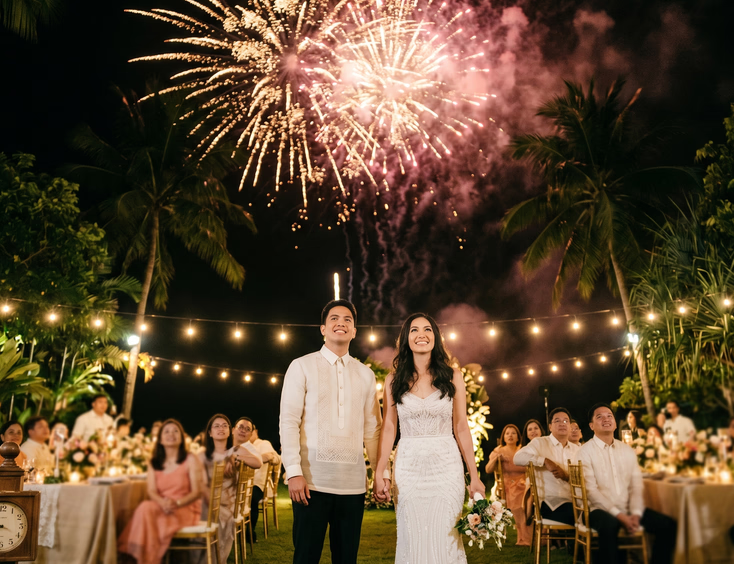
You picked the supplier. You signed the contract. Now your coordinator asks what time to schedule the display, and you realize you have no answer.
Three things decide the right time: when the sky goes fully dark, where the fireworks fall in the program, and what curfew the venue enforces. Line all three up and the display fires on the cleanest moment of the night. Miss one and the colors wash out, the program drags, or the venue cuts the power before the finale.
Most couples default to 9:30 or 10 PM because a friend fired theirs then. That default fits some venues and breaks others. Walk into the supplier conversation with the three variables sorted and you lock the schedule on the first call. The complete guide to wedding fireworks in the Philippines covers the types, permits, and cost. This piece handles the clock.
Sunset and the Real Darkness Window
Fireworks need real darkness to read on camera and in person. The sky has to clear the blue-hour glow that lingers 30 to 40 minutes after sunset, and the colors only pop against a black backdrop.
In the Philippines, sunset lands between 5:30 and 6:30 PM most of the year. December and January pull it to around 5:30. April and May stretch it to 6:30. The exact time shifts week to week, so your supplier checks the sunset for your date when they program the display.
Full darkness arrives 30 to 40 minutes after sunset. A December wedding gets full dark by 6:15 PM. A May wedding waits until 7:10. Fire before full dark and the aerial bursts look pale, your photographer fights to expose for the sky, and your videographer cannot separate the shells from the background.
Use a simpler rule: fire at least 90 minutes after sunset. A 7:30 PM finale works in December. A 9:00 PM finale works year-round. The buffer clears the residual light and hands your photographer the cleanest exposure.
Where Fireworks Fit in the Reception Flow
A Filipino reception follows a standard program: grand entrance, prayer, first dance, dinner, AVPs, toasts, parents' dances, money dance, bouquet and garter, prosperity toss, final song, send-off. The fireworks slot at one of three points.
- After the grand entrance. You walk in, the host announces you, and the ground pyrotechnics fire as you reach the head table. This suits ground gerbs, cold sparklers, and waterfalls. Aerial shells do not fit here: the program just started and the sky may not be dark.
- After the first dance. You finish the dance, the host turns the room toward dinner, and a short burst marks the moment before guests eat. Short ground effects work here. Aerial finales do not, since the night still has hours to run.
- As the grand send-off. Most aerial finales land here. The program closes, you step onto the lawn, the supplier fires the display, and guests leave right after. This is the strongest slot, because the display works as the punctuation mark of the whole night.
Each slot suits a different effect, and the full breakdown of wedding fireworks display types available across the Philippines maps each one to the moment it fits. Most couples book the send-off. The reasons Filipino couples close their reception with fireworks cover why that slot delivers the strongest pull across documentation, guest memory, and program closure.
The Standard Send-Off Time Window
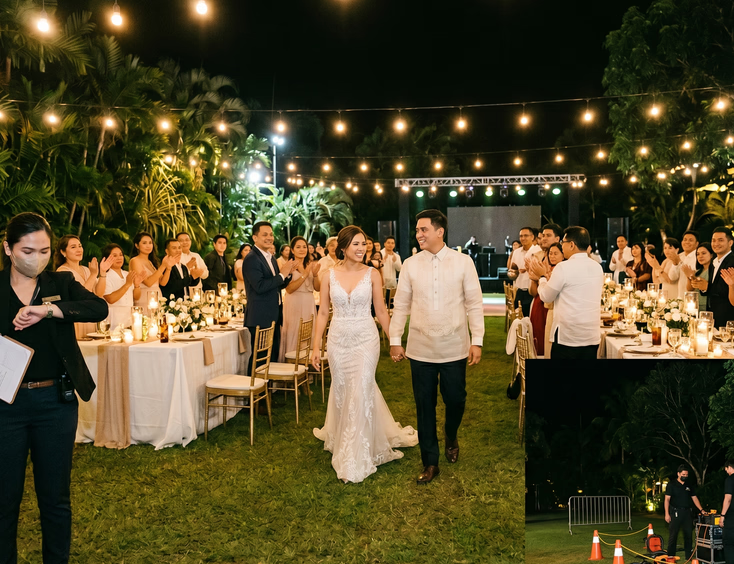
The send-off window in Filipino weddings runs 9:30 PM to 10:30 PM. The exact time hangs on three things: when the reception started, how long the program ran, and what curfew the venue enforces.
| Reception start | Send-off | Reception length | Typical venue |
|---|---|---|---|
| 5:00 PM | 9:30 PM | 4.5 hours | Provincial garden |
| 6:00 PM | 10:00 PM | 4 hours | Tagaytay, Antipolo |
| 7:00 PM | 11:00 PM | 4 hours | Metro Manila hotel |
Provincial gardens start early, because guests reach the venue by 4:30 after the church ceremony and the venue cuts off at 10. Tagaytay and Antipolo weddings take the 6 PM start, since the cooler evening makes the cocktail hour easier and the venue runs to 10:30. Hotels default to the 7 PM start, because guests arrive after rush hour and the contract holds until midnight. Hotels rarely clear aerial fireworks, so the late send-off pairs with cold sparklers or a confetti exit instead.
Your coordinator builds the schedule backward from the firing time. The host calls the final song 15 minutes out, you take the floor for the last dance, the song ends 30 seconds before the supplier triggers the sequence, and the finale closes inside the curfew with margin to spare.
How Venue Curfews Force the Schedule
Every venue enforces a noise cutoff, and that cutoff sets the latest the fireworks can fire.
Tagaytay garden venues cut amplified sound between 10:00 and 10:30 PM most of the year, so aerial shells fire by 10:00 and the reception starts at 5:30 or 6:00. Venues near homes hold tighter cutoffs, because the neighbors file complaints with the LGU.
Boracay beach venues restrict pyrotechnics by zone and by time. White Beach clears displays only in designated windows that shift with the tide and the season, in a band from 8:00 to 10:00 PM, and suppliers confirm the slot with the Malay LGU and the DENR.
Hotel ballrooms in Makati, BGC, Ortigas, and Pasay ban aerial fireworks outright. Indoor effects like cold sparklers and ground gerbs run inside the contract time, with midnight the common cutoff, so the send-off effect fires at 11:00 or 11:30 depending on program length.
Farm and ranch venues in Bulacan, Pampanga, Cavite, and Batangas carry the loosest curfews, because the rural setting limits noise complaints. Some allow displays until 11 PM, which buys an extra hour of program.
The curfew is the hardest constraint you face. Sunset, darkness, and program flow all bend around it. Confirm the cutoff with the venue coordinator before you book the supplier, then build the timeline backward. The restrictions and bans that decide which venues clear pyrotechnics cover the rules by region and venue type.
The Photographer and Videographer Consideration
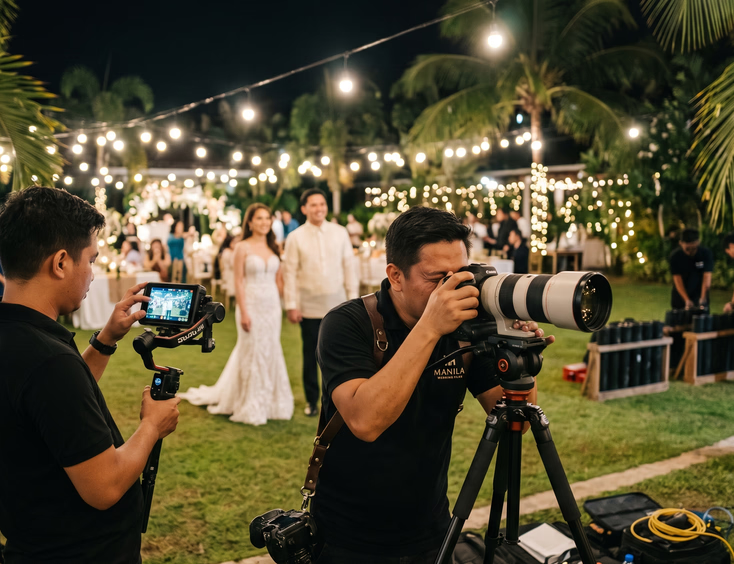
Your photo and video team needs lead time before the display fires. Photographers reposition for the wide shot, videographers reset for the sky exposure, and the lighting crew kills the venue spotlights so the bursts read against a dark backdrop.
Tell your photographer the firing time 15 minutes ahead. The pros know the workflow, but the cue removes the risk that someone is shooting the bar when the first shell hits. Videographers need the same warning to switch lenses, drop the frame rate for slow motion, and lock a stable wide angle.
The supplier coordinates with your team at the on-site rehearsal. Good suppliers ask which angle the photographer plans to shoot from and aim the launch so the bursts open in frame. Cheap suppliers fire from a fixed direction whatever the camera does.
Tip: For the couple-in-silhouette frame, stand between the camera and the launch point with the bursts opening behind you at 30 to 45 degrees above the horizon. Tell both the supplier and the photographer where you'll stand at the morning rehearsal, so the angle the supplier fires lines up with the frame the photographer shoots.
Weather and Wind Contingencies
Plan the schedule around weather that can push the display 30 minutes or scrap it.
Light rain stops few aerial displays, since the shells fire through water without losing color or trajectory. Heavy rain cancels the show, because the crew cannot keep a safe ignition setup. Suppliers watch the radar 24 hours out and make the call two hours before firing time.
Sustained wind above 25 kph grounds aerial fireworks, because the debris drift turns unpredictable and the safety buffer outgrows the venue. Tagaytay ridge venues hit this most, since the elevation throws stronger gusts than Metro Manila or the coast. The supplier rechecks wind 30 minutes out and either confirms or pushes the display 15 to 30 minutes for the gusts to settle.
PAGASA storm signals set the rules. Signal 1 clears the display in most LGUs with extra precautions. Signal 2 cancels aerial shows in most LGUs, because the BFP suspends pyrotechnic permits for the duration, and the supplier refunds or reschedules under the contract.
Build a 15-minute buffer into the run sheet. If the supplier programmed 9:45 PM, the host should know they can stretch the program to 10:00 if the wind delays firing. Coordinators add the slack by extending the song before the send-off rather than cutting it.
The Specific Timing Workflow
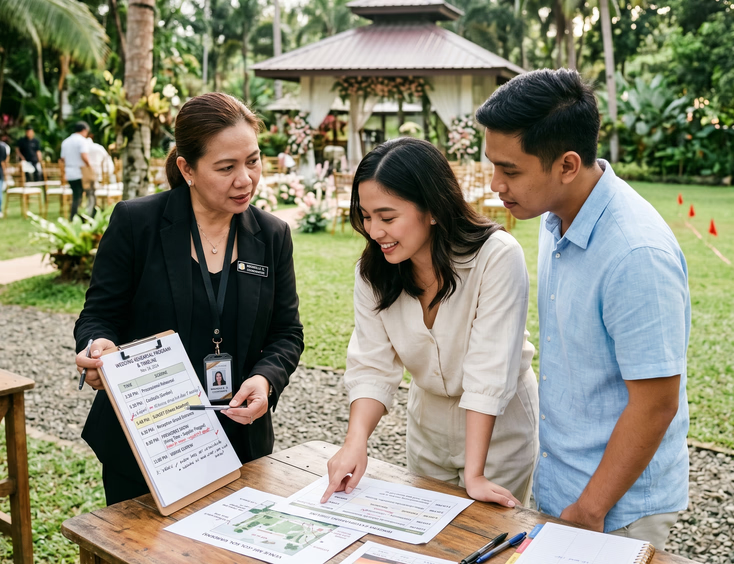
Walk into the planning meeting with this workflow:
- Confirm the sunset time for your wedding date.
- Add 90 minutes for the earliest safe firing time.
- Check the venue curfew for the latest safe firing time.
- Fire inside the window between those two numbers.
Inside that window, pick the moment that suits your program. Most couples drop the display into the last 10 minutes of the reception. The host calls the final song, the song ends, you step onto the lawn, the supplier triggers the sequence, the display runs 90 seconds to 3 minutes, you hug the close family, and the night ends.
The right length for your reception flow shapes how long that final block runs. Build the program backward from the firing time, leave 5 minutes for setup before and 10 for goodbye after, and the timeline holds.
Browse the directory of licensed wedding fireworks suppliers in the Philippines and ask each shortlisted supplier how they coordinate the timing with the venue curfew and your documentation team. The ones who answer in detail run the display on schedule. The ones who improvise fire 20 minutes late and miss the photographer's setup.
Your wedding has one ending. The fireworks fire once, the photographer catches the frame once, and your guests look up once. Schedule the moment right and the rest falls in line. Schedule it wrong and the most expensive 90 seconds of your budget reads as a footnote instead of the closing image.
Still Searching for a Right Match?
Find Your Perfect Wedding Supplier Today!
Discover trusted wedding suppliers across the Philippines in our complete directory. Compare services and connect with the ones that fit your dream celebration.
Browse Wedding SuppliersFeatured Blog Posts

Filipino Wedding Entourage - Roles, Order of March, and Modern Etiquette
6 mins readCivil Weddings in the Philippines - Requirements, Costs, and Step-by-Step Process
9 mins readCivil Wedding Requirements in the Philippines - Complete Checklist
6 mins readCost of Wedding in the Philippines - 5 Essential Things You Need to Know
7 mins readPrincipal Sponsors (Ninong/Ninang) - How Many, How to Ask, What They Really Do
4 mins readVeil, Cord, Candle & Coins - Roles, Options, and When They Happen
4 mins readEntourage for a Traditional Pinoy Wedding - Complete Roles and Guide
6 mins readComplete List of Civil Wedding Requirements in the Philippines
8 mins readHow to Choose Wedding Ninongs and Ninangs - Ask Yourself These 3 Important Questions
5 mins read