


Paputok to Pyrotechnics: How Wedding Fireworks Evolved in Philippine Celebration Culture
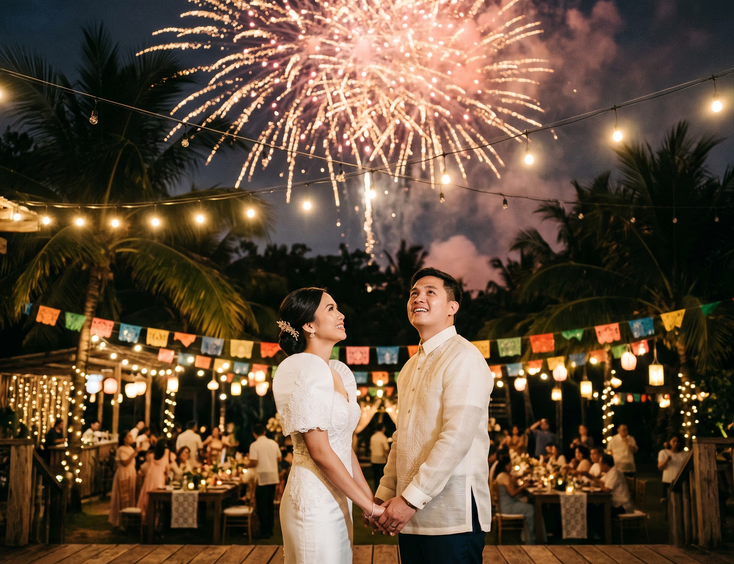
Picture your earliest fireworks memory: a tin can, a Judas Belt, and your tito laughing too hard for someone holding a lighter. The smell hit first. Then the crack, then paper bits raining across the driveway while your lola covered her ears from the kitchen window and yelled at no one in particular.
Filipinos did not arrive at wedding fireworks through Pinterest. The tradition runs through barangays across the country, and Filipinos have lit it at New Year's, at fiestas, and at the barangay basketball finals since the Spanish colonial period. The move from those backyard explosions to a choreographed wedding finale took four centuries, and the through-line held the whole way: fire in the sky means something happened. The complete guide to wedding fireworks in the Philippines covers the types, timing, permits, and cost. This piece traces how the country got here.
Spanish Galleons and the First Filipino Fireworks
Chinese traders brought gunpowder to the islands long before the Spanish arrived. Pre-colonial communities fired bamboo cannons and bronze lantaka during celebrations, and they used the noise the way you'd use it today: to tell the village something worth marking had happened.
Spanish friars formalized the practice. Through the 1700s and 1800s, towns set off imported and locally made pyrotechnics at patron-saint feasts, processions, and town anniversaries. Families in Bocaue, Bulacan, turned their town into the country's pyrotechnics capital and held that title for three centuries. They learned the trade from their grandparents and passed it to their children, building the manufacturing base that later supplied the wedding industry.
By the early 1900s, Filipinos were lighting paputok at private celebrations, not just religious ones. Families set off small-scale fireworks at baptisms, debuts, and weddings. These displays ran without choreography or licensed operators. Safety standards did not exist yet. Filipinos read fire as the marker of an occasion long before anyone regulated it.
New Year's Eve Built the National Habit
Filipinos light more fireworks per capita on December 31 than on any other day of the year. The habit runs deep enough that the Department of Health publishes injury counts each January, and lawmakers use those counts to set the rules you now plan around.
At midnight, generation after generation of Filipinos learned to tie fireworks to a turning point. The old year ends, the new year starts, and you light up the sky to mark the change. Children learned to count down to the blasts. Adults learned to host them. After three generations, fireworks became the default way to say a moment outranks an ordinary day.
A wedding marks the same kind of turn:
- The vows mark the commitment in front of everyone you invited.
- The reception throws a party for it.
- The finale says it in the sound and light Filipinos have used for generations.
The Bocaue Tragedy and the Regulatory Shift
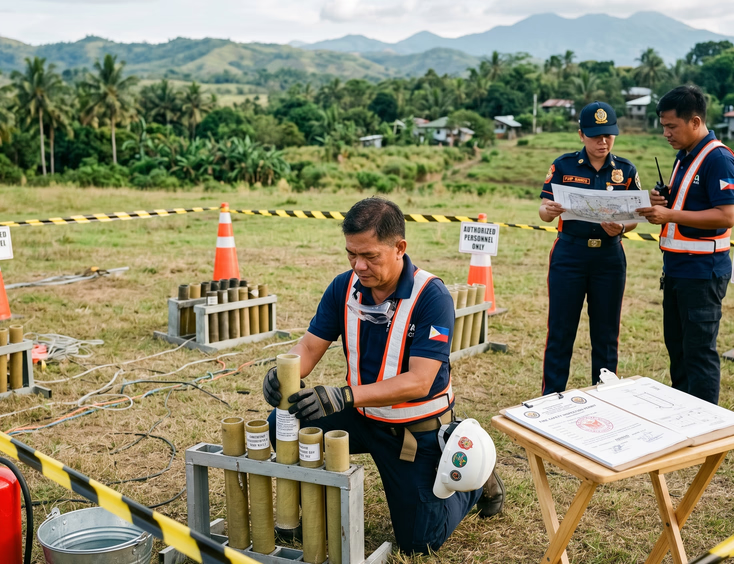
A major fireworks accident at Bocaue pushed pyrotechnics safety into the national conversation. Regulators tightened licensing, restricted manufacturing zones, and pushed the industry to professionalize. Backyard manufacturers upgraded their compliance or closed. Licensed operators with PNP-FED accreditation and BFP coordination became the only legal option for public displays.
That round of regulation produced the wedding fireworks industry you book from today. Before enforcement tightened, couples who wanted fireworks called the local supplier in Bulacan, paid in cash, and lit the shells themselves. The displays cost little, misfired often, and hurt people often enough that no one was shocked when they did.
The new rules changed who shows up at your wedding:
| Before the rules tightened | After | |
|---|---|---|
| Who runs it | The couple or a cash supplier from Bulacan | A licensed PNP-FED operator |
| Permits | None | BFP permit filed 15 to 30 days out |
| Insurance | None | ₱1 million to ₱5 million public liability |
| Crew | The couple and their tito | A trained, on-site crew |
| Cost | Cheap | Higher, with contingency clauses |
Couples paid more, walked away safer, and gave compliant operators a steady new line of business. Two decades of incremental rule-making shaped today's industry, and the legal side of wedding fireworks in the Philippines walks through where the rules stand.
When Weddings Started Booking Real Pyrotechnics
Through the 1990s, Filipino couples closed the reception with a slow dance, a sparkler arch, and a goodbye line at the door. Aerial fireworks at a reception stayed rare and expensive, reserved for wealthy provincial families with land for the safety buffer.
Here is how the finale went mainstream:
- Through the 1990s. Slow dance, sparkler arch, goodbye line. Aerial shells reserved for the few families with the land.
- Mid-2000s. Destination weddings in Boracay, Bohol, and Palawan took off. Beachfront venues cleared the safety requirements hotel ballrooms could not, and the photographers shooting those weddings posted the finales to early wedding blogs.
- By 2010. Garden estates in Tagaytay, Silang, and Alfonso started clearing displays for couples, and suppliers multiplied to meet the demand.
- Within five years. Fireworks turned from a luxury upgrade into a standard line item on mid-range packages.
Couples planning Metro Manila weddings saw the beach images first and started asking suppliers whether the same effect worked on a garden lawn. Tagaytay venues answered first, and the rest of the market followed them.
The Display Categories That Filipino Suppliers Now Offer
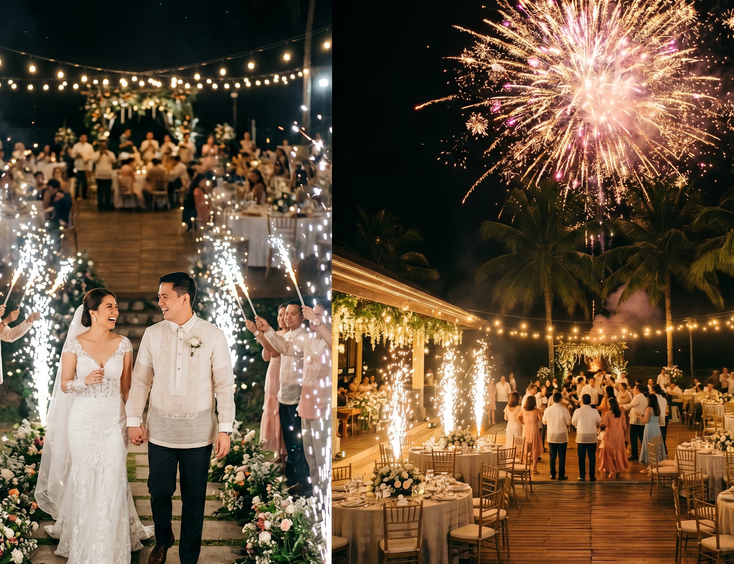
Licensed suppliers now sell a wider catalog than the backyard operators ever did:
- Cold sparklers for indoor receptions
- Ground gerbs for the entrance
- Aerial shells for the outdoor finale
- Waterfall effects for the cake reveal
Couples mix categories to match their venue, budget, and program flow. The full breakdown of wedding fireworks display types available across the Philippines covers each option with the use cases that suit it.
Cold sparklers changed the indoor market the most. Hotels in Makati, BGC, and Ortigas that banned the traditional pyrotechnics approved cold sparklers, because the flame runs cool enough to fall outside the fire code. Couples on a Shangri-La, Fairmont, or Peninsula booking could now close the program with an effect that matched the lawn-wedding finales their barkada kept posting.
Drone light shows arrived in the late 2010s as a parallel category. The hardware came from China and the United States, Filipino suppliers were slow to buy in because of the entry cost, and the first to book drones were destination weddings in Boracay and Cebu. Prices have dropped since, and drone shows now compete with fireworks in the ₱150,000 to ₱400,000 tier.
Why the Cultural Fit Is Stronger Than Couples Notice
Filipino weddings borrow from American, Spanish, Chinese, and indigenous traditions. The white gown is Western, the cord and veil Catholic, the money dance older Filipino. The fireworks at the end reach back further than all three.
Watch the older guests during the finale. They respond harder than anyone younger. Your lolo who left Pangasinan as a young man watched fireworks at the town fiestas of his childhood, and the sound reaches something the slideshow and the speeches can't. Your tita who flew in from Cebu spent her childhood watching paputok at her hometown patronal feast. The finale lands on the same nerve.
Tip: Schedule the finale before your oldest guests head home. The lolas and titos who grew up on fiesta paputok react harder than anyone on the lawn, and an 11 PM display fires to a half-empty venue once they've left. Put the send-off at 9:30 or 10, while the people who feel it most are still in their seats.
You book the fireworks expecting a modern luxury upgrade, then watch your grandparents react harder than anyone else on the lawn. The display looks new. The reaction is centuries old.
What the Trend Looks Like Now
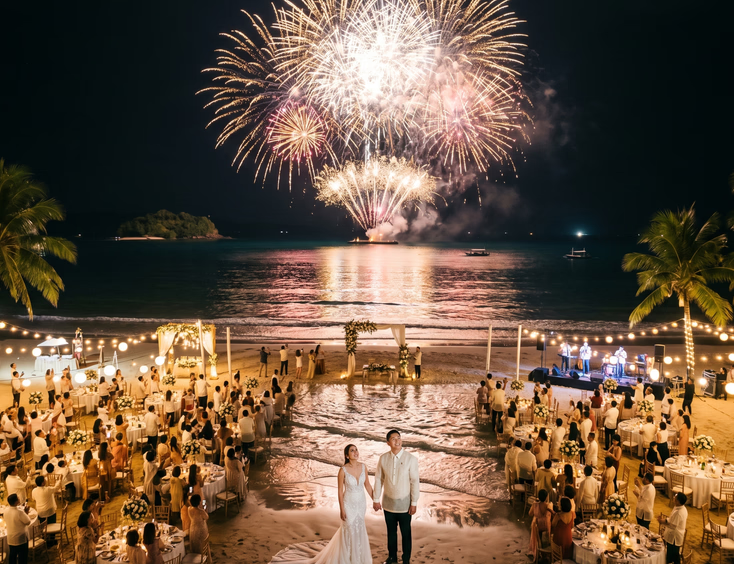
The Philippine wedding industry treats fireworks as a standard category rather than a luxury add-on. A mid-range wedding on a ₱500,000 to ₱1.5 million budget carries a ₱40,000 to ₱100,000 line item for pyrotechnics. Provincial weddings book aerial finales at the highest rates, because the venues clear the safety requirements without negotiation, and hotel weddings default to cold sparklers and ground effects. The same instinct explains why Filipino couples keep choosing fireworks to cap the reception.
Suppliers have professionalized to match. You can browse the directory of licensed wedding fireworks suppliers in the Philippines by region across Luzon, Visayas, and Mindanao. Most established suppliers carry public liability insurance between ₱1 million and ₱5 million, file BFP permits on behalf of couples, and write wind-and-rain contingency clauses into their contracts.
Couples weighing traditional fireworks against modern alternatives compare cost first. The different options Filipino couples book when the budget will not stretch to a full aerial display range from sparkler exits at ₱2,000 to drone light shows at ₱150,000 and beyond.
From Bamboo Cannon to Choreographed Finale
A village in pre-colonial Luzon lit a bamboo cannon to mark a chieftain's wedding. Four hundred years later, a couple in Tagaytay watches a 200-shell aerial finale synced to their first-dance song. The technology, the licensing, and the cost all changed. The instinct underneath them did not: announce the moment with fire so the whole barangay remembers.
You are not starting a new tradition when you book a wedding fireworks display. You are continuing one your ancestors carried through Spanish colonization, American occupation, two world wars, and the boom-and-bust decades in between. The bamboo cannon became the paputok, the paputok became the pyrotechnic shell, and the shell became the finale that ends your reception. You're the latest to light it.
Still Searching for a Right Match?
Find Your Perfect Wedding Supplier Today!
Discover trusted wedding suppliers across the Philippines in our complete directory. Compare services and connect with the ones that fit your dream celebration.
Browse Wedding SuppliersFeatured Blog Posts


Filipino Wedding Entourage - Roles, Order of March, and Modern Etiquette
6 mins readCivil Weddings in the Philippines - Requirements, Costs, and Step-by-Step Process
9 mins readCivil Wedding Requirements in the Philippines - Complete Checklist
6 mins readCost of Wedding in the Philippines - 5 Essential Things You Need to Know
7 mins readPrincipal Sponsors (Ninong/Ninang) - How Many, How to Ask, What They Really Do
4 mins readVeil, Cord, Candle & Coins - Roles, Options, and When They Happen
4 mins readEntourage for a Traditional Pinoy Wedding - Complete Roles and Guide
6 mins readComplete List of Civil Wedding Requirements in the Philippines
8 mins readHow to Choose Wedding Ninongs and Ninangs - Ask Yourself These 3 Important Questions
5 mins read