

Paperless vs. Printed Wedding Invitations: What Filipino Couples Need to Consider
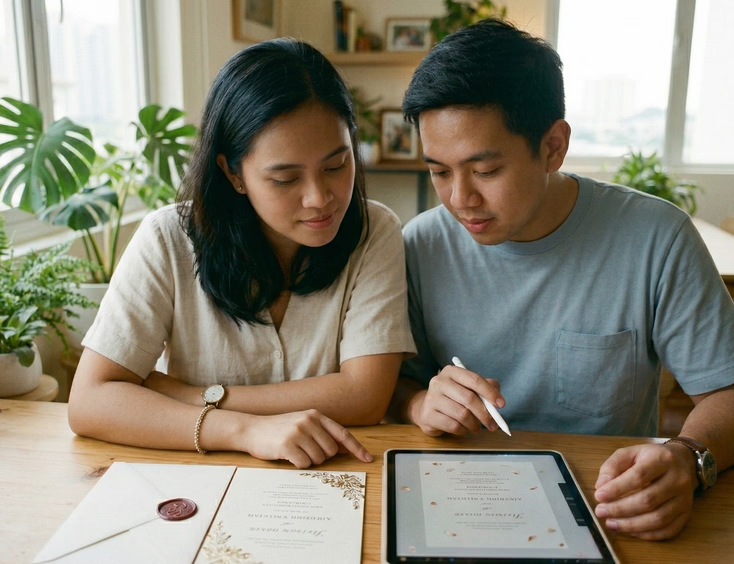
Filipino couples planning their weddings face a decision that feels small but carries more weight than expected. Printed invitations and digital ones each come with tradeoffs. The right choice depends on your guest list, your budget, your timeline, and how much you care about first impressions.
Neither option is universally better. Both have situations where they fail.
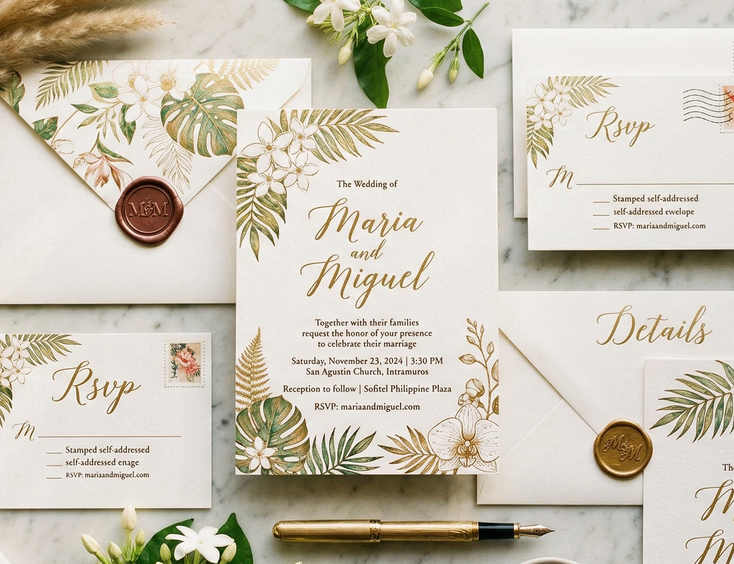
What Printed Invitations Still Do Well
A physical invitation lands differently. Your ninong picks it up from the mail, handles it, sets it on the ref door. It signals that the wedding is formal and that the couple put thought into it.
For Filipino weddings with older guests, printed invitations carry social weight that digital ones don't. Lolo and Lola are not checking Viber for event details. Your parents' barkada expects something in an envelope. Skipping print for that segment of your guest list reads as an oversight, not a stylish choice.
Printed invitations also remove ambiguity. The date, venue, and dress code are on paper. Nobody claims they didn't see the message. Nobody asks you to re-send the link.
The tradeoffs are real. Print costs money, lead time, and coordination. A 200-piece printed suite from a reputable Philippine stationer typically runs ₱15,000 to ₱50,000 depending on materials and finishing. You need to order 6 to 8 weeks before your send date, sometimes longer for custom work. Errors that slip past proofreading get reprinted at your expense.
For a closer look at what drives those numbers, the Filipino wedding invitation cost breakdown covers pricing by print method, quantity, and supplier type.

What Digital Invitations Actually Solve
Digital invitations solve three specific problems: cost, speed, and RSVP tracking.
A well-designed e-invite costs a fraction of print. Platforms like Canva, Zola, and Paperless Post let you build something polished for free or close to it. You send it the same day you finish it. You update it if details change without reprinting anything.
RSVP tracking is where digital genuinely wins. Instead of chasing guests by phone, you get a dashboard. You see who opened the invite, who confirmed, who hasn't responded. For couples managing large Filipino guest lists where RSVPs come in slowly and last-minute, that visibility matters.
The Filipino Wedding RSVP Etiquette guide covers what to realistically expect from guests and how to manage the follow-up without causing family tension.
Digital also works well for your younger guests, your college friends, your officemates. They live on their phones. Sending them a beautifully designed invite via Viber or Instagram DM feels natural, not cheap.
The limitation is perception. Some guests, particularly those from older generations or more traditional families, read a digital invite as low-effort regardless of how much design work went into it. In Filipino social dynamics, that perception has consequences. It affects how guests show up, what they contribute as sponsors, and what they say to other family members.
Where Filipino Wedding Culture Complicates the Decision
Philippine weddings carry social obligations that most wedding planning content from other countries ignores.
Principal sponsors, secondary sponsors, and close family members expect a physical invitation. It's not sentiment. It signals their role and importance in the event. Sending a ninang a digital invite when her counterpart received a printed one creates a hierarchy she will notice.
Your guest list likely spans three generations with different comfort levels around technology. A blanket approach, either all print or all digital, creates friction somewhere.
The most practical approach many Filipino couples use is a two-track system. Printed invitations go to family, principal sponsors, older guests, and anyone whose perceived status in the event matters. Digital invitations go to younger guests, friends, and anyone whose contact you only have digitally anyway.
This approach cuts print volume significantly, which reduces cost, and lets you send digital invites immediately while the printed ones go through production.
Timing Affects Both Options Differently
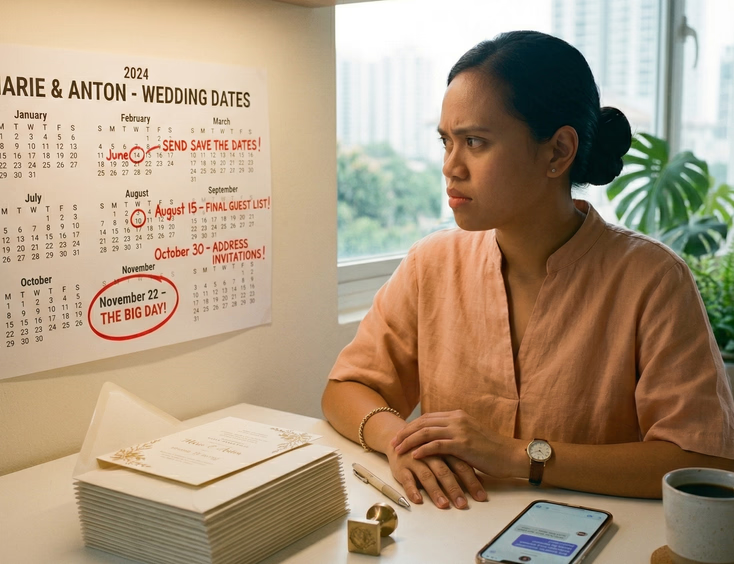
Print has a fixed timeline. You need your guest list finalized, your design approved, and your order placed at least 8 weeks before your send date. Most Philippine invitation suppliers require a 2 to 4 week production window, plus time for addressing and mailing.
The Filipino wedding invitation timeline breaks down the full schedule from design to delivery so you don't back yourself into a rushed order.
Digital has no production lead time, but it has its own timing issue. Guests receive digital invitations and immediately forget them unless the event is saved to their calendar. Print sits on a desk. Digital disappears into a Viber thread within hours.
If you send digital, follow up. Send a reminder two weeks before the RSVP deadline. A second reminder a week before the wedding. Without that follow-up, your response rate drops.
What to Weigh Before You Decide
Ask yourself four questions.
Who are your guests and what do they expect? A guest list dominated by family elders and principal sponsors pushes you toward print. A younger, urban guest list makes digital more viable.
What does your budget allow? Print at scale gets expensive fast. If your invitation budget is under ₱10,000, digital for most guests with print only for key recipients makes financial sense.
How much lead time do you have? If your wedding is three months away and you haven't ordered yet, digital buys you time. If you have six months, print is on the table.
How formal is the event? A cathedral wedding with a grand reception at a hotel carries different expectations than a garden ceremony with 80 people. Match the invitation format to the event's register.
Finding the Right Supplier or Tool for Your Choice
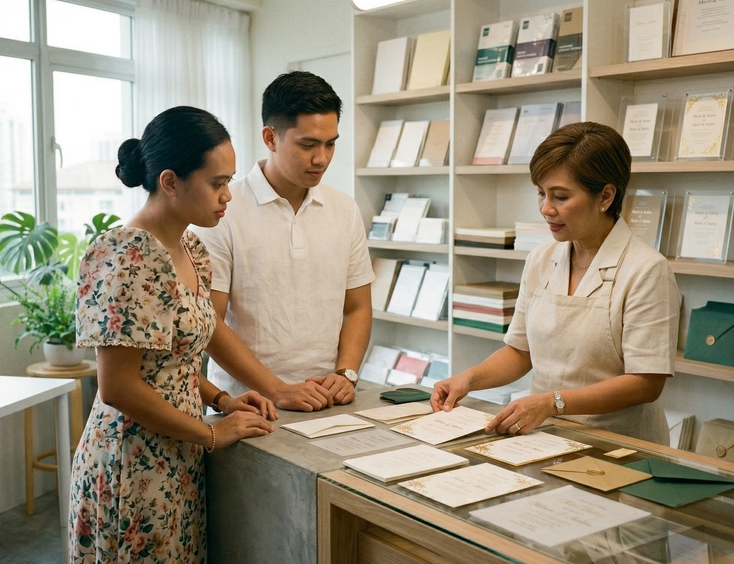
If you go with print, working with a supplier who understands Filipino wedding stationery conventions saves you from back-and-forth over formats, envelope addressing, and insert types. Browse wedding invitation suppliers in the Philippines to find printers and stationers who handle full suites, not just the main card.
If you go digital, the best apps and websites for digital Filipino wedding invitations covers which platforms work well for local couples and what each one offers.
For couples leaning toward a hybrid approach, pairing a printed main invitation with a digital wedding website keeps all the event details in one place guests can reference anytime. The guide to setting up a wedding website for Philippine weddings walks through how to structure it so it actually reduces the questions guests send you.
The Format Follows the Guest, Not the Trend
Digital invitations are not inherently modern and smart. Printed invitations are not inherently traditional and wasteful. Each format serves specific guests in specific situations better than the other.
Map your guest list. Identify who needs print and who is fine with digital. Build your budget around that split. Order early enough that neither choice becomes a scramble.
The invitation is the first thing your guests receive from you. Get the format right for the people receiving it, not for the aesthetic you want to project.
For the broader picture of everything your invitations need to cover, the complete guide to Filipino wedding invitations is the place to start.
Still Searching for a Right Match?
Find Your Perfect Wedding Supplier Today!
Discover trusted wedding suppliers across the Philippines in our complete directory. Compare services and connect with the ones that fit your dream celebration.
Browse Wedding SuppliersFeatured Posts



The Complete Filipino Couple's Guide to Wedding Rings & Bands in the Philippines: Traditions, Styles, Budgets & Where to Buy
22 mins readWedding Reception Ideas that Honor Tradition and Wow Your Guests
4 mins readFilipino Wedding Dress Guide for Style Traditions and Smart Shopping
6 mins readFilipino Wedding Cost Guide - Realistic Budgets, Percentages, and Price Drivers by Region
9 mins readPhilippines Honeymoon Guide - Best Islands, Resorts, Costs & 7–14 Day Itineraries
9 mins readFilipino Wedding Games - Traditions, Modern Twists, and Crowd-Pleasers for Every Reception
8 mins read