

Filipino Wedding Invitation Design Trends Couples Are Loving Right Now
Filipino wedding invitation design has shifted significantly over the last few years. Local designers have raised the standard, couples are more intentional about aesthetics, and the gap between what's available in Manila and what international stationery studios produce has narrowed considerably. The result is a wider, more interesting range of options than Filipino couples have ever had access to.
These are the design directions gaining traction right now, with notes on what makes each one work and which wedding styles they suit best.
Botanical and Oversized Floral Illustration
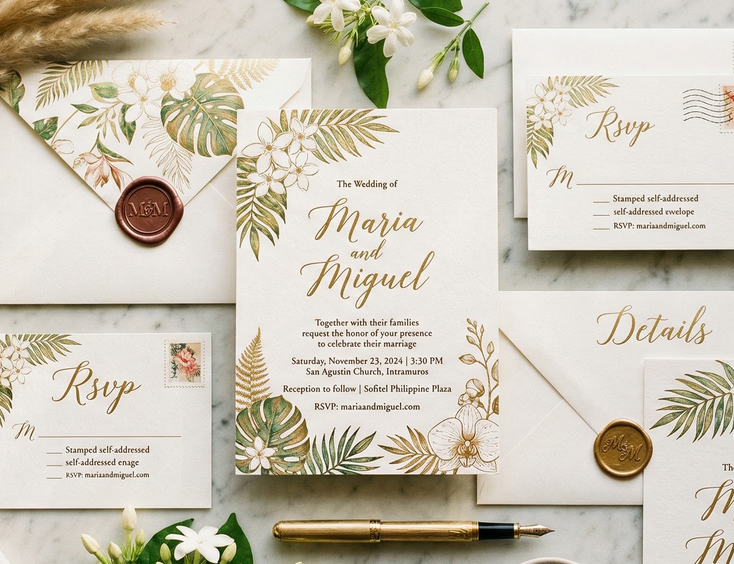
Illustrated florals have dominated Filipino wedding stationery for several years and show no sign of fading. The shift in recent seasons has been toward scale. Couples are moving away from small, delicate corner arrangements toward large-format botanical illustration that bleeds off the card edges or takes up the majority of the invitation face.
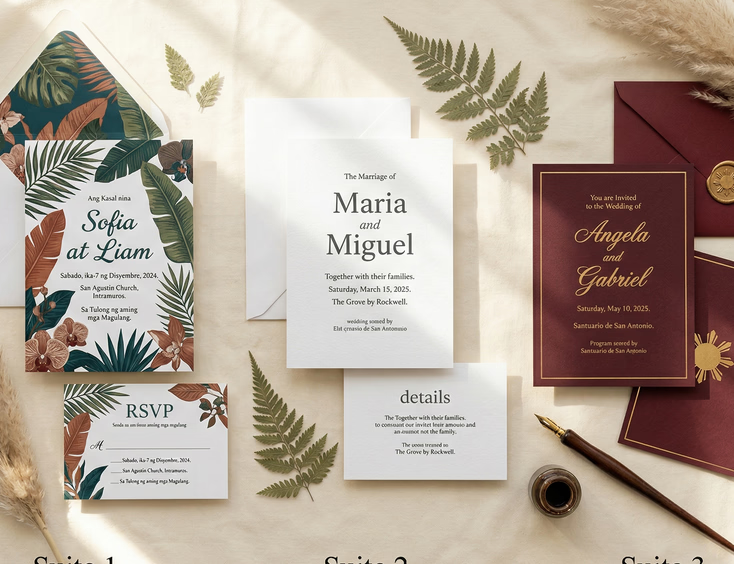
Tropical flora leads this direction: bird of paradise, monstera, anthurium, and native Philippine orchids drawn in detailed watercolor or ink. The palette has moved away from blush and dusty rose toward deeper, more saturated tones. Terracotta, burnt sienna, forest green, and deep burgundy appear frequently alongside ivory and cream cardstock.
This style works for garden ceremonies, outdoor receptions, and couples who want something lush without being overly ornate. The illustration carries the design, so the typography stays clean and secondary.
Minimalist Typography-Led Design
On the opposite end, a growing number of Filipino couples are stripping invitation design back to almost nothing. No illustration, no border, no decorative element beyond the typography itself.
This approach relies entirely on font selection, spacing, and paper quality. Couples choosing this direction typically invest more in the physical production: heavier cardstock, letterpress or foil printing, cotton paper, or hand-torn edges. The restraint of the design makes the material quality visible in a way that busier layouts don't.
Sans-serif fonts in light weights sit alongside classic serifs. Some designers pair a single script font for the couple's names with clean roman text for the details below. The negative space does as much work as the text.
This style suits hotel ballroom weddings, modern civil ceremonies, and couples whose overall aesthetic runs contemporary. It photographs exceptionally well for flat lays and detail shots.
For a deeper comparison between this direction and traditional approaches, Minimalist vs. Classic Filipino Wedding Invitation Designs: Which Style Fits Your Wedding? covers the tradeoffs in full.
Terracotta, Warm Earth, and Neutral Palettes
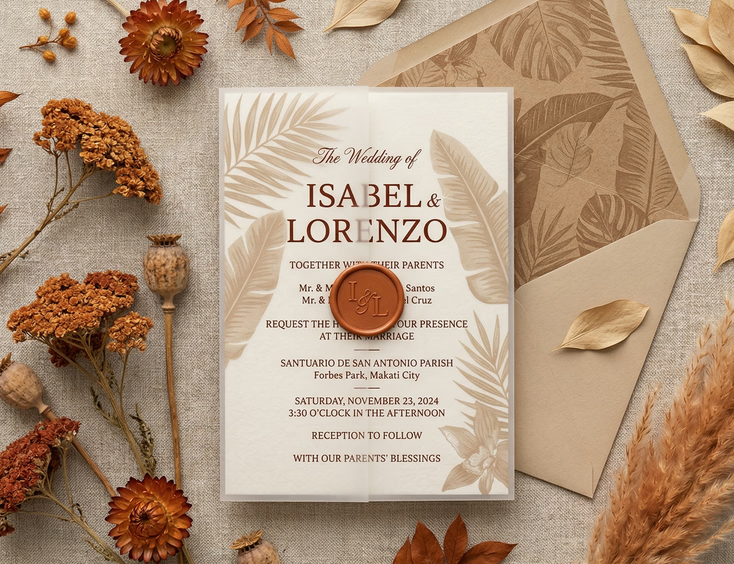
The cool blush and grey palettes that dominated Filipino wedding stationery through the mid-2010s have given way to warmer tones. Terracotta, sand, warm white, camel, and rust now appear across invitation suites that range from rustic to refined.
This palette shift connects to a broader move toward organic, natural wedding aesthetics in the Philippines. Pampas grass, dried botanicals, rattan, and raw linen have become standard wedding décor elements, and invitation design has followed. An invitation in warm terracotta with kraft envelope lining and a wax seal reads as cohesive with that visual world.
The warmth of these palettes also reproduces well on uncoated and textured papers, which many Filipino couples prefer for the tactile quality they add to the suite.
Foil Accents and Tactile Finishes
Metallic foil has been a Filipino wedding stationery staple for decades, but the application has become more restrained and intentional. Rather than covering borders and backgrounds in gold, designers now use foil selectively: a single line of the couple's names, a small crest or monogram, a delicate botanical outline.
Copper foil has overtaken gold as the preferred metallic for warmer palettes. Silver remains the choice for cool-toned or monochromatic suites. Rose gold held strong for several years and still appears, though less often as a primary choice.
Beyond foil, couples are requesting other tactile finishes: embossing, debossing, velvet laminate on the envelope, and letterpress printing that leaves a visible impression in the paper. These finishes communicate quality before the guest reads a single word.
The production cost for these techniques is higher than standard digital or offset printing. Couples who prioritize these details typically reduce their print quantity or allocate a larger portion of their stationery budget to the main invitation rather than the full suite.
How Much Do Wedding Invitations Cost in the Philippines? A Budget Breakdown covers how these premium finishes affect the total cost per set.
Heritage and Cultural Motifs
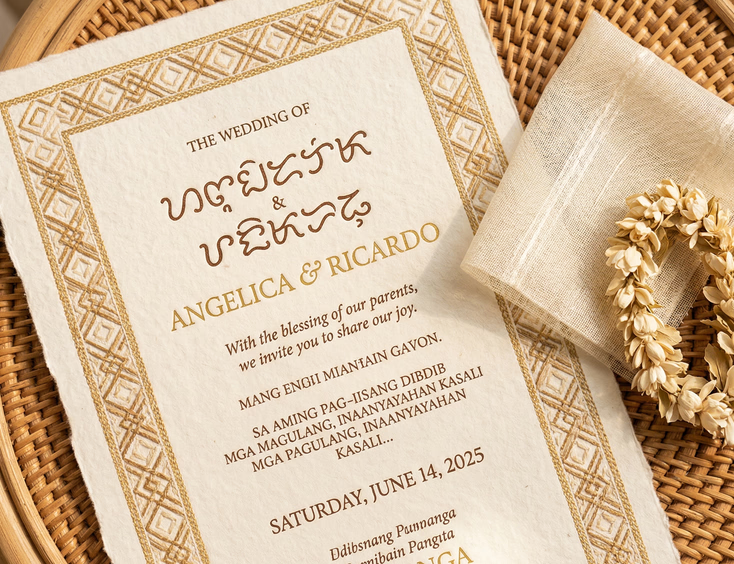
A meaningful and growing direction in Filipino wedding stationery involves drawing from Philippine visual heritage. Couples are incorporating traditional weave patterns, baybayin script, indigenous geometric designs from the Cordilleras and Mindanao, and native flora into their invitation design.
The most effective versions of this approach use one well-chosen element rather than layering multiple cultural references. A border derived from piña weave geometry. The couple's names rendered in baybayin alongside the romanized version. A background texture referencing hablon cloth from Iloilo.
This direction resonates particularly with couples who want their wedding to reflect their roots, couples marrying in heritage venues, and Filipino diaspora couples planning destination weddings in the Philippines who want the stationery to carry a sense of place.
How to Design a Wedding Invitation That Reflects Filipino Heritage and Culture shows how designers and couples have executed this with intention.
Vellum Overlays and Layered Suites
Vellum, a translucent paper, has become a recurring element in Filipino wedding invitation suites over the last two years. Designers use it as an overlay on the main card, a jacket around the suite, or a separate details card that sits over the invitation face.
The layering effect adds dimension and a soft, romantic quality to the suite without requiring illustration or embellishment. The translucency allows colors and textures from the card beneath to show through, creating a subtle visual depth.
Vellum works across multiple aesthetics. On a botanical suite, it softens the illustration. On a minimalist design, it adds texture without disrupting the clean layout. On a heritage-inspired suite, it can carry secondary text while keeping the main card uncluttered.
Assembly takes longer with vellum layers, and the material requires careful handling during printing. Couples ordering suites with vellum elements should factor additional lead time into their production schedule.
Monogram and Crest Design
Custom monograms and family crests have moved from formal European-style weddings into mainstream Filipino wedding stationery. A well-designed monogram, the couple's initials arranged into a mark, appears on the invitation face, the envelope seal, and sometimes the wedding day stationery like programs and menus.
Some couples commission a full illustrated crest that incorporates meaningful symbols: a landmark from their hometown, a flower with personal significance, or a motif connected to how they met. These crests become a visual thread across the entire wedding identity.
The investment in a custom crest pays dividends across all printed materials. A mark designed for the invitation carries through to signage, favor tags, welcome bags, and digital assets without requiring a new design brief for each application.
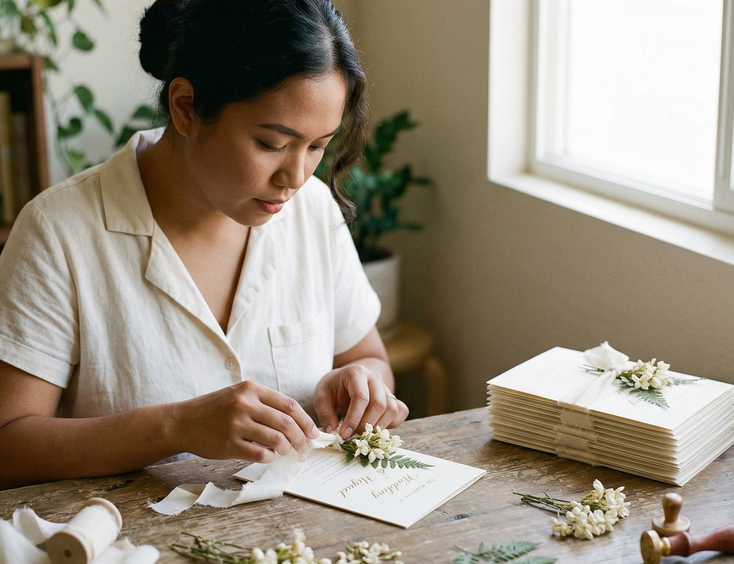
Dried Botanical Inclusions
Some Filipino stationery studios now offer invitation suites with dried flower inclusions sealed within the envelope or attached to the card with a ribbon or twine. Dried sampaguita, pressed ferns, and small dried blooms appear most often.
This detail works best for intimate weddings with smaller guest counts. The assembly is time-intensive, and the per-piece cost rises with the inclusion. For weddings above 150 guests, the production time and cost make this detail difficult to scale.
For couples with smaller lists, a dried botanical inclusion turns the invitation into a keepsake that guests are unlikely to discard.
What's Fading
Some directions that dominated Filipino wedding stationery a few years ago are appearing less frequently.
Heavy laser-cut borders with elaborate scrollwork have given way to cleaner edges and more restrained ornamentation. Heavily distressed vintage styles with aged paper effects and sepia tones have become less common as couples gravitate toward fresher palettes. Oversized suites with five or more insert cards have simplified into two or three pieces, with wedding websites carrying the additional information.
The overall direction is toward more considered, less cluttered design. Couples are choosing fewer elements executed with better materials rather than elaborate suites that sacrifice quality for quantity.
Matching Your Trend to Your Wedding
A trend is only useful if it matches your wedding. The botanical oversized illustration style suits a garden ceremony. The minimalist typography direction suits a contemporary hotel reception. Heritage motifs suit a couple who wants cultural meaning in every element of their day.
Before committing to a design direction, look at your venue, your overall aesthetic, and the tone you've set in your invitation wording. The invitation should read as part of the same world as the rest of your wedding, not as a separate design project.
Floral, Elegant, Rustic: A Guide to Filipino Wedding Invitation Aesthetics by Theme maps specific design directions to wedding themes in more detail.
Browse stationery and invitation suppliers in the Philippines to find designers working in the styles covered here, from botanical illustrators to minimalist typographers to heritage-inspired studios.
For the full picture of Filipino wedding invitation planning, the complete guide to Filipino wedding invitations covers every decision from guest list to delivery.
Still Searching for a Right Match?
Find Your Perfect Wedding Supplier Today!
Discover trusted wedding suppliers across the Philippines in our complete directory. Compare services and connect with the ones that fit your dream celebration.
Browse Wedding SuppliersFeatured Posts


The Complete Filipino Couple's Guide to Wedding Rings & Bands in the Philippines: Traditions, Styles, Budgets & Where to Buy
22 mins readWedding Reception Ideas that Honor Tradition and Wow Your Guests
4 mins readFilipino Wedding Dress Guide for Style Traditions and Smart Shopping
6 mins readFilipino Wedding Cost Guide - Realistic Budgets, Percentages, and Price Drivers by Region
9 mins readPhilippines Honeymoon Guide - Best Islands, Resorts, Costs & 7–14 Day Itineraries
9 mins readFilipino Wedding Games - Traditions, Modern Twists, and Crowd-Pleasers for Every Reception
8 mins read