

How to Design a Wedding Invitation That Reflects Filipino Heritage and Culture
Filipino wedding invitations carry more weight than most couples realize. Before a single guest arrives at the church, your invitation tells them something about who you are as a couple and where you come from. Designing one that reflects Filipino heritage takes more than adding a sampaguita border. It requires deliberate choices across motifs, materials, typography, and color.
Start With Your Regional Roots
The Philippines has over 7,000 islands and dozens of distinct cultural traditions. Your heritage is not generic Filipino. It is Ilocano, Kapampangan, Visayan, Maranao, Igorot, Bicolano, or any combination of regions your families carry. Starting from that specific place gives your invitation a story no template can replicate.
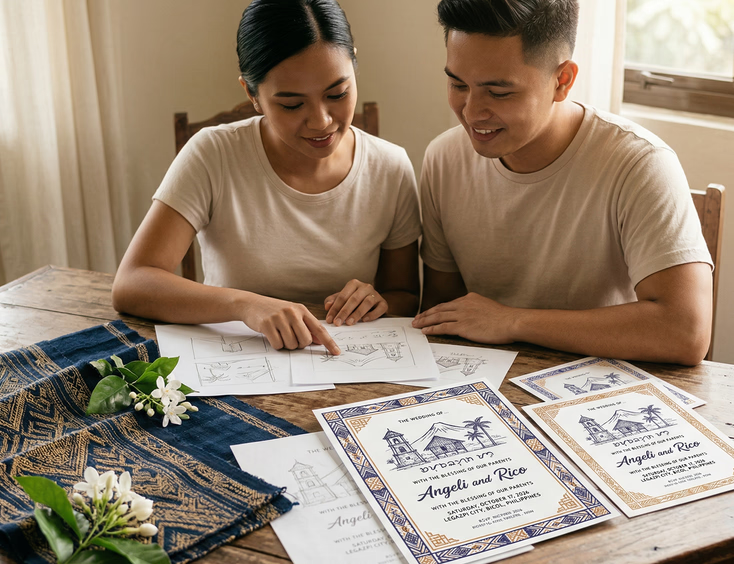
Couples from the Ilocos region often draw from inabel weave patterns, geometric and rhythmic textiles that translate well into border treatments and envelope liners. Maranao heritage opens access to okir motifs, the flowing arabesque patterns found in malong textiles and wooden carvings. Cordillera couples have used the angular patterns of G'ang weaving from Mountain Province to texture invitation backgrounds. Visayan couples frequently incorporate motifs from hablon weaving in Miag-ao or Pototan.
If your family spans multiple regions, pick one visual tradition and commit to it rather than mixing several. A clean, cohesive invitation reads stronger than one trying to represent every branch of your family tree.
Choose Motifs That Mean Something
Specific Filipino motifs carry meaning that generic floral prints do not.
Sampaguita is the national flower and signals purity and devotion. It works well in delicate line-art treatments alongside invitation text rather than as a background fill.
Parol shapes, the star lantern associated with Filipino Christmas, appear in some heritage-themed invitations as a symbol of light and celebration. They work best as a subtle watermark or wax seal design rather than a central graphic.
Sarimanok, the mythical bird from Maranao culture, is bold and graphic by nature. It suits couples who want a strong cultural statement and works well as a single-color foil stamp on the envelope.
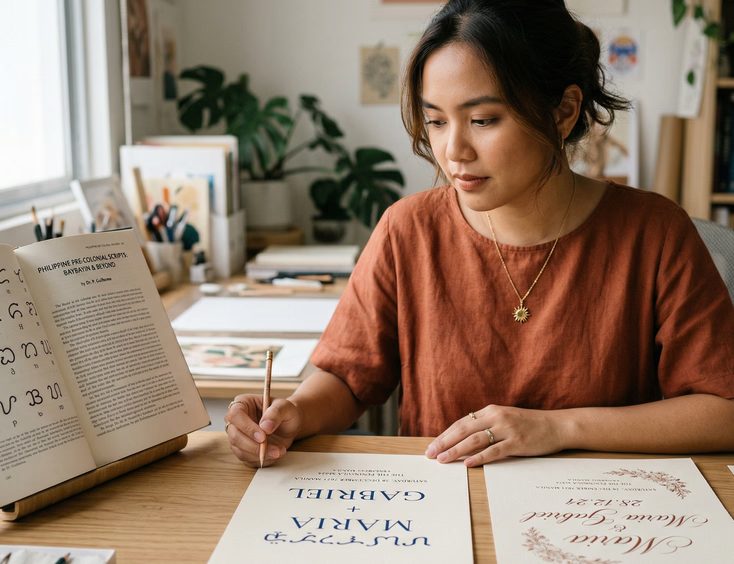
Baybayin script is one of the most requested heritage elements. The pre-colonial writing system of Luzon carries genuine historical weight. Use it for your names, a single meaningful word, or a short phrase rather than full blocks of text. Most guests cannot read it, and decorative baybayin passages become visual noise. Keep it purposeful.
Banig weave patterns, from the traditional woven mats of Basey in Samar or Bohol, translate into graphic textile-like borders. They sit well on kraft or cream stock and pair with earthy color palettes.
Pick a Material That Holds the Design
Filipino heritage designs earn more when the paper or material beneath them connects to local craft traditions.
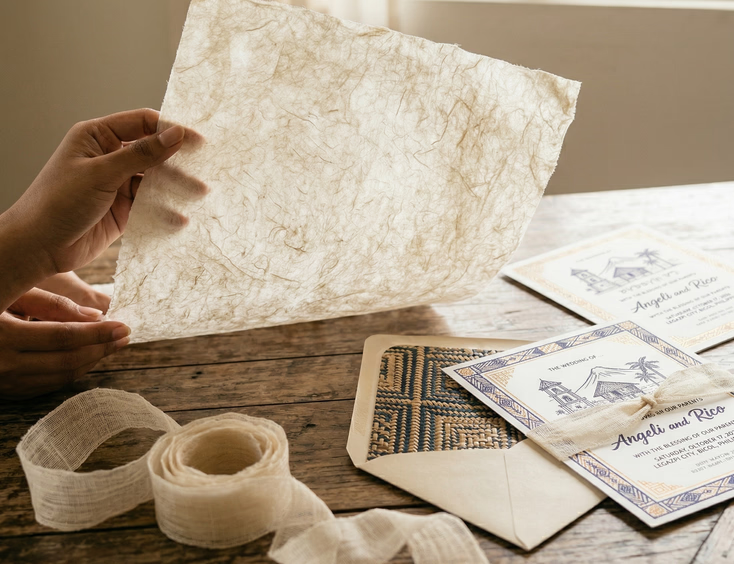
Abaca paper, made from banana plant fibers and produced in regions like Leyte and Quezon, has a natural texture and slight translucency. It accepts letterpress and foil printing and carries a distinctly Filipino character before the design even registers.
Piña cloth, woven from pineapple leaf fibers and traditionally used for barong tagalog and wedding gowns, can appear as an insert, a ribbon, or an envelope liner. It adds tactile weight that guests notice the moment they open the envelope.
For couples with a tighter budget, look for textured cotton papers printed with a weave simulation. They do not carry the same craft heritage as true abaca or piña, but they hold the visual vocabulary without the cost.
Stationery suppliers in the Philippines who specialize in heritage-themed invitations usually stock abaca and piña options. Asking about material sourcing during your consultation tells you whether a supplier understands Filipino craft or just sells generic print packages.
Build a Color Palette From Textile Traditions
Pre-colonial Filipino textiles were not pastel. They were red ochre, deep indigo, forest green, gold, and black. T'nalak cloth from the Tboli people of South Cotabato uses three colors: red, black, and off-white. Malong patterns from Lanao carry jewel tones and gold. Pina cloth in its natural state is ivory with golden warmth.
Couples designing heritage-forward invitations often default to white and gold out of habit. A stronger choice anchors the palette in the specific textile tradition they are referencing. Indigo and ivory for inabel-inspired designs. Deep red and black for T'nalak references. Gold and emerald for okir motifs.
Pastel versions of these palettes exist and some couples prefer them for a softer look. The trade-off is that lighter palettes reduce the cultural clarity of the design. A guest familiar with the tradition sees the diluted version as decorative rather than intentional.
Typography Choices for Heritage Designs
Serif typefaces with calligraphic qualities pair well with heritage motifs without competing against them. Scripts modeled on traditional penmanship styles, like the flowing hand common in Spanish-colonial-era documents, also appear frequently in Filipino heritage invitations.
If you incorporate baybayin, place it alongside a clean modern serif for the English or Filipino text rather than stacking two decorative styles. Contrast between the historical script and a contemporary typeface makes both more readable and more visually interesting.
Avoid fonts that carry strong associations with other cultural aesthetics. Tuscan serif fonts read as Western Americana. Thin brush scripts read as East Asian minimalism. Both undercut the Filipino-specific character of your design.
Work With a Designer Who Knows the Source Material
Heritage design done poorly looks like costume. A designer who treats okir as a clip-art add-on or baybayin as a font choice rather than a writing system will produce something that looks Filipino from a distance and falls apart up close.
Ask any designer you meet with to show you previous work with Filipino heritage elements. Ask them which region the motifs came from and whether they worked with cultural references. A designer who can answer those questions has done the research. One who says "we have Filipino-inspired templates" probably has not.
The design conversation should include your regional background, your families' specific cultural traditions, and the formality level of your wedding. A traditional church wedding in Manila calls for different visual choices than an outdoor ceremony in Batangas or a destination wedding with international guests who may need more visual context about the traditions being represented.
For couples wanting broader context on how heritage design fits within current invitation styles, Filipino wedding invitation design trends covers what designers across the country are producing right now. If you are weighing heritage aesthetics against a more minimal approach, minimalist vs. classic Filipino wedding invitation designs breaks down how those two directions actually differ in practice.
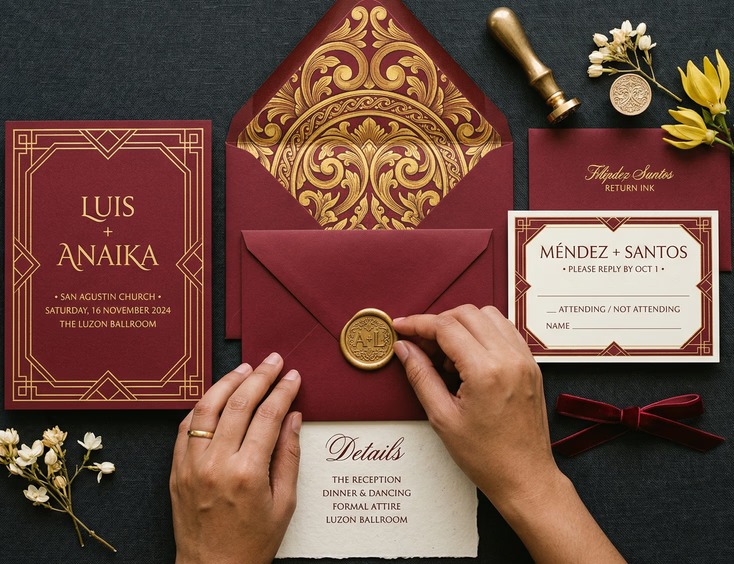
Keep Cultural Elements Coherent Across the Suite
Your invitation suite includes more than the main card. The envelope, RSVP card, details insert, and any additional enclosures all contribute to the overall impression. Heritage elements work best when they carry through the entire suite with intention rather than appearing only on the front panel of the main invitation.
A couple using inabel-patterned borders on the main card should carry a simplified version of that pattern onto the envelope liner or the back of the RSVP card. Wax seals in baybayin or sarimanok designs close the envelope in a way that connects to the interior design. The suite functions as a single object rather than a collection of separate pieces.
You do not need to put cultural motifs on every surface. A main card with a strong heritage design paired with clean, undecorated enclosure cards lets the primary piece breathe. Too much pattern across too many surfaces competes with itself.
A Full Picture of the Filipino Wedding Invitation
This blog is part of a larger resource covering every aspect of wedding invitations for Filipino couples. The complete guide to Filipino wedding invitations covers wording, timing, etiquette, printing, and design from a single place. If you are still in early planning stages, starting there gives you a full picture before you commit to a design direction.
For couples who want to explore how heritage aesthetics fit within broader theme choices, the guide to Filipino wedding invitation aesthetics by theme covers how floral, rustic, and elegant directions can incorporate cultural elements without losing coherence.
Your invitation is the first object your guests hold that belongs to your wedding. A design rooted in your actual heritage gives it a specificity that trends-based designs rarely match.
Still Searching for a Right Match?
Find Your Perfect Wedding Supplier Today!
Discover trusted wedding suppliers across the Philippines in our complete directory. Compare services and connect with the ones that fit your dream celebration.
Browse Wedding SuppliersFeatured Posts

The Complete Filipino Couple's Guide to Wedding Rings & Bands in the Philippines: Traditions, Styles, Budgets & Where to Buy
22 mins readWedding Reception Ideas that Honor Tradition and Wow Your Guests
4 mins readFilipino Wedding Dress Guide for Style Traditions and Smart Shopping
6 mins readFilipino Wedding Cost Guide - Realistic Budgets, Percentages, and Price Drivers by Region
9 mins readPhilippines Honeymoon Guide - Best Islands, Resorts, Costs & 7–14 Day Itineraries
9 mins readFilipino Wedding Games - Traditions, Modern Twists, and Crowd-Pleasers for Every Reception
8 mins read