

Minimalist vs. Classic Filipino Wedding Invitation Designs: Which Style Fits Your Wedding?
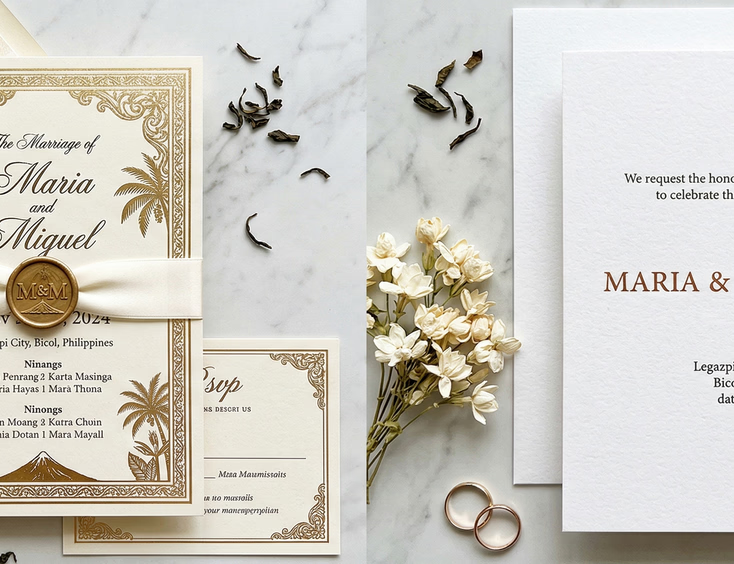
Two design philosophies dominate Filipino wedding invitations right now. The first builds on ornate tradition: formal typography, decorative borders, rich embellishment, and a layout that signals ceremony and occasion. The second strips everything back: clean fonts, generous white space, restrained detail, and quality that speaks through material rather than decoration.
Neither is better. Each fits a specific kind of wedding, couple, and budget. The mistake is choosing one because it looks beautiful on Pinterest without checking whether it matches the wedding you're actually planning.
This guide breaks down what each style involves, where each one works, and how to decide between them.
What Classic Filipino Wedding Invitation Design Actually Means
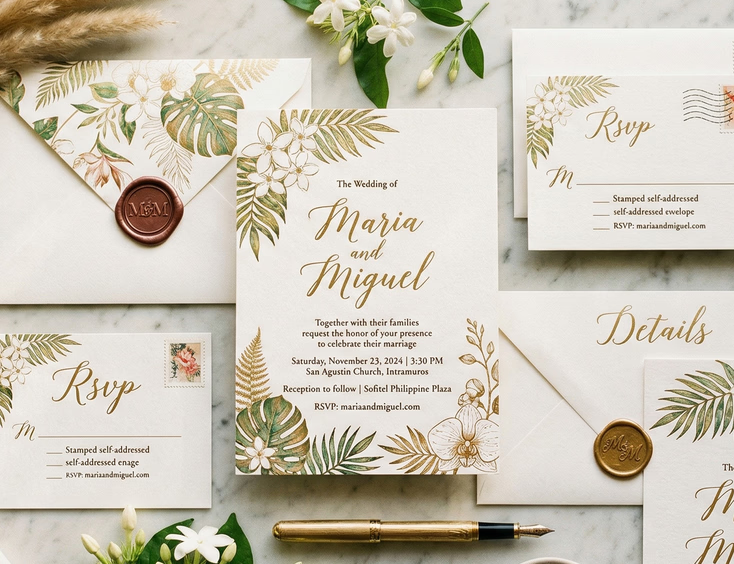
Classic Filipino wedding invitation design draws from Catholic ceremony tradition and formal social custom. It communicates occasion through visual weight. The layout is structured and symmetrical. Typography uses formal serif or script fonts with consistent hierarchy from the host line down to the RSVP details.
Decorative elements carry the style: ornate borders, floral corner arrangements, scrollwork, laser-cut edges, ribbon details, and wax seals on envelope closures. Gold foil appears often, either as an accent on typography or as a frame around the invitation face. Paper stock runs heavier, and the envelope typically includes a printed liner.
Classic invitations arrive as suites rather than single cards. The full suite might include the main invitation, a separate reception card, an RSVP card with return envelope, a sponsor insert, an accommodation card for out-of-town guests, and a mass card if the ceremony includes a printed program insert.
This style signals formality and tradition to guests before they read a word.
What Minimalist Design Actually Means
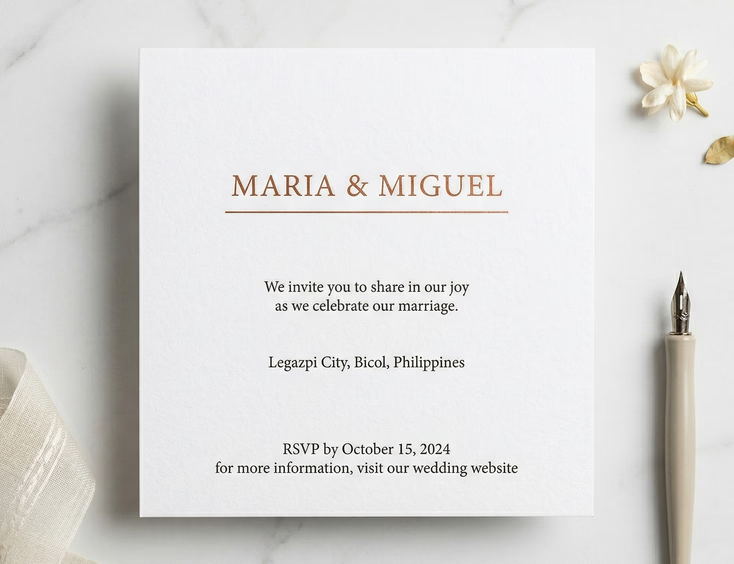
Minimalist Filipino wedding invitations remove decoration and let typography and materials carry the design. The layout uses generous white space. Fonts are carefully chosen and limited to two, often a script for the couple's names and a clean serif or sans-serif for the body text.
There are no borders, no corner florals, no scrollwork. The invitation communicates quality through the paper itself: heavy cotton stock, textured uncoated surfaces, letterpress printing that leaves a visible impression, or foil applied selectively to a single line of text.
Minimalist suites are typically smaller in scope. A main card, an envelope, and sometimes a small details card. Additional information lives on a wedding website rather than a stack of inserts.
The restraint demands more precision. Every element on a minimalist invitation is visible and intentional. A font choice that reads as generic, a slightly off margin, or a paper stock that feels thin undermines the entire design in a way that busier layouts would absorb.
Where Classic Design Works Best
Traditional Catholic ceremonies. A formal church wedding in a heritage basilica calls for an invitation that matches the setting. Classic design signals respect for the occasion and aligns with what older family members expect to receive.
Large formal receptions. A 300-person sit-down dinner at a hotel ballroom has a formality that minimalist stationery can undercut. Classic design scales to the scale of the event.
Weddings with extensive sponsor lists. A long ninong and ninang list fits more naturally into a classic suite, which has the visual space and the insert structure to accommodate it without looking cluttered.
Couples from traditional families. When both sets of parents are deeply involved in the wedding and have strong expectations about what a wedding invitation looks like, classic design meets those expectations without requiring a negotiation.
Weddings with religious significance. Couples who want the invitation to reflect the sacramental nature of the ceremony gravitate toward classic design. The visual weight communicates that this is more than a party.
Where Minimalist Design Works Best
Contemporary venues. BGC lofts, industrial event spaces, rooftop receptions, and modern hotel function rooms suit a minimalist aesthetic. The invitation reads as cohesive with the setting.
Intimate weddings. A ceremony with thirty guests calls for a different register than a 250-person reception. Minimalist design fits the scale and the intimacy.
Destination weddings. Couples marrying in El Nido, Siargao, or a Batanes cliffside often choose minimalist invitations because the location does the heavy lifting. The invitation points toward the experience rather than trying to match it in decoration.
Couples with a strong personal aesthetic. If your everyday style runs clean and uncluttered, a classic invitation with heavy ornamentation will feel like a costume. The invitation should feel like you.
Weddings where the design budget is tight. Minimalist invitations cost less to produce per piece when executed without premium finishes. A clean design on good paper costs less than a laser-cut suite with foil, multiple inserts, and printed envelope liners.
The Budget Difference
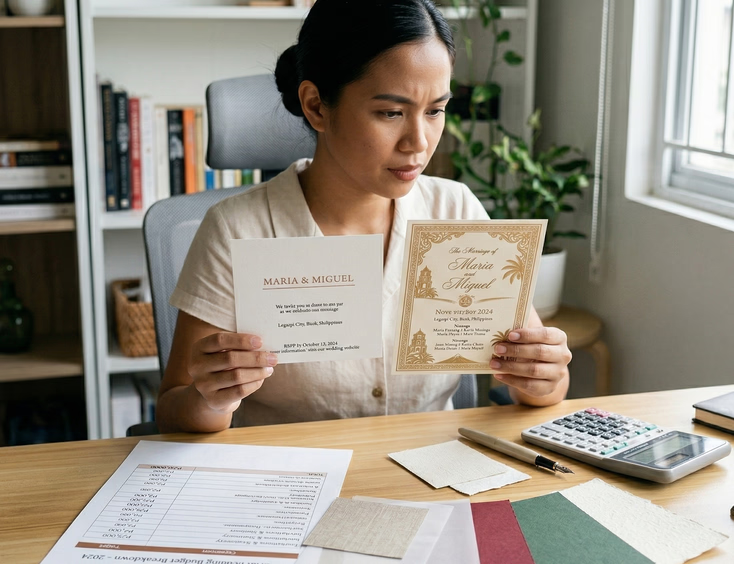
Classic Filipino wedding invitation suites cost more across every production variable. More design elements mean more design time. More inserts mean more paper and more printing. Embellishments like laser cutting, foil, ribbon, and wax seals add cost per piece. Assembly takes longer.
A mid-range classic suite in the Philippines runs between ₱250 and ₱600 per set depending on finishes and quantity. Premium classic suites with multiple embellishments can reach ₱800 to ₱1,500 or more.
A minimalist suite at the same tier runs lower on the base design, but the cost climbs quickly when couples invest in premium paper and printing techniques. Letterpress on cotton stock, for example, costs more per piece than digital printing on standard cardstock regardless of how simple the design looks.
The honest comparison: a minimalist invitation on premium materials costs roughly the same as a mid-range classic suite. A budget minimalist invitation on standard cardstock costs less than almost any classic option.
How Much Do Wedding Invitations Cost in the Philippines? A Budget Breakdown breaks down where the money goes across both styles.
What Your Guests Will Think
Older Filipino guests, particularly family elders and principal sponsors, read classic invitations as appropriate. A minimalist card can read as sparse or under-designed to guests who associate visual weight with respect and occasion.
Younger guests and urban professionals read minimalist design as considered and modern. They respond positively to restraint.
You cannot fully satisfy both groups with one design. The decision is about who matters most in the context of your wedding, and which style aligns with the experience you want guests to walk into.
If your wedding skews traditional in every other respect but you want a minimalist invitation, expect a comment or two from relatives. Decide in advance whether that matters to you.

Hybrid Approaches
Some Filipino couples split the difference. A minimalist layout with a single foil-stamped crest or monogram. A classic structure with a cleaner, more modern typeface and reduced decoration. Botanical illustration used sparingly on an otherwise restrained layout.
Hybrid approaches work when the combination is intentional rather than indecisive. Mixing elements from both styles because you couldn't choose often produces an invitation that reads as uncertain. Mixing them because you identified specific elements from each that serve your wedding produces something genuinely interesting.
Talk to your designer about what a hybrid might look like before committing to either direction fully. Most experienced Filipino stationery designers have navigated this conversation with dozens of couples.
Making the Decision
Answer these four questions before you brief a designer or choose a template.
Where is your ceremony? A heritage church points toward classic. A contemporary venue points toward minimalist.
How large is your guest list? A large formal reception suits classic. An intimate gathering suits minimalist.
Who are your guests? A predominantly older, traditional guest list reads classic as respectful. A younger, contemporary guest list reads minimalist as intentional.
What does the rest of your wedding look like? Your invitation should match your florals, your venue styling, and your overall aesthetic. If your mood board runs organic and uncluttered, a heavily ornamented invitation creates a mismatch your guests will feel even if they can't articulate why.
The right style is the one that fits all four answers, not just the one that looks most appealing on its own.
For more on how design connects to specific wedding themes and settings, Floral, Elegant, Rustic: A Guide to Filipino Wedding Invitation Aesthetics by Theme maps this out in detail.
To see what Filipino couples are currently choosing across both directions, Filipino Wedding Invitation Design Trends Couples Are Loving Right Now tracks the current movement.
Once your style is decided, your wording needs to match. How to Word a Filipino Wedding Invitation: Templates for Every Style and Tone gives you templates calibrated to both approaches.
Browse stationery and invitation suppliers in the Philippines to find designers who specialize in both classic and minimalist Filipino wedding stationery.
For the full picture of Filipino wedding invitation planning from guest list to delivery, the complete guide to Filipino wedding invitations covers every decision along the way.
Still Searching for a Right Match?
Find Your Perfect Wedding Supplier Today!
Discover trusted wedding suppliers across the Philippines in our complete directory. Compare services and connect with the ones that fit your dream celebration.
Browse Wedding SuppliersFeatured Posts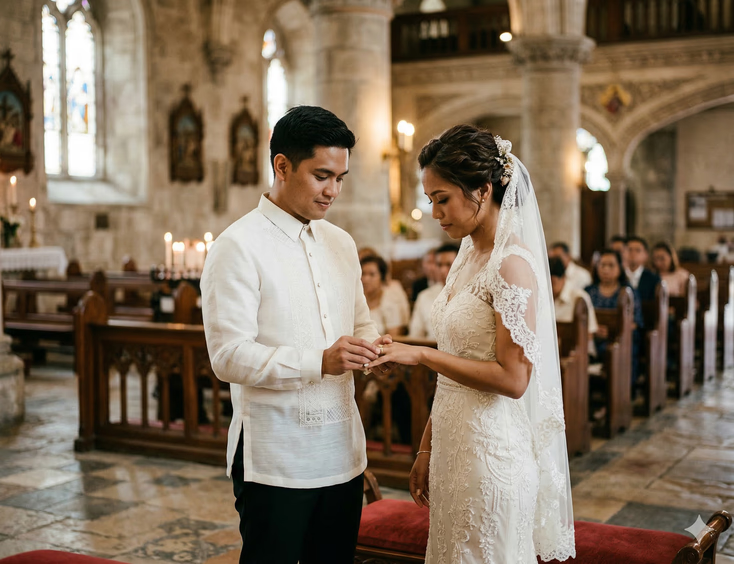


The Complete Filipino Couple's Guide to Wedding Rings & Bands in the Philippines: Traditions, Styles, Budgets & Where to Buy
22 mins readWedding Reception Ideas that Honor Tradition and Wow Your Guests
4 mins readFilipino Wedding Dress Guide for Style Traditions and Smart Shopping
6 mins readFilipino Wedding Cost Guide - Realistic Budgets, Percentages, and Price Drivers by Region
9 mins readPhilippines Honeymoon Guide - Best Islands, Resorts, Costs & 7–14 Day Itineraries
9 mins readFilipino Wedding Games - Traditions, Modern Twists, and Crowd-Pleasers for Every Reception
8 mins read