


Why Filipino Weddings Demand More from Their Event Stylists Than Most
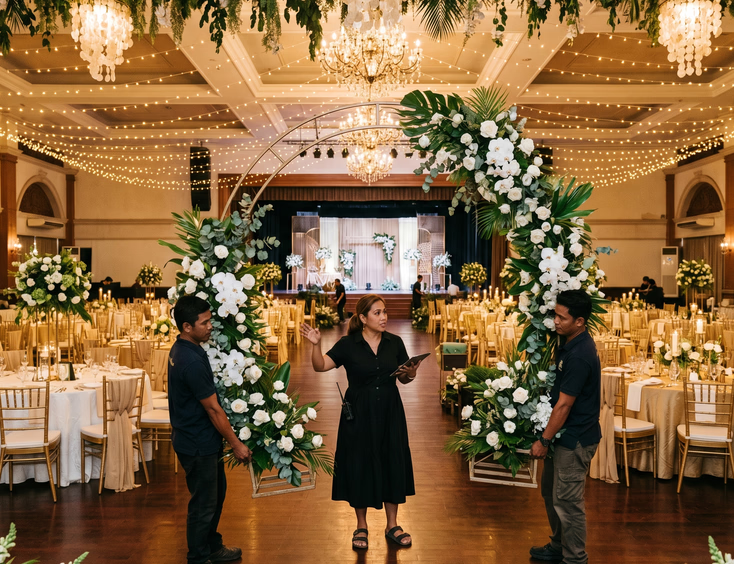
A wedding stylist in Sydney or London handles one venue, one ceremony structure, and a guest list that averages 80 to 120 people. A wedding stylist in the Philippines handles two venues, a dozen ritual elements, an entourage of 30 or more people, 300 to 500 guests, and weather that can shift from sunshine to downpour in fifteen minutes.
The scope of work is different. The cultural expectations are different. The logistics are different. Filipino weddings push event stylists harder than most markets, and understanding why helps you evaluate suppliers with sharper criteria.
The Entourage Changes the Scale of Everything
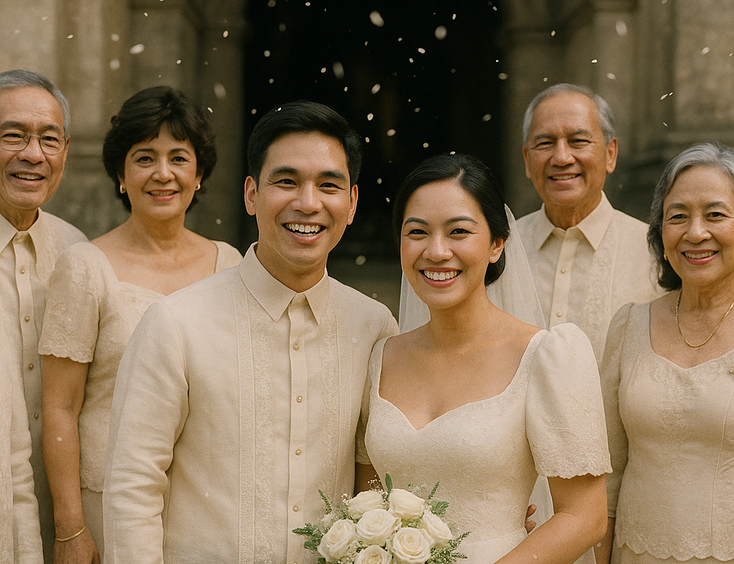
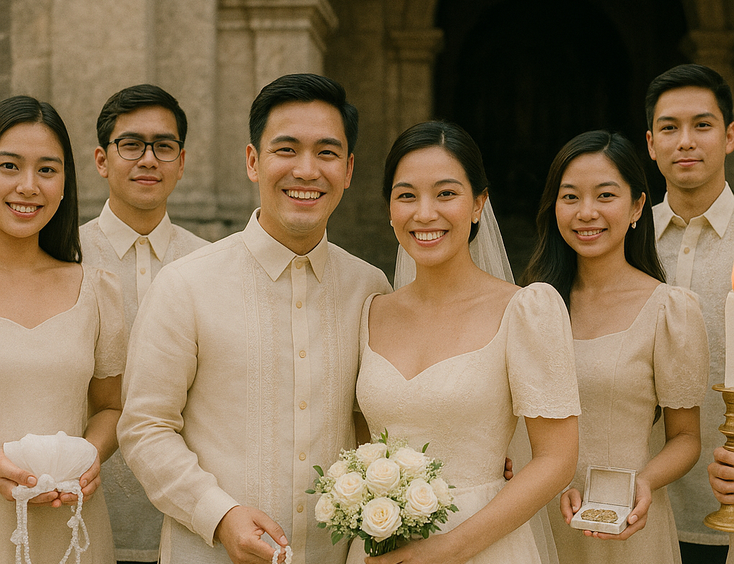
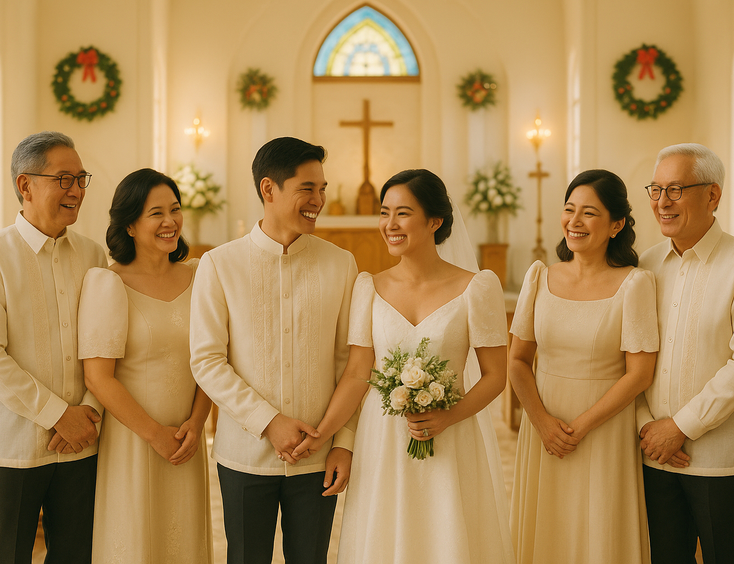
A typical Western wedding has a best man, a maid of honor, and a handful of groomsmen and bridesmaids. A Filipino wedding entourage includes principal sponsors (ninangs and ninongs), secondary sponsors for the cord, veil, candle, and coins, groomsmen, bridesmaids, flower girls, ring bearers, bible bearers, and coin bearers.
That list can reach 20 to 40 people.
Your stylist accounts for every member. Each principal sponsor needs a designated seat at the ceremony, often with specific pew markers or chair accents. Flower girls need petal baskets that match the floral palette. Secondary sponsors need accessible positions near the altar for their respective rituals. Your stylist maps all of this into the ceremony layout and builds visual elements for each role.
The entourage also drives floral volume. A bride in the Philippines might need 6 to 10 bridesmaid bouquets, 15 to 20 boutonnieres, corsages for mothers and ninangs, and a separate set of floral accents for the flower girls. Compare that to a wedding with three bridesmaids and one best man. The floral brief alone is three to four times the size. Your florist sources, arranges, and delivers all of this in coordination with your stylist, who ensures every piece matches the overall design. If you want to understand how flower choices affect this equation, read about the most popular wedding flowers used in Filipino weddings and what they symbolize.
Religious Rituals Create Styling Work Other Markets Skip
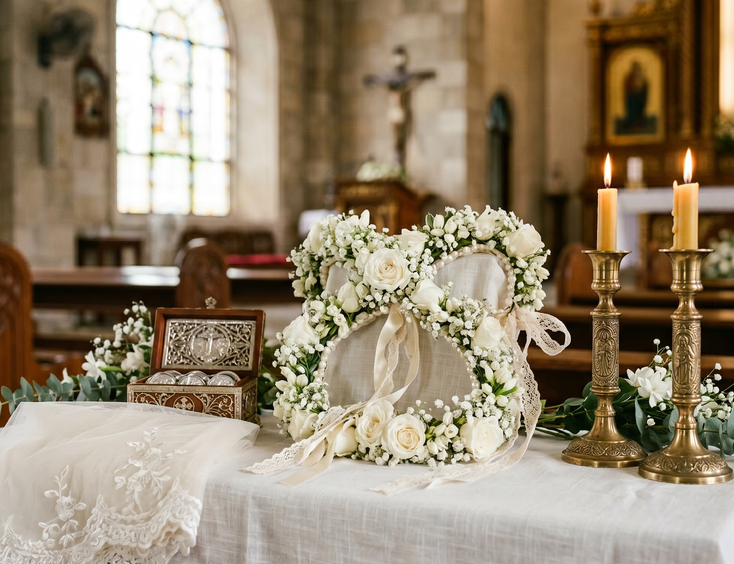
Filipino Catholic weddings include ritual elements that do not exist in most Western ceremonies. Each one requires physical objects, spatial planning, and visual design.
The Cord Ceremony (Yugal)
Two sponsors place a looped cord over the couple's heads in a figure-eight shape. The cord might be a silk rope, an oversized rosary, or a garland of fresh flowers. If the couple chooses a floral cord, your florist builds it from scratch, matching the blooms and color palette to the rest of the ceremony. Your stylist positions the cord on a display table or tray before the ritual, styled to be visible and accessible for the sponsors.
The Veil Ceremony
Two sponsors drape a veil over the couple during the ceremony, covering the groom's shoulders and the bride's head. The veil itself becomes a design element. Your stylist selects fabric, length, and embellishment that complement the bride's gown and the altar setup.
The Candle Ceremony
Sponsors light candles during the ceremony to represent the unity of two families. Your stylist sources candle holders, designs the display, and positions them within the ceremony space so the lighting moment is visible to guests and photographers.
The Coin Ceremony (Arrhae)
Sponsors present 13 coins to the officiator. Your stylist designs or sources a coin tray, pouch, or box that fits the wedding theme. The coins sit on display during the ceremony, adding another styled element to the altar table.
Four rituals. Four sets of props. Four spatial considerations within the ceremony layout. A stylist working a non-Filipino wedding rarely faces this level of ceremonial detail.
Two Venues, Two Complete Setups
Most Filipino weddings hold the ceremony at a church and the reception at a separate venue. Your stylist designs, sources, transports, installs, and styles two complete environments in a single day.
The church setup covers the altar backdrop, pew accents, entrance décor, aisle runner, ceremonial display tables, and floral arrangements. The crew installs this in a limited window, often during a gap between the church's regular mass schedule.
The reception setup is larger in scope: stage backdrop, entrance tunnel or arch, ceiling treatments, table centerpieces for 20 to 50 tables, buffet station décor, photobooth area, couch and lounge setups, guest book station, and lighting design.
Your stylist coordinates two crews or one crew working in staggered shifts. The church setup starts early in the morning. The reception setup might start the night before or run parallel with a second team. Both locations need to share a visual identity without looking like carbon copies of each other.
A single-venue wedding with 100 guests does not require this kind of operational coordination. Filipino weddings demand it as standard.
Guest Counts That Reshape the Venue
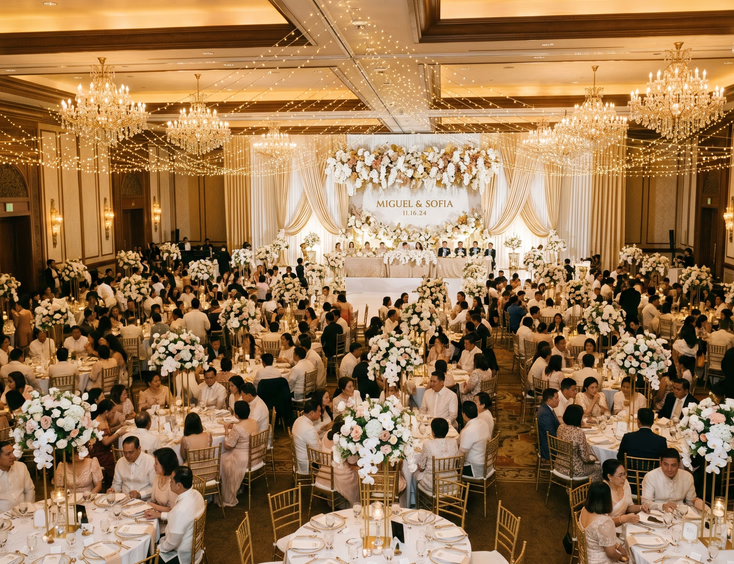
A Filipino wedding guest list of 300 to 500 people is normal. Weddings in Manila, Cebu, and Davao regularly hit these numbers because Filipino families extend invitations across multiple generations of relatives, family friends, coworkers, and community members.
Your stylist designs for this scale. Centerpieces need to be tall enough to be seen across a packed ballroom. Stage backdrops need to be large enough to serve as the visual anchor for a room with 40 or 50 tables. Entrance setups need to handle the flow of hundreds of guests arriving within the same 30-minute window.
The food service layout also falls within the stylist's scope. Buffet stations for 300 guests take up significant floor space. Your stylist incorporates buffet placement into the floor plan so guests can move between their tables, the stage area, and the food stations without creating bottlenecks.
Weather Is a Variable, Not a Backdrop
Outdoor Filipino weddings face tropical conditions that stylists in temperate climates rarely handle.
Humidity wilts flowers faster. Your stylist and florist choose varieties that hold up in heat, or they keep arrangements in cooled storage until the last possible moment before setup. Roses and orchids handle Philippine humidity better than peonies and tulips, which wilt within hours in direct sun.
Rain is a year-round possibility. Your stylist prepares a contingency plan for outdoor setups: a covered backup location, weatherproof fabric choices, weighted props, and a crew ready to relocate critical elements within an hour.
Wind affects draping, tall centerpieces, and lightweight props. Stylists working beach or garden weddings in Batangas, Palawan, or Boracay anchor their setups and avoid materials that catch wind.
These conditions turn every outdoor Filipino wedding into a logistics exercise that goes beyond design talent.
The Budget Pressure Is Real
Filipino couples often allocate 10 to 15% of their total wedding budget to flowers and styling. For a ₱500,000 wedding, that means ₱50,000 to ₱75,000 to cover two venues, a large entourage, ritual elements, and 300 guests.
Your stylist works within that ceiling while managing imported flower costs, rental fees, transportation to multiple venues, crew meals, and overtime charges. The ability to source locally, substitute blooms based on seasonal availability in the Philippines, and maximize visual impact within a constrained budget separates strong Philippine stylists from average ones.
A stylist quoting ₱50,000 for a simple setup and ₱200,000 for a full design is not inflating prices. They are pricing against a scope of work that includes twice the venue count, three times the floral volume, and five times the guest count of a standard wedding in most other markets.
The Emotional Weight of Filipino Weddings
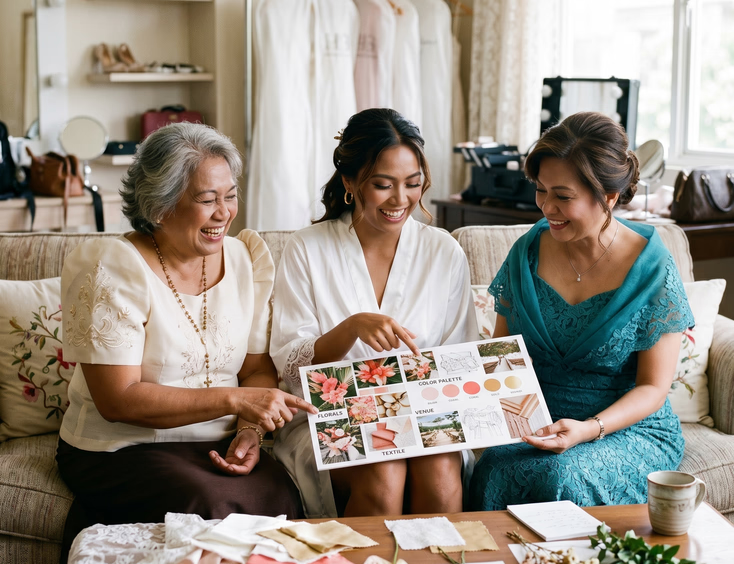
Filipino families treat weddings as a family event, not a couple's event. Parents, grandparents, aunts, uncles, and sponsors all carry expectations about how the celebration should look and feel. Your stylist navigates input from multiple decision-makers, each with their own preferences and traditions.
A bride might want a minimalist modern theme. Her mother might expect a traditional church setup with full floral altar arrangements. The ninang sponsoring the flowers might have opinions about bloom selection. Your stylist mediates these perspectives and builds a cohesive design that satisfies multiple stakeholders without losing the couple's original vision.
This layer of interpersonal coordination goes beyond design skill. It requires cultural fluency and patience that Filipino stylists develop through years of working within this market. If you are still deciding whether to book one supplier or two, our guide on hiring a wedding florist and event stylist in the Philippines walks through the tradeoffs.
What This Means for You as a Couple
When you evaluate a wedding event stylist in the Philippines, you are not comparing them to a decorator who places centerpieces and leaves. You are hiring someone who manages ceremonial design, multi-venue logistics, large-scale spatial planning, weather contingencies, budget constraints, and family dynamics.
Ask your stylist how they handle two-venue setups. Ask about their rain contingency process. Ask how many crew members will be on-site. Ask about their experience managing large entourages and Filipino ceremony rituals. These questions reveal whether a supplier can handle the demands that Filipino weddings place on event stylists.
For a broader view of the stylist's role, read our guide on what a wedding event stylist does in the Philippines. When you are ready to compare suppliers, browse our directory of wedding florists and event stylists in the Philippines to find verified professionals who understand the full scope of a Filipino wedding.
Still Searching for a Right Match?
Find Your Perfect Wedding Supplier Today!
Discover trusted wedding suppliers across the Philippines in our complete directory. Compare services and connect with the ones that fit your dream celebration.
Browse Wedding SuppliersFeatured Blog Posts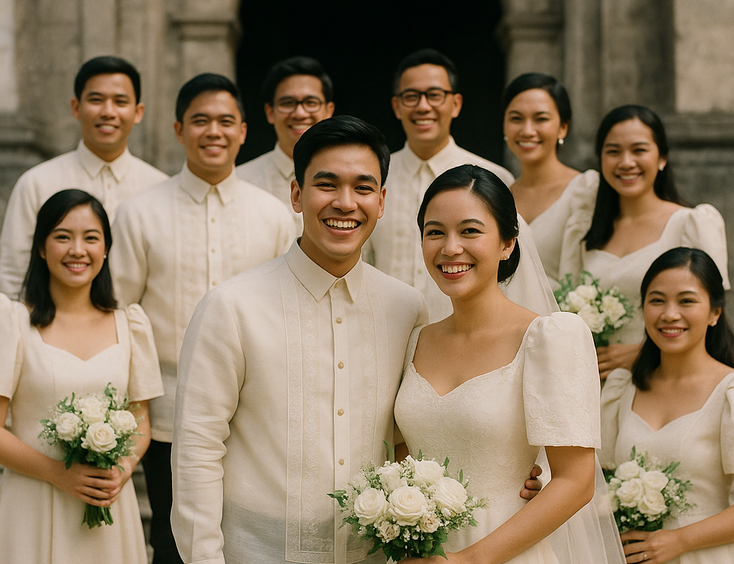

Filipino Wedding Entourage - Roles, Order of March, and Modern Etiquette
6 mins readCivil Weddings in the Philippines - Requirements, Costs, and Step-by-Step Process
9 mins readCivil Wedding Requirements in the Philippines - Complete Checklist
6 mins readCost of Wedding in the Philippines - 5 Essential Things You Need to Know
7 mins readPrincipal Sponsors (Ninong/Ninang) - How Many, How to Ask, What They Really Do
4 mins readVeil, Cord, Candle & Coins - Roles, Options, and When They Happen
4 mins readEntourage for a Traditional Pinoy Wedding - Complete Roles and Guide
6 mins readComplete List of Civil Wedding Requirements in the Philippines
8 mins readHow to Choose Wedding Ninongs and Ninangs - Ask Yourself These 3 Important Questions
5 mins read