


Why Couples Ghost Wedding Suppliers and How to Stop It

Filipino wedding suppliers know the feeling. A couple messages with excitement. They ask all the right questions. They request your pricing. They sound serious. Then silence. No reply. No follow-up. No explanation. The supplier waits a day, then a week, then a month, and eventually realizes the couple ghosted.
Ghosting frustrates suppliers more than any other booking problem. The work of replying to inquiries feels wasted. The peak season slips by with hopeful conversations that go nowhere. Most suppliers blame the couples and move on. The truth is that most ghosting happens for fixable reasons, and the patterns repeat across the Filipino wedding market. This guide walks through why couples ghost wedding suppliers, what triggers the silence, and how to design your inquiry process to keep more couples engaged through to booking.
Understanding Why Filipino Couples Actually Ghost Suppliers
Filipino wedding suppliers tend to attribute ghosting to the couple being flaky, rude, or disinterested. Sometimes the diagnosis is correct. More often, the couple ghosts because something in the supplier's process made them disengage.
Couples ghost for one of seven reasons. Each is addressable.
Reason one: pricing shock. The supplier shared pricing the couple did not expect, and they did not know how to respond.
Reason two: poor response time. The supplier replied too slowly, and the couple moved on to faster competitors.
Reason three: cold or templated replies. The supplier's response felt impersonal, and the couple lost interest.
Reason four: information overload. The supplier sent too much at once, and the couple felt overwhelmed.
Reason five: lack of clarity. The supplier did not explain the next step, and the couple stalled out of confusion.
Reason six: the couple was just shopping early. They were researching, not ready to book.
Reason seven: external life delays. Family disagreements, financial planning, postponed dates, or other reasons paused the couple's wedding planning entirely.
Suppliers cannot solve every ghosting case. Reasons one through five can be reduced significantly with better systems. Reasons six and seven require follow-up strategies that recover bookings months later.
The wider booking system that addresses ghosting sits inside how to respond to wedding inquiries so couples actually book you and the complete guide to getting more wedding clients in the Philippines.
Fix Pricing Shock by Pre-Qualifying Couples
Filipino couples often ghost suppliers when the pricing surprises them. They messaged expecting a certain budget range, the actual numbers landed higher than expected, and they did not know how to respond.
The fix starts with pricing visibility before the inquiry conversation.
Show starting rates on your website. A couple seeing "Packages start at PHP 75,000" on your pricing page self-qualifies before messaging.
Show starting rates on your directory listings. Bridestory. EventNest. Kasal. These platforms allow pricing fields. Use them. The pattern fits inside getting listed on EventNest.com, Bridestory, and other Philippine wedding directories.
Show starting rates on your Google Business Profile. Include them in your services. Couples filter by price before clicking through to your site. The setup fits inside Google Business Profile setup for Filipino wedding suppliers.
Reference your pricing range in your social bios. Instagram. TikTok. Facebook. A bio that includes "Wedding photography packages from PHP 75K" pre-qualifies couples scrolling.
Mention pricing context when sharing real wedding features. "Garden wedding for 50 guests, full-service florals starting at PHP 80K." Couples reading your content know your range.
The transparency reduces pricing shock dramatically. Couples who message you already know your starting point. The ones who fit are far more likely to engage seriously. The ones who do not fit move on without wasting your time.
Fix Slow Response Time
Filipino couples expect quick replies on social platforms. The expectation has tightened over the years. A 24-hour response time feels slow now. Couples expect responses within one to two hours during business hours.
Filipino wedding suppliers lose bookings every week because they reply too slowly.
Track your average response time. Use a free tracking method. Note the time you receive each inquiry and the time you reply. After a month, you will see your average.
Aim for under two hours during business hours. Faster is better. The fastest reply almost always wins the conversation.
Use push notifications across every platform. Messenger. Instagram DMs. Email. Viber. WhatsApp. The platforms Filipino couples use most.
Use saved replies for first responses. The first message does not have to be the full proposal. A warm acknowledgment with a few clarifying questions buys time while keeping the conversation alive.
Set realistic business hours. Be available within those windows. Communicate clearly outside of them. A pinned story or auto-reply that says "We reply within 24 hours Monday to Saturday" sets expectations.
Hire help if volume justifies it. A virtual assistant trained to handle first acknowledgments and basic inquiries can save you from slow response losses during peak season.
The full response system pairs with how to respond to wedding inquiries so couples actually book you. Speed alone fixes a significant share of ghosting.
Fix Cold or Templated Replies
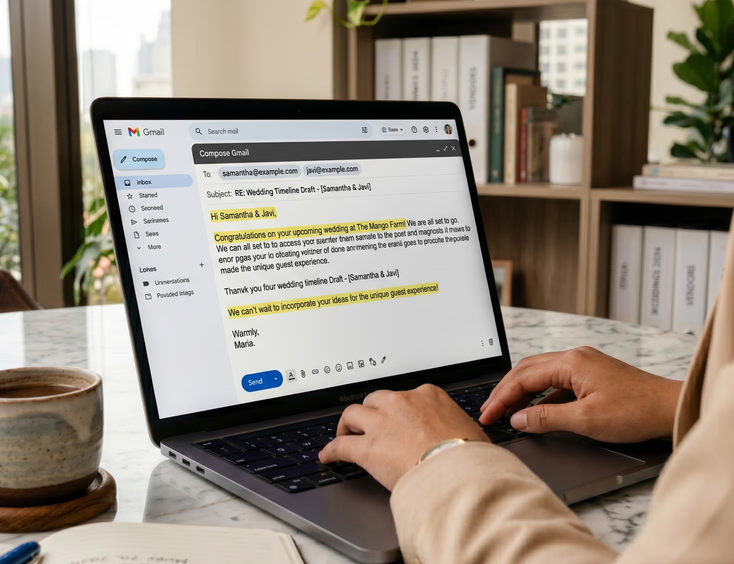
Filipino couples can tell when a reply feels generic. They scroll past dozens of supplier responses and recognize the patterns instantly. Cold replies signal that the supplier sees them as a transaction.
The fix is selective personalization. Templates speed up replies. Personalization keeps them warm.
Open with the couple's name. Avoid generic greetings like "Hi po, thanks for messaging." Use "Hi Anna and Mark."
Reference details from their inquiry. Their wedding date. Their venue. The detail they shared in their message. "Thank you for messaging about your November 2026 wedding at Antonio's Tagaytay."
Express genuine excitement about their wedding. Not gushing. Just a sentence that acknowledges the day matters. "We have a few weddings at Antonio's coming up and would love to learn more about what you are planning."
Use templated middles for efficiency. Your standard package information, FAQ block, or pricing summary stays consistent. The opening and closing are where personalization happens.
Personalize the closing. End with something specific. "If a same-day edit is important to you, we can definitely include that in your package."
Five seconds of personalization at the start and end of an otherwise templated reply transforms how Filipino couples receive your message. They feel seen rather than processed.
Fix Information Overload
Filipino wedding suppliers sometimes ghost themselves by sending too much information at once. A couple sends a one-line inquiry and receives a five-page pricing document, three carousels, two videos, and a wall of text in reply. The couple closes the message and never opens it again.
Match the level of detail to the stage of the conversation.
First reply. Short. Warm. Personalized. Two to four clarifying questions. Optional: starting price or package summary.
Second reply. Slightly more detail. The full pricing document or starting package overview. Direct answers to questions the couple asked.
Third reply or call. The full proposal. Specifics for their wedding.
Avoid sending the entire pricing PDF, the contract template, the inclusions list, the FAQ document, and the booking link all in the first reply. The volume overwhelms couples. They stall, then ghost.
Pace the information across two to three exchanges. The couple stays engaged because each message gives them just enough to respond to.
The full pricing flow pairs with crafting a wedding package pricing sheet Filipino couples understand. The pricing sheet itself should not feel like information overload either.
Fix Lack of Clarity About Next Steps
Filipino couples sometimes ghost not because they lost interest but because the supplier never told them what to do next. The conversation ends without direction, and the couple moves on.
Every reply should end with a clear next step.
"Would Thursday or Friday work for a quick 20-minute call?"
"Want me to send the full pricing guide so you can review it?"
"Can you confirm the guest count so I can put together a tailored proposal?"
"Shall we book a venue visit so we can discuss the layout in person?"
The next step removes ambiguity. The couple knows exactly what comes next. They can either say yes, suggest an alternative, or explain why they need time.
Open-ended replies that end with "Let me know what you think" leave couples unsure how to respond. Many ghost out of indecision, not disinterest.
The pattern pairs with the discovery call script that books wedding clients. The discovery call is often the clearest next step that closes bookings.

Identify Couples Who Are Just Shopping Early
Some Filipino couples ghost because they were not ready to book in the first place. They were comparing options. Researching for a wedding 18 to 24 months away. Or trying to convince a partner that wedding planning needs to start.
These couples are not lost. They are early. Suppliers who handle early inquiries differently often book the couple six months later.
Identify early shoppers by their questions.
Early shoppers ask about pricing first. They want to know if you fit their budget before they invest emotional energy.
Early shoppers do not have firm dates. "We are thinking sometime next year" signals they are still planning.
Early shoppers ask about availability for vague ranges. "Are you available in 2026?" without a specific month or date is a research question, not a booking request.
Treat early shoppers warmly. Send them the pricing summary. Answer their questions. Save them in a follow-up list. Reach out three to six months later with a friendly check-in.
The follow-up structure fits inside following up with wedding inquiries without sounding desperate. Early shoppers convert into bookings when the supplier stays warm and visible during their planning window.
Recover Couples Paused by Life Delays
Filipino weddings get postponed, delayed, or paused for many reasons. Family disagreements about the venue. Financial planning. Job changes. Pandemic-style disruptions. Health issues. Death in the family.
When couples ghost suddenly mid-conversation, life often interrupted them. They are not avoiding you. They are managing something bigger than your inquiry.
The recovery framework.
Wait two to three weeks. Do not chase too soon. Give the couple space.
Send a warm, no-pressure follow-up. "Hi Anna! Hope you and Mark are doing well. Just wanted to check in. No rush at all if your plans have shifted. Let me know if you want to pick the conversation back up whenever the timing feels right."
Wait another two to three weeks before a second follow-up. Same warmth. Same lack of pressure.
After the second follow-up, stop. The couple knows you exist. Constant chasing damages your reputation.
Some life-delayed couples come back months later. Others move on entirely. Both outcomes are acceptable. Your job is to leave the door open without pushing.
Build a Follow-Up System That Recovers Bookings
Most Filipino wedding suppliers underuse follow-ups. They send one reply, wait for the couple to respond, and move on if they go silent. The pattern leaves bookings on the table.
Build a structured follow-up system.
Follow-up one: two to three days after the initial reply. A warm check-in. "Hi Anna! Just following up on my reply. Let me know if you have any questions or want to set up that call."
Follow-up two: one week later. Share something useful. A relevant tip. A new portfolio piece. A recent wedding feature that matches their style.
Follow-up three: two to three weeks later. A final friendly nudge. "Hi Anna! Wanted to check in one more time. If your plans have shifted, no pressure at all. If you want to pick the conversation back up, I have a few slots opening next week."
After follow-up three, mark the inquiry as cold. Stop reaching out actively.
Suppliers who follow up consistently recover 20 to 30% of bookings that would otherwise have gone cold. The pattern is significant. A photographer receiving 50 inquiries per month who recovers 10 to 15 of them through follow-ups books significantly more weddings.
The full follow-up framework sits inside following up with wedding inquiries without sounding desperate.

Move Conversations Off Crowded Platforms
Filipino couples often start inquiries on Instagram DMs, Messenger, or TikTok DMs. These platforms work for first contact but become difficult to manage once the conversation deepens.
Move serious inquiries to channels with better tools.
After the first or second exchange, ask for email or Viber. "Should I send the full pricing guide to your email?"
The shift accomplishes three things. It signals the conversation is becoming serious. It moves the discussion to a platform with better organization. It reduces the risk of messages getting buried in DM clutter.
Email also serves as documentation. A pricing guide, proposal, and contract sent through email leaves a clear paper trail. Filipino couples often appreciate the structure.
Avoid Common Filipino Wedding Supplier Anti-Ghosting Mistakes
Filipino wedding suppliers repeat the same anti-ghosting mistakes.
Chasing too aggressively. Sending five follow-ups in a week feels desperate. The couple disengages further.
Sending guilt-trip follow-ups. "I have not heard from you. Are you no longer interested?" reads as manipulative.
Going silent themselves. Some suppliers ghost couples after one or two exchanges if the couple seems uninterested. The pattern hurts your reputation.
Refusing to share pricing until a meeting. Couples want to know the budget range before they invest in a call.
Treating every couple identically. Different couples need different approaches. A serious booker needs different attention than a casual researcher.
Failing to track ghosting patterns. Without tracking, you cannot improve. Note which stages couples disengage at. Adjust accordingly.
Blaming couples for everything. Some ghosting is the couple's fault. Most has fixable supplier-side issues.
Skipping follow-ups during peak season. The busiest months are when follow-ups matter most. Couples are messaging many suppliers and forget who they spoke with.
Not warming up your CRM with cold inquiries. Cold leads from 6 to 12 months ago sometimes warm back up. Periodic outreach to old leads recovers surprise bookings.
Burning out on the process. Ghosting hurts emotionally. Build systems that protect your motivation and keep the work sustainable.
Track Ghosting Patterns and Adjust
Filipino wedding suppliers who track their ghosting patterns improve their booking rate every quarter.
Track three metrics.
Stage of disengagement. Where do couples ghost? After the first reply? After receiving pricing? After the discovery call? Pattern recognition reveals the weak spot.
Response time per ghosted inquiry. Did slow replies cause the ghosting? Faster replies should reduce the count.
Source of ghosted inquiries. Which platforms produce the highest ghost rates? Instagram DMs might ghost more than email inquiries, for example.
After three months of tracking, the patterns become clear. Adjust your process based on what the data shows.
The wider tracking framework fits inside tracking your numbers: KPIs every wedding supplier should watch.
Where Anti-Ghosting Fits in Your Wider Booking System
Stopping ghosting is not a one-time fix. It requires a complete booking system that addresses pricing transparency, response speed, personalized replies, paced information, clear next steps, structured follow-ups, and patience with early shoppers.
For the full marketing and booking framework, see the complete guide to getting more wedding clients in the Philippines.
Pre-qualify couples through visible pricing. Reply fast. Personalize even with templates. Pace the information. Clarify the next step. Identify early shoppers and follow up over time. Build a structured follow-up sequence. Track ghosting patterns and adjust. Filipino couples who messaged you will stay engaged through to booking, and the ones who ghost will become rarer over time.
Join the Philippines' Trusted Wedding Network
Connect With Couples Ready to Book Your Services
Showcase your wedding business to engaged Filipino couples searching for trusted suppliers. Build your portfolio presence, grow your bookings, and stand out in your category.
List Your BusinessFeatured Blog Posts

Filipino Wedding Entourage - Roles, Order of March, and Modern Etiquette
6 mins readCivil Weddings in the Philippines - Requirements, Costs, and Step-by-Step Process
9 mins readCivil Wedding Requirements in the Philippines - Complete Checklist
6 mins readCost of Wedding in the Philippines - 5 Essential Things You Need to Know
7 mins readPrincipal Sponsors (Ninong/Ninang) - How Many, How to Ask, What They Really Do
4 mins readVeil, Cord, Candle & Coins - Roles, Options, and When They Happen
4 mins readEntourage for a Traditional Pinoy Wedding - Complete Roles and Guide
6 mins readComplete List of Civil Wedding Requirements in the Philippines
8 mins readHow to Choose Wedding Ninongs and Ninangs - Ask Yourself These 3 Important Questions
5 mins read