


How to Respond to Wedding Inquiries So Couples Actually Book You

Most Filipino wedding suppliers lose bookings before the couple ever decides on a budget. The drop-off happens in the inquiry response. A couple sends a message at 11pm on a Sunday. The supplier replies three days later with a generic price list and no warmth. The couple has already moved on to two competitors who replied faster and made them feel seen.
How you respond to inquiries shapes whether couples book you. The portfolio gets them to message. The reply convinces them to book. Filipino couples decide within the first one to two messages whether they want to continue the conversation. This guide walks Filipino wedding suppliers through the inquiry response system that turns first messages into signed contracts.
Why Inquiry Response Decides the Booking
Filipino couples planning weddings message three to five suppliers per category before they decide. They compare replies side by side. The supplier with the warmest, fastest, most useful response usually wins the booking, even when their pricing or portfolio is not the strongest.
Inquiry response performs three jobs in the booking journey.
It builds trust. Couples decide whether you feel professional, warm, and reliable based on your reply. A rushed or robotic response signals risk.
It filters qualification. Your reply tells couples whether you fit their wedding. The right details move them toward booking. The wrong details push them toward competitors.
It opens the booking conversation. A strong reply leads naturally toward the next step. A discovery call. A pricing review. A consultation. A weak reply ends the conversation right there.
The inquiry response sits inside the wider booking system you set up through the complete guide to getting more wedding clients in the Philippines. The marketing brings the inquiry. The reply turns it into a booking.
Step One: Reply Fast
Filipino couples expect quick replies on social platforms and Messenger. The expectation is faster than most suppliers realize. A 24-hour response time was acceptable five years ago. Couples in the current Filipino wedding market expect replies within one to two hours during business hours.
The fastest replier almost always wins. A photographer who replies in 20 minutes beats one who replies in 36 hours, even if the second photographer has a better portfolio.
Set up systems that keep your response time short.
Push notifications on. Get notified for Messenger, Instagram DMs, Email, and Viber. Filipino couples message across multiple platforms. You need to know when each one comes in.
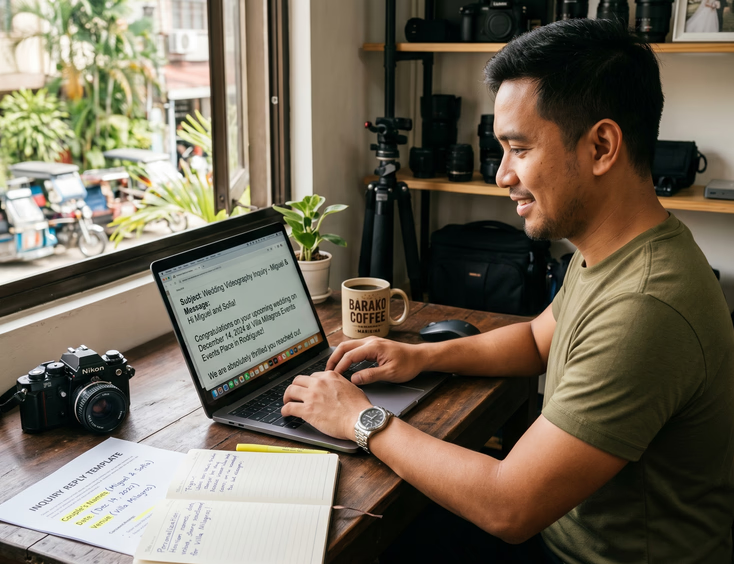
Saved replies for the first response. The first reply does not need to be the full proposal. A warm acknowledgment with a few questions buys time. Save a template that opens warmly, references the couple's wedding date, and asks two to three clarifying questions.
Defined business hours. Tell couples when to expect replies. Hours like Monday to Saturday, 9am to 7pm work well. Set clear boundaries while staying responsive within those windows.
Backup person. If you handle high volume, train an assistant or virtual assistant to send the initial acknowledgment. The couple gets a fast reply. You handle the detailed response when you have time.
Filipino couples ghost suppliers who reply slowly. The patterns sit inside why couples ghost wedding suppliers and how to stop it. Speed alone solves a significant portion of the ghosting problem.
Step Two: Open With Warmth, Not Pricing
The biggest mistake Filipino wedding suppliers make in inquiry responses is leading with pricing. A couple messages with a soft hello and one question, and the supplier replies with a wall of package prices, terms, and conditions. The couple feels processed rather than welcomed.
Open with warmth. Greet the couple by name. Acknowledge their wedding date or venue if they mentioned it. Express genuine excitement about their plans.
A sample opening for a Manila photographer.
"Hi Anna and Mark! Congratulations on your engagement. Thank you for reaching out about your November 2026 wedding at Antonio's Tagaytay. We have a few weddings in that area coming up and would love to learn more about what you are planning."
Two sentences of warmth before any business content sets the tone for the rest of the conversation. Filipino couples respond to suppliers who feel human, not transactional.
Avoid generic openings like "Hi po, thanks for messaging" with no personalization. The couple's name, venue, or wedding date in the first reply signals that you read their message and care about their specific event.

Step Three: Ask the Right Clarifying Questions
A good inquiry response does not assume. It asks. Couples appreciate suppliers who treat their wedding as unique, not as one more transaction.
The right clarifying questions accomplish three things. They show you care about details. They surface information you need to quote accurately. They build the conversation so the couple feels engaged.
Common questions to include in your first reply.
For photographers and videographers. What is the wedding date? Where is the venue? Approximately how many hours of coverage do you need? Are you considering a same-day edit or a prenup session?
For coordinators and planners. What is the wedding date? Where are the ceremony and reception? Roughly how many guests? Do you need full planning, partial, or on-day coordination?
For florists. What is the wedding date and venue? What is your overall style or color palette? Are you thinking installation pieces, bouquets only, or a full reception setup?
For caterers. What is the wedding date? Where is the venue? How many guests? Are you considering buffet, plated, or stations? Any dietary requirements to plan for?
Limit to three to four questions in the first reply. Too many feels like a survey. Couples disengage from suppliers who interrogate them upfront.
Step Four: Share Pricing in the Right Way
Filipino couples want pricing. Avoiding it entirely backfires. Sharing it incorrectly also backfires. The middle ground sits in how you present pricing within the conversation.
Three approaches work consistently.
Starting rates. Share a price floor. "Our wedding photography packages start at PHP 75,000 for six hours of coverage." This lets couples self-qualify by budget without dropping out of the conversation.
Package tiers with starting prices. Outline three to four package levels with starting rates. Couples appreciate seeing the range of options.
Pricing guide. Some suppliers prefer to send a detailed pricing guide as a downloadable file after the first warm exchange. The guide includes packages, inclusions, and pricing.
Avoid two pricing mistakes.
Sending only a flat price list with no context. A pricing list without warmth or relationship-building feels cold.
Refusing to share any pricing until a meeting. Some couples just want to know if your services fall within their budget. Withholding pricing entirely loses inquiries that might have qualified.
The pricing presentation pairs with crafting a wedding package pricing sheet Filipino couples understand. Use the same structure couples will see in your full guide.
Step Five: Anticipate and Answer Common Questions
Filipino couples ask the same questions in the same patterns. Suppliers who anticipate and answer those questions in the first or second reply reduce back-and-forth and close bookings faster.
Common questions to address proactively.
What is included in each package?
Do you travel? Are there travel fees?
How does the booking process work?
What is the down payment? What payment schedule do you offer?
How early should we book?
Can you accommodate our wedding date?
Are there discounts for off-season weddings?
Do you offer engagement or prenup sessions?
Build a "FAQ block" you can paste into responses when relevant. The block answers common questions in a structured way. Customize the opening and closing for each couple, then paste the FAQ block in the middle.
This approach saves hours during peak season without making your replies feel templated. Couples appreciate getting clear answers without having to ask question by question.
Step Six: Personalize Even When Using Templates
Templates speed up replies. Templates also kill conversions if the couple senses that the message is the same one sent to everyone.
Filipino couples spot generic replies instantly. The fix is selective personalization. Use templates for the structure. Personalize the opening, the closing, and one detail in the middle.
A sample structure.
Personalized opening. Greet by name. Reference their wedding date, venue, or detail from their inquiry.
Templated middle. Your standard package information, FAQ block, or pricing summary.
Personalized closing. A line that addresses their specific situation. "If a same-day edit is important to you, we can definitely work that into your package."
Personalized call to action. "I have a free slot for a discovery call this Thursday or Friday. Which works better for you?"
Five seconds of personalization at the start and end transforms a templated reply into a personal conversation. Couples notice the difference and respond accordingly.
Step Seven: Move Toward a Discovery Call
Most Filipino wedding bookings close faster after a call. A chat conversation can drag on for two weeks. A 20-minute call resolves questions and builds trust faster than 30 back-and-forth messages.
Build the discovery call into your inquiry response flow. After the first one or two exchanges, suggest a call.
Sample language.
"It might be easier to walk you through everything in a quick 20-minute call. Would Thursday or Friday afternoon work for you?"
Offer two specific time options. Open-ended availability questions ("when works for you?") often stall the conversation. Two clear options move it forward.
Use a tool that handles scheduling without back-and-forth. Calendly, TidyCal, or even a simple Google Calendar share helps couples book a slot themselves.
The discovery call framework sits inside the discovery call script that books wedding clients. The call is where the booking usually closes.
Step Eight: Follow Up Without Sounding Desperate
Filipino couples sometimes go quiet for days or weeks after the first reply. They are comparing, discussing with family, or busy with work. A well-timed follow-up recovers a significant share of bookings that would otherwise go cold.
Follow up at three intervals.
Two to three days after the first reply. A warm check-in. "Hi Anna! Just following up on my reply. Let me know if you have any questions or want to set up that call."
One week later. A second touch. Share a relevant tip, a new portfolio piece, or a recent feature. "Hi Anna, hope your week is going well. Wanted to share this recent Tagaytay garden wedding we covered last month that might be similar to what you are planning."
Two to three weeks later. A final, friendly nudge. "Hi Anna! I wanted to check in one more time. If your wedding plans have shifted, no pressure. If you would still like to talk, I have a few slots opening up next week."
After the third follow-up, leave the conversation. Filipino couples who ghost after three friendly touches usually do not return. Constant chasing kills your reputation and your motivation.
The full follow-up framework sits inside following up with wedding inquiries without sounding desperate.

Step Nine: Address Price Objections Calmly
Filipino couples often ask "Pwede pa bang bumaba ang price?" Suppliers who panic and drop prices fast lose margin and signal that their pricing is negotiable.
Address price objections calmly.
Reaffirm the value. Walk through what is included in your package. Couples sometimes object on price because they did not fully understand the inclusions.
Offer flexible alternatives. Smaller packages, fewer hours, removed services. Adjusting scope is fair. Discounting the same service at a lower price devalues your brand.
Hold firm when needed. Some couples will book at your price after a calm conversation. Others will leave. Both outcomes are acceptable.
The full framework for price objections sits inside how to handle pwede pa bang bumaba ang price without losing the booking. The way you handle objections shapes how couples remember you, even when they do not book.
Step Ten: Send a Clear Proposal or Booking Form
Once a couple confirms interest, the next step is locking the booking. The proposal or booking form moves the conversation from interest to commitment.
A strong proposal includes the following.
Personalized header with the couple's names and wedding date.
Selected package with full inclusions.
Clear total price.
Down payment amount and due date.
Payment schedule for the remaining balance.
Cancellation and refund terms.
Signature lines or a link to a digital signing tool.
Send the proposal within 24 hours of the discovery call. Filipino couples often hesitate when the next step is unclear. A timely proposal removes the friction.
For the full contract framework, see contracts and deposits: how to lock in Filipino wedding bookings confidently. The proposal stage is where the booking finalizes.
Step Eleven: Confirm the Booking Warmly
The booking is not done until the couple has signed and paid the down payment. Until then, treat them like leads who can still walk.
When the couple agrees, do not disappear. Send a warm confirmation message.
"Anna and Mark, we are so excited to be part of your November wedding. Your proposal is attached. Once you have reviewed and signed, we will officially block your date and start the planning conversations."
After the down payment lands, send another warm message.
"Thank you so much. Your date is officially booked. We will send a planning timeline this week and schedule our first planning session for next month."
These small gestures cement the relationship and set the tone for the months leading up to the wedding. Couples remember the warmth long after the contract is signed.
Step Twelve: Track Your Inquiry Response Performance
Filipino wedding suppliers often have no idea what percentage of their inquiries actually book. The number is critical for growth.
Track three metrics.
Response time. How quickly do you reply on average? Aim for under two hours during business hours.
Inquiry-to-booking rate. Of every 10 inquiries, how many become bookings? Strong suppliers convert 30 to 50%. Anything below 20% signals issues in the response process.
Inquiry source. Where do inquiries come from? Instagram. TikTok. Google. Bridestory. Referrals. Knowing the sources helps you double down on what works.
Review your metrics monthly. If conversion drops, audit your replies. Are you slow? Cold? Too long? Too short? Adjustments based on data improve booking rates over time.
The full metrics framework sits inside tracking your numbers: KPIs every wedding supplier should watch.
Common Filipino Wedding Supplier Inquiry Response Mistakes
Filipino wedding suppliers repeat the same mistakes.
Replying after 24+ hours. Couples have already messaged competitors. The conversation often ends before you reply.
Leading with pricing. The reply feels transactional. Warmth comes first.
Using copy-paste responses with no personalization. Couples sense it immediately.
Sending wall-of-text replies. Mobile-heavy Filipino couples scroll quickly. Long unbroken paragraphs lose attention.
Refusing to share any pricing until a meeting. Couples want at least a starting range before they invest time in a call.
Asking too many questions upfront. Surveys feel cold. Three to four targeted questions is enough.
Skipping the follow-up. Suppliers who never follow up lose 30 to 50% of recoverable bookings.
Ghosting their own leads. Some suppliers respond once, then disappear if the couple does not reply immediately. Two to three follow-ups recover many of those leads.
Forgetting to confirm and welcome after booking. The relationship continues after the deposit. Warm follow-through reduces buyer's remorse and sets up referrals later.
Treating every couple identically. Personalization matters. A 200-guest hotel wedding in BGC and a 50-guest garden ceremony in Tagaytay deserve different conversations.
Where Inquiry Response Fits in Your Wider Booking System
Your inquiry response is the moment your marketing pays off. The website, the portfolio, the social media, the directories all work to bring couples to your inbox. The reply turns the inquiry into a wedding.
For the full marketing and booking framework, see the complete guide to getting more wedding clients in the Philippines.
Reply fast. Open with warmth. Ask the right questions. Share pricing in the right way. Anticipate common questions. Personalize even with templates. Move toward a discovery call. Follow up without sounding desperate. Handle price objections calmly. Send a clear proposal. Confirm the booking warmly. Track your performance. Filipino couples who message you will feel seen, helped, and ready to book.
Join the Philippines' Trusted Wedding Network
Connect With Couples Ready to Book Your Services
Showcase your wedding business to engaged Filipino couples searching for trusted suppliers. Build your portfolio presence, grow your bookings, and stand out in your category.
List Your BusinessFeatured Blog Posts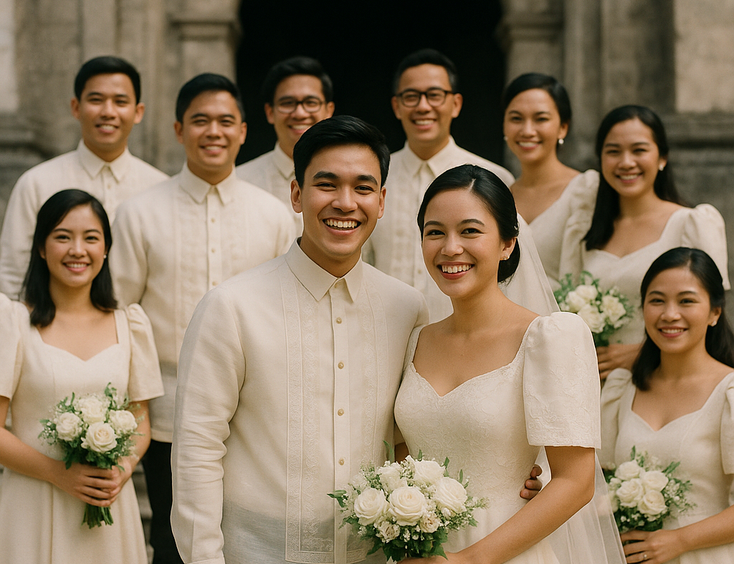

Filipino Wedding Entourage - Roles, Order of March, and Modern Etiquette
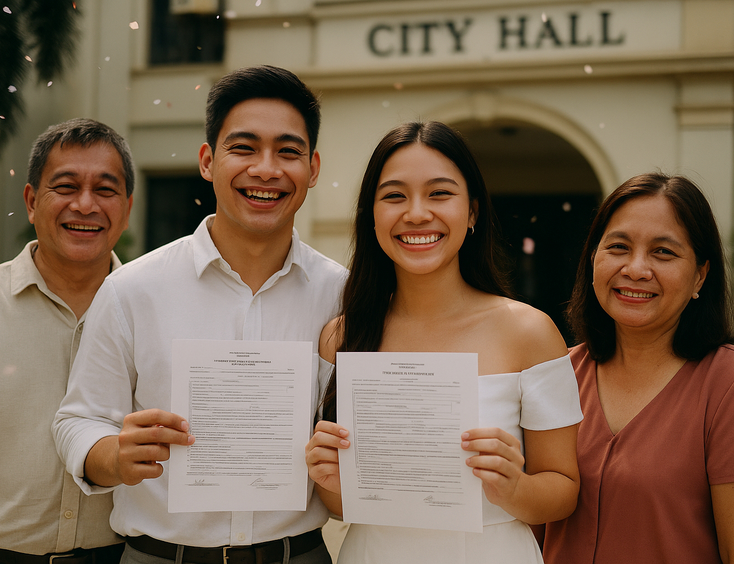
6 mins readCivil Weddings in the Philippines - Requirements, Costs, and Step-by-Step Process
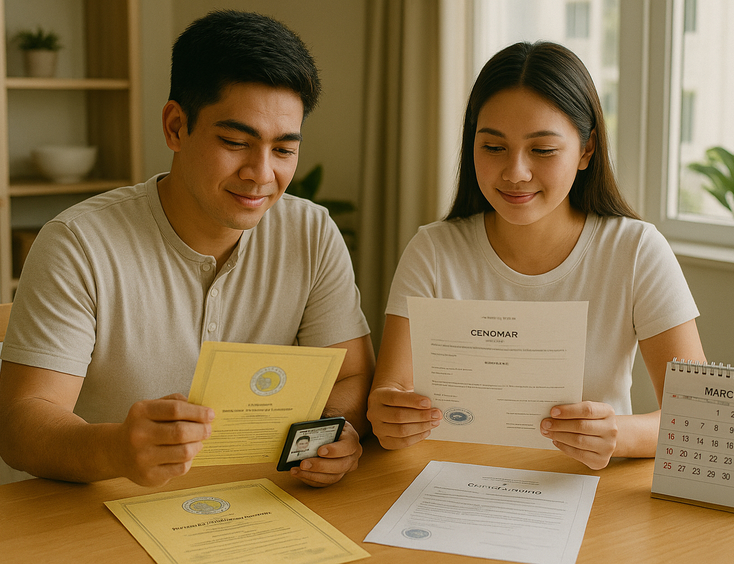
9 mins readCivil Wedding Requirements in the Philippines - Complete Checklist
6 mins readCost of Wedding in the Philippines - 5 Essential Things You Need to Know
7 mins readPrincipal Sponsors (Ninong/Ninang) - How Many, How to Ask, What They Really Do
4 mins readVeil, Cord, Candle & Coins - Roles, Options, and When They Happen
4 mins readEntourage for a Traditional Pinoy Wedding - Complete Roles and Guide
6 mins readComplete List of Civil Wedding Requirements in the Philippines
8 mins readHow to Choose Wedding Ninongs and Ninangs - Ask Yourself These 3 Important Questions
5 mins read