


The Discovery Call Script That Books Wedding Clients

Filipino wedding suppliers who close the most bookings share one habit. They get couples on a call before sending a proposal. A 20-minute conversation builds more trust than two weeks of back-and-forth messages. The couple hears your voice, feels your warmth, asks their unfiltered questions, and decides whether to book before the call ends. Suppliers who skip the call lose bookings to suppliers who insist on it.
The challenge is that most Filipino wedding suppliers run discovery calls without structure. They wing it. They wait for the couple to lead. They ramble through their packages. They forget to ask for the booking at the end. A strong discovery call follows a script. Not a robotic one. A flexible structure that moves the conversation from hello to confirmed booking in 20 minutes. This guide walks Filipino wedding suppliers through the discovery call script that turns calls into closed weddings.
Why Discovery Calls Convert Better Than Chats
Filipino couples comparing suppliers feel overwhelmed. They message ten suppliers, receive ten replies, juggle ten pricing guides, and freeze on the decision. The supplier who pulls them out of the chat fog and onto a call almost always wins.
Discovery calls deliver four advantages no text-based conversation can match.
They build trust through voice. Couples hear your tone, your warmth, your confidence. A reply that reads as friendly can feel cold without voice context. A call closes the gap immediately.
They surface real questions. Couples ask follow-up questions on calls they would never type out. The conversation reveals what they actually care about.
They speed up the decision. A 20-minute call replaces three weeks of intermittent messages. The booking decision happens faster.
They create commitment. A couple who shows up for a call has signaled investment. The booking conversation gains traction once they have given you their time.
The discovery call fits inside the wider inquiry flow you built through how to respond to wedding inquiries so couples actually book you. The call is the bridge between inquiry and contract.
How to Get Couples to Actually Take the Call
Filipino couples sometimes hesitate to schedule a call. They prefer messages because messages feel low pressure. The way you offer the call shapes whether they accept.
Offer the call confidently. "It might be easier to walk you through everything in a quick 20-minute call." The framing signals that the call serves them, not just you.
Offer two specific time slots. Open-ended availability questions stall. "Would Thursday at 3pm or Friday at 5pm work better?" gives the couple a clear path forward.
Keep the duration short. 20 minutes feels manageable. An hour-long call feels like a commitment couples often delay.
Choose the right platform. Most Filipino couples are comfortable with a Zoom or Google Meet call. Some prefer a phone call. Some prefer a Messenger video call. Match the platform to where the conversation began.
Send a confirmation with prep notes. After the couple agrees, send a short confirmation. The platform link. A line about what to expect. "We will cover your wedding vision, walk through our packages, and answer your questions. Looking forward to chatting Thursday at 3pm."
The confirmation reduces no-shows. Couples sometimes forget calls. A reminder the morning of the call brings the no-show rate close to zero.
Before the Call: Prepare in 10 Minutes
Filipino wedding suppliers who wing discovery calls leave bookings on the table. A 10-minute prep raises your close rate significantly.
Review the couple's inquiry messages. Pull every detail they shared. Wedding date. Venue. Style. Guest count. Specific questions they asked. Use these throughout the call.
Check their social media if shared. A quick look at their Instagram, Facebook, or wedding hashtag tells you their vibe. The vibe shapes your tone.
Review your own portfolio for matching weddings. If they want a Tagaytay garden wedding, pull two or three of your best matching real weddings to reference during the call.
Have your pricing sheet ready. Open the document on a second screen or printout. You will reference specific packages live.
Prepare your three closing questions. The questions you will ask near the end of the call to move toward booking. The exact wording sits later in this guide.
Set up your environment. Quiet room. Good lighting if on video. Phone on silent. Water nearby. A notepad for taking notes during the call.
Walk into the call ready. Filipino couples can tell when the supplier is scrambling. Preparation builds confidence.

The Discovery Call Script
A discovery call has five phases. Each phase has a purpose. Together they move from hello to booking in 20 minutes.
Phase one: warm opening (2 minutes)
Phase two: discovery (5 to 7 minutes)
Phase three: package walkthrough (5 to 7 minutes)
Phase four: closing the conversation (3 to 5 minutes)
Phase five: clear next step (1 to 2 minutes)
The structure stays consistent across calls. The content adapts to the couple in front of you.
Phase One: Warm Opening
The first two minutes set the tone for the entire call. A warm, confident opening tells the couple they made the right decision to schedule.
Open with their names. "Hi Anna and Mark, so good to finally hear your voices."
Reference what you already know. "I saw your wedding is at Antonio's Tagaytay in November. We have a few weddings there coming up, and I am excited to chat about yours."
Ask about their day. A short personal connection helps. "How is your week going? Are you in the thick of wedding planning yet?"
Set the call structure. "I want to keep this to about 20 minutes. I will ask a few questions to understand your wedding, walk you through our packages, and answer anything you have. Sound good?"
The opening accomplishes three things. It establishes warmth. It signals professionalism. It sets expectations.
Avoid opening with apologies or filler. "Sorry I have only 20 minutes" undercuts your authority. "Thank you for taking the time" feels too transactional.
Phase Two: Discovery
The next five to seven minutes belong to the couple. Your job is to listen, ask the right questions, and understand their wedding deeply enough to position your services as the right fit.
Ask open-ended questions that invite stories, not yes-or-no answers.
What does your wedding day look like in your head? Walk me through how you picture it from morning to reception.
What kind of feeling do you want your wedding to have?
What attracted you to our work specifically?
Where are you in your planning? What have you already booked?
What is most important to you on the wedding day?
Take notes throughout. Filipino couples notice when suppliers actually listen. Notes signal that you are absorbing their answers, not just running a script.
Reflect their answers back. "It sounds like the intimate, garden vibe is non-negotiable. You want something that feels personal, not over the top." Reflection makes couples feel understood.
Resist the urge to pitch during discovery. The discovery phase is purely about them. The pitch comes next.
The wider listening framework pairs with the conversational style you built through how to respond to wedding inquiries so couples actually book you. Strong discovery shapes the rest of the call.
Phase Three: Package Walkthrough
Once you understand their wedding, walk them through how your service fits.
Frame the walkthrough around their needs, not your features. "Based on what you described, I think our mid-tier package, the Liwayway Signature, fits you best. Let me walk you through what is included."
Tie inclusions to their wedding. Generic feature lists feel cold. "We include eight hours of coverage, which means we can start from your morning prep at the hotel through the entrance to the reception. With two photographers, we capture both you and Mark during prep separately, then your guests reactions during the ceremony."
Acknowledge the option below and above. Briefly mention the entry and premium packages so they see the full range. "If you wanted fewer hours, our entry package covers six. If you wanted to add a same-day edit or a destination prenup, the premium package includes both."
Share the price clearly. "The Signature is PHP 95,000. Down payment is 30%, with the balance two weeks before the wedding."
Pause for their reaction. Do not rush past the price. Let the couple absorb it. If they ask follow-up questions, answer them clearly. If they go quiet, ask what is on their mind.
The walkthrough should take five to seven minutes. Longer presentations lose the couple. Shorter ones leave too many gaps.
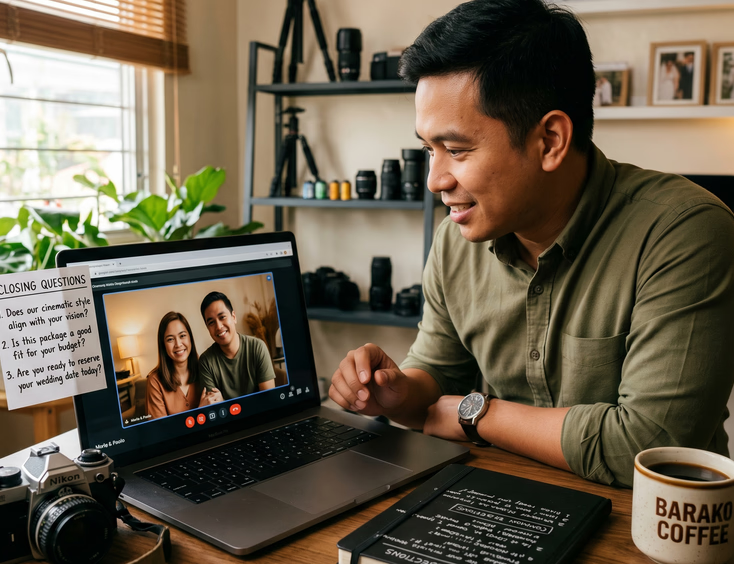
Phase Four: Closing the Conversation
The closing phase is where bookings actually happen. Filipino wedding suppliers who skip this phase rely on the couple to drive the next step, and most couples need help.
Ask three closing questions in order.
Question one: "Does the package I described feel like the right fit for your wedding?"
This is the validation question. If the couple says yes, they are confirming the match. If they hesitate, you uncover what is missing. Address concerns before moving on.
Question two: "Do you have any other questions before we talk about next steps?"
This is the clearance question. Filipino couples sometimes hold back questions. Asking openly invites them to surface concerns.
Question three: "Are you ready to lock in the date, or do you need a few days to think it over?"
This is the booking question. Direct. Friendly. No pressure. The couple either commits, requests a few days, or signals hesitation. Each response leads to a clear next step.
Some Filipino couples book on the call. Others say "yes, we want to book" and ask for the proposal to review and sign. Either outcome is a win. The booking decision happens in the call.
Phase Five: Clear Next Step
End every call with a clear next step. Couples should leave the conversation knowing exactly what to do.
If they book on the call: confirm the steps. "I will send the contract and the down payment details within 24 hours. Once you sign and pay the down payment, your date is locked in. I will schedule our first planning meeting next month."
If they need time: set a follow-up. "Take a few days to talk it over. I will follow up on Friday. If you have questions in the meantime, message me directly. The date is yours if you confirm by Friday."
If they want a written proposal: confirm the timeline. "I will send the full proposal by tomorrow. It will include everything we discussed plus the contract template. Take your time reviewing. Let me know by next week if you would like to proceed."
End warmly. "Thank you for the call, Anna and Mark. I am genuinely excited about your wedding. I will follow up shortly."
Send a follow-up message within an hour of the call. Recap the call. Confirm next steps. Attach the relevant documents.
The next step pairs with the booking finalization in contracts and deposits: how to lock in Filipino wedding bookings confidently.
How to Handle Common Objections During the Call
Filipino couples raise objections during discovery calls. The most common ones have patterns. Knowing how to respond keeps the booking conversation moving.
Objection: "The price is higher than we expected."
Response: "I understand. Let me share why our pricing is structured this way. Then we can talk through what options work for your budget."
Walk through the value, not the discount. Some couples respond to value. Others need a lighter package. Either way, do not panic and slash your price.
Full framework sits inside how to handle pwede pa bang bumaba ang price without losing the booking.
Objection: "We need to think about it."
Response: "Of course. Take a few days. Is there anything specific you want to think through? I can help clarify in the meantime."
Sometimes the thinking is genuine. Sometimes it hides a deeper concern. Surfacing the concern lets you address it.
Objection: "We need to check with parents or family."
Response: "Completely understandable. Filipino weddings often involve family input. Would it help if I sent a clear summary you can share with them?"
Provide the summary the same day. The faster they have what they need, the faster they decide.
Objection: "Can you hold the date for a week while we decide?"
Response: "I can hold the date for three days while you decide. After that, I will need to release it. The down payment locks it in."
Avoid holding dates indefinitely. The pattern damages your business and signals weak boundaries.
Objection: "Can we get a discount?"
Response: "Our pricing reflects the value we deliver. What I can offer is a lighter package if budget is the main concern."
Discounting trains the couple to expect lower prices. Repackaging maintains your value.

Run Discovery Calls With Both Partners Present
Filipino weddings often involve both partners in the decision. Calls with only one partner stall when the absent partner needs to weigh in.
Insist on both partners attending. "When you schedule the call, please include both you and Anna so we can answer questions from both of you."
If only one partner attends, accept the call but adjust expectations. "I noticed Mark could not join. Is he good with making this decision, or should we plan a quick second call to include him?"
Calls with both partners book significantly more often than calls with only one. The pattern is consistent across Filipino wedding markets.
Track Discovery Call Performance
Filipino wedding suppliers who track their discovery call performance improve their close rate every quarter.
Track three metrics.
Show-up rate. What percentage of scheduled calls actually happen? Anything below 80% signals confirmation or scheduling issues.
Close rate. Of every 10 calls, how many turn into bookings? Strong suppliers convert 40 to 60% of discovery calls. Anything below 30% signals issues in the call structure.
Time to close. How long between the discovery call and the signed contract? Shorter is better. A two to three-day window suggests a clean process. A two-week window suggests follow-up needs improvement.
Review these metrics monthly. Adjust based on the data.
The wider tracking framework fits inside tracking your numbers: KPIs every wedding supplier should watch.
Avoid Common Filipino Wedding Supplier Discovery Call Mistakes
Filipino wedding suppliers repeat the same mistakes.
Skipping calls entirely. Suppliers who only message lose bookings to suppliers who call.
Letting the couple drive the conversation. Some discovery is great. Total passivity leaves the call directionless.
Pitching too early. Pitching before discovery makes the couple feel sold to. Listen first. Pitch second.
Skipping the closing questions. Without asking for the booking, many couples leave the call without deciding.
Holding dates too long. Open-ended date holds damage your calendar and signal weak boundaries.
Running calls without notes. Couples notice when suppliers ask the same questions multiple times across the conversation.
Letting calls run over time. A 20-minute call that stretches to an hour exhausts the couple and you. Stick to the time.
Forgetting the follow-up message. The call ends, the supplier disappears, the couple cools off. A quick message within an hour locks in the momentum.
Treating every couple identically. The script is a framework. The couple in front of you should shape the conversation.
Where Discovery Calls Fit in Your Wider Booking System
Discovery calls are the bridge between inquiry and booking. They turn warm leads into confirmed weddings faster than any other tool in the booking process.
For the full marketing and booking framework, see the complete guide to getting more wedding clients in the Philippines.
Schedule calls confidently. Prepare in 10 minutes. Open with warmth. Listen during discovery. Walk through the package strategically. Close with three direct questions. End with a clear next step. Handle objections without panic. Insist on both partners attending. Track performance and adjust. Filipino couples who jump on a call with you will leave feeling heard, helped, and ready to book.
Join the Philippines' Trusted Wedding Network
Connect With Couples Ready to Book Your Services
Showcase your wedding business to engaged Filipino couples searching for trusted suppliers. Build your portfolio presence, grow your bookings, and stand out in your category.
List Your BusinessFeatured Blog Posts

Filipino Wedding Entourage - Roles, Order of March, and Modern Etiquette
6 mins readCivil Weddings in the Philippines - Requirements, Costs, and Step-by-Step Process
9 mins readCivil Wedding Requirements in the Philippines - Complete Checklist
6 mins readCost of Wedding in the Philippines - 5 Essential Things You Need to Know
7 mins readPrincipal Sponsors (Ninong/Ninang) - How Many, How to Ask, What They Really Do
4 mins readVeil, Cord, Candle & Coins - Roles, Options, and When They Happen
4 mins readEntourage for a Traditional Pinoy Wedding - Complete Roles and Guide
6 mins readComplete List of Civil Wedding Requirements in the Philippines
8 mins readHow to Choose Wedding Ninongs and Ninangs - Ask Yourself These 3 Important Questions
5 mins read