


Crafting a Wedding Package Pricing Sheet That Filipino Couples Understand

Filipino couples planning weddings open dozens of supplier pricing sheets before they book. They scroll quickly, compare packages side by side, and decide which suppliers to message first based on what they see. The supplier with the clearest, most organized pricing sheet usually gets the inquiry. The one with a confusing, overwhelming, or vague pricing document gets skipped.
A pricing sheet does more than list numbers. It tells couples what you offer, who you serve, and whether you fit their wedding. Done well, it filters good inquiries from bad and pre-qualifies couples before they reach out. Done poorly, it loses bookings before the conversation even begins. This guide walks Filipino wedding suppliers through the structure, design, and content choices that make a pricing sheet couples actually understand and want to book from.
Why Your Pricing Sheet Decides More Than You Think
Filipino couples treat pricing sheets like product menus. They browse multiple sheets in one sitting and shortlist suppliers based on what they see. The pricing sheet does three jobs in the booking journey.
It filters budget fit. Couples who see your pricing immediately know whether you match their budget. The ones who fit move forward. The ones who do not move on. Both outcomes save you time.
It signals professionalism. A clean, organized pricing sheet tells couples your business is serious. A messy or generic one signals the opposite, regardless of how strong your portfolio is.
It pre-answers questions. A good pricing sheet covers what couples would otherwise message to ask. Inclusions. Add-ons. Travel fees. Payment terms. Couples enter the inquiry conversation already informed.
A strong pricing sheet sits inside the inquiry response system you built through how to respond to wedding inquiries so couples actually book you. The sheet works alongside your reply system to move couples from inquiry to booking faster.
The Three Pricing Sheet Formats Filipino Wedding Suppliers Use
Filipino wedding suppliers tend to use one of three pricing sheet formats. Each has trade-offs.
The downloadable PDF. A polished PDF couples receive after the first inquiry exchange. Detailed. Branded. Designed to convert. Suppliers maintain control over who sees pricing and when.
The website pricing page. Pricing visible directly on your website. Best for transparency and SEO. Couples can self-qualify before messaging.
The shared link or notion-style page. A hybrid approach. A clean, mobile-friendly link couples can view without downloading. Common for newer suppliers experimenting with digital pricing presentation.
Pick the format that fits your brand and target couple. Most Filipino wedding suppliers benefit from using two formats. A short pricing summary on your website to filter early. A detailed PDF or link sent after the first inquiry for deeper consideration.
The website pricing approach pairs with wedding supplier website essentials Filipino couples look for before inquiring. The downloadable PDF works inside your inquiry response flow.
Step One: Decide What to Include Before You Design
The biggest mistake Filipino wedding suppliers make on pricing sheets is jumping straight to design. They open Canva, pick a template, and start placing numbers without thinking through the content.
Decide what to include first. The structure matters more than the visuals.
A complete pricing sheet typically covers nine elements.
Your business name and brand identity. Logo, tagline, brand colors. Couples should know within seconds whose pricing sheet they are looking at.
A short introduction. One paragraph about who you are, who you serve, and what you specialize in. Pulled directly from your unique selling point and brand voice work in crafting your unique selling point as a wedding supplier in a saturated market.
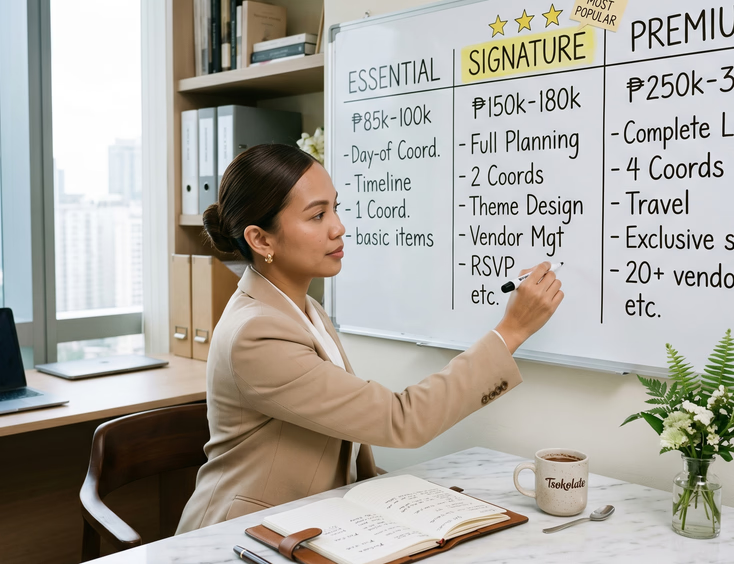
Your package tiers. Two to four package levels. Each clearly named with what is included.
Pricing for each tier. Either exact prices or starting rates. Avoid hiding pricing entirely.
Add-ons and a la carte options. Extra services couples might want to layer in.
Travel fees and policies. Especially relevant for Filipino suppliers covering destination weddings, multi-city events, or remote provinces.
Booking and payment terms. Down payment amount. Payment schedule. Cancellation terms.
A short testimonial or proof element. Two to three short reviews or notable features.
A clear call to action. How to book the next step. Inquiry form. Discovery call. Booking link.
Build the content first. Choose the design second. Suppliers who reverse the order end up with beautiful pricing sheets that fail to convert.
Step Two: Structure Your Package Tiers Strategically
Filipino couples find decisions easier when they see clear options. Three package tiers consistently outperform a single price or an overwhelming list of ten options.
The classic three-tier structure.
Entry-level package. The minimum that lets you deliver quality work. Filters couples who fit your starting budget.
Mid-tier package. Your most popular option. Designed to be the most attractive based on perceived value.
Premium package. Your full-service or luxury offering. Anchors the higher end of your pricing.
The mid-tier should always include the strongest value-to-price ratio. Filipino couples gravitate toward the middle option because it feels balanced. Structure your packages so that the mid-tier feels like the obvious choice.
Some suppliers go further with four tiers, adding either a minimal entry option or an exclusive top-tier. Either works as long as the structure stays clear. Avoid going beyond four tiers. Choice overload kills conversions.
Each package should include the following.
A package name. Something memorable but clear. "The Liwayway Essential," "The Casa de Sol Signature," "The Pamilya Premium."
A short positioning line. One sentence describing who the package fits best. "For intimate Tagaytay garden weddings."
The full list of inclusions. Hours of coverage, deliverables, photographers or team members, edits, prints, albums, behind-the-scenes content, social media materials. Everything the couple gets.
The starting price or exact price. Be specific. Vague pricing like "starts at PHP 50,000+" leaves couples unsure where they actually land.
The framework pairs with creating tiered wedding packages that couples find easy to choose from. The tiered approach makes pricing decisions easier for couples and more profitable for suppliers.
Step Three: Be Specific About What Is Included
Filipino couples ghost suppliers whose package inclusions feel vague. The fix is specificity. List everything the couple gets in concrete terms.
For a photographer, instead of writing "full wedding coverage," list the following.
8 hours of coverage. Two photographers. 600 edited photos. Online gallery delivery within 6 weeks. 10-photo highlight teaser within 5 days. USB drive with all images. Free engagement session.
For a coordinator, instead of writing "full planning support," list the following.
Unlimited planning meetings. Vendor management. Timeline creation and distribution. Rehearsal coordination. Day-of management with a team of three coordinators. Emergency kit on hand. Post-wedding vendor wrap-up.
For a florist, instead of writing "complete wedding florals," list the following.
Bridal bouquet. Three bridesmaid bouquets. Two boutonnières. Two corsages. Reception centerpieces for 10 tables. One ceremony arch installation. Setup and breakdown service.
The specificity does three things. It pre-empts questions. It shows the value behind your pricing. It signals professional clarity. Filipino couples respond to suppliers who treat them like adults capable of evaluating detailed information.

Step Four: Use Pricing That Feels Honest and Confident
Filipino wedding suppliers often hesitate on pricing. They start too low, second-guess every number, and adjust constantly. The hesitation shows in their pricing sheets.
Price with confidence.
Pick a price range that reflects your skill, experience, and the kind of weddings you want more of. Pricing too low signals desperation. Pricing too high without delivering matching value signals overconfidence.
Match your pricing to your portfolio. A photographer with a portfolio of 500 weddings should not price like someone with five. A florist using only locally grown blooms should price differently from one importing flowers.
State exact numbers when possible. "PHP 85,000" reads stronger than "from PHP 80,000+." Exact numbers signal that you know your value.
Avoid pricing in dollars or other foreign currencies unless you primarily serve overseas Filipino couples. Filipino couples planning weddings in the Philippines budget in pesos.
The wider pricing strategy sits inside how to price your wedding services in the Philippines without underselling. Strong pricing on your sheet reflects strong pricing in your business.
Step Five: Design the Pricing Sheet for Mobile Reading
Most Filipino couples open pricing sheets on their phones. A pricing sheet designed for desktop reading often fails on mobile.
Design for mobile first.
Use a vertical layout. Pricing sheets in landscape orientation read poorly on phones.
Use large, readable fonts. Body text should be at least 14pt. Section headers should stand out clearly.
Use plenty of white space. Cramped pages with text wall-to-wall lose readers.
Use visual hierarchy. Headers, sub-headers, and body text should follow consistent sizing rules.
Keep total length manageable. A six to eight-page PDF reads easily. A 20-page document loses couples by page five.
Use page breaks deliberately. Each package tier should fit on one to two pages without splitting awkwardly.
Test your pricing sheet on a phone before sending it. Read it as a couple would. If something feels hard to read, redesign it.
Step Six: Use Your Brand Voice and Visual Style
A pricing sheet that uses generic Canva templates and vague stock photos blends with every other supplier in the Philippines. Filipino couples notice. The pricing sheet should feel like a natural extension of your brand.
Apply your brand identity throughout.
Use your brand colors. Headers, accents, buttons, and dividers should match your website, social media, and other brand materials.
Use your typography. The same fonts you use on your website and other marketing materials should appear on the pricing sheet.
Use your photography. The real portfolio images you use in your other marketing belong here too. Avoid stock photos.
Use your voice. The way you write your captions, your About page, and your inquiry replies should match the tone of your pricing sheet. Warm, professional, distinct.
Include personal touches. A photo of you. A short note from you in your own handwriting if your brand fits that vibe. A signature line that feels human.
The pricing sheet is a brand document, not just a price list. The polish reinforces the work you did when building a wedding supplier brand Filipino couples actually remember.

Step Seven: Address Travel Fees and Coverage Areas Directly
Filipino weddings often span multiple locations. Manila couples plan weddings in Tagaytay. Cebu couples plan weddings in Bohol. Davao couples plan weddings on Samal Island. Travel fees often surprise couples late in the conversation and damage trust.
Address travel directly on the pricing sheet.
Define your coverage area. List the cities where your packages apply with no travel fees.
Define your travel fee structure. If you charge per kilometer, per province, or per overnight stay, list the rates.
State if travel requires accommodation. Some Filipino weddings need overnight stays for prep and same-day coverage. Be clear about expectations.
Mention destination weddings if you cover them. Many Filipino suppliers do not. If you do, state your destination wedding rates separately.
Couples appreciate transparency on travel. Hidden costs that appear later are one of the most common reasons Filipino couples leave negative reviews.
Step Eight: Include Booking and Payment Terms
Filipino couples want to know how the booking process works before they say yes. A pricing sheet that ignores booking terms forces couples to message you with basic questions. Cover the terms upfront.
Include the following.
Down payment amount. Most Filipino wedding suppliers ask for 30 to 50% as a down payment. State the exact percentage or amount.
Payment schedule. When is the next payment due? Two weeks before the wedding? One month before? Both at the same time?
Accepted payment methods. Bank transfer. GCash. Maya. Cash. Credit card. Bdo, BPI, or other specific banks. Foreign currency.
Cancellation and refund terms. The most sensitive section. State what happens if the couple cancels at different intervals. Avoid surprising couples after they sign.
Other policies. Rescheduling. Late payments. Add-ons after the contract.
Booking and payment terms sit inside the wider contract framework in contracts and deposits: how to lock in Filipino wedding bookings confidently. The pricing sheet previews these. The contract formalizes them.
Step Nine: Add Social Proof Naturally
Pricing sheets that include testimonials and trust signals convert better than those without. The proof reduces hesitation right at the moment couples are weighing whether to book.
Add proof in moderation. Two to three short testimonials placed strategically.
Pull testimonials that speak to specific package tiers. A testimonial about your wedding day coordination supports your coordinator pricing. A testimonial about your premium photography package supports your top-tier offering.
Include short, attributed quotes. "Best photographer we worked with in Manila. Worth every peso. - Anna and Mark, November 2024 wedding."
Add small visual trust signals. Logos of publications that featured you. Awards. Notable client mentions if appropriate.
The wider trust signal strategy fits inside trust signals Filipino couples look for before booking a supplier.
Step Ten: End With a Clear Call to Action
The pricing sheet should end with action. The last page is prime real estate for telling couples what to do next.
A clear call to action does the following.
Tells couples how to reach you. Direct contact details. Phone. Email. Messenger. Booking link.
Sets expectations. Response time. Process from inquiry to contract.
Reduces friction. Avoid making couples search for how to inquire.
A sample call to action page.
"Ready to book? Send us a message at [email protected] or DM us on Instagram @liwaywaystudio. We respond within 24 hours. Once we confirm availability, we will send a personalized proposal and walk you through the booking process step by step."
End the pricing sheet on a personal note. A photo of you. Your signature. A short line that feels human. Couples remember the warmth.
Avoid Common Filipino Wedding Supplier Pricing Sheet Mistakes
Filipino wedding suppliers repeat the same pricing sheet mistakes.
Hiding pricing entirely. Couples expect at least starting rates. Hiding pricing pushes them to competitors who shared theirs.
Sending a pricing sheet that is just a list of numbers with no branding. Generic price lists feel cold and forgettable.
Using inconsistent formatting. Three different fonts. Multiple color schemes. Mismatched photo styles. The chaos signals an unpolished brand.
Overloading the document. A 20-page pricing sheet covering every possible scenario overwhelms couples.
Skipping inclusions. Couples cannot evaluate value without seeing what each package contains.
Using vague language. "Comprehensive coverage" or "full service" tells couples nothing. Specifics convert.
Ignoring travel fees. Surprise charges later damage trust.
Forgetting the call to action. Couples reach the last page and have nowhere to go.
Not updating the sheet annually. A pricing sheet from two years ago lists outdated rates, old packages, and old terms.
Not customizing for couples when sending. The pricing sheet itself stays templated. The cover email or message that accompanies it should be personalized.
Where Your Pricing Sheet Fits in Your Wider Booking System
Your pricing sheet works alongside your website, your inquiry response, your discovery call, your proposal, and your contract. Each stage builds on the previous one. A strong pricing sheet pre-qualifies couples, signals professionalism, and moves the conversation forward.
For the full marketing and booking framework, see the complete guide to getting more wedding clients in the Philippines.
Decide what to include before designing. Structure your package tiers strategically. Be specific about inclusions. Price with confidence. Design for mobile reading. Use your brand voice and visual style. Address travel fees and coverage. Include booking and payment terms. Add social proof naturally. End with a clear call to action. Filipino couples receiving your pricing sheet will understand what you offer, trust your business, and move toward booking.
Join the Philippines' Trusted Wedding Network
Connect With Couples Ready to Book Your Services
Showcase your wedding business to engaged Filipino couples searching for trusted suppliers. Build your portfolio presence, grow your bookings, and stand out in your category.
List Your BusinessFeatured Blog Posts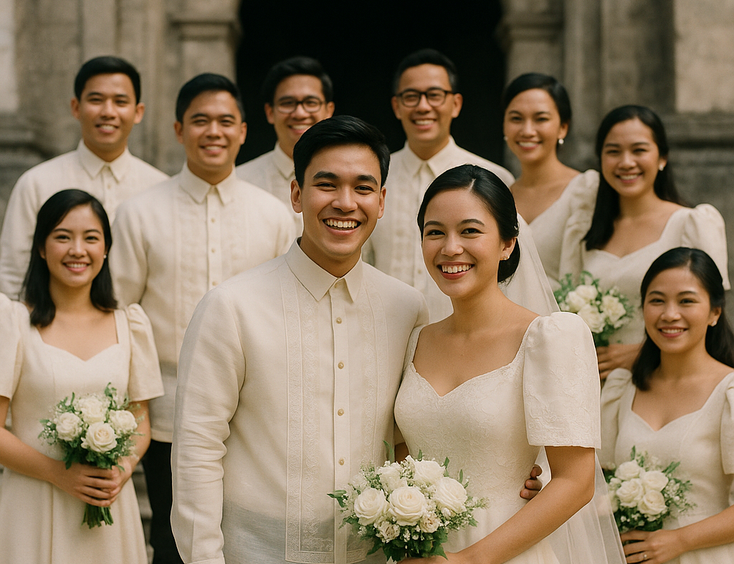

Filipino Wedding Entourage - Roles, Order of March, and Modern Etiquette
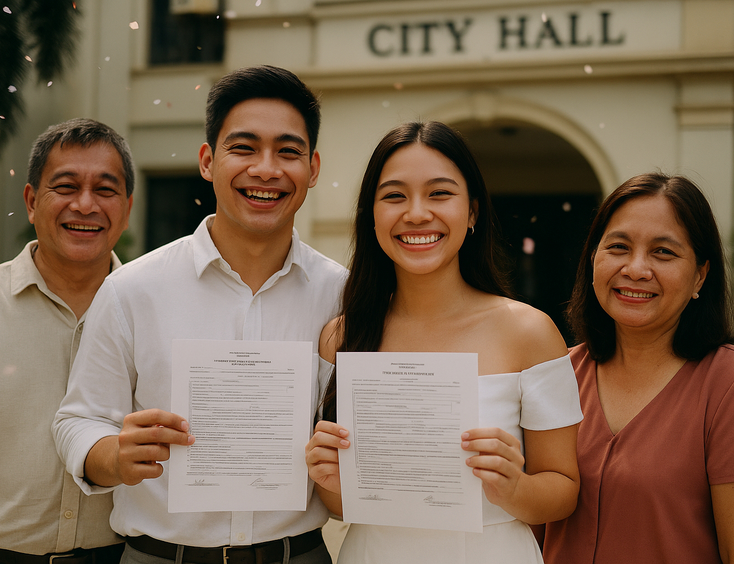
6 mins readCivil Weddings in the Philippines - Requirements, Costs, and Step-by-Step Process
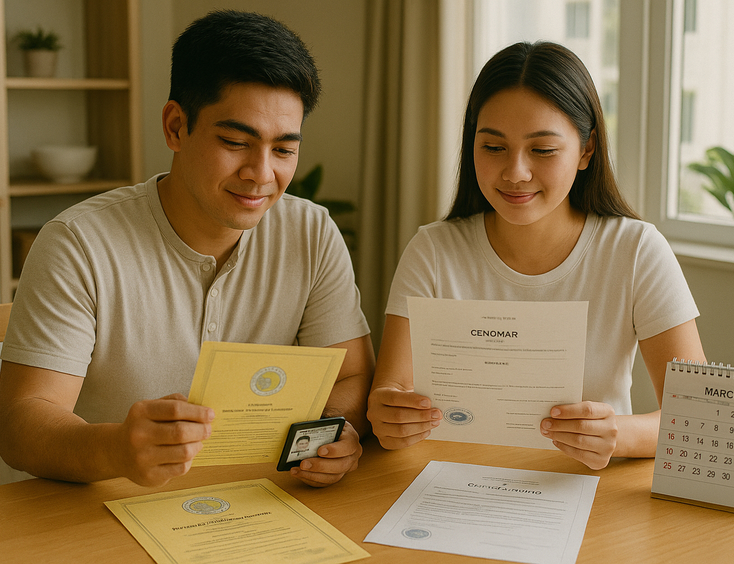
9 mins readCivil Wedding Requirements in the Philippines - Complete Checklist
6 mins readCost of Wedding in the Philippines - 5 Essential Things You Need to Know
7 mins readPrincipal Sponsors (Ninong/Ninang) - How Many, How to Ask, What They Really Do
4 mins readVeil, Cord, Candle & Coins - Roles, Options, and When They Happen
4 mins readEntourage for a Traditional Pinoy Wedding - Complete Roles and Guide
6 mins readComplete List of Civil Wedding Requirements in the Philippines
8 mins readHow to Choose Wedding Ninongs and Ninangs - Ask Yourself These 3 Important Questions
5 mins read