

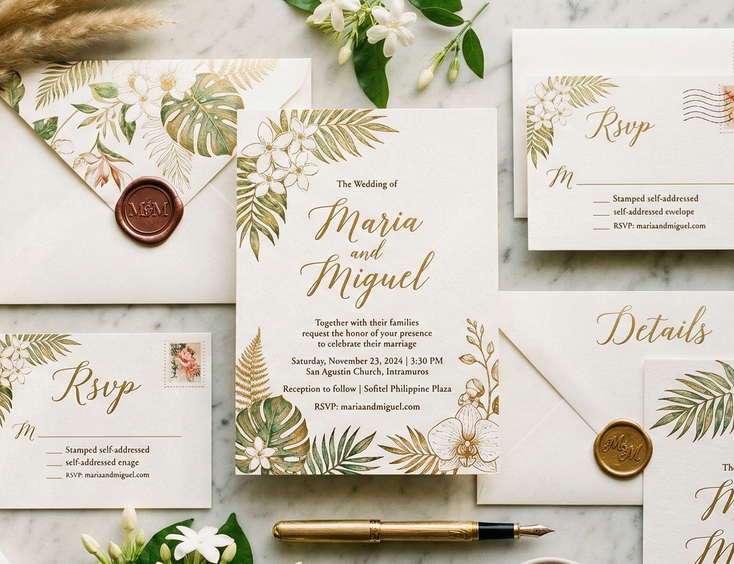
Where to Have Your Wedding Invitations Printed in the Philippines

Choosing where to print your wedding invitations matters as much as the design itself. A beautiful layout printed on the wrong stock, through the wrong process, by a printer who cannot hold fine detail, produces an invitation that disappoints in hand even when it looked right on screen. Filipino couples have more printing options now than a decade ago, and the range creates its own confusion.
The options fall into four categories: specialist invitation printers, commercial print shops, online printing platforms, and print-on-demand services. Each suits a different budget, timeline, and design complexity. Knowing which one fits your invitation before you start calling around saves time and money.
Specialist Invitation Printers
Specialist invitation printers focus exclusively or primarily on wedding and event stationery. They stock premium paper, maintain relationships with foil and letterpress equipment, and staff designers or consultants who understand invitation suite structure. These are the printers to call when your invitation requires a technique that general commercial printing does not offer.
Metro Manila has the highest concentration of specialist printers in the country. Areas like Kapitolyo in Pasig, Magallanes in Makati, and parts of Quezon City carry multiple boutique stationery studios that handle full invitation suites from design to delivery. Many also work with clients nationwide through courier and digital proofing.
What to look for in a specialist printer:
In-house letterpress or foil equipment. Ask directly whether the printer owns the equipment or outsources it. A printer who outsources letterpress to a third vendor has less control over quality and timelines than one who runs the press in-house. Turnaround estimates from outsourced printers often slip because they depend on another shop's schedule.
A paper sample kit. Any serious specialist printer offers physical paper samples before you commit to stock. Seeing and feeling the difference between 300gsm cotton and 350gsm matte card, or between natural abaca and textured linen stock, changes decisions that no screen preview can settle.
A clear proofing process. Specialist printers provide at minimum a digital proof and ideally a physical printed proof before full production runs. A printer who moves straight from file submission to full print run without a proof step is a risk worth avoiding.
Specialist printers cost more than commercial alternatives, and the gap is significant. Expect to pay a premium for quality paper, skilled setup, and lower-volume print runs. For couples whose invitation design includes foil, letterpress, engraving, or specialty materials like abaca or piña, that cost difference reflects the gap in output quality.
Commercial Print Shops
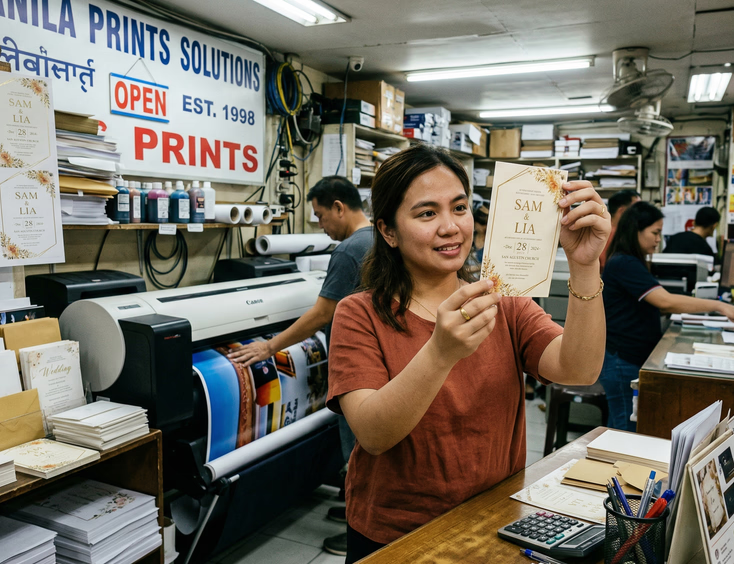
Commercial print shops handle high-volume offset and digital printing across many product types. Wedding invitations are one item in a catalog that also includes business cards, flyers, and banners. These shops are widely available across Metro Manila and in major provincial cities including Cebu, Davao, Iloilo, and Bacolod.
Commercial shops suit couples with straightforward designs: digital printing on standard card stock, no specialty techniques, standard cut sizes. A clean typographic invitation on heavy white or cream card, printed in one or two colors, comes out well from a reputable commercial shop at a fraction of specialist pricing.
The limitation is technique. Commercial offset and digital printing cannot replicate the tactile impression of letterpress or the light-catching quality of foil stamping. A design that depends on those effects will look flat when converted to standard digital print. Couples who want specialist results from commercial pricing will be disappointed.
Recto Avenue in Manila has historically been the country's print district, with dozens of shops concentrated in a walkable stretch. Prices are competitive because shops operate close together and compete for walk-in business. Quality varies significantly between shops on the same street, so asking for a test print before committing to a full run is standard practice here.
Provincial commercial print shops vary more in capability than Metro Manila counterparts. In Cebu City, several established commercial printers handle wedding stationery with consistent quality. In smaller cities and municipalities, options narrow and specialty stocks may not be available locally. Couples in provincial areas often work with Manila-based specialists who ship nationwide rather than rely on local commercial shops for complex designs.

Online Printing Platforms
Several Philippine-based online printing platforms now offer wedding invitation printing with template-based or custom file upload options. These platforms handle the upload-to-doorstep process with standardized pricing, no minimum-quantity pressure, and courier delivery.
The advantages are convenience and transparency. You see pricing before committing, upload a finalized design file, choose from a set of available paper stocks, and receive delivered invitations without visiting a shop. For couples who have a designer handling the file preparation and want straightforward printing without consultation, this route is efficient.
The limitations are the same as commercial shops: technique range is narrow, paper stock options are curated rather than extensive, and the process assumes your design file is print-ready. Couples who upload an invitation file designed for digital viewing rather than print production often receive output with color shifts, font rendering issues, or resolution problems that only appear in the physical print.
If you use an online platform, confirm the following before placing a full order: color mode of your file matches the platform's requirements (CMYK, not RGB), bleed and margin specifications are built into your file, and you order a single proof copy for review before printing the full quantity.
Printing in Cebu, Davao, and Key Provincial Cities
Couples planning weddings outside Metro Manila do not need to default to shipping from Manila, though that remains an option most specialists offer. Cebu City carries several boutique invitation studios and commercial print shops capable of handling full suites with above-average quality. The concentration is smaller than Metro Manila but the options are real.
Davao City has a growing wedding industry with local invitation designers and printers who serve couples across Mindanao. The specialist printer ecosystem is smaller than Cebu, and couples wanting letterpress or foil work in Davao more often work remotely with Manila-based specialists than find local equivalents.
Iloilo City and Bacolod both have established local stationery and invitation suppliers serving the strong wedding market in the Western Visayas region. These cities carry commercial print capability and several boutique studios, particularly in Iloilo, that handle full invitation suites with competent design and printing.
For couples in more remote provincial areas, the practical approach is to work with a Manila or Cebu-based specialist remotely, approve digital and physical proofs by courier, and have the full run shipped. Most specialist printers have established this workflow and build regional courier lead time into their production schedules.

What to Confirm Before You Commit to Any Printer
Regardless of which type of printer you use, ask these questions before placing an order:
Minimum quantities. Some specialist printers set minimum runs of 50 or 100 suites. If you need 30 invitations, a printer with a 100-piece minimum costs significantly more per unit than their advertised rate suggests. Online platforms and commercial shops typically have lower or no minimums.
Production lead time. Standard digital printing at a commercial shop can turn around in three to five working days. Letterpress from a specialist printer typically takes two to four weeks. Foil stamping on custom stock can take longer, depending on material availability. Build these timelines against the Filipino wedding invitation timeline and confirm that your printer's production window fits your send date.
Revision and reprint policy. Ask what happens if the printed output does not match the approved proof. A clear answer that includes reprinting at the printer's cost for their errors protects you from absorbing the cost of a production mistake. A vague answer about "doing their best" does not.
File format requirements. Confirm the exact file format, resolution, color mode, and bleed specification the printer requires before your designer finalizes the file. Discovering a format mismatch after design completion costs time and sometimes money if the designer charges for revisions.
Envelope printing and addressing. Some printers handle guest name addressing on envelopes, either digitally or through calligraphy referrals. If you need addressed envelopes, ask whether the printer offers this or can refer you to someone who does.
How Budget Shapes the Printing Decision
Printing method and paper stock account for a large share of total invitation cost. Couples who budget for a specialist print experience but discover the cost mid-process often end up compromising the design to fit a printing budget they did not plan for.
How much wedding invitations cost in the Philippines breaks down pricing by printing method, paper type, and suite complexity so you can match your printing choice to a realistic number before you start consulting printers. If you are still deciding between DIY production and professional printing, DIY wedding invitations in the Philippines covers where that route saves money and where it costs more than expected.
Finding Invitation Printers Through a Supplier Directory
Searching for printers by word of mouth or general web search produces inconsistent results. A supplier directory filters by specialization, location, and service type, which shortens the research process considerably.
Stationery and invitation suppliers in the Philippines lists printers and designers across regions, including specialists who handle letterpress, foil, abaca, and piña work alongside commercial and digital printing options. Filtering by your location and required technique surfaces relevant options without the noise of general search results.
Reading supplier profiles alongside recent client feedback gives you a clearer picture of turnaround reliability, proof quality, and how each printer handles revisions. Printers with consistent positive feedback on their proofing process and communication tend to deliver fewer surprises in production.
The full picture of Filipino wedding invitation planning, from choosing a design direction to wording, timing, and etiquette, sits in the complete guide to Filipino wedding invitations. If you are still working through the decisions that come before printing, that resource connects every stage of the process from a single place.
Your printer is the last professional who handles your invitation before your guests do. Choosing the right one for your design, budget, and timeline is the decision that determines whether the invitation your guests receive matches the one you imagined.
Still Searching for a Right Match?
Find Your Perfect Wedding Supplier Today!
Discover trusted wedding suppliers across the Philippines in our complete directory. Compare services and connect with the ones that fit your dream celebration.
Browse Wedding SuppliersFeatured Posts



The Complete Filipino Couple's Guide to Wedding Rings & Bands in the Philippines: Traditions, Styles, Budgets & Where to Buy
22 mins readWedding Reception Ideas that Honor Tradition and Wow Your Guests
4 mins readFilipino Wedding Dress Guide for Style Traditions and Smart Shopping
6 mins readFilipino Wedding Cost Guide - Realistic Budgets, Percentages, and Price Drivers by Region
9 mins readPhilippines Honeymoon Guide - Best Islands, Resorts, Costs & 7–14 Day Itineraries
9 mins readFilipino Wedding Games - Traditions, Modern Twists, and Crowd-Pleasers for Every Reception
8 mins read