

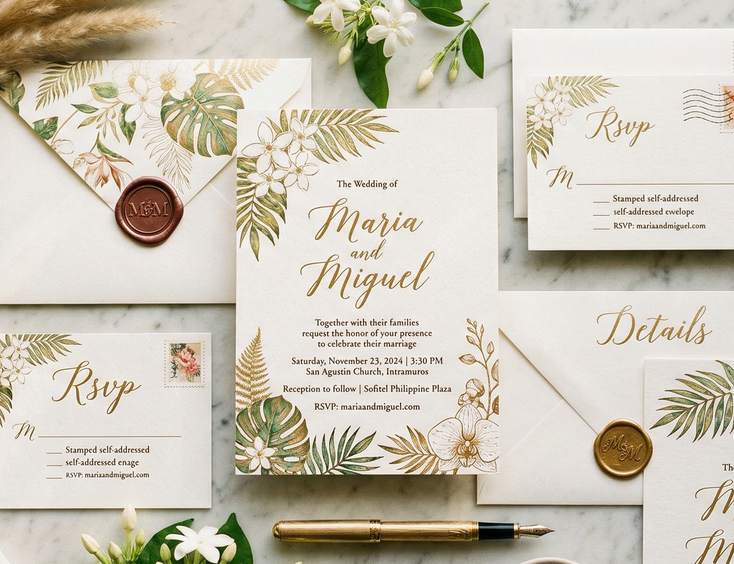
DIY Wedding Invitations in the Philippines: Is It Worth It?
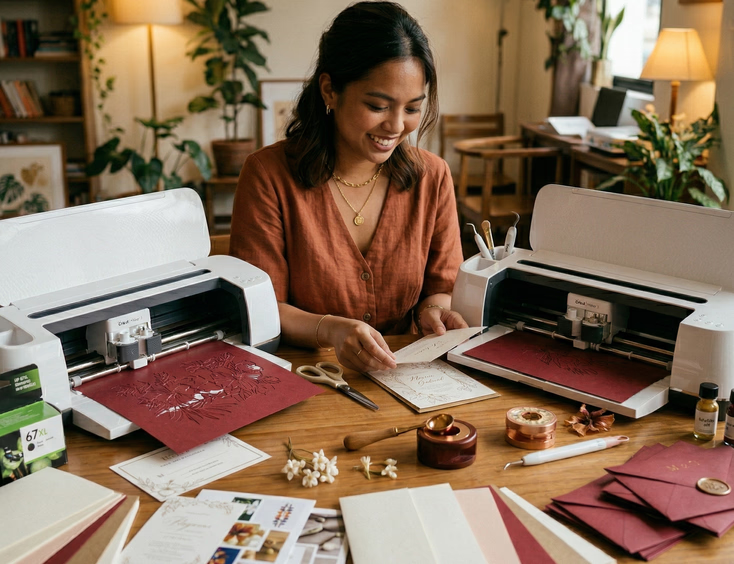
The appeal of DIY wedding invitations is easy to understand. You control the design, you avoid designer fees, and the finished product feels personal in a way that a template or a packaged suite does not. Filipino couples with creative backgrounds, access to craft supplies, and enough time before the wedding date sometimes produce genuinely impressive results this way.
The honest answer to whether it is worth it depends on three things: your actual skill level, your realistic timeline, and the true cost of materials once you source everything you need. Most couples who attempt DIY invitations underestimate at least one of these, and the ones who underestimate all three usually end up spending more than a mid-range professional suite would have cost them.
Where DIY Actually Saves Money
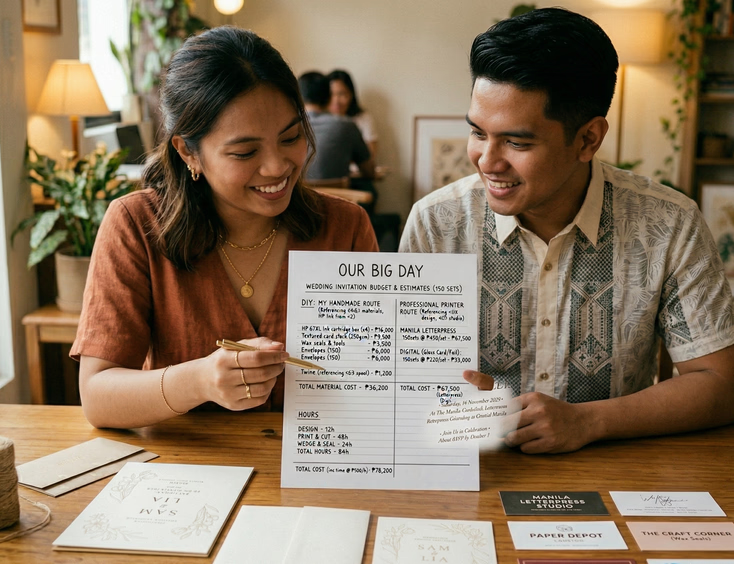
DIY saves money in specific conditions. If you already own a cutting machine like a Cricut or Silhouette, design software you know how to use, and a home printer capable of handling card stock, your material costs are the primary expense. Under those conditions, a clean typographic invitation on premium card stock can cost ₱20 to ₱40 per suite in materials, which is genuinely cheaper than most professional options.
Digital design skills also reduce the cost gap between DIY and professional. A couple where one partner works in graphic design, marketing, or any field involving layout software can produce a print-ready file without hiring a designer. That fee, which runs ₱3,000 to ₱15,000 for custom work from a professional, disappears entirely from the budget.
Simple designs amplify the DIY advantage. A two-color typographic invitation on heavy card stock, cleanly laid out and printed on a reliable home or office printer, costs very little to produce and looks sharp when the execution is controlled. The DIY advantage shrinks as design complexity increases.
Where DIY Costs More Than Expected
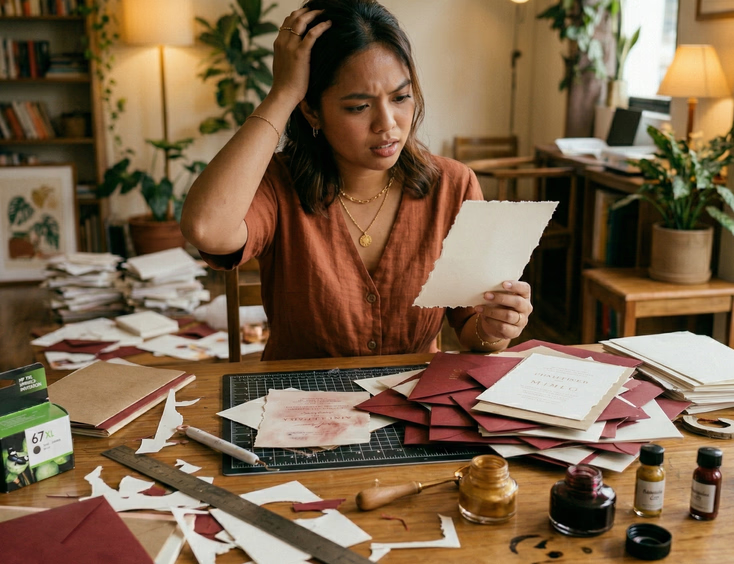
Materials are the first surprise. Card stock that matches professional invitation quality costs more than the paper available at office supply chains. Cotton paper, textured linen stock, and abaca paper require sourcing from specialist suppliers, and minimum purchase quantities at those suppliers often mean buying more sheets than your guest list requires. A couple who needs 80 invitation cards but buys paper in packs of 100 absorbs the cost of 20 unused sheets on every component of the suite.
Cutting is the second surprise. A clean straight cut on heavy card stock requires either a guillotine cutter capable of handling the weight or a cutting machine with the right blade setting for that stock. Hand cutting with scissors or a craft knife produces edges that read as amateur regardless of how good the printed design looks. Renting time on a guillotine cutter at a print shop removes some of the cost advantage of DIY. Buying one adds equipment cost to the budget.
Ink is the third surprise. Home printers consume ink faster than most people expect when printing on heavy, absorbent card stock. A printer running low on ink mid-run produces cards with inconsistent color that are unusable. Couples who print in small batches to manage this often end up with color variation across the suite that is visible when suites are compared side by side.
Envelope lining is where many DIY invitations fall apart visually. Lining envelopes by hand requires cutting liner paper to precise dimensions, applying adhesive without visible bubbling or bleeding, and inserting the liner before the adhesive sets. Done well, it looks polished. Done under time pressure or without the right adhesive, it looks rushed. A 150-envelope lining session takes three to five hours for a practiced hand. For someone doing it for the first time, longer.
Wax seals have the same learning curve. The first ten or fifteen seals of any DIY session rarely match the last ten in terms of depth, clarity, and finish. Couples who practice on scrap paper before sealing the actual envelopes manage this better than those who go straight to the final envelopes.
The Time Cost Is Real
Professional invitation designers and printers absorb the hours of file preparation, proofing, printing, cutting, and assembly into their service fee. DIY couples absorb those hours themselves.
A realistic time estimate for a DIY suite of 100 invitations:
Design and file preparation: 8 to 20 hours depending on skill level and design complexity. First-time users of design software take longer. Couples who revise the design multiple times extend this significantly.
Test printing and adjustment: 2 to 4 hours. Color calibration between screen and print, paper feed testing, margin adjustment, and ink coverage checks all take time before the actual print run.
Printing: 3 to 6 hours for a full suite of 100 across multiple components. Home printers handle card stock more slowly than commercial equipment and require monitoring for paper jams and ink levels.
Cutting: 2 to 4 hours depending on whether you use a cutting machine or a manual guillotine.
Assembly: Stuffing, folding inserts, adding enclosures, lining envelopes, sealing, and addressing takes 4 to 8 hours for 100 suites.
The total sits between 19 and 42 hours of active work, spread across multiple sessions. For couples in full-time employment planning a wedding simultaneously, that time has a real cost even when it does not show up in the materials budget.
What DIY Cannot Replicate
Certain printing techniques are not available to DIY production regardless of skill or budget.
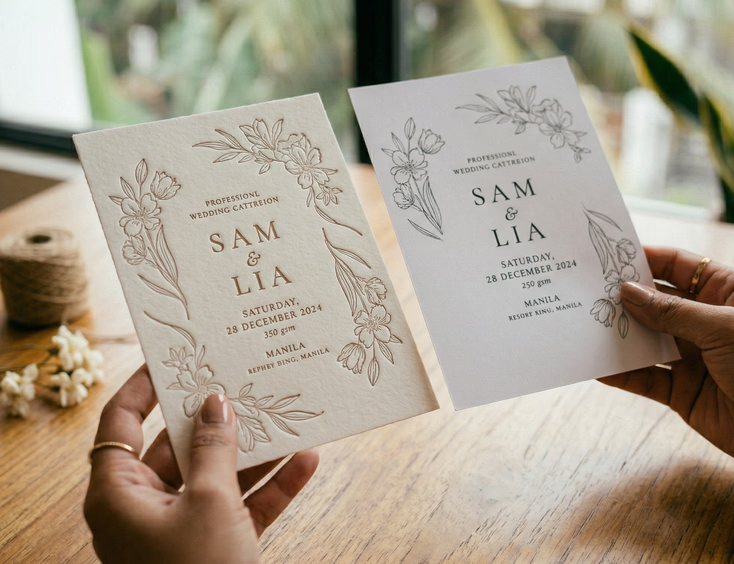
Letterpress requires a printing press. Foil stamping requires a heat press and custom dies. Engraving requires specialized equipment. Couples who want these finishes on their invitations need a professional printer. There is no DIY version of letterpress that produces comparable results with home equipment.
The tactile quality of a professionally printed invitation on premium stock also differs from home-printed card stock in ways that are difficult to quantify but immediately apparent in hand. A 400gsm cotton paper invitation with deep letterpress impression feels different from a 300gsm card stock printed on a home inkjet. Guests who have received professional wedding invitations notice the difference.
For couples committed to a premium print aesthetic, DIY handles the design stage and hands off to a professional printer for production. This hybrid approach captures the cost saving from eliminating designer fees while delivering a finished product that matches professional output quality.
Supplies and Where to Find Them in the Philippines
Filipino couples attempting DIY invitations have better local supply access than a few years ago. Several options exist across Metro Manila and through online platforms that ship nationwide.
Card stock and specialty papers are available at National Bookstore and Fullybooked for standard weights. Specialty papers including textured, linen, and heavier cotton stocks are available through art supply stores in areas like Cubao, Quiapo, and Binondo, and through online sellers on Shopee and Lazada who import from wholesale paper suppliers.
Abaca paper requires sourcing from specialty suppliers. Some craft stores in Metro Manila carry it, and several online sellers offer it in small quantities suited to invitation production.
Cutting machines including Cricut and Silhouette models are available through authorized resellers in Metro Manila and on Lazada and Shopee. The entry-level models handle standard card stock adequately. Heavier stocks require a machine with stronger cutting capacity.
Wax seal kits including stamps, wax sticks, and melting spoons are widely available through online craft suppliers and several stationery shops in Metro Manila. Brass stamp heads with custom monograms or designs can be ordered through local craft suppliers or imported from online suppliers with a two to three week lead time.
Twine, ribbon, dried botanicals, and pressed flowers are available through craft markets, dried flower suppliers, and online sellers. Dried sampaguita and other Philippine florals are available through specialty dried flower vendors, particularly in the Divisoria and Quiapo markets.
The Honest Calculation
DIY wedding invitations are worth attempting when the following conditions are true: you have the design skills to produce a print-ready file, you own or have reliable access to the equipment, your design does not require specialist printing techniques, and you have the time to absorb 20 to 40 hours of production work without it disrupting the rest of your wedding planning.
They are not worth attempting when any one of those conditions is absent. A couple without design experience who spends ₱8,000 on materials and 30 hours of effort to produce invitations that look amateur has spent more, in time and money combined, than a mid-range professional package would have cost.
The middle path works well for many Filipino couples: design the invitation yourself using a purchased template or your own layout skills, then take the print-ready file to a commercial or specialist printer for professional production. You eliminate the designer fee, retain creative control, and receive a finished product that a printer's equipment and materials produce better than a home setup can.
How much wedding invitations cost in the Philippines breaks down professional printing costs by method and tier so you can compare what DIY materials actually cost against what a printer charges for the same output. Where to have your wedding invitations printed in the Philippines covers how to find and evaluate printers if you go the hybrid route and need a professional to handle production after you finish the design.
For couples considering digital invitations as an alternative to both DIY and professional printing, digital wedding invitations in the Philippines covers whether that route suits a Filipino wedding context and what the social considerations are before you skip print entirely.
Stationery and invitation suppliers in the Philippines lists professional designers and printers across budget tiers if you decide after reading this that professional production fits your situation better. Comparing supplier profiles and client feedback gives you a clearer picture of what each price point actually delivers before you commit.
The full resource for Filipino wedding invitation planning sits in the complete guide to Filipino wedding invitations, covering design, wording, timing, etiquette, and printing decisions from a single place.
Your time before the wedding is finite. Spend it on the tasks that genuinely benefit from your personal attention, and let professionals handle the ones where their equipment and experience produce better results than yours will.
Still Searching for a Right Match?
Find Your Perfect Wedding Supplier Today!
Discover trusted wedding suppliers across the Philippines in our complete directory. Compare services and connect with the ones that fit your dream celebration.
Browse Wedding SuppliersFeatured Posts

The Complete Filipino Couple's Guide to Wedding Rings & Bands in the Philippines: Traditions, Styles, Budgets & Where to Buy
22 mins readWedding Reception Ideas that Honor Tradition and Wow Your Guests
4 mins readFilipino Wedding Dress Guide for Style Traditions and Smart Shopping
6 mins readFilipino Wedding Cost Guide - Realistic Budgets, Percentages, and Price Drivers by Region
9 mins readPhilippines Honeymoon Guide - Best Islands, Resorts, Costs & 7–14 Day Itineraries
9 mins readFilipino Wedding Games - Traditions, Modern Twists, and Crowd-Pleasers for Every Reception
8 mins read