


What to Check During Your Bridal Gown Fitting to Avoid Last Minute Garment Emergencies
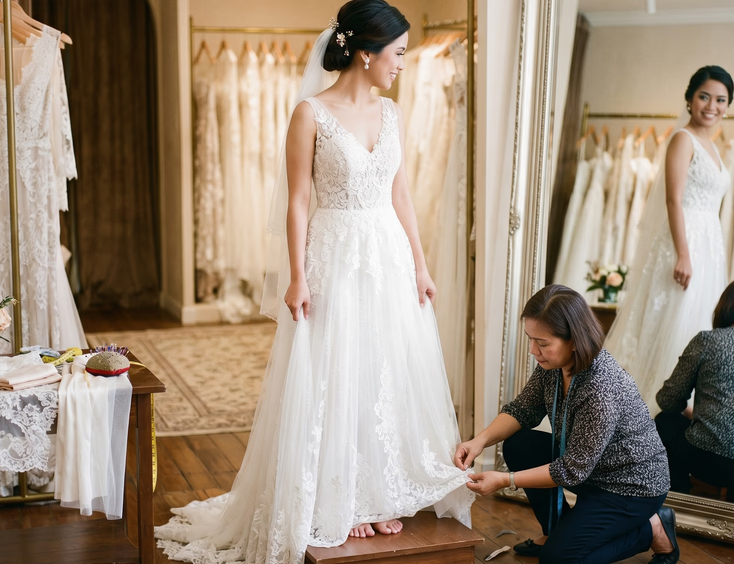
Most brides walk into a fitting focused on how the gown looks. You check the silhouette in the mirror, take a few photos, and leave. That approach misses the point. A fitting is your chance to find garment problems while your designer can still fix them. A loose bead at the fitting becomes a missing bead on the altar. A tight zipper in the boutique becomes a broken zipper in the bridal suite.
Filipino weddings put gowns through movement that most fittings don't simulate. You kneel for the blessing. You raise your arms for the cord and veil ceremony. You lift arrhae coins. You hug ninongs and ninangs. You sit through a full Catholic mass that can run over an hour. If your gown can't handle those movements in the fitting room, it won't handle them at the church.
This guide covers what to check, test, and flag during each fitting so you walk into your wedding day with a gown that performs under pressure.
Bring your wedding shoes and undergarments to the fitting
Your gown fits differently with flat sandals than it does with three-inch heels. The hem length, the drape of the skirt, and the way the train falls behind you all change based on your shoe height. Bring the shoes you'll wear on your wedding day to every fitting after the first one.
The same applies to undergarments. A strapless bra, a corset, a seamless bodysuit, or a cotton slip each change the way the bodice sits against your body. Your designer needs to see the gown over the exact foundation you'll wear at the ceremony.
Pack these for every fitting:
- Wedding shoes (ceremony pair and reception pair if you plan to switch)
- Bra, corset, or bodysuit you'll wear on the day
- Shapewear, if you plan to use it
- Hair clips or a tie to pull your hair up (so you can see the neckline and back)
If you're wearing a traditional Filipiniana gown with terno sleeves, bring a strapless option underneath. Visible bra straps under sheer piña or jusi fabric will change how your designer adjusts the armhole and sleeve drape.
Test movement, not just appearance
Stand in front of the mirror and admire the gown for a moment. Then stop posing and start moving.
Sit down. Lower yourself into a chair the way you'll sit during the ceremony and reception. Check for these problems:
- Does the bodice ride up or gap at the bust?
- Does the waistline dig into your stomach?
- Can you breathe comfortably when seated for ten minutes?
- Does the skirt bunch up or pull in a way that makes standing back up awkward?
Kneel. Place both knees on the floor. Filipino Catholic ceremonies include kneeling during the blessing, the consecration, and often the cord and veil ritual. Notice:
- Does the skirt have enough fabric to allow kneeling without pulling the bodice down?
- Can you stand up from kneeling without someone helping you with the train?
- Do beads or embellishments near the knee area press into your skin?
Raise your arms. Lift both arms to shoulder height and above. You'll do this when your sponsors place the cord and veil, when you receive the arrhae, and during your first dance.
- Do the sleeves or armholes restrict your reach?
- Does the bodice pull away from your chest when your arms are up?
- If you're wearing terno sleeves, do they shift or collapse when you lift your arms?
Walk at pace. Take ten full strides across the fitting room. Walk the way you'll walk down the aisle, then walk faster the way you'll move during the reception.
- Does the hem drag or catch under your shoes?
- Does the train pull at the waistline when you walk fast?
- Can you turn without the skirt twisting around your legs?
Hug someone. Bring a friend or ask your designer to stand in. Wrap your arms around them the way you'll hug family at the reception. Check if the beading scratches their skin or clothing, and whether the sleeves restrict a full embrace.
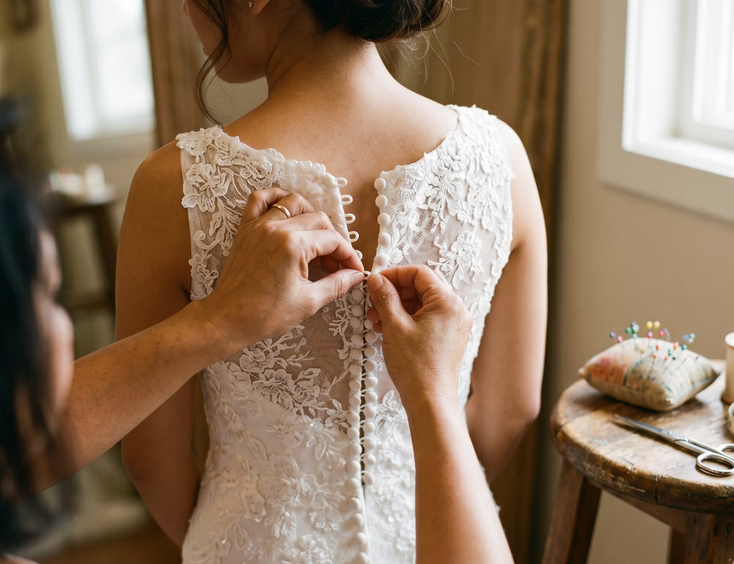
Inspect closures under pressure
Zippers, hooks, buttons, and corset lacing are the most common failure points on a wedding gown. They hold the garment together under hours of movement, and they break when they're under too much tension or too little reinforcement.
Zippers. Have your designer zip and unzip the gown while you stand still, then again after you sit and stand twice. A zipper that works fine on a motionless body can jam when the fabric shifts from movement. Check:
- Does the zipper glide without catching fabric?
- Is there a hook or button at the top of the zipper to anchor it closed?
- Can someone zip you up in under thirty seconds? Your coordinator or maid of honor will do this on your wedding day, likely in a cramped bridal suite.
Buttons. Loop-and-button closures along the back of a gown look beautiful and take time to fasten. Count the buttons. If your gown has more than twenty, your maid of honor needs to practice fastening them before the wedding. Ask your designer:
- Are the loops reinforced at the base where they attach to the fabric?
- Do the buttons slip out of the loops when you arch your back or sit?
- Is there a hidden zipper underneath for faster dressing, with the buttons serving a decorative purpose?
Corset lacing. If your bodice has a lace-up back, test how tight it needs to be for a secure fit. Then sit, kneel, and raise your arms. Corset lacing loosens with movement. Your designer should show you (or your maid of honor) how to tighten and tie it so it holds through a full ceremony and reception.
Bustle hooks. If your gown has a train, it needs a bustle for the reception. Test the bustle at the fitting. Make sure the hooks, loops, or ties are secure and that the bustled train doesn't hang unevenly. Have someone other than the designer try fastening the bustle so you know whether a bridesmaid can do it in a bathroom hallway after the ceremony.
Check the fabric under different lighting
Your fitting room uses a specific type of light. Your church, reception venue, and outdoor photo locations use different types. Fabric that looks opaque under warm boutique lighting can turn sheer under direct sunlight or bright white church lights.
Ask your designer to test the gown near a window or under a bright overhead light. Look for:
- Transparency. Can you see the outline of your undergarments through the skirt or bodice? White and ivory fabrics are the most prone to this problem under strong light.
- Color shifts. Some whites lean blue under fluorescent lights and yellow under warm lights. If your ceremony and reception have different lighting setups, check how the gown looks under both tones.
- Embellishment reflection. Beads, sequins, and metallic thread catch light differently depending on the source. Crystal beading that sparkles under boutique spotlights might look dull in a dimly lit church, or blinding under outdoor afternoon sun.
If your ceremony is outdoors in Tagaytay, Boracay, or Siargao, ask the boutique to step outside with you for thirty seconds. Afternoon tropical sunlight in the Philippines is harsh, and it reveals fabric details that indoor lighting hides.
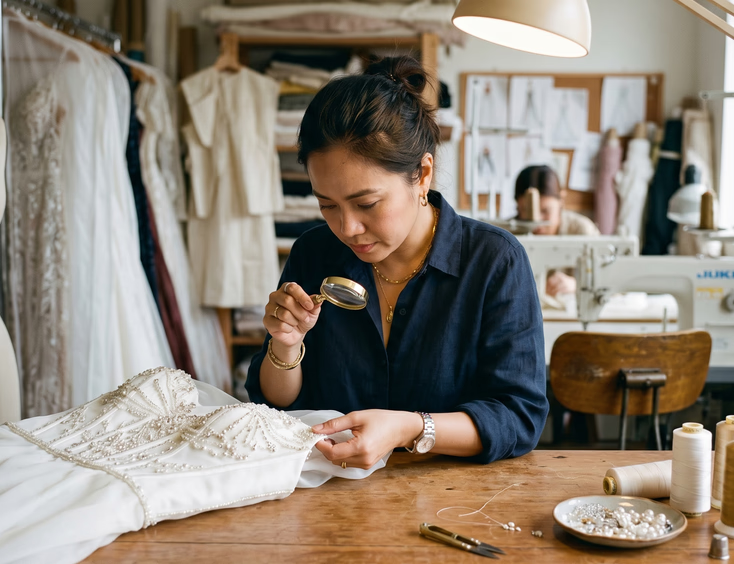
Examine beading, embroidery, and embellishments up close
Run your fingers along the beaded sections of the gown. Press gently on individual beads and sequins. If any shift, wiggle, or feel loose, flag them for your designer.
Focus on high-stress areas:
- Waistline and hip seams. These areas flex with every movement. Beading here takes the most strain.
- Underarms and armholes. If you're wearing terno or butterfly sleeves, the beading near the armhole will catch friction every time you lift your arms.
- Neckline and collar. Beading along the neckline rubs against your skin and the cord during the ceremony. Loose beads here snag the veil or the wedding cord.
- Hem and train edge. Beads near the floor catch on carpet, tile, grass, and sand. Your designer should reinforce the beading thread and secure the ends so a single caught bead doesn't unravel the entire line.
If your gown uses hand-sewn embroidery on piña or jusi, check for loose threads along the pattern edges. Natural fiber embroidery can fray if the thread ends aren't properly secured. Ask your designer to knot and seal every thread end.
Verify the hem length with your ceremony shoes on
Stand in your ceremony shoes on a flat surface. Have someone check the hem from the front, both sides, and the back.
- Front hem. Should clear the floor by half an inch to one inch so you don't step on it while walking forward.
- Side hem. Should be level with the front. Uneven hems catch on pews, chair legs, and your own feet during turns.
- Back hem and train. The train length determines how far behind you the fabric drags. Walk forward and have someone watch the train. Does it flow, or does it bunch? Does it catch on the floor surface?
If you're switching to lower heels or flats for the reception, tell your designer. Some gowns need a bustle adjustment to account for the height change. A bustle set for three-inch heels will hang too low when you switch to flats, and the hem will drag on the dance floor.
Flag every concern, no matter how small
Brides hold back during fittings. You don't want to seem difficult. You tell yourself the slight pinch at the waist will be fine, or the loose sequin near the hem probably won't matter. It will matter. The pinch becomes pain after three hours. The loose sequin catches on the church carpet and pulls out four more.
Keep a running list on your phone during the fitting. Note:
- Anything that pinches, pulls, or restricts movement
- Loose beads, threads, or embellishments
- Closures that stick, slip, or require too much force
- Areas where the fabric gaps, bunches, or feels too tight
- Anything you noticed under different lighting
Share the full list with your designer before you leave. A good designer wants this feedback. Fixing a loose bead takes five minutes at the atelier. Fixing it on your wedding morning takes a miracle.

Schedule your fittings with enough time for fixes
Most Filipino bridal designers recommend two to three fittings. Space them so your designer has time to make adjustments between each one.
A practical fitting timeline:
First fitting (5 to 3 months before the wedding). The gown takes shape. Focus on overall fit, silhouette, and major adjustments to the bodice, waist, and skirt. Test basic movement. Flag any fabric concerns.
Second fitting (2 months before). Refinements. Beading and embellishments should be in place. Test closures, bustle, and movement under church conditions (sit, kneel, raise arms). Check transparency under strong light.
Final fitting (2 to 3 weeks before). Everything should be finished. This is your last chance to flag problems. Bring your shoes, undergarments, and a bridesmaid who will help you dress on the day. Rehearse the bustle. Take the gown home and store it properly.
If your designer identifies a major fix at the second fitting, add a third fitting before the final pickup. Rushing a fix in the last week invites new problems.
Don't leave the final fitting without doing these five things
- Rehearse the full dressing sequence. Put the gown on from start to finish, including undergarments, shoes, and accessories. Time it. Your bridal party needs to know how long dressing takes so they can plan the wedding morning schedule.
- Teach the bustle to your maid of honor. She should fasten and unfasten it twice without help. Take a video on your phone so she can review it the night before the wedding.
- Confirm care instructions with your designer. Ask about steaming, spot-cleaning, and whether any part of the gown (beading, piña fabric, corset boning) needs special handling.
- Get an extra packet of matching beads, buttons, or thread. Your designer may have spares. Pack these in your bridal emergency kit for same-day repairs.
- Check the garment bag. If the boutique gives you a plastic bag, replace it with a breathable cotton or muslin bag before storing the gown at home.
For proper gown storage between your final fitting and the wedding, read our guide on how to properly store your wedding gown after your final fitting in the Philippines.
Protect your gown beyond the fitting room
A thorough fitting catches problems before your wedding day. But your gown still needs protection during the ceremony, the reception, and the years after. For a full garment care timeline from fitting day through preservation, read our complete guide to wedding garment care in the Philippines.
If your fitting reveals weak points in the gown, like delicate closures, loose beadwork, or thin fabric at stress areas, prepare your entourage with the right tools. Our guide on emergency wedding garment fixes every bridal entourage should be ready for covers the repairs your bridal party should practice before the big day.
Need a professional to handle pre-wedding steaming, gown reinforcement, or last-minute alterations? Browse our garment care suppliers directory to connect with trusted providers across the Philippines.
Still Searching for a Right Match?
Find Your Perfect Wedding Supplier Today!
Discover trusted wedding suppliers across the Philippines in our complete directory. Compare services and connect with the ones that fit your dream celebration.
Browse Wedding SuppliersFeatured Blog Posts



Filipino Wedding Entourage - Roles, Order of March, and Modern Etiquette
6 mins readCivil Weddings in the Philippines - Requirements, Costs, and Step-by-Step Process
9 mins readCivil Wedding Requirements in the Philippines - Complete Checklist
6 mins readCost of Wedding in the Philippines - 5 Essential Things You Need to Know
7 mins readPrincipal Sponsors (Ninong/Ninang) - How Many, How to Ask, What They Really Do
4 mins readVeil, Cord, Candle & Coins - Roles, Options, and When They Happen
4 mins readEntourage for a Traditional Pinoy Wedding - Complete Roles and Guide
6 mins readComplete List of Civil Wedding Requirements in the Philippines
8 mins readHow to Choose Wedding Ninongs and Ninangs - Ask Yourself These 3 Important Questions
5 mins read