


How to Properly Store Your Wedding Gown After Your Final Fitting in the Philippines
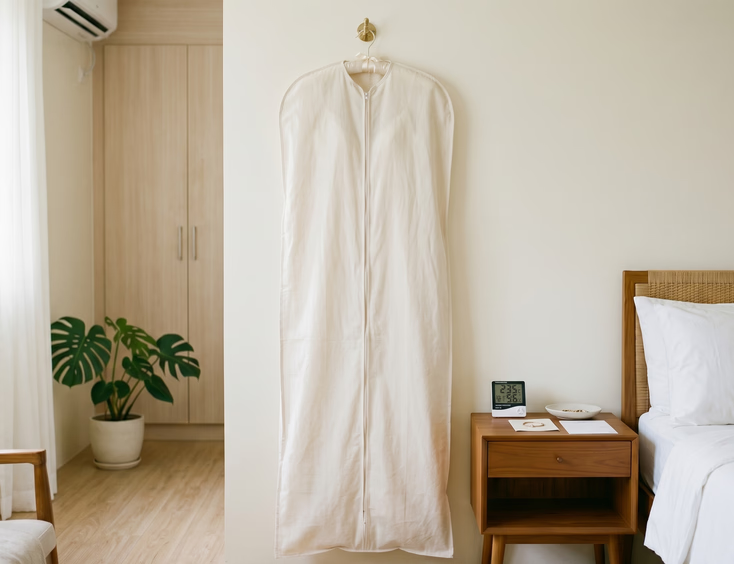
The gap between your last fitting and your wedding day is where most gown damage happens. You carried the dress home in a garment bag, hung it in the nearest closet, and moved on to your checklist. But that closet might be working against you.
In the Philippines, indoor humidity sits between 70% and 85% for most of the year. Mold spores need moisture above 60% relative humidity to colonize fabric. Your closet, unless air-conditioned, exceeds that threshold on any given Tuesday. Silk, organza, piña, and jusi absorb moisture fast and release it slow. Leave your gown in a warm, stagnant room for two weeks, and you risk yellowing, mildew spots, or weakened fibers before you even walk down the aisle.
This guide covers how to store your wedding gown between pickup day and your wedding, with specific steps for the Philippine climate.
Choose the right room before you choose the right hanger
The room matters more than the hanger. You need a space that stays cool, dry, dark, and stable. In the Philippines, that means an air-conditioned room. Consistent temperature below 75°F and humidity below 60% will protect silk, satin, tulle, and natural fibers like piña and jusi from moisture damage.
Avoid these storage spots:
- Rooms without AC or ventilation. Stagnant, humid air accelerates mold growth. A closed bedroom without air-conditioning during a Quezon City summer can reach 85% humidity by mid-afternoon.
- Rooms with large windows. UV light fades dyes and weakens organza, lace, and tulle. Even indirect sunlight through sheer curtains causes gradual damage.
- Kitchens or rooms near cooking areas. Smoke and cooking odors absorb into fabric. You won't smell it at first, but the gown will carry it on your wedding day.
A guest bedroom or master bedroom with working AC is your safest option. If your home doesn't have a suitable room, ask your bridal boutique if they offer short-term storage. Many ateliers in Manila, Cebu, and Davao will hold your gown until a few days before the wedding.
Hang or lay flat: know what your gown needs
You'll hear conflicting advice about hanging vs. laying flat. The answer depends on your gown's weight, fabric, and construction.
Hang the gown if:
- It's lightweight (chiffon, organza, light tulle)
- It has minimal beading or embellishments
- It has built-in hanger loops sewn into the bodice
Use a wide, padded hanger to distribute the weight across the shoulders and bodice. Thin wire or plastic hangers will stretch the neckline and distort the shape within days. If the gown has a long train, loop it over the hanger using the built-in train loop, or fold the train and drape it over a padded surface inside the garment bag.
Lay the gown flat if:
- It's heavy (dense beading, structured bodice, cathedral train)
- It uses delicate natural fibers like piña or jusi
- The straps or sleeves are thin and can't support the gown's full weight
Fold loosely along the natural lines of the dress. Place acid-free tissue paper between each layer to prevent beads, sequins, or embroidery from snagging the fabric. Stuff the bodice and sleeves with crumpled acid-free tissue to hold the shape. Avoid sharp folds, especially on areas with lace or embroidery.
Use the right garment bag (and skip the plastic)
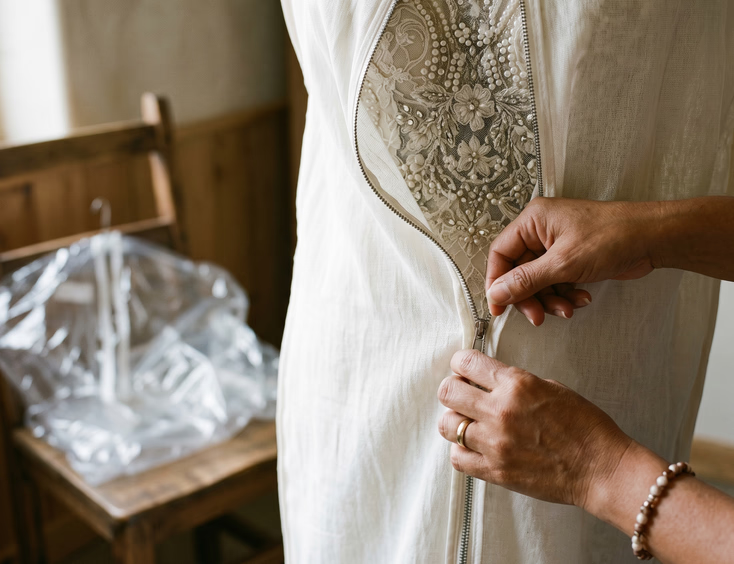
Your bridal boutique gave you a garment bag at pickup. Check what it's made of. Plastic garment bags trap moisture inside and create the conditions mold needs to grow. In a humid Philippine home, a plastic bag around your gown acts like a greenhouse.
Use a breathable cotton or muslin garment bag instead. A breathable bag allows air circulation while protecting the gown from dust, pet hair, and accidental contact. If your boutique provided a plastic bag, replace it. You can find cotton garment bags at fabric shops in Divisoria, online craft stores, or through your gown designer.
If you're storing the gown flat in a box, use an acid-free storage box. Acid-free tissue and box materials act as a pH buffer, protecting the fabric from chemical reactions that cause yellowing. A regular cardboard box contains lignin, an organic compound found in wood pulp that breaks down and damages delicate fabrics over time.
Handle the gown with clean, dry hands
This sounds minor. It makes a bigger difference than you'd expect. Your skin produces oils, and those oils transfer to fabric on contact. Lotions, perfumes, and makeup residue will oxidize in storage and leave yellow or brown marks that don't appear for weeks.
Before touching your gown:
- Wash and dry your hands
- Remove rings, bracelets, and watches that can snag beading or embroidery
- Skip hand lotion and perfume until after you've finished handling the dress
If you're arranging the gown in its bag or box, wear clean white cotton gloves. This is standard practice in textile conservation, and it applies to your wedding gown too.
Protect piña and jusi gowns with extra care
Piña fabric comes from pineapple leaf fibers. Jusi comes from raw silk or banana leaf fibers. Both are lightweight, sheer, and carry deep cultural significance in Filipino weddings. They are also more fragile than satin, polyester, or silk organza.
Storage rules for piña and jusi:
- Lay flat, never hang. These fibers are stiff and lightweight but can distort under gravity. Hanging pulls the weave apart over time.
- Use acid-free tissue between folds. Piña is prone to creasing. Tissue cushions the folds and prevents permanent lines.
- Store in an AC room at all times. Piña absorbs moisture fast. In the Philippine climate, even a few days in a humid room can weaken the fibers.
- Use a steamer, not an iron, to remove wrinkles before the wedding. High heat from an iron can scorch or permanently damage piña and jusi. A garment steamer on low heat, held at a distance, relaxes the fibers without contact.
- Keep away from perfume, hairspray, and insect repellent. Chemical residues react with natural plant fibers and cause discoloration that no dry cleaner can reverse.
If your gown blends piña with silk or polyester, the piña sections still need the same level of caution. Treat the entire gown based on its most delicate component.
Control humidity if you don't have central AC
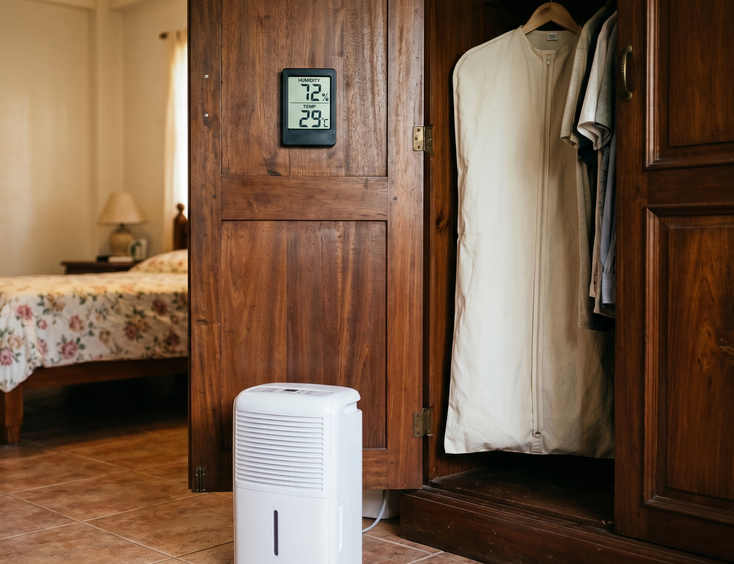
Most Philippine homes don't have central air-conditioning. If the room where you're storing your gown has a window-type or split-type AC unit, run it during the hottest and most humid hours of the day (10 AM to 4 PM). If you don't have AC in the storage room at all, use a portable dehumidifier. Aim for indoor humidity below 60%.
Budget-friendly alternatives:
- Silica gel packets. Place several large packets inside the garment bag or storage box. These absorb excess moisture from the surrounding air. Replace them every few weeks.
- Charcoal dehumidifiers. Activated bamboo charcoal bags absorb moisture and odors. You can find them at hardware stores and supermarkets across the Philippines.
- Electric dehumidifiers. A small unit rated for a single room costs between ₱2,000 and ₱5,000 and will keep humidity below 60% if you run it for a few hours each day.
Check humidity with a hygrometer. You can buy a basic digital hygrometer at Ace Hardware or Handyman for under ₱500. Place it in the storage room and check it once a day for the first week. If humidity stays above 60% with your current setup, add a dehumidifier or move the gown to a cooler room.
Keep pets, kids, and foot traffic away from the gown
A cat's claw will catch beading. A toddler's sticky fingers will leave marks on white satin. A guest opening the closet might brush against the fabric with a bag or jacket. Store the gown in a room with a door that stays closed.
If you have pets, keep them out of the storage room entirely. Pet fur sticks to tulle and lace, and removing it without damaging the fabric takes more effort than you'd expect on the morning of your wedding.
Inspect the gown once a week before the wedding
Set a weekly reminder to check the gown. Open the garment bag or box and look for:
- Yellowing or discoloration. Catch this early and you can address it before the wedding.
- Mildew spots or musty smell. If you detect either, move the gown to a drier room, increase ventilation, and consult your bridal boutique or a garment care professional.
- Pest activity. Silverfish and moths feed on natural fibers. Look for small holes or fine dust near the fabric. Add cedar blocks or lavender sachets (not mothballs, which leave a chemical smell) to the storage area as natural repellents.
- Loose beading or threads. If you find any, bring the gown to your designer or seamstress for a quick repair before the wedding.
Each time you check the gown, refold it along different lines if it's stored flat. This prevents permanent creases from forming in the same spots.
Schedule steaming and transport close to the wedding day
Steam the gown two to three days before the wedding. Most bridal boutiques and garment care providers in the Philippines offer professional steaming services. If you're steaming at home, use a handheld garment steamer on low heat. Hold it six to eight inches from the fabric and move in smooth downward strokes.
For transport:
- Lay the gown flat in the back seat of a car or across a clean, covered surface in the trunk. Avoid folding it into a small space.
- Bring it inside within minutes. A parked car in the Philippine sun becomes an oven. Fifteen minutes in a hot trunk can undo weeks of careful storage.
- If traveling to a destination wedding, pack the gown in a hard-sided garment travel case. Wrap it in acid-free tissue and pad the case to prevent shifting. Carry it on the plane if possible; checked luggage exposes the gown to rough handling and unpredictable temperatures.
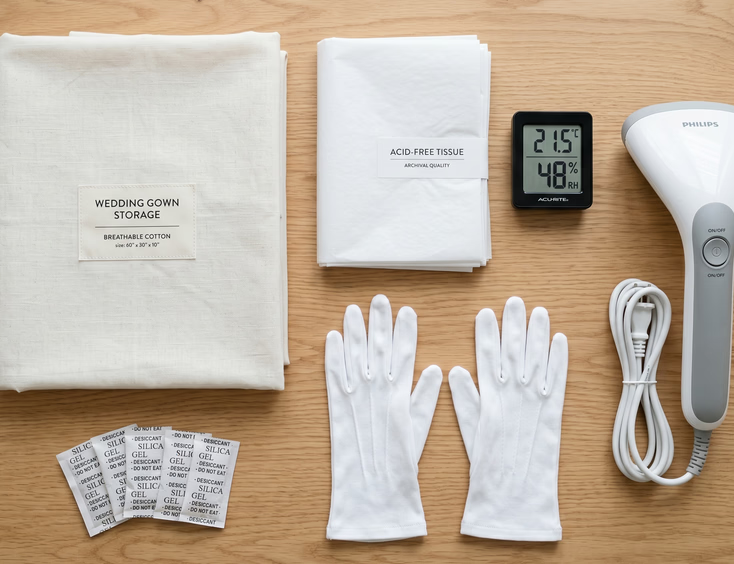
Your gown storage checklist at a glance
At pickup:
- Replace plastic bag with a breathable cotton garment bag
- Store in an air-conditioned room away from sunlight
- Handle with clean, dry hands
Days after pickup:
- Check humidity with a hygrometer (target: below 60%)
- Add silica gel or a dehumidifier if needed
- Restrict room access from pets and foot traffic
Weekly until the wedding:
- Inspect for yellowing, mildew, pests, and loose beading
- Refold along different lines if stored flat
2 to 3 days before the wedding:
- Steam the gown (professional or at-home steamer on low heat)
- Arrange transport to the venue or bridal suite
Take the next step in protecting your wedding garments
Storing your gown between the final fitting and your wedding is one piece of a bigger garment care timeline. For a full overview of how to care for your bridal garments from fitting day through long-term preservation, read our complete guide to wedding garment care in the Philippines.
On your wedding day itself, your gown faces new threats: sweat, food stains, ground contact, and weather. Prepare your entourage with emergency wedding garment fixes they should know before the ceremony, and make sure someone packs a bridal emergency kit focused on garment protection.
If you want a professional to handle steaming, spot-cleaning, or pre-wedding garment prep, browse our garment care suppliers directory to find vetted providers across the Philippines.
Still Searching for a Right Match?
Find Your Perfect Wedding Supplier Today!
Discover trusted wedding suppliers across the Philippines in our complete directory. Compare services and connect with the ones that fit your dream celebration.
Browse Wedding SuppliersFeatured Blog Posts





Filipino Wedding Entourage - Roles, Order of March, and Modern Etiquette
6 mins readCivil Weddings in the Philippines - Requirements, Costs, and Step-by-Step Process
9 mins readCivil Wedding Requirements in the Philippines - Complete Checklist
6 mins readCost of Wedding in the Philippines - 5 Essential Things You Need to Know
7 mins readPrincipal Sponsors (Ninong/Ninang) - How Many, How to Ask, What They Really Do
4 mins readVeil, Cord, Candle & Coins - Roles, Options, and When They Happen
4 mins readEntourage for a Traditional Pinoy Wedding - Complete Roles and Guide
6 mins readComplete List of Civil Wedding Requirements in the Philippines
8 mins readHow to Choose Wedding Ninongs and Ninangs - Ask Yourself These 3 Important Questions
5 mins read