


What Is the Money Dance at Filipino Weddings and How Does It Work
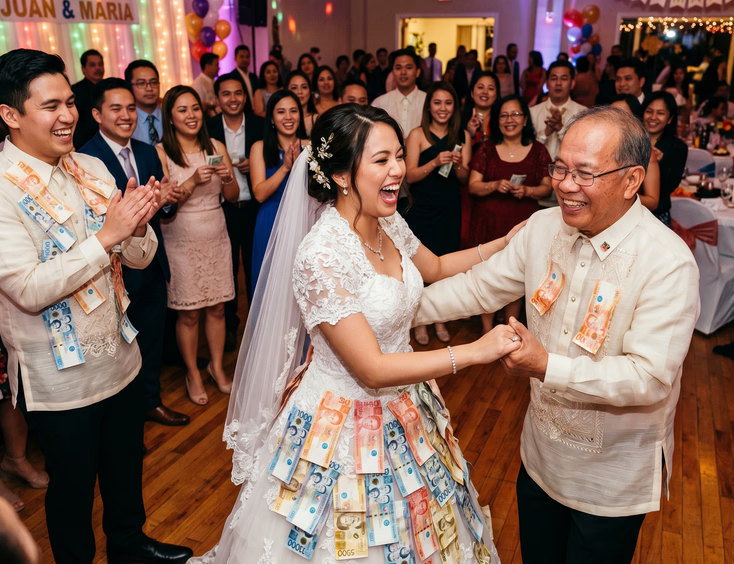
The money dance is a Filipino wedding tradition where guests pin cash to the bride and groom while dancing with them. Filipinos call it the sabitan ng pera or the prosperity dance. Your emcee announces it, your guests line up, and one by one they pin bills to your clothing, dance with you for 30 to 60 seconds, then step aside for the next person.
The tradition shows up at Filipino weddings across the country and in Filipino communities overseas. It blends celebration with financial support, turning gift-giving into a public, interactive part of your reception.
How the Money Dance Works
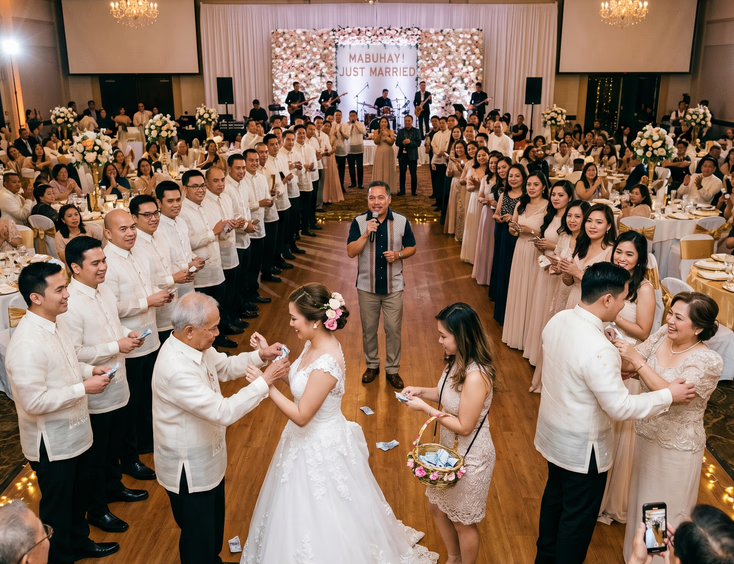
The money dance follows a straightforward sequence. Your emcee or DJ announces the start. An upbeat song plays. Male guests line up in front of the bride. Female guests line up in front of the groom.
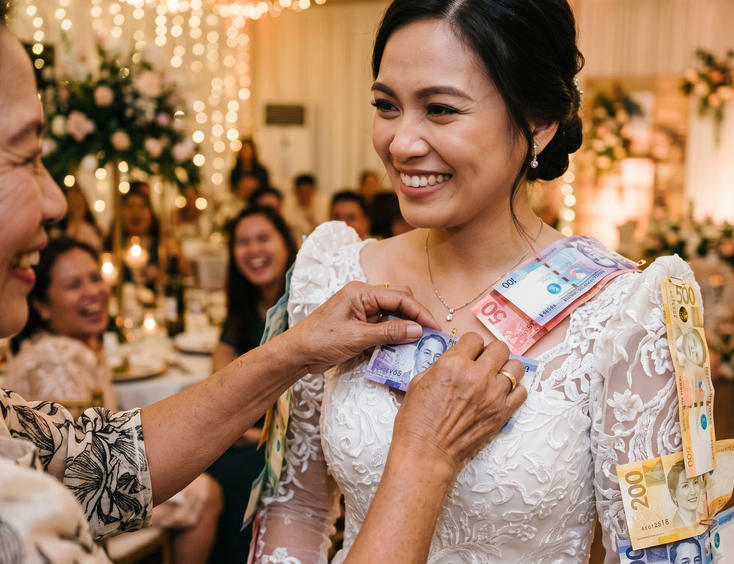
Each guest approaches, pins a bill to the bride's or groom's clothing, then dances with them for a brief turn. Some guests pin a single bill. Others pin several. Ninangs and ninongs (godparents) and close relatives tend to pin larger denominations.
After all guests have taken their turn, the couple is covered in pinned bills. Some families take it further. Guests fashion the money into crowns, sashes, garlands, and capes for the bride and groom to wear. The creative element turns a simple gift exchange into a visual spectacle that photographs well and entertains the crowd.
The whole sequence takes 10 to 20 minutes depending on your guest count.
Where the Tradition Came From
The money dance exists in multiple cultures. Poland, Nigeria, Greece, Portugal, Mexico, and Hungary all have their own versions. Tracing the tradition to a single origin is difficult because these variations developed across different regions and centuries.
The Polish version may be one of the oldest recorded forms. Guests danced with the bride and placed money in an apron she wore. The best man managed the sequence and offered shots of whiskey to participants. Some scholars place the Polish version around the early 20th century.
The Filipino money dance absorbed elements from both Spanish colonial customs and broader Asian gift-giving traditions. Filipino communities value collective support for newlyweds. The money dance made that support visible and participatory instead of private. Rather than handing an envelope at the door, your guests walk up, pin money to your clothes, and share a moment with you on the dance floor.
The tradition rooted itself in Filipino wedding culture because it aligned with existing values: family obligation, communal celebration, and practical generosity.
What the Money Dance Means in Filipino Culture
Financial Support for Newlyweds
The money collected during the dance helps couples cover wedding expenses or start married life. Some couples put the money toward their honeymoon. Others save it for a home down payment or household expenses. The practical purpose is straightforward: your community pools resources to give you a financial head start.
A Public Display of Community
Filipino weddings involve large guest lists. The money dance gives you face time with each guest. You dance with your tita, your college roommate, your boss, and your lolo in sequence. Each person gets a moment with you on the floor. The tradition compresses dozens of individual interactions into a single energetic segment of your reception.
Wishing Prosperity
Pinning money to the couple symbolizes a wish for financial abundance. The act is a blessing. Your guests contribute to your future and express their hope that your married life will be prosperous. The tradition ties celebration to generosity in a way that feels natural at a Filipino gathering.
How to Plan the Money Dance at Your Wedding
Coordinate with Your Emcee and DJ
Your emcee introduces the money dance and explains the process to guests who may not be familiar with it. Your DJ plays an upbeat track that keeps energy high while guests rotate through the line. Coordinate the timing so the money dance falls after the first dance and the cotillion de honor, when the reception energy is already elevated.
Inform Your Guests Ahead of Time
Include a note in your wedding program or send a message through your group chat letting guests know the money dance will be part of the reception. This gives them time to bring cash. Guests who arrive without cash feel awkward when the line forms and they have nothing to pin.
Prepare Your Attire
Pinning bills to a wedding gown or barong Tagalog can damage delicate fabric. You have several options to protect your outfit:
Attach a ribbon or sash. Give guests a designated pinning area so the rest of your outfit stays untouched.
Use a decorative pouch or apron. The apron variation is traditional in several cultures. Guests drop money into the pouch instead of pinning it.
Change into simpler clothes. Some couples swap into a second outfit before the money dance. This protects the wedding attire and gives you more freedom to move on the floor.
Assign a Money Collector
Designate a trusted friend or family member to collect the pinned money as it accumulates. Bills fall off during the dance. A collector follows behind you, gathers loose cash, and keeps it secure. Without one, you lose bills on the floor.
Set a Time Limit
A money dance that runs too long drains energy from the reception. Aim for 10 to 15 minutes. If your guest list is large (200 or more), consider running two lines per person: one for the bride and one for the groom at the same time. This cuts the duration in half.
Modern Variations Filipino Couples Use
The Money Garland
Instead of individual pinning, a friend or family member assembles a garland of bills before the reception. They tape or pin bills together into a long chain. During the money dance, they drape the garland around the bride and groom. This avoids pin damage and creates a dramatic visual moment.
The QR Code Money Dance
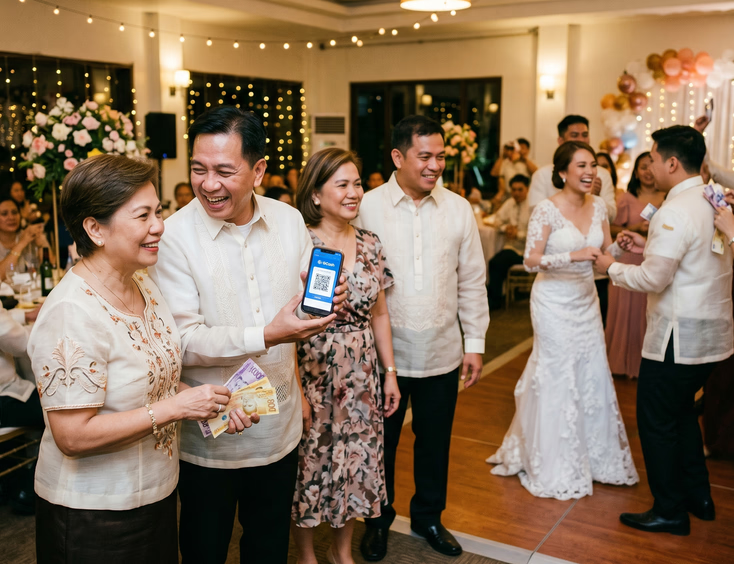
Some Filipino couples have gone cashless. They display a QR code on a screen during the money dance. Guests scan the code and send money through GCash, Maya, or a bank transfer. The couple still dances with each guest, but the transaction happens on a phone instead of with a pin. This works well for younger guest lists comfortable with digital payments.
The Charitable Money Dance
Couples who feel uncomfortable collecting money for themselves redirect the funds. They announce that money dance contributions will go to a chosen charity. Guests still participate in the tradition, and the couple channels the generosity toward a cause they care about.
The Basket Variation
Some couples place a decorated basket on the dance floor. Guests drop bills into the basket as they dance with the bride or groom. No pins, no garlands, no QR codes. The basket keeps things clean and simple.
Common Questions About the Money Dance
Do You Have to Do the Money Dance?
No. The money dance is optional. Some couples skip it because they find it awkward or because it does not fit the tone of their reception. If you choose to include it, own the moment and have fun with it. If you skip it, no guest will hold it against you.
How Much Money Do Guests Pin?
Amounts vary. Most guests pin PHP 100 to PHP 500 bills. Close relatives and ninongs/ninangs tend to pin PHP 1,000 or more. There is no required amount. The gesture matters more than the denomination.
When Does the Money Dance Happen?
The money dance takes place during the reception, after the couple's first dance and group performances. Your emcee slots it into the program alongside other interactive segments. Most couples place it in the second half of the reception when guests have eaten and the energy is loose.
Can You Do the Money Dance at a Destination Wedding?
Yes. The money dance travels well. Filipino couples who marry abroad bring the tradition with them. If your guest list includes non-Filipinos, brief them on the tradition before the reception so they know what to expect and can participate.
Make Your Money Dance Memorable
The money dance gives your guests a chance to celebrate you up close, one by one. It connects your reception to a tradition that Filipino families have practiced for generations. If you want a choreographer to help you plan the flow and transitions of your money dance alongside your first dance and cotillion, browse wedding dance choreographers in the Philippines and start planning.
Still Searching for a Right Match?
Find Your Perfect Wedding Supplier Today!
Discover trusted wedding suppliers across the Philippines in our complete directory. Compare services and connect with the ones that fit your dream celebration.
Browse Wedding SuppliersFeatured Blog Posts

Filipino Wedding Entourage - Roles, Order of March, and Modern Etiquette
6 mins readCivil Weddings in the Philippines - Requirements, Costs, and Step-by-Step Process
9 mins readCivil Wedding Requirements in the Philippines - Complete Checklist
6 mins readCost of Wedding in the Philippines - 5 Essential Things You Need to Know
7 mins readPrincipal Sponsors (Ninong/Ninang) - How Many, How to Ask, What They Really Do
4 mins readVeil, Cord, Candle & Coins - Roles, Options, and When They Happen
4 mins readEntourage for a Traditional Pinoy Wedding - Complete Roles and Guide
6 mins readComplete List of Civil Wedding Requirements in the Philippines
8 mins readHow to Choose Wedding Ninongs and Ninangs - Ask Yourself These 3 Important Questions
5 mins read