


The Role of Adult Children and Apo in Their Parents' Anniversary Celebration

The group chat has been quiet for three weeks. The eldest sibling is doing all the planning. The youngest hasn't responded to any of the questions about the venue. The middle one already booked flights from Singapore but doesn't know what date the Mass is. Mom and Dad's golden anniversary is four months away and nobody in the family knows who's actually in charge.
Filipino anniversary celebrations organized by adult children for their parents are some of the most meaningful events the family will ever host, and some of the most logistically chaotic.
The chaos isn't a failure of love. It's a failure of structure. Filipino families rarely talk openly about roles, budgets, and decision authority when planning parental anniversaries, which means the planning defaults to whoever raises their hand first and absorbs everyone else's silence as agreement.
This guide covers how adult children and apo can take on roles for their parents' or grandparents' milestone anniversary, how to divide the work without resentment, and how to make the celebration the parents will actually remember.
Why Parental Anniversary Planning Falls to the Adult Children
By the time Filipino parents reach their silver, pearl, ruby, or golden anniversary, the energy required to plan a milestone celebration usually exceeds what they have to spend on themselves.
The kids have to step up. Three reasons:
The parents won't plan their own celebration at this scale. Asking parents to plan their own golden jubilee is like asking the guests of honor to organize their own surprise party. Filipino parents in their fifties, sixties, and seventies will usually deflect when adult children ask "what do you want to do?" because they don't want to seem demanding. The kids have to take the initiative.
The celebration honors what the parents built. The marriage that produced the adult children deserves recognition that the marriage itself can't organize. The kids are saying, in physical form, that the household, the values, and the family the parents built mattered enough to be marked with a real celebration.
The cultural expectation is clear. In Filipino tradition, the adult children of silver, golden, and diamond couples organize the milestone celebrations. The parents may resist, may downplay the milestone, may insist "huwag na lang" multiple times before the celebration. The kids should plan anyway.
The Eldest Child's Role
The traditional lead, though not always the right one.
What the eldest typically handles. The overall coordination of the celebration. The communication with the parents. The final decisions when siblings disagree. The presentation of major gifts. The opening or closing remarks at the program.
When the eldest should delegate. When the eldest lives abroad, when the eldest doesn't have time, or when another sibling has more event-planning experience. The cultural default of "eldest leads" should yield to practical capability when the actual lead role requires hands-on coordination.
What the eldest should never do. Plan the entire celebration alone without sibling input, then present it as a done deal. Even if the eldest has the capacity and the budget to handle everything, the celebration loses meaning when the other siblings are reduced to invited guests at their own parents' anniversary.
The Coordinator Role
The person actually running the celebration. Sometimes the eldest. Sometimes not.
What the coordinator handles. Vendor communication with the venue, caterer, photographer, musicians, stationer, and cake designer. Timeline management from booking to the day of the celebration. The day-of execution and contingency management. The point of contact for all family members on logistical questions.
Who should be the coordinator. The sibling with the most planning capacity, the most flexible schedule, and the closest proximity to the parents. Often the sibling who lives in the same city as the parents. Often a sibling whose work involves project management, events, or coordination by nature.
What the coordinator needs from the family. Clear authority to make decisions within agreed parameters. A budget framework agreed by all contributing siblings. Backup support from at least one other sibling who can step in if the coordinator gets sick or stuck.

The Sibling Roles
Anniversary planning works best when each sibling has a defined role rather than a vague invitation to "help."
The financial lead. Manages the shared budget, collects contributions from siblings, pays vendors, and tracks expenses. Often the sibling abroad who can't help on the ground, since financial coordination can happen remotely.
The program designer. Plans the program flow, drafts speeches, coordinates the audio-visual presentation, manages the family video or slideshow, and works with the live musicians for the celebration on the music cues.
The styling lead. Coordinates the color palette and visual program, works with the stationery designer on the invitations, commissions the heritage anniversary cake, and handles the venue florals and decoration.
The spiritual lead. Coordinates the anniversary Mass at the parish, arranges the Vatican apostolic blessing for golden couples, and organizes any novena or pilgrimage components the parents would value.
The gift lead. Coordinates the major family gift, often the heritage jewelry piece or commissioned heirloom that becomes the centerpiece of the program. Works with the Filipino heritage jewelry artisans on commissions that take months to complete.
The hospitality lead. Handles the guest list, manages the invitations and RSVPs, coordinates accommodations for out-of-town family, and runs the welcome and seating at the celebration itself.
The Role of the In-Laws (Spouses-in-Law)
The most often-overlooked planning category, and the one where the most family friction develops.
What spouses-in-law should do. Support their spouse's planning role without inserting themselves as decision-makers. Help with adjacent tasks like preparing their family's part of the program, coordinating with the grandchildren's involvement, and managing the day-of logistics for their immediate family.
What spouses-in-law should not do. Take over the planning, even when they have more event-planning experience than their spouse. Make decisions about the celebration without consulting the adult children of the celebrating parents. Treat the celebration as their event rather than as their in-laws' event.
How to involve in-laws meaningfully. Assign them specific roles within the celebration. A reading at the Mass. A musical performance during the program. A short speech on behalf of the next generation. The role acknowledges them as family without making them planners.
The Apo (Grandchildren) Role
Grandchildren bring the celebration to life in ways the adult children can't.
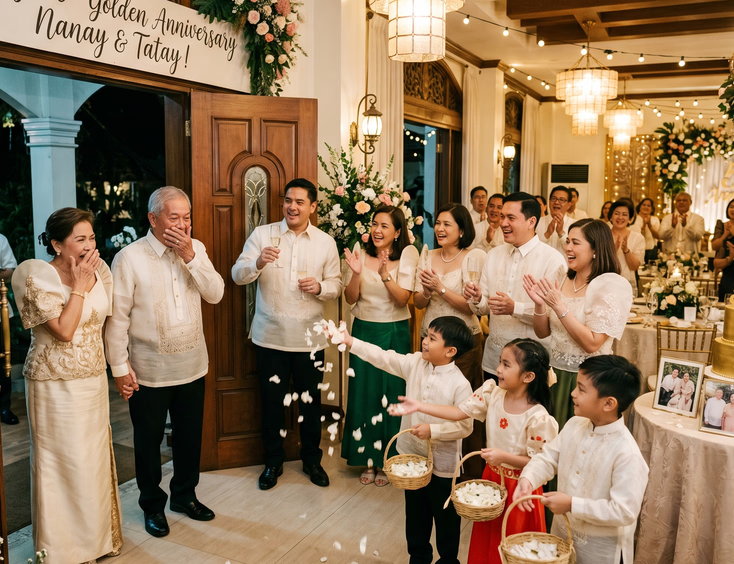
For young apo (under 10). Participation in the entrance procession at the Mass. Bringing flowers to the parents during the program. Singing a song the parents loved when their own kids were young. The apo don't need significant roles; their presence is the point.
For teen apo (10 to 17). Reading the novena prayers in the days before the anniversary Mass, serving as ushers at the celebration, helping with the audio-visual presentation, and contributing short pieces to the program (poems, songs, readings).
For adult apo (18 and older). Significant roles in the program. Speeches alongside the adult children. Performance contributions. Coordination of the entire grandchildren's segment of the celebration. Adult apo often handle the photography and videography, which means they're working through the entire celebration in a defined role.
The cumulative effect of apo participation. When grandchildren participate in the celebration, the milestone becomes a multi-generational event that the family talks about for decades. The four generations gathered together create the images that hang on living room walls forever.

How to Divide the Budget Among Siblings
The most uncomfortable conversation Filipino siblings have to navigate when planning parental anniversaries.
The principle of differential contribution. Each sibling contributes according to ability. Siblings abroad earning in dollars or other foreign currencies often contribute more financially. Local siblings often contribute more in time and labor. Both forms of contribution are equally valuable, but the family needs to acknowledge them explicitly.
The contribution conversation. The coordinator initiates a clear conversation about contributions early in the planning, ideally six months before the celebration. The conversation covers:
- Total estimated budget for the celebration
- Each sibling's financial contribution
- Each sibling's time and labor contribution
- How major gifts are funded and from whom
- How surprises and additional expenses get handled
The shared spreadsheet approach. A simple shared spreadsheet that all siblings can see, showing contributions and expenses, removes the secrecy that creates resentment. Filipino families often resist this kind of transparency because money talk feels indelicate, but the alternative is years of subtle bitterness about who "actually" paid for the celebration.
Handling siblings who can't contribute much. Some siblings simply can't contribute much money. The family should adjust their role rather than excluding them. A sibling who can't contribute financially can still take on significant time-based roles. The contribution stays meaningful.
Handling siblings who contribute disproportionately. A sibling who contributes significantly more should be acknowledged but not given disproportionate decision authority. Money doesn't equal voice in family decisions. The contribution earns gratitude, not unilateral control.
How to Plan Around Siblings Abroad
Most contemporary Filipino families have at least one adult child working overseas.
The early communication timeline. Siblings abroad need more lead time to coordinate flights, work leave, and visa requirements. Major decisions should be agreed at least four months out for siblings working in the United States, Europe, or the Middle East. Six months out is better.
The video call infrastructure. Family planning meetings should include the siblings abroad through video calls scheduled in time zones that work for everyone. The eldest sibling or the coordinator should run the meetings with prepared agendas, since unstructured calls waste the limited time the siblings abroad have available.
Role assignment for siblings abroad. Siblings abroad can take on roles that don't require physical presence: financial coordination, vendor research and selection, video editing for the family slideshow, speech preparation, and coordination with relatives in other countries. The roles should feel substantial, not consolation prizes.
The trip planning logistics. Siblings abroad often combine the anniversary trip with extended home visits. The coordinator should know the arrival and departure dates of each sibling abroad, since the program timing may need to flex to accommodate them.
Common Sibling Conflict Patterns and How to Handle Them
The over-functioning sibling. One sibling takes on everything and resents the others. Solution: the over-functioning sibling needs to actively delegate, even when they could do tasks faster themselves. The other siblings need to step up and accept the imperfect execution of work they didn't have to coordinate.
The under-functioning sibling. One sibling contributes minimally and shows up like a guest. Solution: the coordinator should assign specific tasks rather than asking generally "how can you help?" Concrete asks land better than open invitations.
The competing styles. Two siblings disagree fundamentally about the celebration's tone, scale, or aesthetic. Solution: the parents' preferences should override sibling disagreements. If both options would please the parents, the lead sibling on that category decides.
The financial imbalance resentment. The sibling who contributed more begins to dominate decisions. Solution: clear written agreement at the start of planning about decision authority by category. Money in does not equal say-so over everything.
The in-law interference. A spouse-in-law begins to take over planning in ways that bypass the adult children. Solution: the affected sibling needs to gently re-center the planning conversation around the adult children, often through one-on-one conversation with their spouse outside the family planning meetings.
The Surprise Versus Open Planning Question
One of the most contested questions in parental anniversary planning.
The case for surprise. Filipino parents often resist celebrations being organized for them, deflecting with "huwag na" or "okay na ang simpleng dinner lang." Planning the celebration as a surprise sidesteps the resistance and ensures the celebration happens at the scale the children believe the milestone deserves.
The case for open planning. Parents at this stage may have specific preferences, restrictions, or sensitivities (health issues, social anxieties, family conflicts) that affect celebration choices. Surprises can produce mismatches between what the children planned and what the parents actually want.
The hybrid approach. Tell the parents a celebration is happening, give them broad parameters, but keep specific details and major gifts as surprises. The parents can prepare emotionally and physically. The celebration retains the surprise elements that make it memorable.
Best for surprises. Silver anniversaries where the parents are still active and adaptable. Specific gift presentations that benefit from emotional impact. The reveal of the Vatican apostolic blessing certificate for golden couples.
Best for open planning. Anniversaries beyond fifty, where the parents have specific energy and health requirements. Celebrations involving travel that the parents need to physically prepare for. Programs requiring the parents' specific participation, like vow renewals.
How the Coordinated Family Effort Fits Into the Larger Anniversary
The roles and structures above support the celebration the family puts together for the parents.
For the overall celebration design, the Filipino couple's guide to celebrating wedding anniversaries walks through how the family-coordinated celebration fits the broader Filipino anniversary tradition.
For gift coordination, the anniversary gift ideas for Filipino parents guide covers the specific gifts that work for parents at each milestone year.
For budget alignment across the celebration, the realistic cost breakdown for Filipino anniversary celebrations helps the family understand the typical spend at each scale of celebration.
What the Family Effort Actually Creates
Twenty years from now your parents won't remember which sibling picked the caterer.
They'll remember the moment all their adult children stood together at the altar during the renewal of vows at their golden jubilee. They'll remember the grandchildren who sang the song their own kids used to sing when they were small. They'll remember the family video where every one of their children, including the ones overseas, spoke about what their marriage taught them.
The celebration becomes the gift. The gift becomes the family's collective act of recognition.
Designate the roles. Coordinate the work. Stand together for the parents who made you all a family.
Still Searching for a Right Match?
Find Your Perfect Wedding Supplier Today!
Discover trusted wedding suppliers across the Philippines in our complete directory. Compare services and connect with the ones that fit your dream celebration.
Browse Wedding SuppliersFeatured Blog Posts



Filipino Wedding Entourage - Roles, Order of March, and Modern Etiquette
6 mins readCivil Weddings in the Philippines - Requirements, Costs, and Step-by-Step Process
9 mins readCivil Wedding Requirements in the Philippines - Complete Checklist
6 mins readCost of Wedding in the Philippines - 5 Essential Things You Need to Know
7 mins readPrincipal Sponsors (Ninong/Ninang) - How Many, How to Ask, What They Really Do
4 mins readVeil, Cord, Candle & Coins - Roles, Options, and When They Happen
4 mins readEntourage for a Traditional Pinoy Wedding - Complete Roles and Guide
6 mins readComplete List of Civil Wedding Requirements in the Philippines
8 mins readHow to Choose Wedding Ninongs and Ninangs - Ask Yourself These 3 Important Questions
5 mins read