


Filipino Heirloom Jewelry for Anniversaries, Tamburin, Gold Filigree, and the Stories They Carry
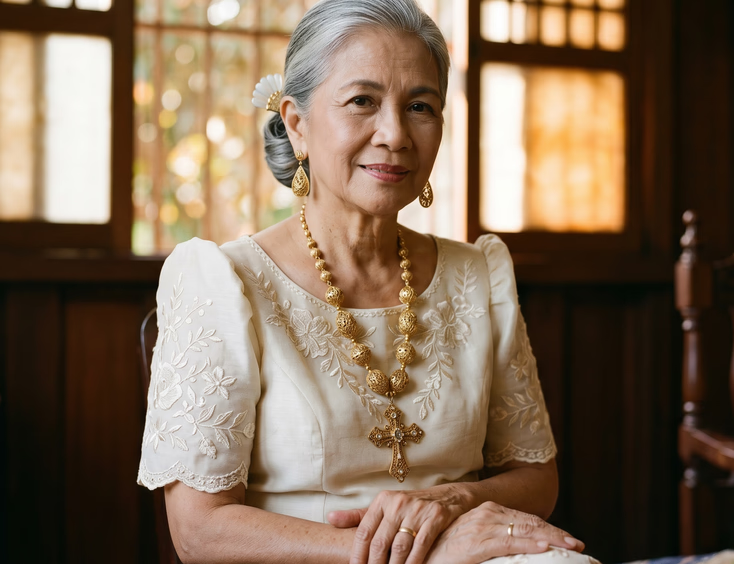
Your lola wore the same gold tamburin necklace to every family wedding for forty years. When she died, your mom got it. Your mom wore it to your wedding. When your mom hits her golden anniversary next year, she'll wear it to her own jubilee Mass.
That necklace has been to more anniversaries than most people in your family.
Filipino heirloom jewelry carries a different kind of weight than modern jewelry. The tamburin necklace, the gold filigree earrings, the peineta combs your great-grandmother wore, the agimat amulets passed down through baptisms and weddings, these pieces don't just commemorate the anniversary. They are the anniversary, in physical form, that the family hands forward.
This guide covers the heirloom jewelry traditions Filipino couples use for anniversary gifts, what each piece means, where to find them, and how to commission new heirlooms that the next generation will carry.
Why Heirloom Jewelry Suits Anniversaries Better Than New Jewelry
A new piece of jewelry celebrates the year. An heirloom piece celebrates the marriage.
For Filipino couples raised in households where the jewelry box held generations of pieces, the difference matters. A wedding ring marks the beginning. An heirloom marks the continuation, the connection to grandmothers and great-grandmothers who stayed married long enough that their pieces survived to be passed forward.
Four reasons heirloom jewelry works for anniversaries in ways new jewelry doesn't:
The story comes with the piece. Modern jewelry needs marketing copy to mean something. Heirloom jewelry carries the story of where it came from, who wore it, and what it survived. The story is the value.
The craftsmanship rewards close attention. Filigree work, repoussé, granulation, the techniques used in traditional Filipino gold work require skills modern mass production has abandoned. Each piece holds hours of artisan labor that machine-made jewelry can't replicate.
The materials age beautifully. Filipino antique gold, usually 18k or 22k, develops a patina over decades that brand-new pieces lack. The yellow softens. The surface picks up the marks of generations of wearers. The piece looks more valuable at 80 years old than it did at 10.
The piece can be passed forward. A modern necklace gets worn and eventually forgotten. An heirloom piece given for a silver anniversary becomes the piece a daughter wears at her own wedding, which becomes the piece a granddaughter wears at her debut, which becomes the piece a great-granddaughter wears at her own golden jubilee.
The Tamburin: The Most Filipino Anniversary Necklace
The piece most Filipino families recognize on sight, and the one that anchors most heirloom jewelry collections.
What it is. A traditional Filipino necklace featuring small hollow gold beads, usually 22k, strung together in a uniform pattern. The beads can be smooth, textured with filigree, or pressed with repoussé designs. The clasp is often an ornate gold hook or a sliding tube closure. The full piece sits at the collarbone or drapes lower depending on the length.
Where the tradition comes from. Tamburin necklaces trace back to pre-colonial Filipino goldwork, with influences from Spanish colonial-era jewelry techniques layered on top. The piece was traditionally worn at major life events: baptisms, debuts, weddings, anniversaries, and funerals. Families with means commissioned new tamburins for each generation. Families without means passed the same piece down through daughters.
Why it suits anniversaries. The tamburin works for any milestone year but carries special weight at silver and golden anniversaries. Many Filipino families have a tamburin that the matriarch wore at her own wedding and has worn at every subsequent milestone. Bringing the piece out for the golden anniversary Mass closes a circle the family has been drawing for decades.
Where to find authentic pieces. Estate sales in old Manila families. Antique dealers like Sining Antiques and the legitimate dealers along A. Mabini in Ermita. Auction houses like Leon Gallery occasionally feature Filipino heirloom jewelry. Specialized vintage jewelry dealers in Binondo and the older parts of Cebu. Verifying authenticity matters, since reproductions exist in volume.
Where to commission new tamburins. Master jewelers like Ramon Orlina (estate work), Eli Pe Tamayo, and the goldsmiths working in Meycauayan, Bulacan, the historic center of Filipino jewelry craftsmanship. Many of the families running these workshops have been making tamburins for four or five generations.
What it costs. A small antique tamburin necklace in 22k gold: ₱45,000 to ₱180,000 depending on the age, the weight, and the provenance. A commissioned new tamburin from a master goldsmith: ₱65,000 to ₱350,000 depending on the gold weight and the detail level. Top-tier antique pieces with documented provenance: ₱250,000 to ₱1.2 million.
Gold Filigree Earrings and Pendants
The lacework of Filipino jewelry, and the technique that turns metal into something that looks woven.
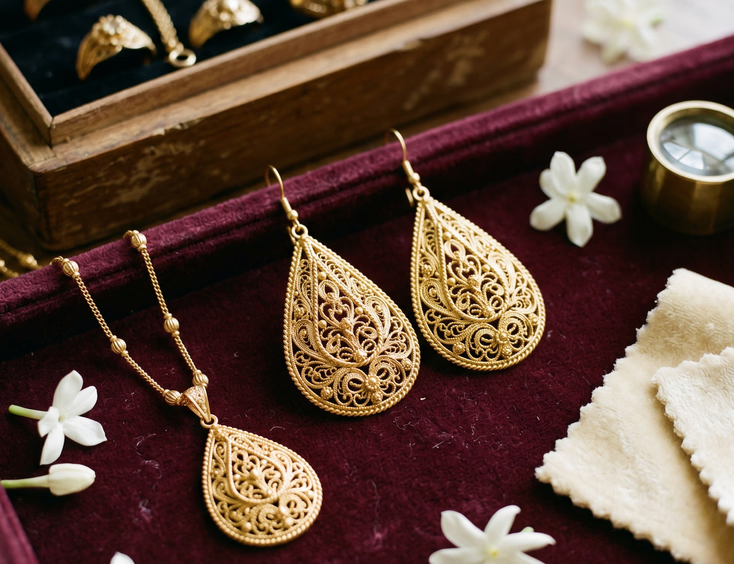
What it is. Jewelry made from fine gold wire twisted, soldered, and shaped into intricate openwork patterns. The technique creates pieces that look more like embroidery than metalwork. Common forms include teardrop earrings, pendant necklaces, brooches, and decorative pins worn on traditional Filipiniana attire.
Where the tradition comes from. Filigree work entered Filipino goldsmithing through Spanish colonial influence, layered onto pre-existing local techniques. The form became especially associated with Meycauayan, Bulacan and the Visayan goldsmithing centers. Filipino brides traditionally wore filigree pieces at their weddings, and the same pieces returned for every subsequent milestone in the marriage.
Why it suits anniversaries. Filigree pieces age into themselves. The thin gold wires develop patina at different rates than solid gold, which creates subtle color variations that machine-made jewelry can't replicate. A pair of filigree earrings given at a tenth anniversary becomes the pair worn at the twenty-fifth, the fiftieth, and eventually the eightieth, with each decade adding character.
Where to find authentic pieces. Meycauayan, Bulacan remains the center of authentic Filipino filigree work. Workshops like those run by the Bonifacio and Lapuz families produce both heritage reproductions and entirely new commissions. Manila antique dealers carry estate filigree pieces. Cebu's older jewelry shops along Colon Street occasionally feature Visayan filigree work, which has a slightly different aesthetic than Bulacan filigree.
What to commission. A pair of filigree teardrop earrings designed to complement a modern Filipiniana terno or barong tagalog. A filigree pendant on a simple gold chain, suited for everyday wear after the anniversary. A custom filigree brooch designed for the wife to wear on milestone occasions.
What it costs. A pair of antique filigree earrings: ₱25,000 to ₱95,000. Commissioned new filigree pieces from Meycauayan: ₱35,000 to ₱180,000. Master-level filigree work with custom design: ₱85,000 to ₱400,000.
The Peineta and Heritage Hair Combs
The often-forgotten heirloom category, and the one that survives most quietly in Filipino families.
What it is. Decorative combs worn in the hair, traditionally pinned at the back of a chignon or bun. Filipino peinetas range from tortoiseshell combs with gold inlay to solid gold combs with mother-of-pearl detail to filigree combs that incorporate the same lacework techniques as the earrings and necklaces.
Where the tradition comes from. Peineta usage in Filipino culture traces back to Spanish colonial-era fashion, when matronas wore elaborate combs as part of formal Filipiniana attire. The combs became heirlooms because they were rarely worn casually, which meant they survived longer than daily-wear pieces.
Why it suits anniversaries. A peineta given as an anniversary gift becomes the piece the wife wears at every subsequent milestone Mass, family wedding, and formal Filipiniana occasion. The piece holds its symbolic weight without requiring frequent wear. Many golden and diamond couples wear peinetas at their jubilee Masses that they last wore at their own weddings.
Where to find authentic pieces. Antique dealers specializing in Filipino estate jewelry. Auction houses occasionally feature significant peinetas from old Manila families. Reproduction peinetas, often using tortoiseshell substitutes since real tortoiseshell trade is restricted, are available from contemporary Filipino jewelry designers working in the heritage space.
What to commission. A peineta designed to anchor the wife's hairstyle for the anniversary Mass and the reception. Heritage-style designs work best when commissioned from artisans who understand both the visual tradition and the modern hair-styling realities (most contemporary peinetas need to balance heritage aesthetics with comb structures that actually hold modern hair).
What it costs. An antique peineta with documented provenance: ₱18,000 to ₱120,000. A commissioned new peineta with gold and mother-of-pearl detail: ₱28,000 to ₱150,000. Master-level custom peineta work: ₱85,000 to ₱350,000.
The Agimat and Religious Heirloom Pieces
The category most outside Filipino families don't know exists, and the one with the deepest spiritual weight.
What it is. Amulets, religious medallions, scapulars, and rosaries crafted in gold or silver and worn as both jewelry and devotional objects. Traditional agimat amulets combine pre-colonial spiritual symbolism with Catholic iconography. More common heirloom pieces include gold rosaries with hand-engraved beads, religious medals (often featuring the Virgin Mary, the Sacred Heart, or specific Filipino devotions like Our Lady of Manaoag), and scapular pendants.
Why it suits anniversaries. Religious heirloom pieces work especially well for couples whose anniversary tradition centers on the anniversary Mass, the novena and pilgrimage tradition, or the formal jubilee blessings of the Catholic Church. The piece becomes wearable devotion, carried into the church alongside the marriage itself.
Where to find authentic pieces. Religious shops near major Marian shrines (Manaoag, Antipolo, Quiapo) often carry gold rosaries and religious medallions of heirloom quality. Antique dealers occasionally feature significant pieces from estate sales. The shops along Carriedo and around the Quiapo Church carry a mix of authentic and reproduction pieces; experienced eyes can tell the difference.
What to commission. A custom gold rosary with the couple's anniversary date engraved on the centerpiece. A religious medallion featuring the saint the couple prayed to at their wedding. A pendant featuring the patron saint of the parish where the original wedding took place.
What it costs. An antique gold rosary: ₱35,000 to ₱180,000. A commissioned new rosary with engraved centerpiece: ₱45,000 to ₱150,000. Custom religious medallions and pendants: ₱18,000 to ₱85,000.
Repurposing Existing Heirloom Pieces
The most meaningful direction, and the one most Filipino families overlook.
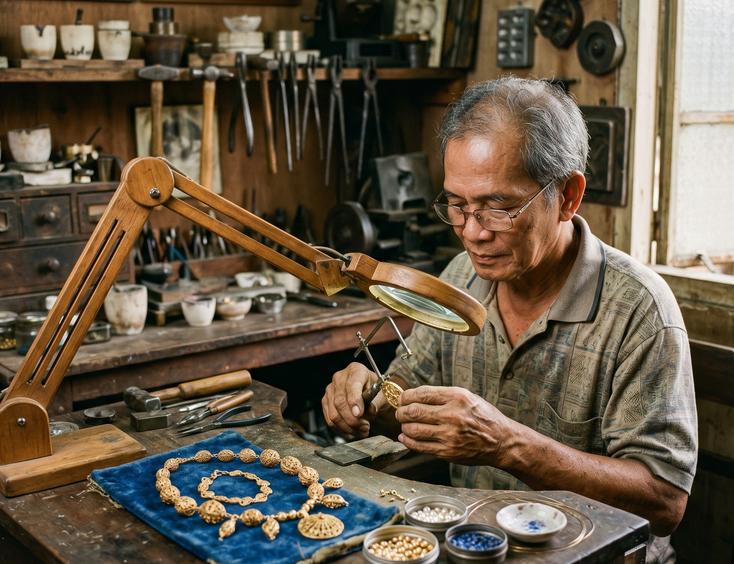
What it is. Taking existing family heirloom pieces, often inherited but not worn, and having them redesigned, restored, or reset into pieces suited to contemporary wear. The original gold gets melted or reworked. The original gemstones get reset. The piece changes form but keeps the lineage.
Why couples choose it. Many Filipino families have inherited heirloom jewelry that sits in safety deposit boxes because the pieces don't suit modern wardrobes. A grandmother's heavy tamburin might overwhelm contemporary Filipiniana. A great-aunt's brooch might be too formal for everyday use. Repurposing turns dormant inheritance into wearable heirloom.
How it works. A goldsmith assesses the existing piece, the available gold weight, and the gemstones. The family decides on a new design that preserves the heritage element while updating the form. The goldsmith melts and reworks the gold, resets the stones, and produces the new piece. The original character of the piece carries forward in subtler ways: a particular gold color, the presence of an inherited gemstone, the use of a heritage clasp or finding.
Where to find craftsmen. Master goldsmiths in Meycauayan handle repurposing work routinely. Designers like Joyce Makitalo, Janina Dizon, and the higher-end heritage jewelry studios in Manila offer redesign consultations. Many couples find skilled jewelers through family recommendations, since trustworthiness matters when entrusting an heirloom to a workshop.
What it costs. Repurposing existing pieces, assuming the family provides the gold and stones: ₱25,000 to ₱120,000 for the labor and design work, depending on complexity. Combined repurposing and addition of new materials: ₱65,000 to ₱250,000.
How to Commission Anniversary Heirloom Jewelry
Start six months ahead for milestone years. Heritage goldsmithing takes time. Custom filigree work alone requires 8 to 12 weeks. Antique sourcing requires patience, since the right piece may not appear immediately.
Bring family pieces to the consultation. If you're commissioning new jewelry that should harmonize with existing family pieces, bring those pieces. The goldsmith can match the gold color, the design language, and the proportions to make the new piece feel like part of an existing collection.
Verify authenticity for antique purchases. Filipino antique gold should be tested at the workshop or by an independent assessor. The gold mark, the construction technique, and the wear patterns all signal authenticity. Provenance documentation, when available, adds significantly to value.
Discuss insurance and storage. Heritage anniversary jewelry warrants formal appraisal and insurance coverage. The pieces should also be stored properly between wearings, ideally in fabric-lined jewelry boxes or vaults rather than in standard jewelry trays.
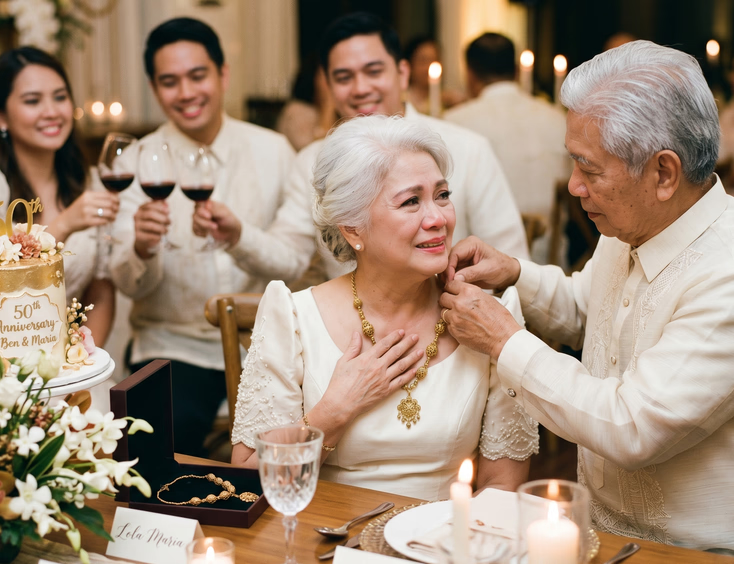
Plan the presentation moment. The heirloom piece carries more weight when presented during the anniversary celebration itself. Many couples present the piece during the dinner, often before the cake-cutting, with a brief reading of the heritage story behind it. The heritage-inspired anniversary cake and the heirloom presentation often anchor the program together.
How Heirloom Jewelry Fits Into the Larger Anniversary
The piece becomes the gift, the memory, and the legacy in one object.
For couples celebrating intimate anniversaries, the heirloom piece presented during a quiet dinner at a Manila restaurant carries more weight than any new purchase. The piece becomes the anniversary, more than the food or the venue.
For couples doing milestone jubilee celebrations, the heirloom worn during the Mass and the reception becomes part of the visual program of the day. The wife's tamburin during the Mass. The filigree earrings during the reception. The peineta tucked into her hair. The full heritage-jewelry styling reads alongside the coordinated his and hers anniversary style and the Filipino color symbolism that honors the milestone year.
For couples in heritage-anchored celebrations, the jewelry connects to the heritage town anniversary destinations like Vigan, Silay, and Taal, where the visual language of the heirloom matches the architectural and cultural setting.
The Filipino couple's guide to celebrating wedding anniversaries walks through how heirloom jewelry fits alongside the Mass, the cake, the photoshoot, and the rest of the celebration tradition.
For couples weighing the heirloom budget against the rest of the anniversary, the realistic cost breakdown across every scale of Filipino anniversary celebration shows how heritage jewelry compares to other anniversary gift categories. For most milestone celebrations, heirloom jewelry runs as a separate line item rather than as part of the celebration cost, since the piece travels forward as legacy rather than getting consumed by the event.
The Piece That Outlasts the Marriage
A tamburin necklace that came into your family at someone's wedding in 1923 has now been to weddings, anniversaries, debuts, baptisms, and funerals across a hundred years.
It has been at the dinner table for golden anniversaries it didn't get worn to. It has been in the safety deposit box during decades when nobody in the family had milestones worth celebrating. It has been re-clasped, re-strung, and once nearly lost in a fire.
It has more years than any single marriage it has commemorated.
The piece is the anniversary, in a form that survives.
Pick the heirloom. Tell the story. Hand it forward.
Still Searching for a Right Match?
Find Your Perfect Wedding Supplier Today!
Discover trusted wedding suppliers across the Philippines in our complete directory. Compare services and connect with the ones that fit your dream celebration.
Browse Wedding SuppliersFeatured Blog Posts

Filipino Wedding Entourage - Roles, Order of March, and Modern Etiquette
6 mins readCivil Weddings in the Philippines - Requirements, Costs, and Step-by-Step Process
9 mins readCivil Wedding Requirements in the Philippines - Complete Checklist
6 mins readCost of Wedding in the Philippines - 5 Essential Things You Need to Know
7 mins readPrincipal Sponsors (Ninong/Ninang) - How Many, How to Ask, What They Really Do
4 mins readVeil, Cord, Candle & Coins - Roles, Options, and When They Happen
4 mins readEntourage for a Traditional Pinoy Wedding - Complete Roles and Guide
6 mins readComplete List of Civil Wedding Requirements in the Philippines
8 mins readHow to Choose Wedding Ninongs and Ninangs - Ask Yourself These 3 Important Questions
5 mins read