


Reusing Your Original Wedding Dress for a Vow Renewal
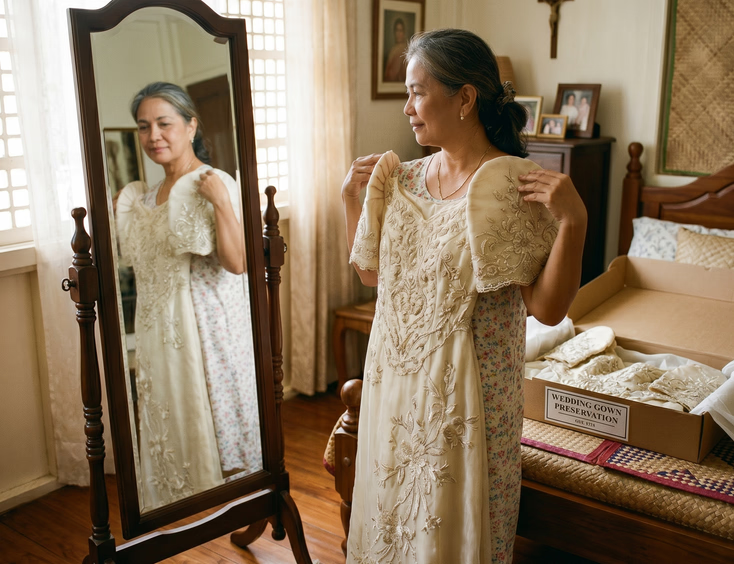
The dress sits in a sealed preservation box at the back of a closet, in a corner of the bodega, or inside an old aparador nobody has opened in years. You remember how it looked on the wedding day. You remember your mother crying when she first saw it. You have not put it on since.
Now the renewal is months out, and the thought arrives quiet at first, then keeps coming back. What if you wore the original dress again?
The question carries more weight than couples expect. The dress is not only fabric. It is the visual symbol of the day the marriage began, and wearing it again could make one of the strongest images of your life together. It could also end in disappointment, with a dress that no longer fits, no longer flatters, or no longer matches who you became. Across the choices that shape a vow renewal in the Philippines, this one runs deeper than most, so this guide walks you through the decision, the evaluation, the alterations, and the point where reuse becomes the wrong call.
Why Brides Want to Reuse the Original Dress
The reasons tend to fall into a few groups, and the one driving you shapes how you should approach the dress:
- Emotional continuity. The dress holds the day the marriage started. Wearing it again ties the renewal to that day in a way no new gown can copy.
- Family connection. You want a daughter, daughter-in-law, or granddaughter to see the original dress on you. The dress enters the family record where the next generation can see it.
- Financial sense. The dress is already paid for. A new gown adds real cost to the budget, and reuse skips it.
- Sentimental preservation. You kept the dress for a reason across all these years. Wearing it again gives that careful storage a purpose.
- Honoring history. The marriage has a history now, and putting the dress back on says so in front of everyone.
Each reason holds. The real question is whether the original dress can deliver on what you hope for, given your body now, the fashion era it came from, and the state of the dress itself. For the wider attire picture, the guide on what to wear to your own vow renewal in the Philippines sets the framework these choices sit inside.
What to Evaluate Before Committing
Rest the decision on the dress as it is and the fit on the body you have, not on the memory of how it looked decades ago. Work through four checks before you commit:
- The physical condition of the dress.
- The fit on your current body.
- The style era the dress came from.
- Your own emotional response when you put it on.
The Physical Condition of the Dress
Pull the dress out of storage and open the box. Examine the fabric in natural light, and watch for:
- Yellowing. White and ivory dresses yellow with age even in proper boxes. Light yellowing may lift with professional cleaning. Deep yellowing may not.
- Fabric weakness. Old silk and organza turn brittle. Press the fabric between your fingers. If it feels stiff or papery, or shows tiny cracks, it has started to break down, and it can tear mid-ceremony.
- Staining. Food, lipstick, or perspiration the original cleaning missed will darken over the years. Test whether the stains lift before you plan around the dress.
- Loose beading and embroidery. The threads holding beads and sequins weaken across decades. Tug a few beads on a hidden seam to test how well they hold.
- Structural elements. Boning, zippers, and internal supports give out over time. A bodice with failed boning will not hold its shape through the day.
If the dress shows serious deterioration in any of these, restoration may run expensive or prove impossible. Get an honest read from a bridal restoration specialist before you commit.
The Fit on the Current Body
Put the dress on. Do not skip this step out of fear, because the fit matters more than anything else in the decision.
Your body changes across decades. The bride at twenty-five and the bride at fifty carry different bodies even when the weight has held steady. The ribcage spreads. The shoulders settle. The waist sits at a new place. The bust changes shape. Check whether the zipper still closes at all, whether the bodice fits without strain, how the shoulders sit, and whether the hemline still works against your posture and heel height now. A bodice that closes but pulls turns uncomfortable across hours and distorts the dress in every photo.
Have someone photograph you in the dress from the front, side, and back, then look at the shots away from the mirror an hour later. The camera shows the strained seam and the dated line that the mirror, and your memory of the wedding day, will talk you past.
The Style Era of the Dress
A dress ages in two ways. The fabric ages, and the style ages. You can repair the first. You cannot repair the second.
A dress with strong era-specific styling reads as belonging to its decade rather than as a timeless gown. The puffed 1980s sleeve. The 1990s minimalist sheath. The early-2000s strapless bodice with corset boning. These details announce the original decade louder than you may realize.
That is not always a problem. Some brides want the vintage feel. Some couples build the renewal around the era of the wedding. But many brides put the dress on and find the style dated in a way the photos never showed, pulling the renewal images toward costume reenactment instead of a current celebration. Ask the honest question: does this silhouette still stand on its own, or does it lock the dress to the year you married? If the answer leans toward updating the look, the modern Filipiniana and Barong Tagalog ideas for vow renewal couples lay out contemporary directions.
The Bride's Emotional Connection to the Dress
Some brides put the dress on and feel carried straight back to the wedding day. The dress feels right and the decision makes itself. Other brides put it on and feel nothing, or feel distance. The dress belongs to a younger self they no longer recognize, and the styling or the memories sit far away rather than close.
Let that response weigh heavily. A dress you love wearing makes strong photos and real memories. A dress you feel obligated to wear makes strained photos and a day that feels off. If your response comes back hesitant, mixed, or flat, the dress may not be the choice, and the wish to reuse should not override what wearing it now actually feels like.
When Alterations Make Reuse Possible
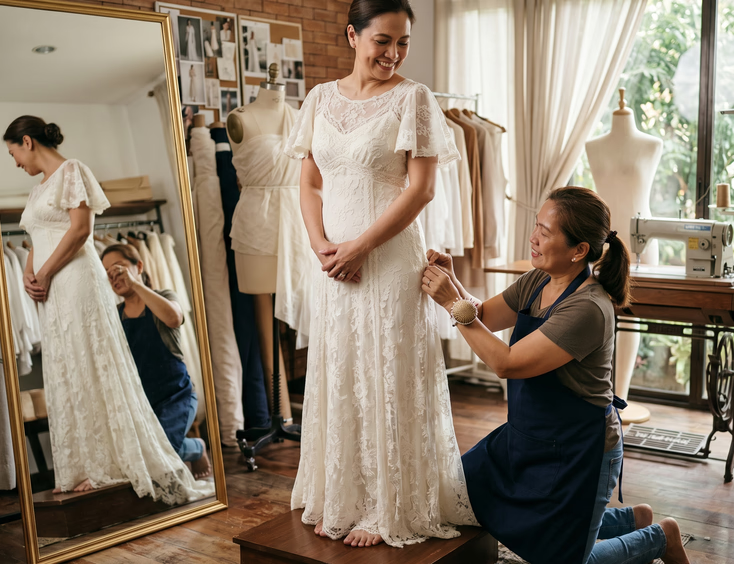
Many original gowns can be altered into something wearable for a renewal. The right tier depends on how much needs to change and how much of the original you want to keep:
| Tier | What changes | What it keeps | Typical timeline | Rough cost (PHP) |
|---|---|---|---|---|
| Minor | Waist, hem, sleeves, small bust adjustments | Reads as the original gown, updated | 4 to 6 weeks | 3,000 to 15,000 |
| Moderate | Sleeves added or removed, neckline, back closure, embroidery | Core silhouette, with a more current feel | Several weeks | 10,000 to 40,000 |
| Major | Cut to tea-length, new skirt, reworked bodice, full reconstruction | The fabric and the emotional weight | Months | 30,000 to 150,000 |
Minor Alterations
Small adjustments keep the dress recognizably the same. A waist taken in or let out. A hem shortened or lengthened. A sleeve adjusted. A small change at the bust. These fit the dress to your current body while holding the design intact, so you still look the way you did at the wedding, only current. Most experienced seamstresses handle this work in four to six weeks.
Moderate Alterations
Larger adjustments change parts of the dress without rebuilding it. Removing or adding sleeves. Reshaping the neckline. Reworking the back closure for a different body shape. Adding or stripping embroidery. The core silhouette survives, and the dress still references the original while feeling more like now.
Major Restructuring
Significant changes turn the dress into something new. Cutting a long gown to tea-length. Converting a strapless bodice to a sleeved one. Pairing the original bodice with a fresh skirt. Taking the dress apart and building a new gown from the fabric. The result is not quite the original, but it carries the original inside it. This work demands real skill, so find a designer or seamstress with a track record in bridal reconstruction.
The Hybrid Approach
Some brides wear the original dress for one part of the day and a new outfit for another. The original for the ceremony, a different dress for the reception, so the gown gets its moment without carrying the whole day. The order reverses too: a new dress for the ceremony, with the original worn for a short photo session or one moment at the reception. The dress lands in the family photo record without having to last the full night.
Working with a Seamstress on Reuse
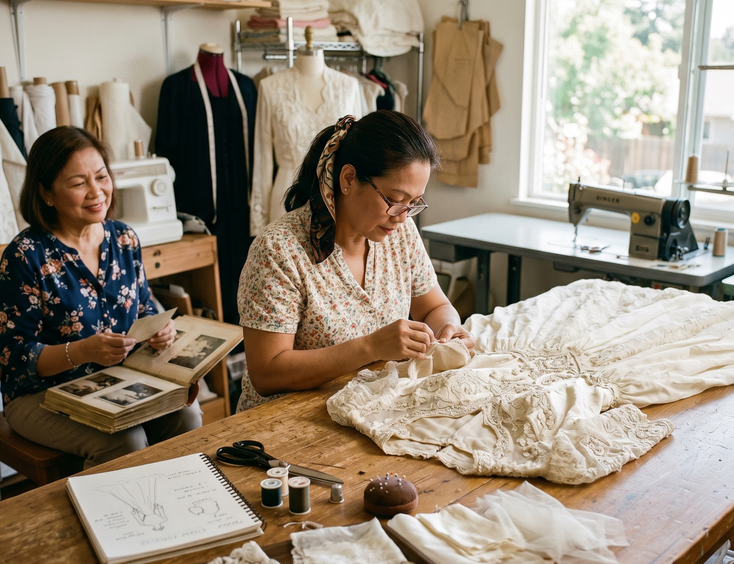
Finding the right seamstress matters more for a reused dress than for a new one. The work asks for technical skill and a sense of how to protect the emotional weight the dress already holds. Start the search early, and allow at least six months from first consultation to the ceremony, since old dresses hide surprises that add work and rushing produces worse results than it would on a new gown.
Bring photos of the original wedding to the first meeting so the seamstress sees how the dress looked on you at its peak and can design alterations that honor that look. Tell her what you want to keep and what you will let go, since some brides want the dress identical to the wedding day and others want it changed a great deal. Ask about her experience with vintage fabric, because old seams behave differently and old fabric does not always take ironing or steaming the way new fabric does. Get a written quote that covers the planned work, the timeline, and a contingency for the issues that surface mid-process. A seamstress fits inside a wider styling team, and the guide to florists and stylists for an intimate vow renewal ceremony covers how those roles pull the whole look together.
When Reusing the Dress Is the Wrong Choice
Honest evaluation sometimes lands on no, and catching that early saves you disappointment later. Reuse becomes the wrong call when:
- The dress has gone past reasonable restoration. Severe yellowing, fabric breakdown, or wide damage can make it unwearable. Forcing it produces a dress that photographs worse than a chosen alternative.
- The body has changed beyond what alterations can reach. Large shifts in shoulder width, ribcage, or overall size sometimes exceed what alteration can do short of rebuilding the whole dress.
- The emotional connection is gone. If putting it on brings distance, discomfort, or sadness instead of continuity and joy, the dress is not the choice. The day should celebrate who you became, not impose a past that no longer fits.
- The style era fights the renewal you want. If the dress reads as costume rather than current dress, the photos will show it.
- The dress fights the venue. A heavy structured ballgown does not belong on a Boracay beach because you happen to own it. The dress serves the renewal, not the reverse.
Photographing the Reused Dress
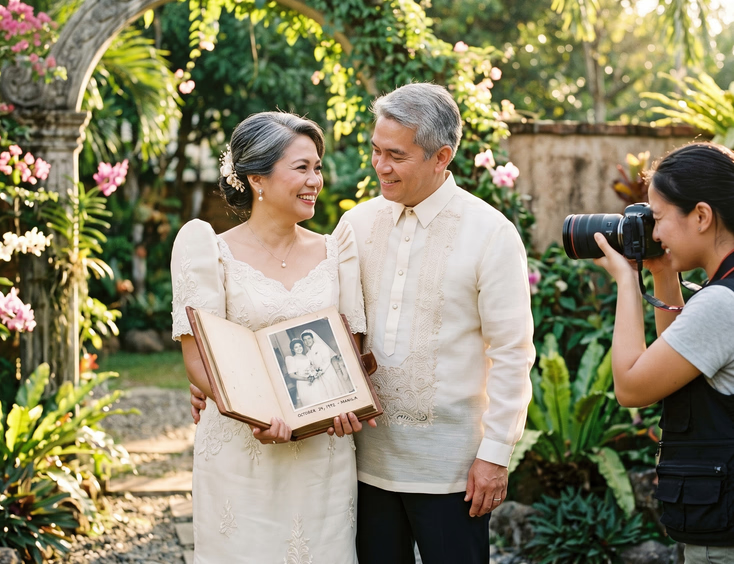
If you decide to reuse the dress, the photography deserves its own plan, since the gown opens a kind of visual storytelling a new dress cannot:
- Side-by-side with the original wedding photo. You pose in the same dress, in a similar pose, set beside the wedding shot. The two images together hold the years between them.
- With the original wedding album. You pose holding the album open to a chosen page, so the link to the past sits right there in frame.
- With the original photographer, if they still shoot. Some couples track down the photographer who documented the wedding and hire them again. One pair of eyes across both days carries a weight a new photographer cannot match.
- With adult children or grandchildren. You in the original dress, ringed by the family that dress saw the start of. The contrast between the gown from the past and the family in the present makes strong imagery.
The guide on how to choose a photographer and videographer for your vow renewal covers what to look for in someone who knows how to shoot a reused dress with care.
The Groom's Outfit When the Bride Reuses Hers
When you reuse your gown, your husband faces a choice about his own outfit, and two approaches work. He reuses his original barong, and the continuity runs complete, both of you in the clothes you wore at the wedding, which holds when the barong still fits and still reads as right. Or he wears a new barong that coordinates with the original gown, so your dress carries the history while he presents a current look, which holds when the old barong no longer fits or when you want the contrast between past and present.
Avoid the split where you stand in the original outfit and he wears a sharply different style. The mismatch reads as uncoordinated in every photo, so settle the choice together. For the range of barong options, the modern Filipiniana and Barong Tagalog ideas for vow renewal couples covers contemporary cuts, and the Filipino dress code guide on vow renewal attire for guests helps you set the tone the rest of the room follows.
A Note on Dress Storage After the Renewal
If you wear the dress for the renewal, the storage question reopens. The dress survived decades once, and the second stretch may run further into the future. Have it professionally cleaned again soon after the day, since even careful wear leaves oils, perspiration, and dust that need removing. Re-preserve it in a fresh acid-free box, because the original may have done its job but no longer guards the dress for another long span.
Decide whether the dress should pass to the next generation. Some Filipino brides intend a daughter, daughter-in-law, or granddaughter to wear or reference it at a future wedding, so plan the preservation with that use in mind. For other physical mementos that come out of the day, the vow renewal souvenirs and favors for Filipino guests covers what couples keep and give.
The Dress Carries the Marriage Forward
The original gown saw the marriage begin. The renewal lets it see what the marriage became. When the choice to reuse works, the dress turns into one of the strongest visual symbols of a commitment you both kept.
Give the decision real thought. The dress has to serve you and the ceremony, not the other way around, and an honest look at the condition, the fit, the era, and your own feeling should guide you. Some brides pull the dress from storage, put it on, and know at once. Others find it no longer fits the moment. Either answer holds, because the day should reflect the marriage as it stands now, in a dress that honors what the two of you came to celebrate.
The dress hangs in the closet right now, waiting on an honest decision. Pull it out. Put it on. Look at the photos. Hear what the dress says about itself and about the woman wearing it today, then choose with confidence either way. The marriage gets its honor regardless. The only question is which dress, on which body, in which ceremony, carries the visual weight of the day. For where outfit decisions fall in the wider schedule, the vow renewal planning checklist for Filipino couples sets the timeline that holds the rest in place.
Still Searching for a Right Match?
Find Your Perfect Wedding Supplier Today!
Discover trusted wedding suppliers across the Philippines in our complete directory. Compare services and connect with the ones that fit your dream celebration.
Browse Wedding SuppliersFeatured Blog Posts


Filipino Wedding Entourage - Roles, Order of March, and Modern Etiquette
6 mins readCivil Weddings in the Philippines - Requirements, Costs, and Step-by-Step Process
9 mins readCivil Wedding Requirements in the Philippines - Complete Checklist
6 mins readCost of Wedding in the Philippines - 5 Essential Things You Need to Know
7 mins readPrincipal Sponsors (Ninong/Ninang) - How Many, How to Ask, What They Really Do
4 mins readVeil, Cord, Candle & Coins - Roles, Options, and When They Happen
4 mins readEntourage for a Traditional Pinoy Wedding - Complete Roles and Guide
6 mins readComplete List of Civil Wedding Requirements in the Philippines
8 mins readHow to Choose Wedding Ninongs and Ninangs - Ask Yourself These 3 Important Questions
5 mins read