


Food Stations vs. Traditional Buffet: A Practical Breakdown for Filipino Couples
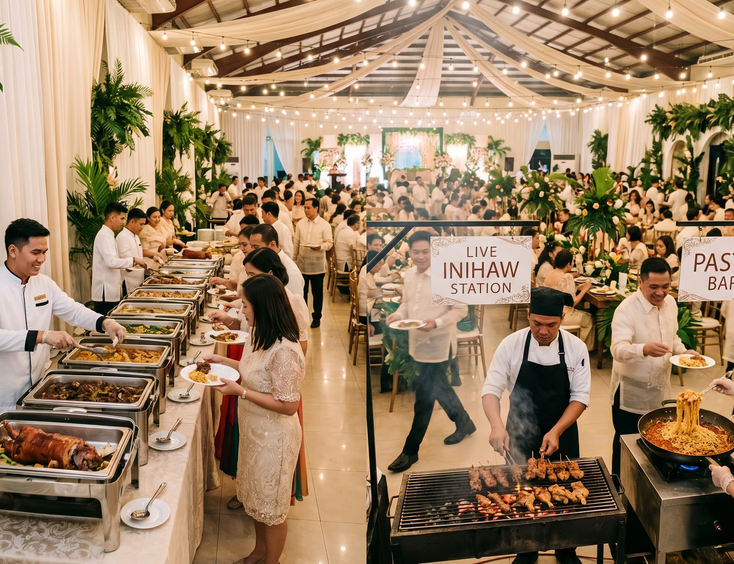
Your caterer offers a buffet package. You accept it without questioning the format. Most Filipino couples do the same. A traditional buffet works, but food stations solve problems that a single buffet line creates: long queues, limited interaction with the food, and a reception that pauses for 40 minutes while 200 guests wait their turn.
Food stations spread the meal across your venue. Guests move between themed cooking corners at their own pace. The format changes how your reception feels, how your guests eat, and how your budget breaks down.
This guide compares both setups so you can decide which one fits your wedding.
How a Traditional Buffet Works
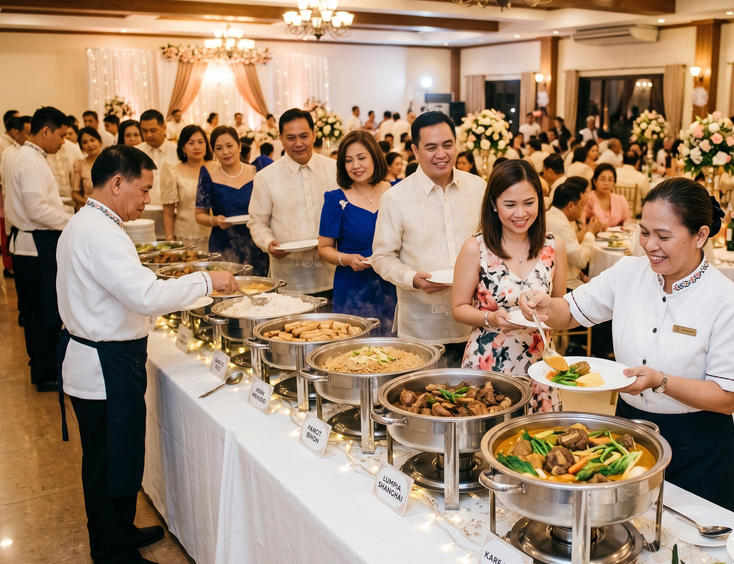
A traditional buffet places all your dishes on one long table. Staff stand behind the chafing dishes and portion food onto each guest's plate. Your emcee calls tables one at a time. Guests line up, receive their food, and return to their seats.
A standard Filipino wedding buffet includes plain and garlic rice, two to three meat dishes, one seafood option, a vegetable dish, pasta, dessert, and drinks. Some couples add a lechon carving station at the end of the line as the visual anchor.
The format is familiar to every Filipino guest. Nobody needs guidance. Tables get called, people line up, food gets served. The simplicity is the strength.
For receptions with 200+ guests, caterers set up two identical buffet lines on opposite ends of the venue. This cuts wait times but doubles the space requirement and may increase staffing costs.
How Food Stations Work
Food stations break your menu into themed mini-setups scattered across different areas of your venue. Each station focuses on a specific cuisine, cooking method, or dish category. Guests walk from station to station, choosing what they want, when they want it.
A Filipino wedding with food stations might include:
- Lechon carving corner with sarsa and atchara on the side
- Inihaw grill station with pork belly, chicken inasal, and grilled squid cooked to order
- Pasta bar where a cook tosses carbonara, aglio olio, or sisig pasta on the spot
- Sisig station served on a sizzling plate with egg and calamansi
- Lomi or noodle soup corner with a large kawa and toppings guests can customize
- Dessert station with halo-halo, leche flan, ube cheesecake bites, and turon
Each station has its own serving staff or cook. Some stations prepare food live in front of guests. Others display pre-made dishes on heated trays. The mix of live and pre-made stations depends on your caterer's capabilities and your budget.
Side-by-Side Comparison
| Factor | Traditional Buffet | Food Stations |
|---|---|---|
| Per-head cost | ₱750 to ₱1,400 | ₱1,200 to ₱1,800+ |
| Best guest count | 150 to 500 | 80 to 250 |
| Venue space needed | One long table area | Multiple corners across venue |
| Guest movement | Single line, table by table | Free-roaming, self-paced |
| Food variety | 6 to 10 dishes, one location | 4 to 7 stations, multiple locations |
| Wait time | 30 to 45 min for full service | Distributed, shorter per station |
| Live cooking | Rare (carving station only) | Common (grill, pasta, noodle) |
| Presentation | Chafing dishes on one table | Themed setups per station |
| Staffing required | Moderate | Higher (cook + server per station) |
| Temperature control | Drops over time in chafing dishes | Better for live-cooked stations |
Where Traditional Buffets Win
Cost Efficiency at Scale
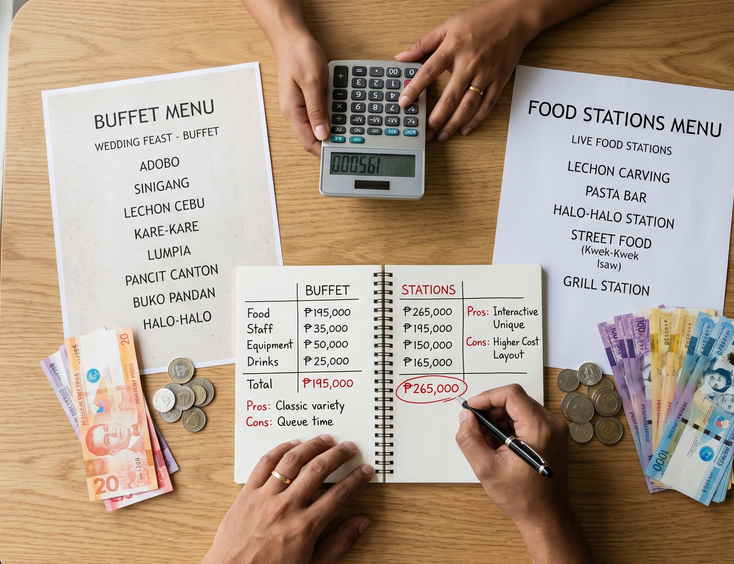
A buffet costs less per head than food stations. At ₱1,000 per person for 200 guests, your total food cost sits at ₱200,000. The same guest count with food stations at ₱1,400 per head jumps to ₱280,000. That ₱80,000 gap covers a photo booth rental or half your florist's bill.
Buffets require fewer staff. One server per chafing dish handles the line. Food stations need a dedicated cook and server at each corner, and four to six stations means eight to twelve additional staff members.
Speed and Predictability
Your coordinator calls tables in order. Each guest spends two to three minutes in line. Within 40 minutes, every guest has eaten. The timeline is predictable, and your emcee can plan the program around a fixed buffet window.
Food stations spread guests across the venue, which reduces line congestion but makes it harder to predict when everyone has finished eating. Your program coordinator needs to gauge the room rather than follow a fixed call-table schedule.
Familiarity
Filipino guests understand buffet etiquette. They wait for their table to get called. They line up in order. They know they can return for seconds. Food stations require a different behavior pattern: roaming the venue, deciding where to go first, and figuring out whether each station is a full dish or a tasting portion. For older guests or conservative family members, the buffet feels more comfortable.
Where Food Stations Win
Guest Experience
Food stations turn the meal into an activity. Guests explore the venue, discover new corners, and watch cooks prepare their food live. The format encourages mingling between groups. Your college friends end up chatting with your titas at the sisig station. Your groomsmen bond with your wife's officemates at the inihaw grill.
A buffet concentrates all your guests in one location for a short burst, then sends them back to their tables. Food stations distribute guest movement across the entire reception.
Reduced Wait Times
A single buffet line serving 200 guests means 30 to 45 minutes of waiting for the last tables called. Food stations eliminate that bottleneck. Guests split across four to six locations, and no single station accumulates the full crowd. Wait times per station drop to five to ten minutes.
Live Cooking and Freshness
An inihaw grill station turns out skewers cooked to order. A pasta bar tosses noodles in a pan 30 seconds before it hits your plate. A noodle soup corner ladles hot broth into a bowl right when you ask for it. The food arrives fresher and hotter than anything that sat in a chafing dish for an hour.
Live cooking also creates sensory engagement. The smell of charcoal grilling pork belly, the sound of a sizzling sisig plate, and the steam rising from a lomi kawa add atmosphere that a quiet buffet table cannot match.
Flexible Venue Use
Food stations spread across your venue, which fills dead zones and gives purpose to awkward corners. A dessert station near the photo wall keeps guests occupied during transitions. A drinks corner near the dance floor keeps energy high after dinner. Your venue feels active instead of front-loaded around one buffet table.
If your venue has an outdoor garden area, you can place a grill station outside and keep the indoor stations focused on comfort food and desserts. This indoor-outdoor split works at resort weddings and garden venues across Tagaytay, Antipolo, and Batangas.
Cost Breakdown: Where Your Money Goes
Understanding the price gap between the two formats helps you decide where to spend.
Traditional Buffet Cost Structure
- Food: 60% to 65% of per-head cost
- Staff (servers, kitchen crew): 15% to 20%
- Equipment (chafing dishes, utensils, buffet table setup): 10%
- Logistics (transport, setup, cleanup): 5% to 10%
Food Station Cost Structure
- Food: 50% to 55% of per-head cost
- Staff (dedicated cooks + servers per station): 25% to 30%
- Equipment (grills, cooking setups, themed displays, individual station tables): 10% to 15%
- Logistics (transport, multi-point setup, cleanup): 5% to 10%
The staff and equipment lines drive the cost difference. A live inihaw grill station needs a cook, a server, a charcoal grill, and ventilation. A pasta bar needs a cook, a pan station, and fresh ingredients prepped per order. Each station is a micro-kitchen.
Some caterers offer a hybrid: a traditional buffet as the base, with one or two add-on food stations. A lechon carving corner and a dessert station alongside a standard buffet give you the interactive element without a full station-based setup. Hybrid packages run ₱1,000 to ₱1,400 per head.
For a detailed look at how caterers structure their pricing, read our guide to per-head pricing for wedding catering in the Philippines.
Logistics Your Caterer Needs to Address
Venue Power and Space
Each live cooking station needs access to electricity or gas. An inihaw grill station needs ventilation or outdoor placement. A pasta bar needs a portable burner. Before you commit to food stations, your caterer must visit the venue and confirm that the space, power supply, and layout support multi-station service.
Ask your venue coordinator whether outside cooking equipment is allowed. Some indoor banquet halls restrict open flames and grills. Others charge a surcharge for additional power usage.
Timing and Program Flow
Buffets work on a schedule. Food stations work on flow. Your coordinator cannot call tables to six different stations in sequence. Guests need an opening signal (your emcee announces that all stations are open) and then they move at their own pace.
Build a 60 to 90-minute window for food station service. Program segments like speeches, games, and dances happen between grazing periods rather than after a single buffet break. Talk to your emcee and coordinator about adjusting the program structure for a station-based meal.
Guest Communication
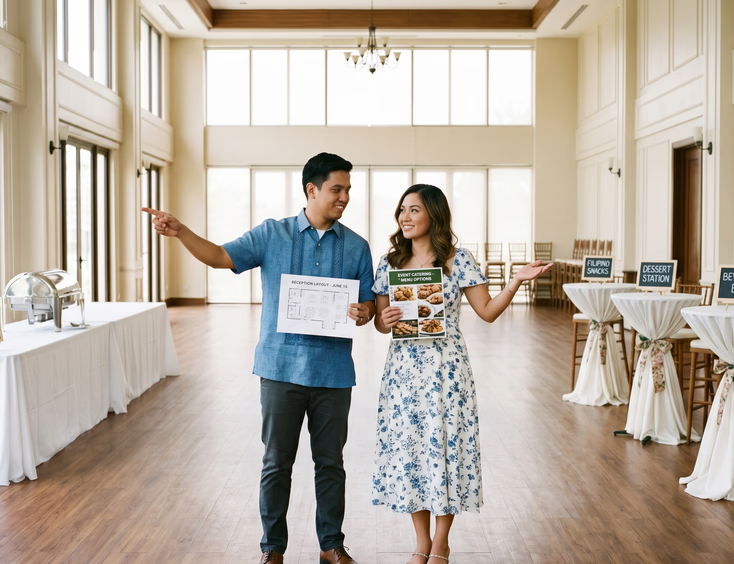
Place visible signage at each station. A small chalkboard or printed card that names the station, lists the dishes, and notes any allergens helps guests navigate without asking staff. Station names with personality (Lolo's Inihaw Corner, The Sisig Lab) add character and double as photo opportunities.
Print a small station map on each table or include it in your wedding program. Guests should know where to find each station before they leave their seats.
Which Format Fits Your Wedding?
Choose a Traditional Buffet If:
- Your guest list exceeds 200
- Your budget targets ₱750 to ₱1,200 per head
- Your venue has limited power outlets or restricts open-flame cooking
- Your guest mix skews older or more traditional
- You want a predictable timeline with a fixed meal window
Choose Food Stations If:
- Your guest count falls between 80 and 200
- Your budget allows ₱1,200 to ₱1,800 per head
- Your venue has space for four to six scattered setups
- You want an interactive, social eating experience
- Your reception program allows a flexible 60 to 90-minute grazing window
Choose a Hybrid If:
- You want the cost efficiency of a buffet with one or two interactive stations
- Your caterer offers add-on stations (lechon carving, dessert bar, grill corner) on top of a base buffet package
- Your guest count lands between 150 and 250
For couples weighing food stations against a sit-down meal, our buffet vs. plated dinner comparison covers the formal dining alternative. If you want pre-reception food to keep guests happy before stations open, check our guide on cocktail hour food ideas for Filipino weddings.
Watch for Hidden Costs
Food stations carry add-on charges that a standard buffet avoids. Corkage fees for outside equipment, generator rental for outdoor stations, additional staff charges per station, and premium ingredient surcharges for live cooking corners can push your final bill 15% to 25% above the quoted per-head rate.
Read our breakdown of hidden costs in wedding catering packages before you finalize your contract.
For a full overview of catering decisions beyond the buffet-vs-stations question, our complete guide to wedding catering in the Philippines covers pricing, booking timelines, and caterer evaluation.
Start Comparing Caterers
Once you decide on a format, request quotes from caterers who offer that service style. Browse verified wedding caterers in the Philippines and compare station-based and buffet packages from suppliers in your area.
Still Searching for a Right Match?
Find Your Perfect Wedding Supplier Today!
Discover trusted wedding suppliers across the Philippines in our complete directory. Compare services and connect with the ones that fit your dream celebration.
Browse Wedding SuppliersFeatured Blog Posts

Filipino Wedding Entourage - Roles, Order of March, and Modern Etiquette
6 mins readCivil Weddings in the Philippines - Requirements, Costs, and Step-by-Step Process
9 mins readCivil Wedding Requirements in the Philippines - Complete Checklist
6 mins readCost of Wedding in the Philippines - 5 Essential Things You Need to Know
7 mins readPrincipal Sponsors (Ninong/Ninang) - How Many, How to Ask, What They Really Do
4 mins readVeil, Cord, Candle & Coins - Roles, Options, and When They Happen
4 mins readEntourage for a Traditional Pinoy Wedding - Complete Roles and Guide
6 mins readComplete List of Civil Wedding Requirements in the Philippines
8 mins readHow to Choose Wedding Ninongs and Ninangs - Ask Yourself These 3 Important Questions
5 mins read