


Hidden Costs in Wedding Catering Packages Filipino Couples Should Watch Out For
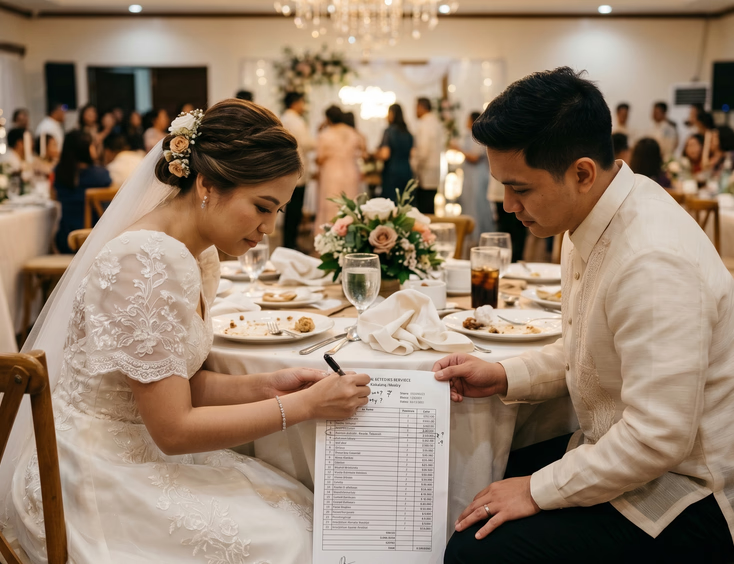
You receive a catering quote. It says ₱1,000 per head for 100 guests. You budget ₱100,000. Then you get the final bill: ₱135,000.
That ₱35,000 gap comes from charges that sat outside the quoted rate. Your caterer mentioned some of them during the initial meeting. Others showed up on the invoice after the reception.
Filipino couples lose money on catering because they treat the per head quote as the total cost. It isn't. The per head rate covers food and basic service. A stack of additional charges raises the real number by 20% to 35%.
You can avoid that surprise. Identify each hidden cost before you sign, ask your caterer to include them in writing, and adjust your budget to absorb the full amount.
Service Charge
Most caterers add a 10% service charge on top of the base food cost. This covers the waitstaff, kitchen crew, and coordination team assigned to your event.
A ₱100,000 food bill becomes ₱110,000 after the service charge.
Some caterers include the service charge in their per head rate. Others list it as a separate line item on the final invoice. Ask your caterer which method they use before you compare quotes. A ₱950 per head rate that includes service charge costs less than a ₱900 per head rate with 10% added on top.
For a detailed breakdown of how per head rates are structured, read our guide on understanding per head pricing for wedding catering in the Philippines.
Value-Added Tax
The standard VAT rate in the Philippines is 12%. Caterers registered with the BIR charge VAT on the total bill, including the service charge.
If your food cost is ₱100,000 and your service charge is ₱10,000, the VAT applies to the combined ₱110,000. That adds ₱13,200.
Your running total: ₱123,200.
Some caterers advertise "VAT-inclusive" rates. Others show a lower base rate and add VAT at the end. Both approaches are legal. The difference is whether you see the real number upfront or on the final invoice. Ask the question directly: "Is this rate VAT-inclusive?"
Out-of-Town Fee
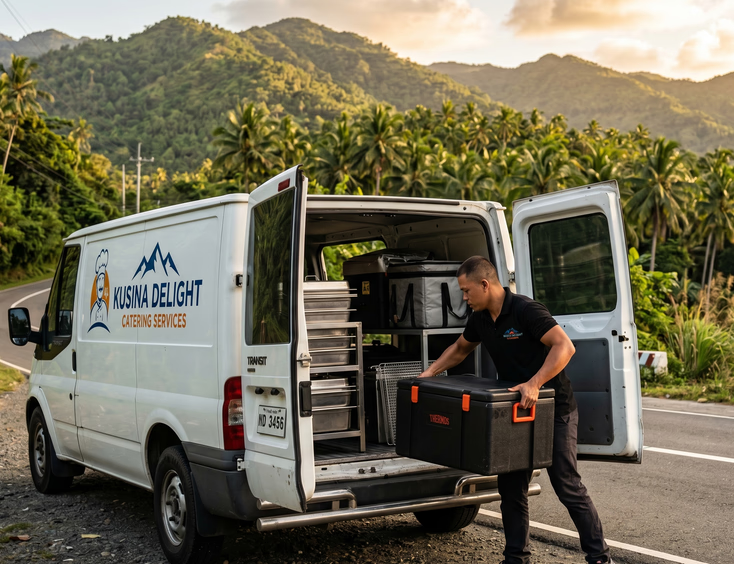
Caterers based in Metro Manila charge an out-of-town fee for venues in Tagaytay, Batangas, Cavite, Laguna, and other provinces. This fee covers fuel, tolls, vehicle rental, and staff travel time.
The fee ranges from 3% to 10% of the total catering cost. A ₱123,200 bill with a 5% out-of-town fee adds ₱6,160. Your total climbs to ₱129,360.
Some caterers charge a flat fee instead of a percentage. A flat ₱5,000 to ₱15,000 out-of-town fee is common for venues within two to three hours of Manila. Ask your caterer which model they use and whether the fee covers round-trip transport for the full team.
If your venue is outside Metro Manila, compare caterers based near your venue. A Tagaytay-based caterer serving a Tagaytay wedding skips the out-of-town fee. That saves you 3% to 10% off the top.
Corkage Fee
Your venue or caterer may charge a corkage fee when you bring in items from outside suppliers. This applies to alcoholic drinks, specialty cakes, desserts, and food carts.
Corkage fees range from ₱3,000 to ₱15,000 depending on the venue and the type of item. A wine corkage fee runs ₱100 to ₱300 per bottle. A cake corkage fee sits between ₱2,000 and ₱5,000.
Venues with in-house catering are more likely to charge corkage because outside items reduce their food revenue. If your venue and caterer are separate suppliers, confirm who charges corkage and for what items.
You can reduce corkage costs by choosing items from your caterer's own menu or partnering with vendors your venue has pre-approved.
Supplier Meals
Your photographer, videographer, coordinator, DJ, host, and other suppliers need to eat during the reception. Most supplier contracts include a clause requiring a meal for each team member.
A wedding with 8 to 12 suppliers means 8 to 12 additional plates. At ₱500 to ₱800 per supplier meal, that adds ₱4,000 to ₱9,600 to your catering bill.
Some caterers include supplier meals in their package. Others charge them as add-ons. Check your catering contract for a supplier meal clause. Then count the total number of supplier staff attending your wedding, including assistants and second shooters. That number is higher than you expect.
Overtime Charges
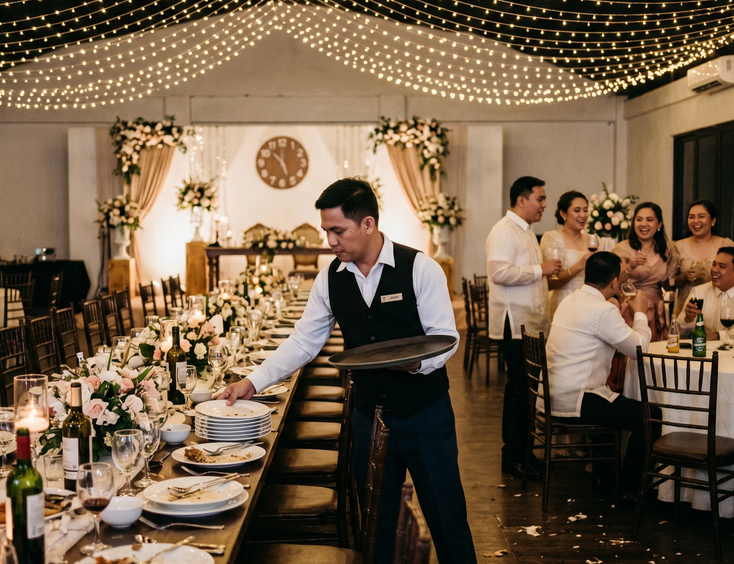
Your reception is scheduled from 6:00 PM to 10:00 PM. The program runs long. Your caterer's contract covers four hours of service. Every hour beyond that incurs an overtime fee.
Overtime charges range from ₱2,000 to ₱5,000 per hour depending on the caterer and the number of staff on-site. A reception that runs two hours over adds ₱4,000 to ₱10,000.
Overtime applies to more than your caterer. Your venue, lights and sounds team, and photo booth operator may charge separately for extended hours. Build a 30-minute buffer into your program timeline. If your reception is likely to run past midnight, negotiate an extended service window in the contract before you sign.
Lechon
Lechon is a staple at Filipino wedding receptions. It is also not included in standard catering packages. You order it as an add-on or source it from a separate lechon supplier.
A whole lechon costs ₱8,000 to ₱15,000 depending on size and supplier. A lechon belly or lechon de leche runs ₱4,500 to ₱7,000.
For a wedding with 150 to 200 guests, you may need two to three whole lechons to ensure adequate servings. That puts your lechon cost between ₱16,000 and ₱45,000.
If you bring lechon from an outside supplier, your venue or caterer may charge a corkage fee on top of the lechon cost. Ask whether your caterer can source lechon directly. Some caterers partner with lechon suppliers and include it in an upgraded package at a lower combined rate.
Mobile Bar and Drinks
A basic catering package includes refillable iced tea, juice, and water. Alcoholic beverages, cocktails, and specialty drinks are separate charges.
A mobile bar setup costs ₱100 to ₱200 per head for a two to three hour service window. For 100 guests, that adds ₱10,000 to ₱20,000.
If you supply your own alcohol, expect a corkage fee from the venue. A per-bottle corkage on wine and spirits adds up faster than a flat mobile bar rate when you're serving 100 or more guests. Do the math on both options before you decide.
Food Stations
Food stations are add-ons to a standard buffet. Each station requires a dedicated cook, equipment, and ingredients that sit outside the base menu.
A pasta station, carving station, Mongolian grill, or crepe station costs ₱50 to ₱200 per head per station. Three stations at ₱150 per head for 100 guests adds ₱15,000 to your bill.
Stations create a better guest experience. They also inflate your catering cost by 10% to 20% if you add several. Choose one or two stations that match your menu theme and skip the rest. A single carving station with lechon belly or roast beef delivers more impact than three stations guests visit once.
Tableware and Equipment Rentals
Some caterers include plates, glassware, flatware, and serving equipment in their package. Others provide food and service only.
If your caterer does not supply tableware, you rent from a separate supplier. A full table setting (dinner plate, salad plate, soup bowl, two glasses, full flatware set, cloth napkin) costs ₱80 to ₱150 per guest. For 100 guests, that's ₱8,000 to ₱15,000.
Chafing dishes, buffet table setups, and serving utensils may also sit outside the catering quote. Confirm whether your caterer provides these or whether your venue includes them in the rental fee.

How to Protect Your Budget
Request an itemized quote that lists every charge separately. A single lump-sum number hides the details you need to compare caterers and control costs.
Ask your caterer these questions before you sign:
- Is the per head rate inclusive of service charge and VAT?
- Do you charge an out-of-town fee, and is it a percentage or flat rate?
- Are supplier meals included, and how many?
- What is the overtime rate per hour?
- Is lechon available as part of the package or an add-on?
- Do you charge corkage for outside drinks, cakes, or food carts?
- Are plates, glassware, and serving equipment included?
Get the answers in writing. A caterer who gives you clear, documented terms is one you can trust with your reception. A caterer who avoids direct answers or leaves charges off the initial quote is one to question. Read our guide on red flags when hiring a wedding caterer in the Philippines to know what other warning signs to look for.
Build the Full Picture Before You Book
Your per head rate is the starting point. The charges listed above are what turn that starting point into your actual spend. A couple budgeting ₱100,000 for catering needs to budget ₱125,000 to ₱135,000 to account for the full cost.
For a detailed breakdown of total catering costs across different guest counts and service styles, read our guide on how much wedding catering costs in the Philippines.
Browse our wedding catering suppliers directory to compare packages and pricing from caterers across the Philippines. Request itemized quotes, ask about every line item, and book a food tasting before you commit.
For menu planning, booking timelines, and contract tips, read our complete guide on wedding catering in the Philippines.
Still Searching for a Right Match?
Find Your Perfect Wedding Supplier Today!
Discover trusted wedding suppliers across the Philippines in our complete directory. Compare services and connect with the ones that fit your dream celebration.
Browse Wedding SuppliersFeatured Blog Posts








Filipino Wedding Entourage - Roles, Order of March, and Modern Etiquette
6 mins readCivil Weddings in the Philippines - Requirements, Costs, and Step-by-Step Process
9 mins readCivil Wedding Requirements in the Philippines - Complete Checklist
6 mins readCost of Wedding in the Philippines - 5 Essential Things You Need to Know
7 mins readPrincipal Sponsors (Ninong/Ninang) - How Many, How to Ask, What They Really Do
4 mins readVeil, Cord, Candle & Coins - Roles, Options, and When They Happen
4 mins readEntourage for a Traditional Pinoy Wedding - Complete Roles and Guide
6 mins readComplete List of Civil Wedding Requirements in the Philippines
8 mins readHow to Choose Wedding Ninongs and Ninangs - Ask Yourself These 3 Important Questions
5 mins read