

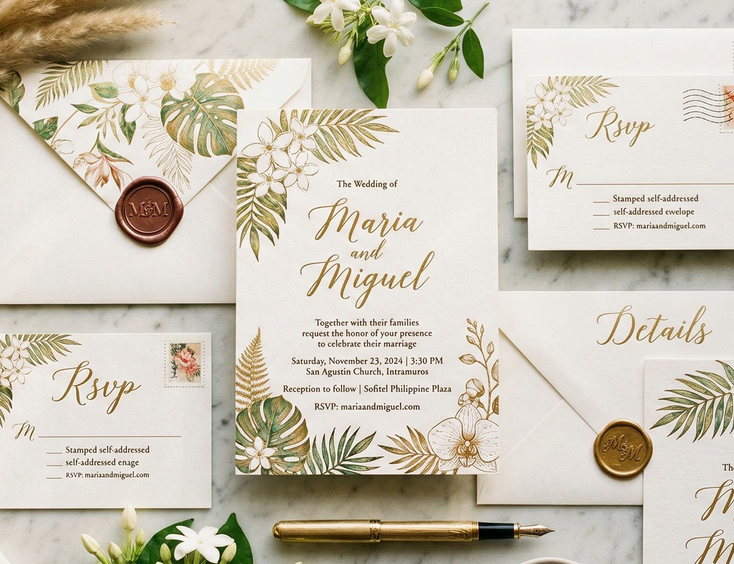
Digital Wedding Invitations in the Philippines: Are They Socially Acceptable?
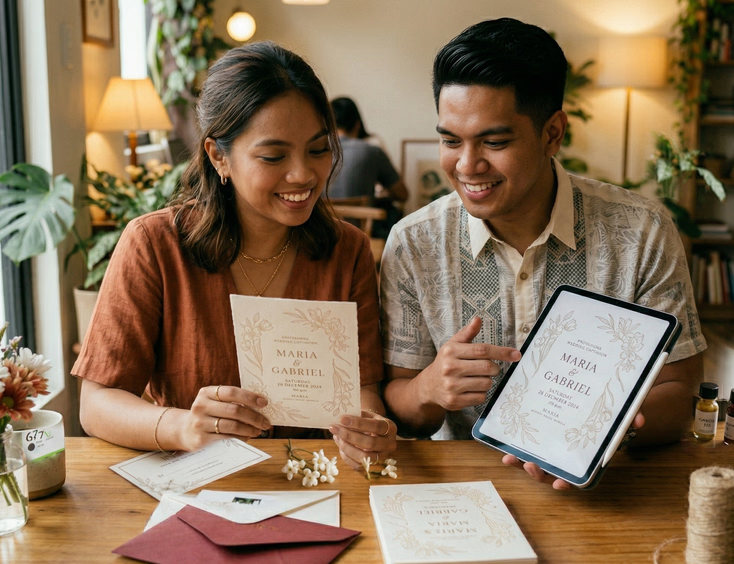
Filipino weddings carry strong social expectations, and the invitation is one of the first places those expectations show up. When a couple sends a digital invitation instead of a physical one, they are not just making a design choice. They are making a statement about formality, effort, and how much they value the guest receiving it. Whether that statement lands well depends entirely on the guest reading it.
Digital wedding invitations are socially acceptable in the Philippines in specific contexts. They are not universally accepted, and pretending otherwise sets couples up for social friction they could have avoided with a clearer understanding of their own guest list.
How Filipino Social Context Shapes the Question
The Philippines runs on pakikisama and hiya. Social harmony matters, and perceived slights, even unintentional ones, carry weight in family and community relationships. An older ninong or ninang who receives a Facebook message instead of a sealed envelope may not say anything directly, but the impression it leaves is real and it lingers.
Filipino weddings also involve a guest list that spans generations. The couple's peers, typically in their twenties and thirties, navigate digital communication comfortably. Their parents' generation, in their fifties and sixties, varies. Their grandparents' generation and elderly relatives almost uniformly expect a physical invitation, and receiving anything else reads as an afterthought.
The social acceptability of digital invitations is not a single yes or no answer. It is a question that depends on which guest you are asking about.

Where Digital Invitations Work Without Issue
Certain guests receive digital invitations without any negative reading attached to them.
Guests based abroad. A cousin in Canada or a college friend in Singapore will not expect a physical invitation to arrive by post. A well-designed digital invitation sent through a personal message, not a group blast, communicates the same care a physical one would. International guests also appreciate the practical information a digital invitation can carry, links to hotel accommodation, transportation notes, and RSVP forms that do not require international postage.
Younger guests in the couple's personal circle. Friends from college, colleagues, and peers who communicate primarily through Viber, Messenger, or Instagram receive digital invitations as normal correspondence. For this segment of the guest list, a beautifully designed digital card sent with a personal message reads as thoughtful and current.
Guests who are being informed rather than formally invited. Some couples use digital announcements to notify a wider circle of acquaintances about the wedding without formally inviting them to attend. This use of digital communication is broadly accepted because it does not carry the same weight as a formal invitation.
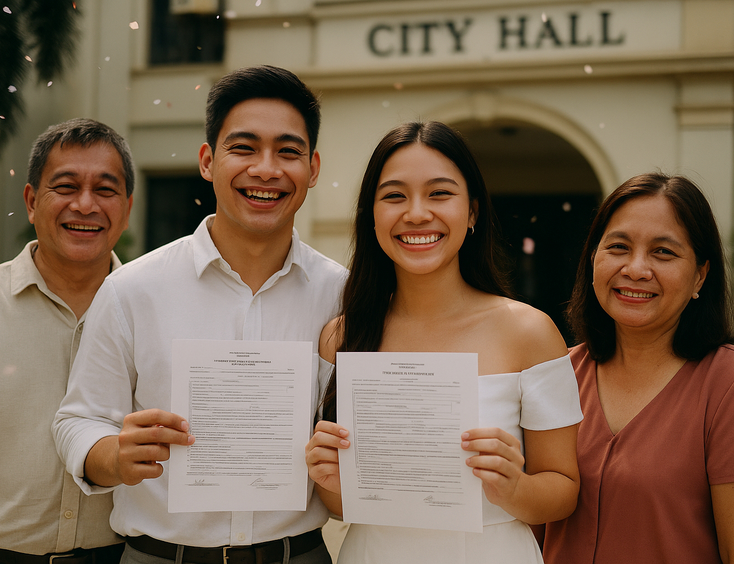
Casual or civil wedding ceremonies. A couple holding a small civil ceremony at a local government office with an intimate reception at a restaurant operates in a different register of formality than a cathedral wedding with a 300-person guest list. Digital invitations fit the scale and tone of smaller, less formal ceremonies without creating a mismatch between the communication and the event.
Where Digital Invitations Create Social Risk
Parents' generation sponsors and principal sponsors. Ninongs and ninangs occupy a formal role in Filipino weddings that carries financial and social weight. Reaching out to a principal sponsor with a digital invitation, particularly an older one with traditional expectations, reads as a failure to recognize their status. A physical invitation delivered personally, or at minimum mailed with a handwritten note, is the expected approach for this group.
Both sets of parents' social networks. Filipino weddings are not just the couple's event. They are the families' event, and the guest list includes people the couple may have met once who carry significant relationships with their parents. These guests, family friends, business associates, community leaders, and extended family, expect a physical invitation because that is the register of communication appropriate to their relationship with the family.
Older relatives. Lolas, lolos, titas, and titos of a certain age may not use smartphones with enough regularity to reliably receive and read a digital invitation. Beyond access, the expectation of a physical card as a sign of respect is deeply embedded in this generation's understanding of how family events work. A digital invitation to an older relative communicates carelessness regardless of how good the design looks on screen.
Large formal weddings. A wedding with 200 or more guests, a church ceremony, a formal reception at a hotel or events venue, and a full entourage operates at a level of formality that digital-only invitations undercut. The gap between a grand formal wedding and a Canva card sent via Viber creates an incongruence that guests notice.
The Hybrid Approach Most Filipino Couples Use
The most practical answer for Filipino couples is not choosing between digital and physical but deciding which guests receive which format.
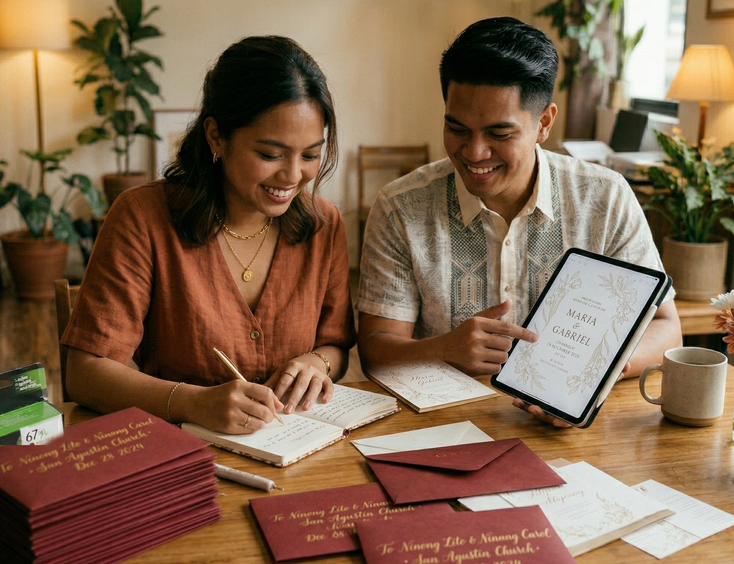
Printed invitations go to principal sponsors, older relatives, parents' social networks, and any guest whose age or relationship warrants the formality of a physical card. Digital invitations go to the couple's peers, international guests, and contacts where a physical mailing is impractical.
This hybrid approach is not a compromise. It is the correct response to a genuinely mixed guest list. A 250-person Filipino wedding guest list typically spans at least three generations with different communication norms, and treating every guest identically ignores those differences.
The hybrid approach also manages costs. Printing 250 premium invitation suites costs significantly more than printing 150 and sending 100 digitally. For couples working within a tight invitation budget, directing printed suites to the guests who need them most and digital invitations to guests who will receive them well is a financially sensible decision.
What Makes a Digital Invitation Feel Like a Real Invitation
A digital invitation that reads as genuine rather than lazy shares several qualities with a physical one.
Personal delivery matters more than the format. A digital invitation sent individually through a direct message, with a personal note from the couple, reads differently from the same file sent as a group broadcast. Group blasts signal that the guest is part of a mass notification rather than a personally considered invitation. Send each digital invitation individually, even if it takes longer.
Design quality signals effort. A digital invitation built on a well-designed template or created with a designer's involvement reads as intentional. A Canva design with the default layout, stock florals, and the couple's details typed in carries the impression of minimal effort regardless of how the couple actually feels about their guests. The design communicates the care taken whether that impression is fair or not.
Complete information removes friction. A physical invitation can include enclosure cards for directions, accommodation, and RSVP details. A digital invitation should include all of that information in one place, with clickable links to maps, accommodation booking, and the RSVP form. An incomplete digital invitation that requires the guest to follow up for basic event details undermines its own convenience.
Timing affects reception. A digital invitation sent four to six weeks before the wedding, around the same window as physical invitations, reads as an invitation. One sent two weeks before reads as a last-minute addition. Respect the same timing norms for digital invitations that physical ones follow.
What Guests Actually Think
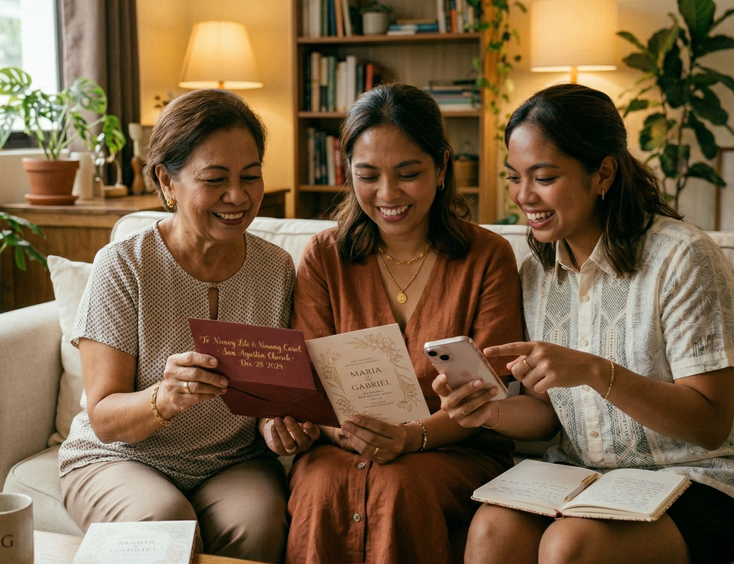
Filipino wedding guests who are asked about digital invitations give answers that split along generational lines with reasonable consistency. Younger guests rarely object. Middle-aged guests vary depending on their relationship to the couple and their general relationship with digital communication. Older guests almost uniformly prefer a physical card and read the absence of one as a signal about how much the couple values their presence.
The couples who navigate this best are the ones who ask the question directly before deciding. A quick conversation with both sets of parents about which guests expect a physical invitation removes the guesswork. Parents know their social networks and can identify the guests for whom a physical invitation is non-negotiable.
For couples who decide to use digital invitations for part or all of their guest list, how to send wedding invitations via Viber, Facebook, and email without losing the personal touch covers the specific delivery mechanics that keep digital invitations feeling personal rather than broadcast. The best apps and websites to make digital wedding invitations for Filipino couples covers the tools that produce designs worth sending.
If you are weighing the full cost and effort comparison between digital and physical, paperless vs. printed wedding invitations lays out the practical considerations across both formats so you can make the decision that fits your wedding, your guest list, and your budget.
Stationery and invitation suppliers in the Philippines lists designers who work in both digital and print formats, including those who offer hybrid packages covering both formats within a single design brief.
The full context for Filipino wedding invitation planning sits in the complete guide to Filipino wedding invitations, covering every decision from design and wording to format and etiquette from a single place.
Digital invitations are a tool. Used with awareness of your specific guest list, they work well for the guests who suit them. Used as a blanket replacement for physical invitations across a traditional Filipino guest list, they create social friction that outlasts the wedding day.
Still Searching for a Right Match?
Find Your Perfect Wedding Supplier Today!
Discover trusted wedding suppliers across the Philippines in our complete directory. Compare services and connect with the ones that fit your dream celebration.
Browse Wedding SuppliersFeatured Posts


The Complete Filipino Couple's Guide to Wedding Rings & Bands in the Philippines: Traditions, Styles, Budgets & Where to Buy
22 mins readWedding Reception Ideas that Honor Tradition and Wow Your Guests
4 mins readFilipino Wedding Dress Guide for Style Traditions and Smart Shopping
6 mins readFilipino Wedding Cost Guide - Realistic Budgets, Percentages, and Price Drivers by Region
9 mins readPhilippines Honeymoon Guide - Best Islands, Resorts, Costs & 7–14 Day Itineraries
9 mins readFilipino Wedding Games - Traditions, Modern Twists, and Crowd-Pleasers for Every Reception
8 mins read