


Why Venue Location Relative to the Church Matters in a Filipino Wedding Reception
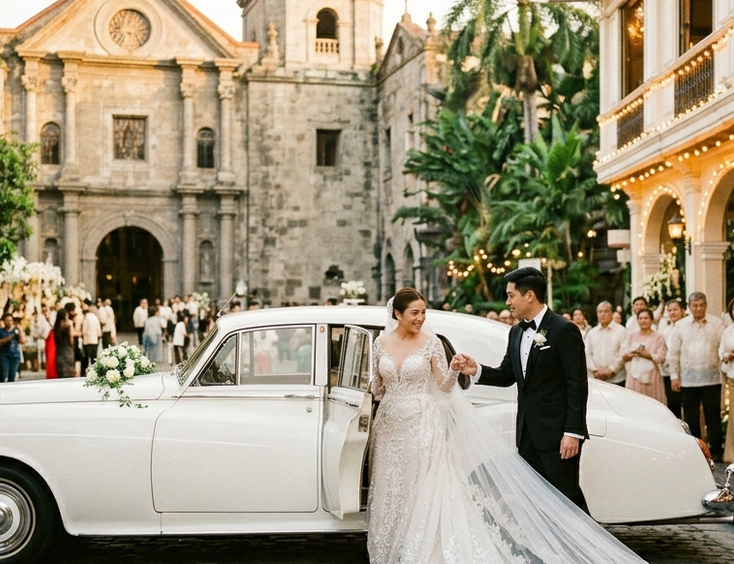
The reception venue should sit within 30 minutes of the church under normal Manila traffic. Filipino weddings run on a tight ceremony-to-reception timeline, and a long transfer kills the program flow, the food temperature, and the guest energy. Pick a venue close to the church when the guest list includes elderly relatives, when the wedding falls during rush hour, or when the ceremony ends past 5 PM. Distance affects more than convenience. It shapes the cost, the photo schedule, the catering setup, and whether your guests actually show up to the reception.
Why Distance From the Church Shapes the Whole Day
A Filipino wedding day runs on borrowed time. The ceremony starts at 3 or 4 PM. The reception runs from 6 to 10 PM. Between those two windows sits the transfer, the cocktail hour, the photo session, and the entrance preparation.
Stretch that window with a long drive, and the whole timeline compresses on the reception side. Guests sit through traffic, arrive late, skip the cocktails, and rush through dinner. The bride and groom miss their own program. The food sits warming for two hours. The host scrambles to fill dead air.
Filipino traffic compounds the problem. A 15-kilometer drive in Metro Manila takes 20 minutes at 2 PM and 90 minutes at 5 PM. A wedding ceremony ending at 5:30 PM in Manila Cathedral and a reception in BGC turns into a logistical mess if you booked them without checking the route.
The decision sits in the planning stage. Pick the church first, then the reception, with the distance and the time of day in front of you.
The 30-Minute Rule and Why It Works
Most Filipino wedding coordinators apply a 30-minute rule. The reception should sit within 30 minutes of the church under your wedding-day traffic conditions, not under best-case Sunday morning traffic.
The rule works because of how the timeline stacks. A 4 PM ceremony ends at 5:15 PM. Add 30 minutes for transfer, and guests arrive at 5:45 PM. The cocktail hour runs from 5:45 to 6:45 PM. The reception program starts at 7 PM. Dinner gets served by 7:30 PM. The whole night ends at 10 PM with time to spare.
Stretch the transfer to 60 minutes, and the entire timeline shifts. Guests arrive at 6:15 PM. Cocktails get cut to 30 minutes. The program starts late. Dinner serves cold. The reception runs past 11 PM, and guests with kids leave before the last dance.
Stretch it to 90 minutes, and the wedding breaks. Half the guests skip the reception. The bride and groom miss their own arrival. The caterer reheats food past safe temperatures. The coordinator rebuilds the program on the fly.
Couples planning weddings outside Metro Manila get more room on the rule. Tagaytay, Cebu, and Davao traffic moves faster, so a 45-minute drive often works the same as a 25-minute Manila transfer. Read the local conditions before you trust the kilometer count.
How Manila Traffic Changes the Math
Metro Manila traffic runs on patterns. A wedding planner reads the patterns before booking the venue.
Saturday afternoon traffic peaks from 4 to 8 PM. EDSA crawls. C5 jams. SLEX northbound from Alabang to Makati can take 90 minutes. A Saturday 4 PM ceremony in Makati and a 6 PM reception in Quezon City turns into a two-hour transfer.
Sunday afternoon traffic stays lighter. Most Sunday weddings handle longer transfers without breaking. A Sunday ceremony in Antipolo and a reception in Tagaytay still works because the routes clear faster.
Friday weddings hit the worst traffic. Friday 5 PM in Metro Manila stops moving. Couples planning Friday weddings should keep the church and venue within five kilometers of each other.
Check the actual route on Waze or Google Maps at the same day and time as your wedding. Two weeks before the date, run the simulation again. Traffic patterns shift with road work, holidays, and weather.
Common Church and Venue Pairings That Work
Filipino couples gravitate toward proven pairings that minimize the transfer time and the logistical risk.
Manila Cathedral and reception venues in Intramuros, Binondo, or Manila. Manila Hotel, Bayleaf Intramuros, and Solaire all sit within 15 to 30 minutes of the cathedral.
San Agustin Church and Intramuros restaurants or Manila Hotel. Walking distance to several reception options. Heritage couples love this pairing for the same-zone convenience.
Santuario de San Antonio in Forbes Park and Makati or BGC venues. Five to 15 minutes to most Makati hotels and BGC event spaces. The shortest transfer in Metro Manila for a major wedding church.
Mary the Queen Parish in San Juan and Quezon City or Pasig venues. Twenty to 30 minutes under normal Saturday traffic.
EDSA Shrine and Greenhills, Mandaluyong, or Ortigas venues. Five to 20 minutes depending on the destination.
Tagaytay churches and Tagaytay garden venues. Pick of Hills Cafe, Caleruega, Tagaytay Highlands chapel, and the surrounding gardens all sit within 15 to 30 minutes of each other.
Cebu Metropolitan Cathedral and Shangri-La Mactan, Marco Polo, or Radisson Blu Cebu. Twenty to 45 minutes depending on the route. Cebu traffic stays lighter than Manila but still slows during rush hour.
For more on regional venue picks, read our guide on the most sought-after wedding reception venue destinations in the Philippines.
How Distance Affects Your Elderly Guests
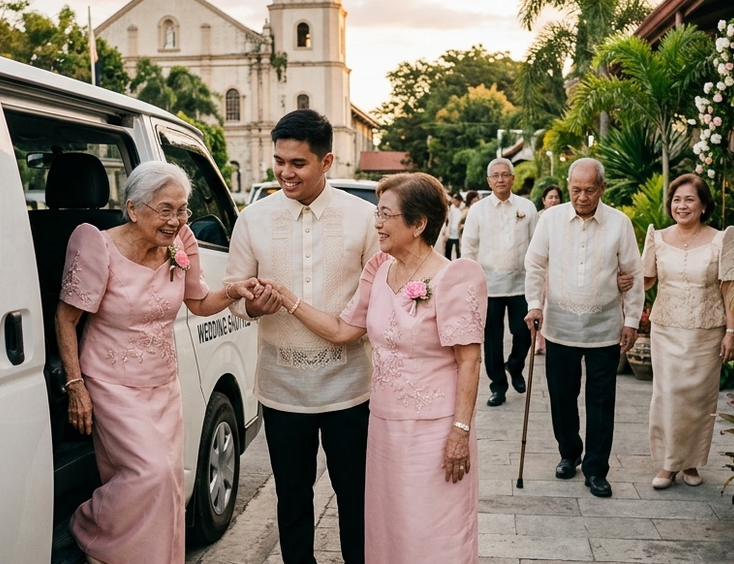
Filipino weddings carry the lola, the lolo, the tito with the bad knee, and the tita who naps after lunch. A long transfer punishes them most.
A 60-minute drive after a 90-minute Catholic mass exhausts elderly guests. Some skip the reception. Some show up tired and leave early. Some power through but suffer the next day.
Couples with large extended families should weight the venue choice toward the older relatives, especially for traditional weddings with a 1 PM or 2 PM mass and an evening reception. Provide a shuttle service if the transfer runs longer than 30 minutes. Senior guests appreciate the air-conditioned ride more than any centerpiece detail.
For a closer look at how the guest list shapes venue decisions, read our guide on how to choose a wedding venue based on your Filipino guest list.
When Distance Affects the Catering Setup
Outside catering depends on temperature control. The food leaves the commissary, gets reheated at the venue, and serves within a four-hour safety window.
A long ceremony plus a long transfer plus a slow program eats into that window. By the time the salad gets served, the chicken has lost its texture and the rice has cooled. Caterers can hold food for 30 to 45 minutes without quality drop. Beyond that, the dishes suffer.
Couples booking outside catering should keep the church-to-venue transfer short and the cocktail hour tight. The longer the gap between food prep and food service, the worse the meal. In-house catering at hotels and venues with their own kitchens avoids this problem because the food cooks on-site.
For the full breakdown of catering trade-offs, read our guide on in-house vs. outside catering at wedding reception venues in the Philippines.
How Distance Shapes the Photo Session
The photo session between the ceremony and the reception runs 30 to 60 minutes. Couples shoot the family portraits, the principal sponsor groupings, and a few couple shots before the entrance.
A long transfer cuts into the photo time. Couples either skip shots, move them to the reception venue, or push the program back. Photographers prefer the church for family shots because the lighting and the backdrop work. The venue works for couple shots and detail photos.
Booking a venue close to the church gives the photographer real session time. Booking a venue 90 minutes away forces the team to choose between photos and program timing. Most couples who skip the photo session regret it later.
How Distance Affects the Cost
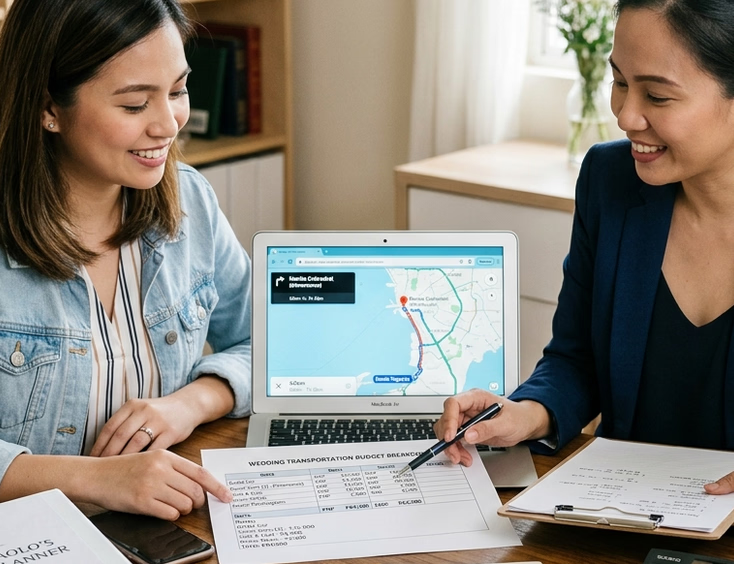
Distance costs money in three ways.
Transportation. A bridal car for two hours costs less than a bridal car for five hours. Coordinator overtime kicks in past the contracted hours. Suppliers charge ingress and egress fees if the venue sits far from their base.
Guest experience. Some couples shuttle elderly guests or out-of-town family. A bus rental from the church to the venue costs PHP 8,000 to PHP 25,000 depending on the distance and the time.
Vendor delays. A florist driving from Manila to Tagaytay to set up by 2 PM has to leave by 9 AM. The same supplier serving a venue near the church can deliver by 11 AM and stretch the prep time. Tight setup windows cost extra in rushed delivery, missed details, and overtime fees.
For the full cost framework, read our guide on how much a wedding reception venue costs in the Philippines.
When a Long Transfer Actually Works
Some couples accept the long drive because the venue itself justifies it. A Tagaytay garden after a Manila ceremony. A Boracay reception after a Manila church wedding. A Batangas beach after a Tagaytay ceremony.
The long transfer works when the couple plans for it. Hire shuttles. Push the ceremony earlier. Book the church and venue with weekday or Sunday timing. Add a longer cocktail buffer. Skip the photo session at the venue and shoot at the church before the transfer.
Destination-style weddings within driving distance of Manila run on this model. A 9 AM ceremony in a Manila church and a 2 PM lunch reception in Tagaytay works because the timeline gives space for the drive. A 4 PM ceremony and an 8 PM Tagaytay reception also works because the post-rush-hour drive moves faster.
The long transfer fails when the couple ignores the timing math. A Saturday 4 PM Manila ceremony and a 6 PM Tagaytay reception breaks because rush-hour SLEX traffic eats the gap.
Questions to Ask Before You Lock the Pairing
Run the route on Waze at the same day and time as your wedding. Note the realistic transfer time, not the best-case time.
Check the venue's ingress and egress hours. A venue with a 1 PM ingress works for a 4 PM ceremony. A venue with a 3 PM ingress forces the suppliers to rush.
Confirm the reception start time. Some venues lock you into a 6 PM start regardless of when the church frees you. Others let you adjust by 30 to 60 minutes.
Ask about the overtime rates. A program ending past 10 PM costs PHP 5,000 to PHP 25,000 per hour at most venues. Long transfers push the program later and trigger overtime fees.
Confirm the parking and the entrance flow. Guests arriving from a different church need clear directions, easy parking, and a smooth entry. Venues with a single narrow entrance create bottlenecks during the post-ceremony arrival surge.
Filipino Wedding Routes That Trip Up Couples
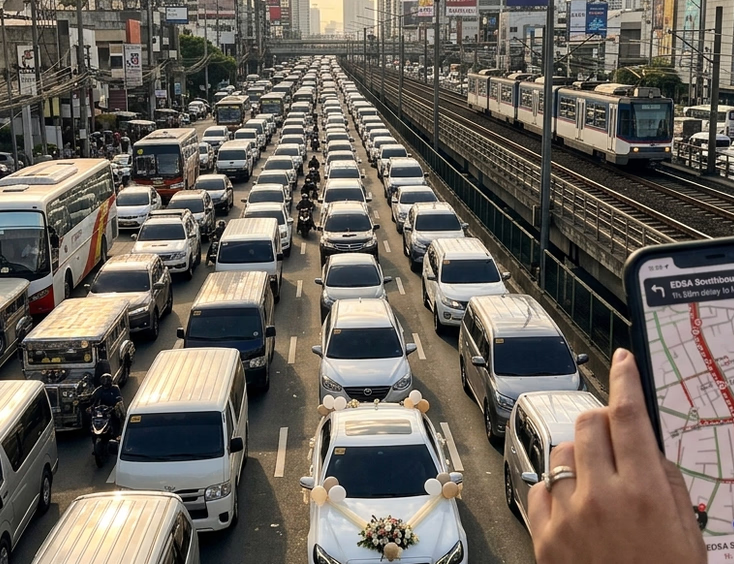
Couples underestimate certain routes. The numbers below reflect real Saturday afternoon Manila traffic.
Manila to Quezon City after 4 PM: 60 to 90 minutes. Looks short on the map. Drives long in real life.
Makati to Tagaytay after 3 PM: 2 to 3 hours. SLEX southbound jams from 3 to 7 PM on Fridays and Saturdays.
Quezon City to BGC after 5 PM: 60 to 90 minutes. EDSA southbound during evening rush.
Antipolo to Manila after 4 PM: 90 to 120 minutes. Marcos Highway and Ortigas Avenue both jam.
Alabang to Manila after 4 PM: 60 to 90 minutes. SLEX northbound piles up.
Couples who marry in churches in these zones should pick reception venues within five kilometers or accept the realistic drive time.
Final Framework for Pairing the Church and the Venue
Pick the church first. The church carries the family meaning, the religious tradition, and often the sentimental weight. Couples don't pick a church based on the reception venue.
Pick the reception venue second, with the church location, the wedding date, and the time of day in front of you. Run the route. Check the traffic. Confirm the transfer fits the 30-minute rule.
Match the timeline to the distance. Long transfers need earlier ceremonies, longer cocktail buffers, and shuttle plans for older guests.
Confirm the realistic vendor logistics. Caterers, florists, and coordinators all factor distance into their setup. Pay the extra ingress fee if it means the team arrives prepared instead of rushed.
Browse vetted venues across every region near major Filipino wedding churches on our reception venue suppliers directory and filter by location to find the right pairing for your church.
For the complete planning guide that ties location, weather, budget, and venue type together, read our pillar guide on choosing a wedding reception venue in the Philippines.
Still Searching for a Right Match?
Find Your Perfect Wedding Supplier Today!
Discover trusted wedding suppliers across the Philippines in our complete directory. Compare services and connect with the ones that fit your dream celebration.
Browse Wedding SuppliersFeatured Blog Posts

Filipino Wedding Entourage - Roles, Order of March, and Modern Etiquette
6 mins readCivil Weddings in the Philippines - Requirements, Costs, and Step-by-Step Process
9 mins readCivil Wedding Requirements in the Philippines - Complete Checklist
6 mins readCost of Wedding in the Philippines - 5 Essential Things You Need to Know
7 mins readPrincipal Sponsors (Ninong/Ninang) - How Many, How to Ask, What They Really Do
4 mins readVeil, Cord, Candle & Coins - Roles, Options, and When They Happen
4 mins readEntourage for a Traditional Pinoy Wedding - Complete Roles and Guide
6 mins readComplete List of Civil Wedding Requirements in the Philippines
8 mins readHow to Choose Wedding Ninongs and Ninangs - Ask Yourself These 3 Important Questions
5 mins read