


How to Choose a Wedding Venue Based on Your Filipino Guest List
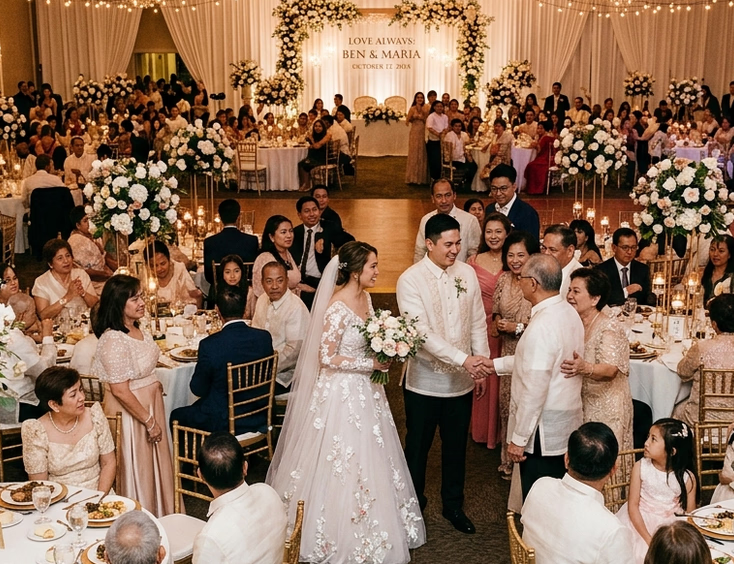
Filipino guest lists run larger than couples expect. Plan for 150 and you end up feeding 220. Plan for 250 and you end up squeezing 310 into a venue rated for 280. The guest list problem starts long before you tour your first venue, and ignoring it costs you money, comfort, and family peace.
This guide walks you through how to size your guest list realistically, match it to the right venue, and avoid the capacity disasters that hit Filipino couples who underestimate how many people actually show up.
Why Filipino Guest Lists Always Run Bigger
Filipino weddings carry cultural weight that pushes guest counts up. Lolas come with lolos. Tito and tita lists include first cousins, second cousins, and sometimes their children. Ninongs and ninangs each bring their families, and the principal sponsor count alone can hit 14 or 18 people on each side.
Office colleagues expect invitations. Barangay friends from your parents' neighborhood expect invitations. College blockmates, high school batchmates, and workmates from previous jobs all expect invitations. Saying no to any of these groups creates lasting tension.
Distance doesn't shrink the list the way couples hope. Relatives in the U.S., Canada, and the Middle East often fly home specifically for family weddings. Cousins working overseas time their vacations around your date.
The cultural rule: Filipino weddings expand guest lists, they don't trim them. Plan for expansion from day one.
Build Your Guest List in Three Tiers
Sort your list into three categories before you start counting heads.
Tier 1: Must-invite. Immediate family, principal sponsors, secondary sponsors, closest friends, godparents, and core family members. These guests cannot be cut. Their absence would damage relationships permanently.
Tier 2: Should-invite. Extended family, longtime family friends, parents' close friends, current coworkers, and bridal party plus-ones. These guests usually attend if invited. Cutting them creates minor friction.
Tier 3: Nice-to-invite. Distant cousins you rarely see, parents' acquaintances, former coworkers, and casual friends. These guests often skip if life gets busy, but they appreciate the invitation.
Add the three tiers. That's your maximum possible guest count. Then apply the realistic show-up rate (covered below) to get your planning number.
The Realistic Show-Up Rate for Filipino Weddings
Filipino weddings run a 75-90% show-up rate among invited guests, depending on venue location, day of the week, and family closeness.
Manila weddings on Saturdays hit 85-90%. Provincial weddings on weekdays drop to 70-75%. Destination weddings outside the bride and groom's home region drop further, often to 50-60% for non-immediate family.
Couples sending invitations to 300 guests typically host 240-270 at the reception. Couples sending 200 invitations typically host 160-180.
Build your venue capacity target around the 85% mark for safety. Send 250 invitations, plan for 215. Book a venue rated for 230 to give yourself headroom.
Match Venue Capacity to Realistic Guest Count
Venue capacity ratings often mislead couples. A ballroom rated for 200 guests means 200 seated comfortably with full place settings, dance floor, buffet stations, photographer movement space, and presidential table clearance. Cramming 230 into the same room cuts comfort hard.
Always book a venue rated 10-15% above your realistic guest count. If you expect 200 guests, book a venue rated for 220-230. If you expect 300, book a venue rated for 330-345.
Garden venues handle overflow better than ballrooms. Open spaces let you add tables when more guests show up than expected. Ballrooms can't expand walls, so over-attendance creates real comfort problems.
For more on venue type and capacity flexibility, read types of wedding reception venues in the Philippines and which one is right for you.
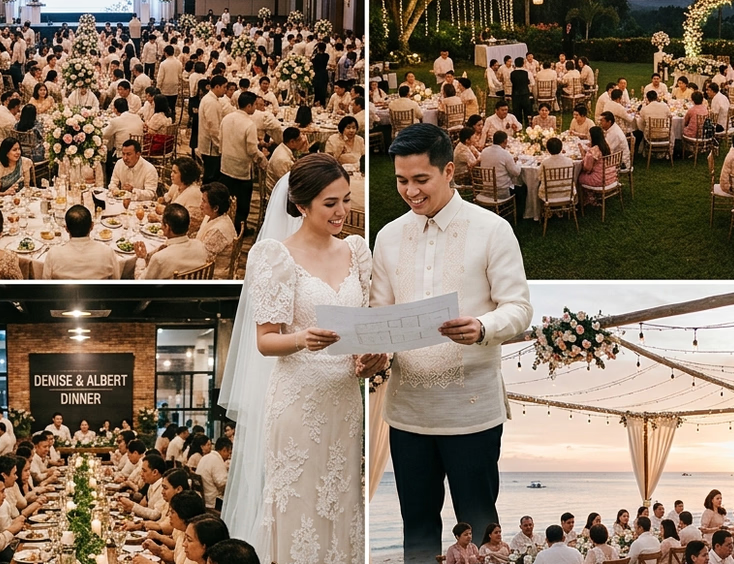
Capacity by Venue Type
Hotels handle large guest counts best. Five-star hotel ballrooms in Manila accommodate 300-600 guests in a single room, with full service infrastructure. Mid-tier hotels manage 150-350 reliably.
Garden venues range widely. Tagaytay properties like Hillcreek Gardens, Alta Veranda de Tibig, and Glass Garden cap at 250-400 depending on layout. Smaller garden venues in Cavite and Batangas cap at 100-180.
Beach resorts work best for smaller groups. Most Boracay and Palawan venues cap at 100-150 for sit-down receptions. Some properties refuse weddings above 80 to protect guest experience.
Function halls and event centers vary. Light of Love Events Place handles 200-350 depending on layout. Smaller function halls cap at 100-150.
Restaurants top out at 60-100 for full-restaurant bookings. Heritage venues like Pinto Art Museum cap at 200-250. Country clubs handle 150-300 reliably.
Match the venue type to your guest count before falling in love with a specific property.
Plan for Plus-Ones Carefully
Plus-one policies decide whether your guest list stays manageable or doubles overnight. Filipino weddings traditionally extend plus-ones to engaged or married guests, though some couples extend it more broadly.
Set a clear plus-one rule before sending invitations. Common policies: married and engaged guests get plus-ones, principal sponsors and immediate family get plus-ones, single friends do not get plus-ones unless they're in a serious relationship.
Each plus-one costs the same as a regular guest. On a ₱2,500 per head catering bill, 30 plus-ones add ₱75,000 to your wedding cost. Track them carefully in your RSVP system.
Account for Children
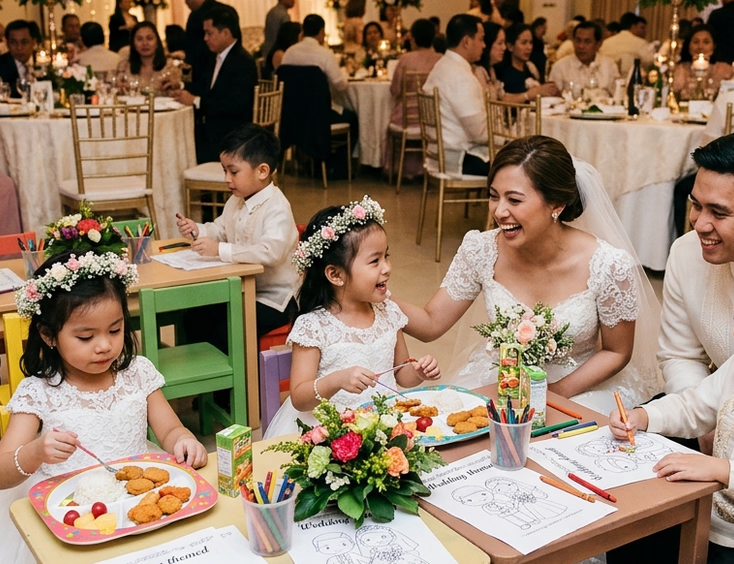
Children change venue dynamics. Filipino weddings often include children of close family, godparents, and family friends. A wedding with 30 children needs different setup considerations than one with five.
Decide your kids policy early. Adults-only weddings work for some couples but create tension with families who expect to bring children. Family-friendly weddings need kids' meals, color stations, and possibly a separate kids' area.
Children typically count as half-rate guests for catering, though some venues charge full rate for kids over 7. Confirm the policy before booking.
RSVP Systems That Actually Work
Filipino guests notoriously skip RSVPs. Sending 300 invitations and getting 180 confirmed RSVPs doesn't mean only 180 will attend. Many guests show up without confirming.
Build your RSVP system to extract real numbers:
Send save-the-dates 8-10 months before the wedding. Send formal invitations 3-4 months before. Set RSVP deadlines 6 weeks before the wedding so you have time to follow up.
Follow up personally with non-respondents. A text from the bride or groom often gets responses that formal RSVP cards don't. For older relatives, ask immediate family to confirm on their behalf.
Confirm final headcount with the venue 7-10 days before the wedding. Most venues lock in catering counts at this point and charge full price for any guests added after.
Special Considerations for Older Guests
Lolas, lolos, titos, and titas have specific venue needs Filipino couples often overlook. Stair access creates problems at heritage venues and rooftop locations. Long distances between ceremony and reception exhaust elderly guests. Extreme heat or rain in outdoor venues hits them hardest.
Choose venues with elevator access if your guest list includes guests over 70. Provide reserved seating with shade or air-conditioning. Reserve closer parking spots for guests with mobility limits.
If your venue requires walking from ceremony to reception or between buildings, arrange shuttle access. Elderly guests often skip the reception if logistics overwhelm them.
For more on church-to-venue logistics, read why venue location relative to the church matters in a Filipino wedding reception.
Out-of-Town and International Guests
Manila-based couples with provincial relatives need to plan transport and accommodations. International guests flying home for the wedding need similar consideration.
Block hotel rooms 6-8 months out at properties near your venue. Negotiate group rates if you can fill 10 or more rooms. Send detailed transport instructions, especially for guests unfamiliar with Manila traffic patterns.
Destination weddings flip the dynamic. Most guests become out-of-town guests, and your show-up rate drops accordingly. Plan a destination wedding around 50-60% attendance from your invited list, not 85%.
How Guest Count Affects Total Budget
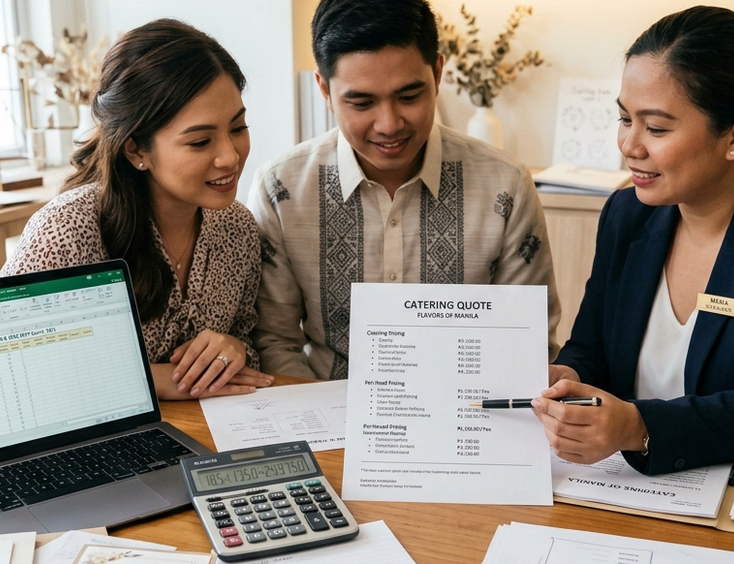
Each additional guest adds catering cost, possibly venue upgrade fees, more invitations, more favors, and more seats to fill on the program timeline.
A 200-pax wedding at ₱2,500 per head costs ₱500,000 in catering alone. A 250-pax wedding at the same per-head rate costs ₱625,000. The 50 extra guests add ₱125,000 to catering plus 50 more invitations (₱5,000-₱10,000), 50 more favors (₱5,000-₱15,000), and possibly a venue upgrade.
Cutting 20-30 guests from a borderline list often unlocks venue options that wouldn't work at higher counts.
For a complete cost breakdown, read how much does a wedding reception venue cost in the Philippines: a realistic budget breakdown.
When to Cap the Guest List
Cap your list when budget tightens past comfort. Cap your list when no venue at your price point handles the count. Cap your list when family pressure pushes you toward a wedding you can't afford.
Capping requires honest conversations. Tell parents your maximum guest count early. Set rules together: no second cousins beyond immediate family, no work acquaintances, no plus-ones for unattached guests.
Filipino families push back on caps, but couples who set them firmly avoid the spiral that drives wedding budgets past their breaking point.
Find Venues That Fit Your Guest Count
Browsing curated venue listings beats calling venues blindly. Verified directories let you filter by capacity range so you compare only venues that handle your specific guest count.
Browse our complete reception venue suppliers directory to find venues that match your headcount, from intimate 50-pax restaurants to 500-pax luxury ballrooms. Each listing includes capacity ranges, layout options, and direct contact information.
Your guest list is the single most important variable in your venue search. Get the count right, build in buffer for over-attendance, and pick a venue that handles your real numbers, not your hopeful ones. Couples who plan around realistic guest counts avoid the worst Filipino wedding mistake: cramming a 300-pax wedding into a 240-pax venue and watching the comfort, photos, and guest experience fall apart.
For the broader picture of how venue choice affects your overall wedding planning, read choosing a wedding reception venue in the Philippines.
Still Searching for a Right Match?
Find Your Perfect Wedding Supplier Today!
Discover trusted wedding suppliers across the Philippines in our complete directory. Compare services and connect with the ones that fit your dream celebration.
Browse Wedding SuppliersFeatured Blog Posts

Filipino Wedding Entourage - Roles, Order of March, and Modern Etiquette
6 mins readCivil Weddings in the Philippines - Requirements, Costs, and Step-by-Step Process
9 mins readCivil Wedding Requirements in the Philippines - Complete Checklist
6 mins readCost of Wedding in the Philippines - 5 Essential Things You Need to Know
7 mins readPrincipal Sponsors (Ninong/Ninang) - How Many, How to Ask, What They Really Do
4 mins readVeil, Cord, Candle & Coins - Roles, Options, and When They Happen
4 mins readEntourage for a Traditional Pinoy Wedding - Complete Roles and Guide
6 mins readComplete List of Civil Wedding Requirements in the Philippines
8 mins readHow to Choose Wedding Ninongs and Ninangs - Ask Yourself These 3 Important Questions
5 mins read