


In-House vs. Outside Catering at Wedding Reception Venues in the Philippines: What Every Couple Must Know
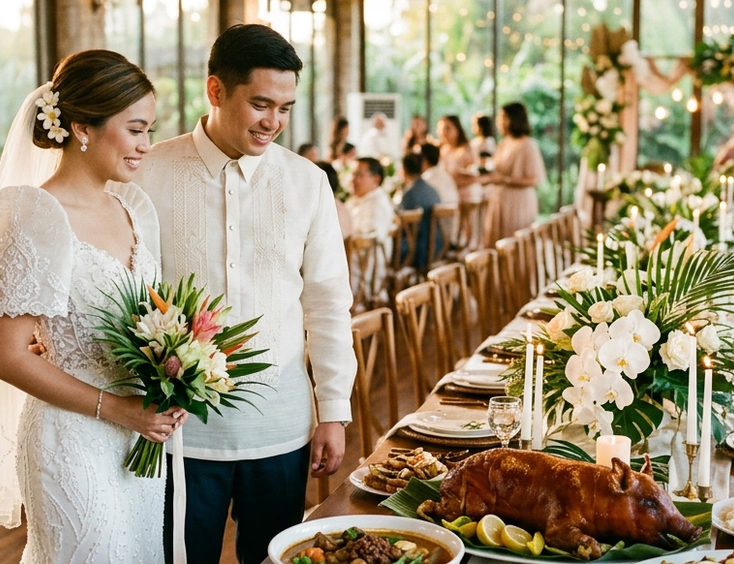
In-house catering means the venue provides the food through its own kitchen or an exclusive partner caterer. Outside catering means you hire a third-party caterer and bring them into the venue, sometimes with a corkage fee. Most hotels and clubs in Manila require in-house. Most garden venues, event spaces, and beach resorts allow outside catering. Your choice affects your budget, your menu, your guest experience, and how much control you have over the food at your reception.
What In-House Catering Means at a Philippine Wedding Venue
In-house catering ties the food service to the venue. You book the ballroom, the function room, or the garden, and the venue's kitchen handles everything from the appetizers to the wedding cake table setup.
Hotels like Shangri-La, Marriott, Sofitel, Manila Hotel, Diamond Hotel, and Conrad operate this way. Country clubs follow the same model. Some private estates and resorts in Tagaytay, Batangas, and Cebu also lock you into their kitchen.
You get a package. The package usually covers the food, the service staff, the table setup, the basic centerpieces, the sound system, and sometimes the cake. You pay per head, and the rate ranges from PHP 1,800 to PHP 4,500 per guest at mid-tier venues. Five-star hotels charge PHP 3,500 to PHP 7,000 per head.
You taste the food at a scheduled food tasting. You pick from a fixed menu. You sign the contract. The venue handles the rest.
What Outside Catering Means and How It Works in the Philippines
Outside catering gives you the freedom to hire a separate caterer. You book the venue for the space alone, then bring in a caterer like Hizon's, Bizu, Josiah's, K by Cunanan, Juan Carlo, or any of the hundreds of catering suppliers across Metro Manila, Cavite, Laguna, Pampanga, and Cebu.
Garden venues like Hillcreek Gardens, Alta Veranda de Tibig, Glass Garden, Fernwood Gardens, and most beach venues in Batangas and Palawan allow this setup. Some venues let you pick from an accredited list. Others let you bring any caterer as long as you pay a corkage fee.
The caterer brings the food, the chafing dishes, the waiters, the table linen, and sometimes the styling. The venue provides the space, the basic chairs and tables, and the comfort rooms. You manage two contracts instead of one.
Cost Comparison: In-House vs. Outside Catering
The price gap is real. Outside catering costs less per head in most cases, but the total bill depends on the venue corkage and the extras.
Sample budget for 150 guests:
In-house at a Manila hotel ballroom: PHP 525,000 to PHP 750,000. The package covers food, service, basic styling, sound, and the venue.
Outside catering at a garden venue: PHP 180,000 to PHP 300,000 for catering plus PHP 80,000 to PHP 250,000 for venue rental. Total lands between PHP 260,000 and PHP 550,000.
You save PHP 100,000 to PHP 250,000 by going the outside catering route at a garden or event space. The catch sits in the logistics. You hire the stylist separately. You rent the sound system. You coordinate the cake delivery. You pay corkage on liquor, lechon, pica-pica, and sometimes even the wedding cake.
For a full breakdown of what your reception spending looks like, read our guide on how much a wedding reception venue costs in the Philippines.
Pros of In-House Catering at Filipino Wedding Venues
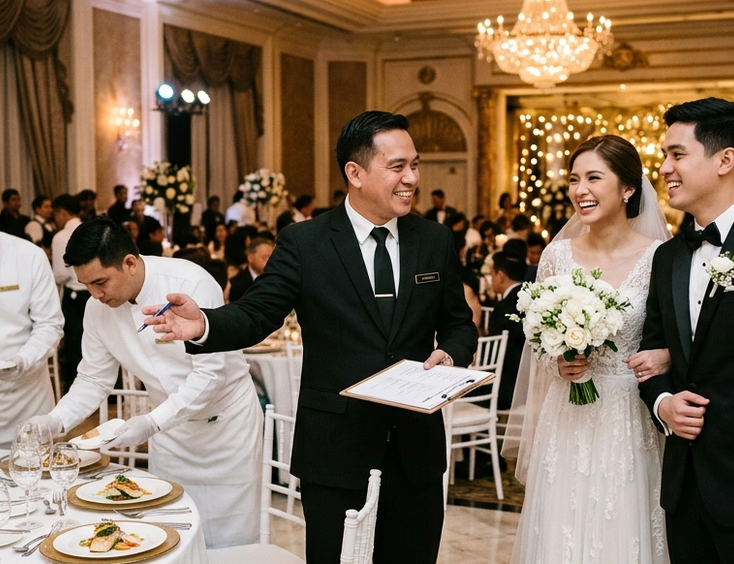
You get one point of contact. The banquet manager handles the food, the timing, the service flow, and the venue setup. You text one person, not five.
You skip corkage fees on most items. The venue treats your booking as a complete package, so you avoid the PHP 5,000 to PHP 30,000 surprise charges that hit outside-catering couples on lechon, cake, and bar.
You eat where you tasted. The same kitchen that cooked your food tasting cooks your wedding dinner. Consistency matters when you serve 200 guests in two hours.
You get tested service staff. Hotel waiters serve weddings every weekend. They know how to plate, how to time the courses, and how to handle a 300-pax buffet line without bottlenecks.
You sidestep the load-in stress. No caterer truck arriving late. No missing chafing dish. No cold soup because traffic on EDSA delayed the kitchen team.
Cons of In-House Catering
You pay a premium. Hotel and club packages cost 30 to 60 percent more than the same headcount at a garden venue with outside catering.
You eat the venue's menu. Some hotels let you customize. Most give you four to six set menus to choose from. You want kare-kare with bagoong from your favorite Pampanga caterer. You can't have it.
You face minimum guarantees. Most hotels require 100 to 150 guests minimum. Intimate weddings of 30 to 60 people pay for empty seats or get pushed to a smaller function room.
You inherit the venue's vendor list. Some hotels require you to use their accredited florist, host, or coordinator. The accredited list charges 20 to 40 percent above market rates.
Pros of Outside Catering
You pick the food you want. You hire the caterer who serves the boodle fight, the lechon de leche, the kare-kare bao, the modern Filipino tasting menu, or the Japanese-Filipino fusion your guests will remember.
You control the budget. Caterers compete. You compare three or four quotes for the same headcount and pick the one that fits. Hotels give you one quote.
You get more for the same peso. Outside caterers often include the styling, the lights, the host, and the photo booth as part of the package, especially the all-in providers like Bizu, Josiah's, and Lawrence Catering.
You serve more food. Outside caterers tend to plate larger portions and offer more variety. Six main courses instead of three. Two pasta options instead of one.
Cons of Outside Catering
You pay corkage. Most venues charge PHP 80 to PHP 300 per pax for outside food. Some charge flat rates of PHP 15,000 to PHP 50,000. Lechon corkage runs PHP 5,000 to PHP 15,000 per pig. Cake corkage hits PHP 3,000 to PHP 10,000.
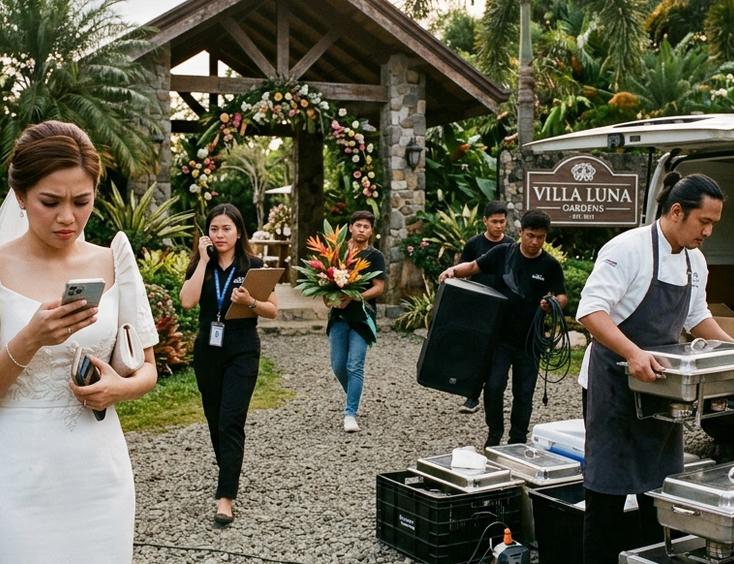
You manage more vendors. The caterer, the venue, the stylist, the sound and lights team, the host, the cake supplier. Six contracts. Six payment schedules. Six points of failure.
You risk coordination gaps. The caterer brings 200 plates. The guest count hits 220. Whose problem is that? In-house catering, the venue. Outside catering, you and the caterer figure it out at 7 PM with hungry titos waiting.
You handle the load-in. The caterer arrives at 1 PM. The venue opens at 12 noon. You lose an hour of setup. Garden venues with strict ingress and egress windows punish late caterers with overtime fees.
When In-House Catering Is the Right Call
Pick in-house if you book a five-star hotel ballroom, a country club, or a venue that requires it. The decision is made for you.
Pick in-house if you host a corporate-style wedding with 200 to 500 guests and need flawless service flow.
Pick in-house if you want a stress-free planning timeline. One contract, one tasting, one final headcount call.
Pick in-house if you marry in the rainy season at an indoor venue and want the full backup of a hotel kitchen and air-conditioned ballroom. Read more on this in our guide on choosing a wedding reception venue based on the Philippine weather and wedding season.
When Outside Catering Is the Right Call
Pick outside catering if you book a garden, a beach, a private estate, or a multi-purpose event space. Most of these venues expect you to bring a caterer.
Pick outside catering if your budget caps at PHP 400,000 for 150 guests. The math works at a garden venue with a mid-tier caterer.
Pick outside catering if food matters more than convenience. You want a specific chef, a regional menu, or a non-traditional spread.
Pick outside catering if you plan an intimate wedding of 30 to 80 guests. Hotels charge minimums that punish small headcounts. Caterers serve 50 pax without the surcharge. For more on this, read our guide on small and budget-friendly wedding reception venues for intimate celebrations.
Questions to Ask the Venue Before You Sign
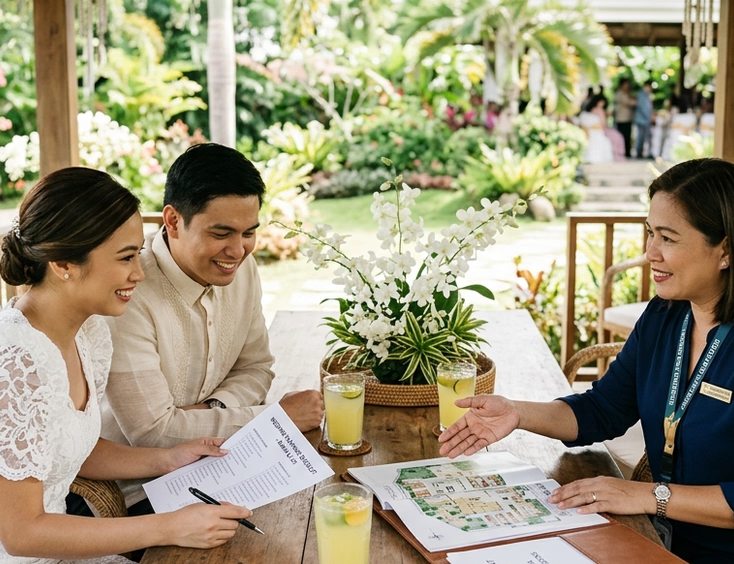
Ask if the venue allows outside catering. Some say yes with corkage. Some say no. Some say yes only from an accredited list.
Ask for the corkage breakdown in writing. Lechon corkage. Cake corkage. Liquor corkage. Pica-pica corkage. Get the numbers per item.
Ask about the kitchen access. Outside caterers need a prep area, water, and power. Some garden venues lack a proper service kitchen.
Ask about the ingress and egress hours. A four-hour ingress window kills a caterer who needs five hours to set up a 200-pax plated dinner.
Ask about the food tasting policy. In-house venues schedule one tasting per couple. Outside caterers offer tasting at their commissary, sometimes free, sometimes at half-price per pax.
Ask about the guest minimum and the headcount cutoff. Hotels lock you in at 72 hours. Caterers usually allow adjustments up to 7 days before.
How the Venue Type Decides Your Catering Path
Hotels and country clubs equal in-house. The decision is closed.
Garden venues, hacienda venues, and beach resorts usually equal outside catering. Some have an in-house option, but most expect you to bring a caterer.
Function halls and event spaces split. Some accredit specific caterers. Some allow any caterer with corkage. Read the contract before booking.
Restaurants and private dining rooms equal in-house. The kitchen is the venue.
For a deeper look at how venue type shapes every other decision, read our guide on the types of wedding reception venues in the Philippines and which one is right for you.
Final Decision Framework for Filipino Couples
Match the venue to the catering style, not the other way around. You fall in love with Fernwood Gardens, you bring a caterer. You fall in love with Sofitel, you eat their food.
Set the budget first. Compute the per-head cost including corkage, taxes, service charge, and the styling extras. Compare apples to apples.
Pick the food experience your guests will remember. Filipino weddings live and die by the food. Cold rice and bland chicken kill the night faster than rain.
Hire vendors you trust. A great in-house team beats a mediocre outside caterer. A great outside caterer beats a generic hotel buffet.
Browse vetted reception venues across the Philippines on our reception venue suppliers directory and start shortlisting based on your catering preference.
For the complete planning roadmap from venue type to final walkthrough, read our pillar guide on choosing a wedding reception venue in the Philippines.
Still Searching for a Right Match?
Find Your Perfect Wedding Supplier Today!
Discover trusted wedding suppliers across the Philippines in our complete directory. Compare services and connect with the ones that fit your dream celebration.
Browse Wedding SuppliersFeatured Blog Posts





Filipino Wedding Entourage - Roles, Order of March, and Modern Etiquette
6 mins readCivil Weddings in the Philippines - Requirements, Costs, and Step-by-Step Process
9 mins readCivil Wedding Requirements in the Philippines - Complete Checklist
6 mins readCost of Wedding in the Philippines - 5 Essential Things You Need to Know
7 mins readPrincipal Sponsors (Ninong/Ninang) - How Many, How to Ask, What They Really Do
4 mins readVeil, Cord, Candle & Coins - Roles, Options, and When They Happen
4 mins readEntourage for a Traditional Pinoy Wedding - Complete Roles and Guide
6 mins readComplete List of Civil Wedding Requirements in the Philippines
8 mins readHow to Choose Wedding Ninongs and Ninangs - Ask Yourself These 3 Important Questions
5 mins read