


Why Managing the Wedding Entourage Is the Hardest Job at a Filipino Wedding (And How Coordinators Handle It)
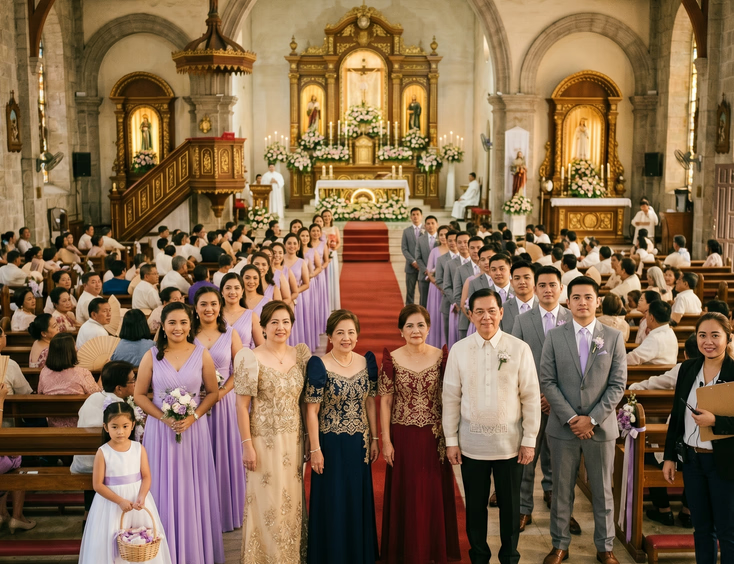
Filipino weddings carry a unique logistical challenge that most couples underestimate: the entourage. A typical Filipino wedding entourage has 20 to 40 members. Large celebrations push that number past 50. Each member has a role, a position in the processional, and a cue during the ceremony. Managing all of them on the wedding day is the single most demanding task your coordinator faces.
The Size of a Filipino Wedding Entourage
A standard Filipino wedding entourage includes:
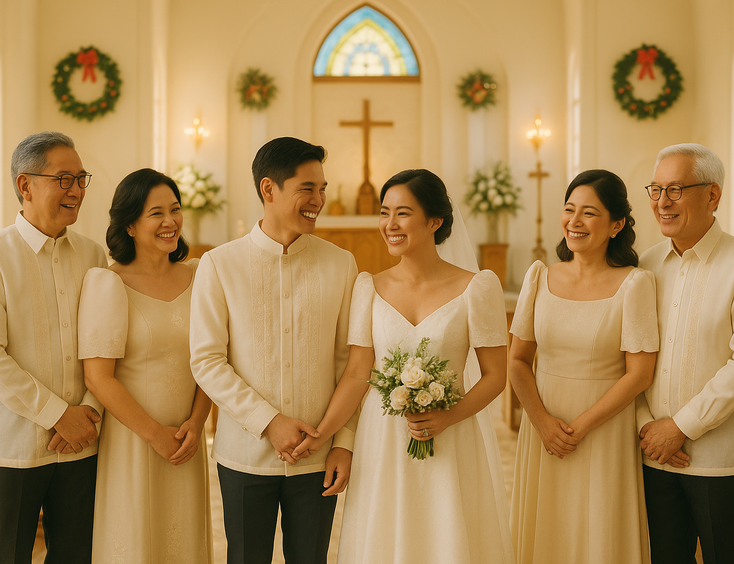
- Principal sponsors (ninong and ninang): Three to five pairs, sometimes more. These are older relatives, family friends, or mentors who serve as symbolic witnesses to the marriage.
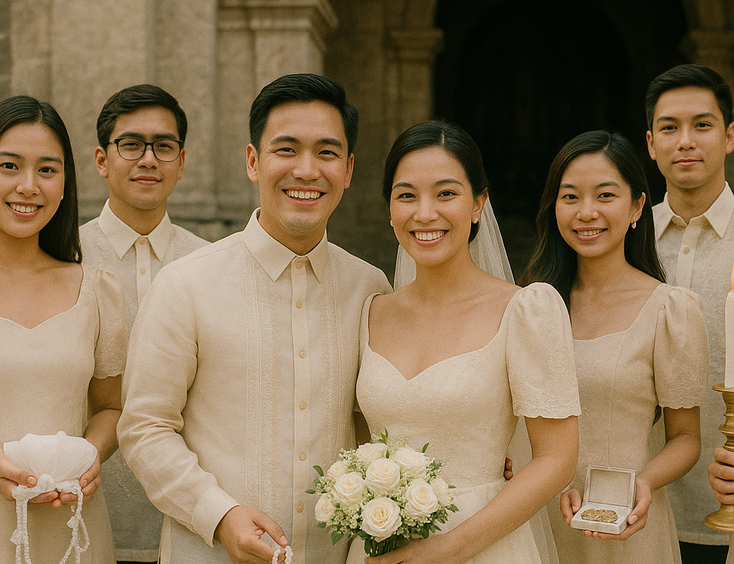
- Secondary sponsors: Pairs assigned to the veil, cord, candle, and coins. Each pair performs a specific ritual during the Catholic ceremony.
- Best man and maid of honor
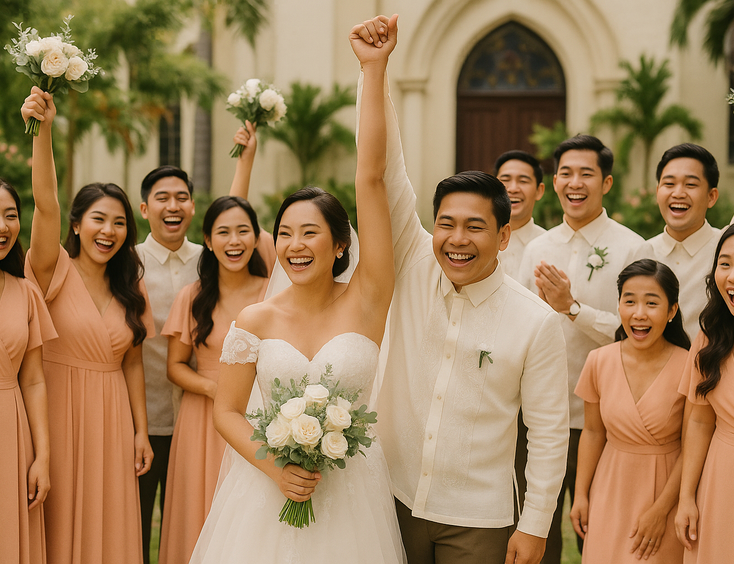
- Groomsmen and bridesmaids: Two to six on each side for most weddings. Larger celebrations include eight or more per side.
- Flower girls and ring bearers: One to four children, ranging in age from three to eight years old.
- Bible bearer, coin bearer, and cord bearer: Older children or young teens who carry ceremonial items down the aisle.
Add the bride and groom and both sets of parents, and you're coordinating 30 or more people in a single processional. Each person must know where to stand, when to walk, and what to carry.
The Processional Order
The Catholic wedding processional follows a specific sequence. The order varies by parish, but a common arrangement runs:
- Groom's parents escort the groom to the altar
- Principal sponsors walk in pairs
- Secondary sponsors walk in pairs
- Groomsmen and bridesmaids walk in pairs
- Ring bearer, coin bearer, bible bearer
- Flower girls
- Maid of honor
- Bride's parents escort the bride
Some churches place the principal sponsors before the groomsmen. Others ask secondary sponsors to enter last. Your church's wedding coordinator or parish secretary confirms the order during the rehearsal.
Getting 30 people to walk in sequence with correct spacing and timing requires practice. You'll run through this at the rehearsal, and your coordinator will position team members along the aisle to cue each group.
The Ceremony Rituals
Catholic Filipino wedding ceremonies include rituals that involve specific entourage members at specific moments:
Veil sponsors drape the veil over the bride's head and the groom's shoulders during the veil ceremony. They stand from their seats, walk to the couple, and place the veil. Timing matters because the priest pauses the liturgy for this.
Cord sponsors place the cord in a figure-eight loop over the couple after the veil. They follow the same walk-and-place sequence.
Candle sponsors light the unity candle or hand individual candles to the bride and groom.
Coin sponsors present the arrhae (wedding coins) to the priest, who blesses them before the groom hands them to the bride.
Each ritual has a cue. Your coordinator tracks when each pair stands, walks to the altar, performs their task, and returns to their seats. A missed cue stalls the ceremony. A confused sponsor walks to the wrong spot and disrupts the flow.
The Rehearsal
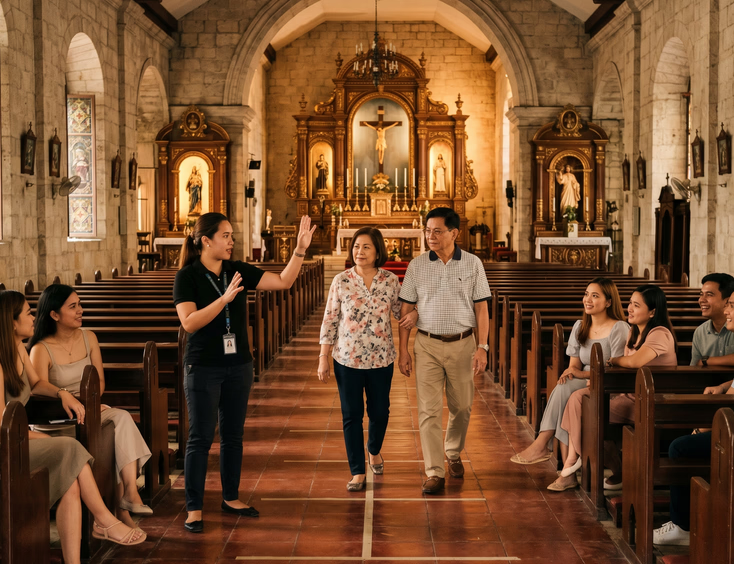
The rehearsal is where your coordinator prepares the entourage for the ceremony. Most Filipino wedding rehearsals happen one to two days before the wedding and last 60 to 90 minutes.
Your coordinator runs the rehearsal by:
- Walking through the full processional order
- Assigning positions and spacing for each pair
- Demonstrating each sponsor ritual (veil, cord, candle, coins)
- Practicing the recessional
- Briefing flower girls and ring bearers on their walk
- Confirming seating positions for the entourage during the ceremony
- Addressing last-minute changes to the lineup
Not everyone attends the rehearsal. Principal sponsors are older and may have scheduling conflicts. Groomsmen fly in the night before. Children get restless after ten minutes of instruction. Your coordinator works with whoever shows up and briefs absent members by phone or group chat.
The Problems That Come Up on Wedding Day
You can rehearse all you want. The wedding day introduces problems your coordinator solves in real time.
Late arrivals. A principal sponsor gets stuck in Metro Manila traffic. The ceremony starts in 20 minutes. Your coordinator adjusts the processional to leave a gap, then slots the sponsor in if they arrive before the march begins. If they don't, the coordinator removes the gap and reassigns any ritual responsibility.
Confused sponsors. A ninang forgets whether she's a veil sponsor or a cord sponsor. She grabs the wrong item. Your coordinator stands near the altar and whispers cues to each pair before they walk up.
Children who freeze or cry. A three-year-old flower girl reaches the middle of the aisle and stops. She turns around and runs back to her mother. Your coordinator assigns a bridesmaid or older child to walk alongside younger participants as a safety net.
Wardrobe issues. A groomsman's barong tagalog rips at the back seam during photos. A bridesmaid's heel breaks on the church steps. Your coordinator carries an emergency kit with sewing supplies, extra buttons, fashion tape, and backup flats.
Program changes. The church ceremony runs 20 minutes long because the priest extended his homily. Your coordinator calls the reception venue to push back the arrival time and adjusts the photo schedule.
Missing items. The arrhae pouch was left in the bridal car. The unity candle wick won't light. Your coordinator assigns a team member to retrieve items and keeps backup supplies ready.
How Coordinators Manage Large Entourages
Experienced coordinators in the Philippines use a system to manage entourage logistics. The specific methods vary, but most follow a similar approach.
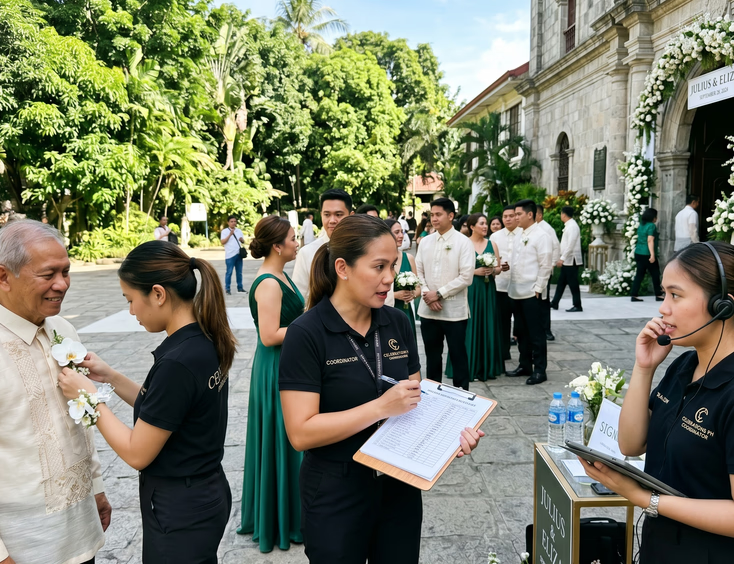
Entourage master list. The coordinator builds a spreadsheet with every member's name, role, contact number, outfit details, and ritual assignment. This list becomes the single reference document for the entire team.
Grouping and pairing. The coordinator groups entourage members by role: principal sponsors together, secondary sponsors together, attendants together, children together. Each group gets a designated handler from the coordinator's team.
Communication channel. A group chat (Viber or Messenger, since most Filipino families use these) keeps the entire entourage connected. The coordinator posts call times, outfit reminders, and meeting points through this channel in the days before the wedding.
Staging area. On wedding day, the coordinator designates a staging area near the church entrance. Entourage members arrive, check in, line up in processional order, and wait for their cue. The coordinator or an assistant stands at the church doors to release each pair.
Cue system. The coordinator positions two to three assistants inside the church. One watches the altar and signals when each sponsor ritual is needed. One stands at the back to manage the processional. One moves between the two to relay timing updates.
Backup plan. If a sponsor cancels on the day, the coordinator reassigns their ritual. If a child can't perform, an older entourage member steps in. The coordinator prepares for these scenarios during the final meeting.
The Emotional Layer
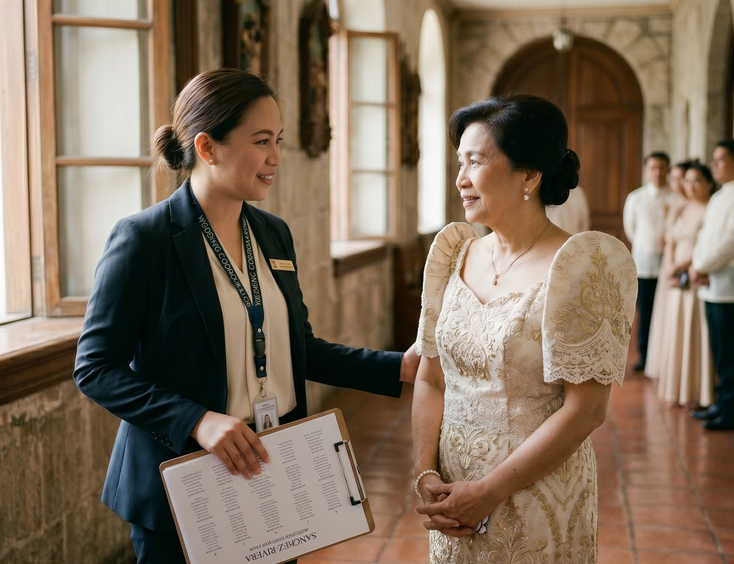
Managing a Filipino wedding entourage goes beyond logistics. You're coordinating people with opinions, expectations, and emotions.
A ninang may feel offended if she's placed fourth in the processional instead of first. Two sets of parents may disagree on how many principal sponsors to include. A bridesmaid may feel excluded if she isn't assigned a ceremony role.
Your coordinator navigates these dynamics with diplomacy. They explain the processional order based on church protocol. They offer alternative roles to entourage members who feel sidelined. They handle family requests without burdening you on your wedding day.
You and your partner should not spend your ceremony worrying about whether Tita Rose knows when to stand up with the cord. That is your coordinator's job.
Do You Need a Coordinator for the Entourage Alone
Some couples consider hiring an OTD coordinator for the entourage management and ceremony alone. This works if your reception is straightforward and you have a reliable emcee and supplier team.
Most couples benefit from a coordinator who handles both the ceremony and reception. The entourage management flows into the reception logistics: the same sponsors need seats at designated tables, the same children need parents to watch them, and the same coordinator keeps the program moving.
If you're planning the wedding yourself and hiring an on-the-day coordinator, make sure your entourage details are locked in before the handoff. Read our tips for couples who plan their own wedding but hire an on-the-day coordinator to get the handoff right.
Your entourage management ties into the Catholic ceremony requirements your coordinator tracks. Our guide on how a coordinator helps you navigate Catholic church requirements covers the paperwork and parish coordination that runs alongside entourage prep.
For the full scope of what planners and coordinators handle beyond the entourage, read our complete guide to hiring a wedding planner or coordinator in the Philippines.
Let a Professional Handle Your Entourage
Your entourage includes the people who matter most to you. Let them enjoy the ceremony instead of stressing over logistics. Browse our directory of wedding planners and coordinators in the Philippines to find a coordinator who knows how to manage large Filipino wedding entourages.
Still Searching for a Right Match?
Find Your Perfect Wedding Supplier Today!
Discover trusted wedding suppliers across the Philippines in our complete directory. Compare services and connect with the ones that fit your dream celebration.
Browse Wedding SuppliersFeatured Blog Posts


Filipino Wedding Entourage - Roles, Order of March, and Modern Etiquette
6 mins readCivil Weddings in the Philippines - Requirements, Costs, and Step-by-Step Process
9 mins readCivil Wedding Requirements in the Philippines - Complete Checklist
6 mins readCost of Wedding in the Philippines - 5 Essential Things You Need to Know
7 mins readPrincipal Sponsors (Ninong/Ninang) - How Many, How to Ask, What They Really Do
4 mins readVeil, Cord, Candle & Coins - Roles, Options, and When They Happen
4 mins readEntourage for a Traditional Pinoy Wedding - Complete Roles and Guide
6 mins readComplete List of Civil Wedding Requirements in the Philippines
8 mins readHow to Choose Wedding Ninongs and Ninangs - Ask Yourself These 3 Important Questions
5 mins read