


How a Wedding Coordinator Helps You Navigate Catholic Church Requirements in the Philippines
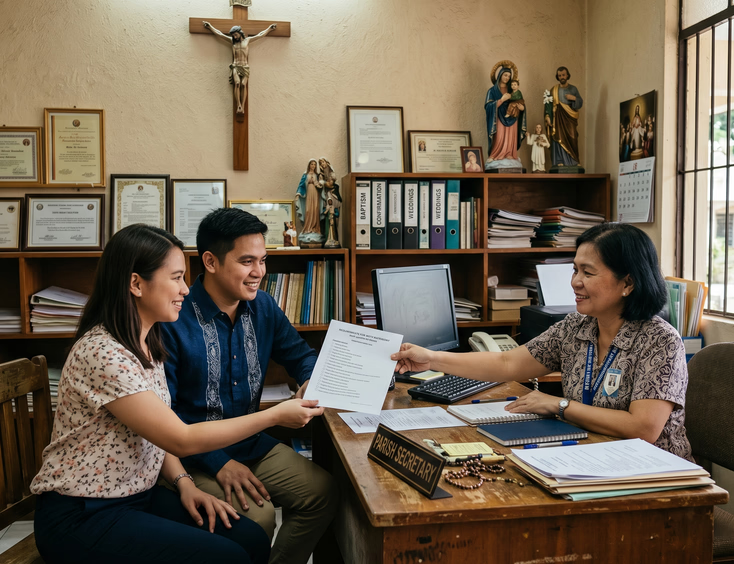
Catholic church weddings in the Philippines involve more paperwork than most couples expect. You need documents from multiple government offices and church offices, each with its own validity period, processing time, and submission deadline. Miss one requirement and the parish can postpone your wedding.
A wedding coordinator tracks every document, deadline, and parish-specific rule so nothing falls through. Here's what the process involves and where a coordinator steps in at each stage.
The Full List of Church Wedding Requirements
A Catholic church wedding in the Philippines requires the following:
- Marriage license from the Local Civil Registrar, valid for 120 days from the date of issue
- PSA birth certificates for both the bride and groom
- Certificate of No Marriage (CENOMAR) from the PSA, issued within six months of your marriage license application
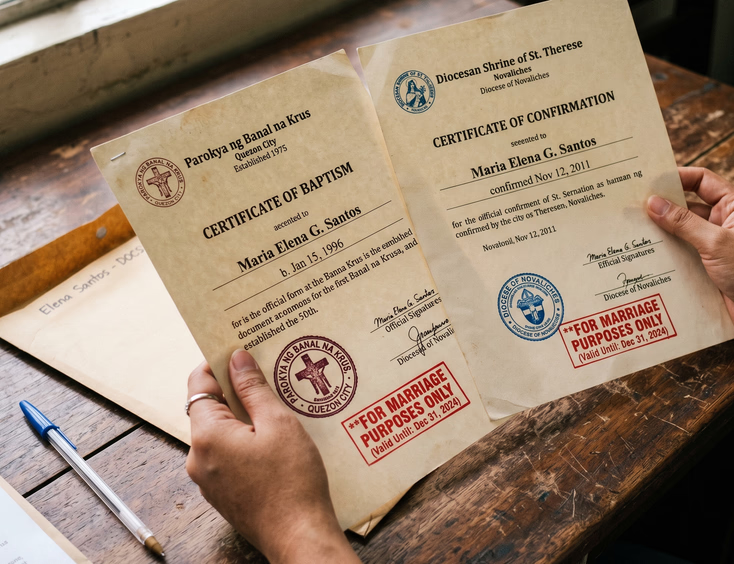
- Baptismal certificates with the annotation "For Marriage Purposes," valid for six months
- Confirmation certificates with the same "For Marriage Purposes" annotation and six-month validity
- Pre-Marriage Counseling certificate from your Local Civil Registrar Office (required for the marriage license)
- Pre-Cana seminar certificate (required by the church, separate from the civil seminar)
- Canonical interview with the parish priest
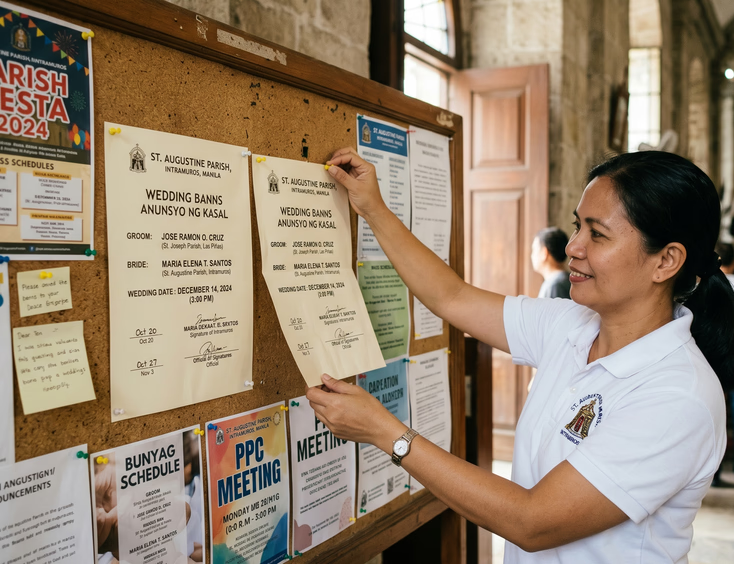
- Wedding banns published for three consecutive Sundays at both parishes
- List of principal sponsors with full names and addresses
- Confession before the wedding (required by most priests)
Some parishes add requirements. If either partner lived abroad for six months or more, the church may ask for a Certificate of Freedom to Marry. Mixed-faith marriages require clearance from the Archdiocesan Chancery Office. Widowed applicants submit the former spouse's death certificate. Couples with a previous civil marriage present a registered marriage contract.
Each document has a different source, a different processing time, and a different validity window. Your coordinator maps all of these onto a single timeline so you know when to request each one.
The Marriage License
Both partners must appear in person at the Local Civil Registrar to file the marriage license application. The license takes 10 days to process and remains valid for 120 days.
That 120-day window creates a scheduling constraint. Apply too early and the license expires before your wedding date. Apply too late and you run out of processing time.
Your coordinator calculates the application date based on your wedding date and builds a buffer for delays. They remind you of the filing deadline and confirm you have every supporting document ready before you visit the registrar.
OFW couples face a tighter squeeze. You need to schedule your flight home with enough lead time to file the application, wait for processing, and still hold the wedding within the 120-day window. Your coordinator helps you map out that timeline months in advance. For more on this, read our guide on working with your wedding coordinator remotely as an overseas Filipino couple.
Baptismal and Confirmation Certificates
Both you and your partner need baptismal and confirmation certificates from the parishes where you received those sacraments. Each certificate must carry the annotation "For Marriage Purposes" and remains valid for six months.
Two common problems come up here.
Older parishes without digital records. Some smaller or provincial parishes store records in handwritten ledgers. Requesting a certificate from these parishes takes longer because staff search through physical books. Your coordinator factors in extra processing time if your parish falls into this category.
Submission deadlines vary by church. Some parishes require these certificates two to three months before the wedding. Others accept them closer to the date. Your coordinator confirms the specific deadline with your chosen church and reminds you when to make the request.
The Canonical Interview
The parish priest or an assigned assistant conducts a canonical interview with both partners one to two months before the wedding. The interview assesses your readiness for the sacrament of marriage.
Each parish runs the interview differently. Some provide a questionnaire in advance. Others conduct it as a conversation. The priest may interview you together, then speak with each of you separately. Topics include your understanding of Catholic marriage, permanence, fidelity, and openness to children.
Your coordinator schedules the canonical interview, confirms the date with the parish office, and reminds you of any documents you need to bring. If your chosen church requires a pre-canonical interview before the formal canonical interview, your coordinator tracks both appointments.
The Pre-Cana Seminar
The Pre-Cana seminar is a marriage preparation program required by the Catholic Church. It covers communication, finances, intimacy, conflict resolution, family life, and the spiritual meaning of marriage. Both partners must attend together.
Seminars run as a full-day session or a two-day weekend retreat, depending on the parish. Costs range from ₱500 to ₱3,000 per couple. Some parishes offer the seminar for free.
The Pre-Cana seminar is separate from the civil Pre-Marriage Counseling required by the Local Civil Registrar for your marriage license. You need both certificates. Couples often confuse the two or assume one replaces the other.
Your coordinator:
- Identifies Pre-Cana schedules at your parish or nearby parishes
- Confirms whether your church accepts certificates from other parishes or organizations
- Checks if an online Pre-Cana option is available and accepted by your wedding church
- Tracks both the Pre-Cana and civil Pre-Marriage Counseling deadlines
- Reminds you to register early since some parishes have limited slots
If you and your partner live abroad, some parishes accept online Pre-Cana seminars or certificates from Catholic organizations in your country of residence. Your coordinator confirms acceptance with your wedding parish before you enroll.
Wedding Banns
Wedding banns are public announcements of your coming marriage, posted at the parishes of both the bride and the groom for three consecutive Sundays before the wedding. Some parishes also require ID photos posted alongside the banns.
Your coordinator:
- Obtains the banns forms from the wedding church after the canonical interview
- Delivers or sends the forms to each partner's home parish
- Tracks the three-Sunday posting period
- Collects the signed permission and published banns from both parishes
- Returns them to your wedding church before the deadline
This step involves coordination between three parishes: the wedding church, the bride's parish, and the groom's parish. If any parish delays the posting, the three-week countdown resets. Your coordinator follows up with each parish to keep the timeline on track.
The Sponsor List
The church requires a complete list of principal sponsors with full names and addresses. Some parishes limit the number of principal sponsors and charge a fee if you exceed the limit.
Your coordinator:
- Collects full names, addresses, and contact details from each sponsor
- Confirms the parish's sponsor limit
- Formats and submits the list to the parish office
- Follows up on any corrections or additions
The sponsor list feeds into the marriage certificate, so accuracy matters. A misspelled name on the marriage certificate requires a correction process after the wedding. Your coordinator double-checks every name before submission.
Managing your sponsors goes beyond paperwork. Each principal and secondary sponsor plays a role during the ceremony. Read our article on why managing the wedding entourage is the hardest job at a Filipino wedding and how coordinators handle it for the full picture.
Confession
Most priests ask both partners to go to confession before the wedding. Some churches schedule confession a week before the ceremony. Others offer it on the wedding day itself, before the rites begin.
Your coordinator confirms whether your church requires confession, when it's scheduled, and whether you need to arrange it separately. If your wedding falls on a day when confession isn't available at the church, your coordinator helps you schedule it at another parish in advance.
Parish-Specific Rules You Won't Find Online
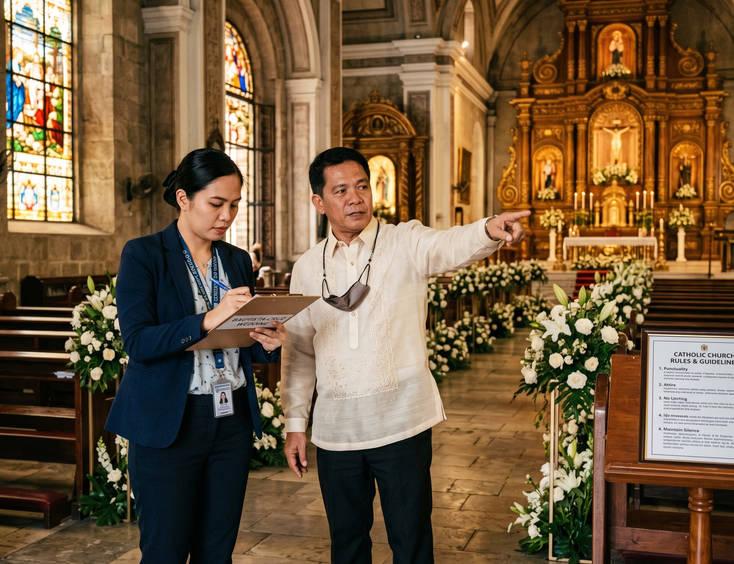
Every parish adds its own rules on top of the standard requirements. These details rarely appear on church websites or social media pages. Your coordinator learns them through direct communication with the parish office.
Examples of parish-specific rules:
- Flower restrictions. Some churches allow only potted fresh flowers, not artificial ones.
- Music restrictions. Certain parishes prohibit non-liturgical songs during the ceremony.
- Entourage limits. A parish may cap your processional at a specific number of pairs.
- Punctuality penalties. Ceremonies that start late may be shortened to avoid overlapping with the next scheduled event.
- Photography rules. Some churches restrict flash photography during the liturgy or limit where videographers can stand.
- Decoration rules. Confetti, petals thrown along the aisle, and certain aisle runners may be prohibited.
Your coordinator visits the parish office, asks about these policies, and builds them into your planning documents. You avoid surprises on the wedding day because your coordinator flagged restrictions months earlier.
The Timeline a Coordinator Builds
A coordinator maps every church requirement onto a master timeline. A typical schedule looks like this:
Six months before the wedding:
- Visit the parish office to reserve the wedding date
- Request baptismal and confirmation certificates
- Order PSA birth certificates and CENOMAR online
- Schedule the canonical interview
Four to five months before:
- Attend the canonical interview
- Register for the Pre-Cana seminar
- Attend the civil Pre-Marriage Counseling at the Local Civil Registrar
Three to four months before:
- Attend the Pre-Cana seminar
- Submit baptismal and confirmation certificates to the parish
- Begin collecting sponsor names and addresses
Two to three months before:
- File the marriage license application (both partners must be present)
- Submit the sponsor list to the parish
- Deliver wedding banns forms to both home parishes
One month before:
- Confirm banns have been posted for three consecutive Sundays
- Collect signed banns and return them to the wedding church
- Schedule confession
- Confirm all documents are complete with the parish office
One to two weeks before:
- Final confirmation with the parish coordinator
- Rehearsal at the church
- Confirm ceremony logistics (arrival time, entourage order, ritual assignments)
Your coordinator owns this timeline. They send reminders, track progress, and flag anything that falls behind schedule.
Civil Wedding Requirements Are Simpler
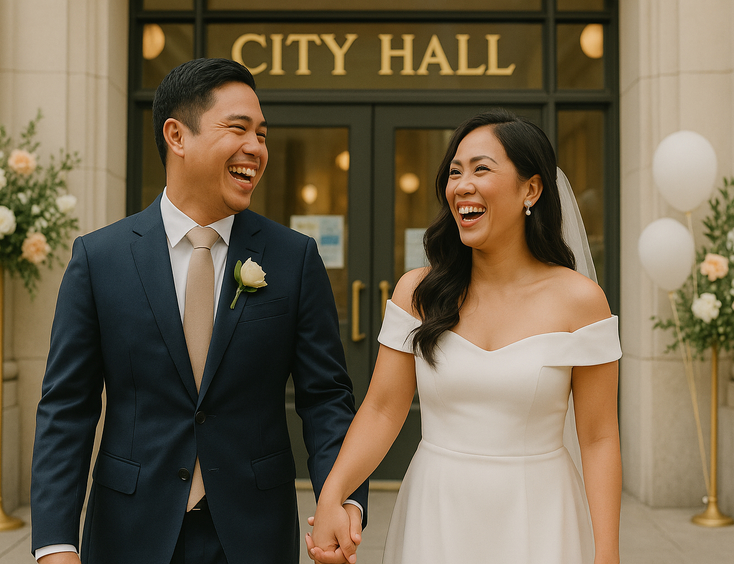
If you're considering a civil ceremony instead, the paperwork is lighter. You skip the church-specific requirements: no baptismal certificates, no canonical interview, no Pre-Cana, no wedding banns. You still need a marriage license, PSA documents, and civil Pre-Marriage Counseling.
A coordinator helps with civil weddings too, especially if you're adding a reception and a program. Read our guide on whether you need a wedding coordinator for a civil wedding in the Philippines.
Let a Coordinator Handle the Paperwork
Church requirements involve multiple offices, overlapping deadlines, and parish-specific rules that change without notice. A coordinator turns that complexity into a checklist you follow step by step.
For the broader picture of what planners and coordinators handle beyond church paperwork, read our complete guide to hiring a wedding planner or coordinator in the Philippines.
Ready to find a coordinator who knows the Catholic church wedding process inside out? Browse our directory of wedding planners and coordinators in the Philippines to compare profiles and send inquiries.
Still Searching for a Right Match?
Find Your Perfect Wedding Supplier Today!
Discover trusted wedding suppliers across the Philippines in our complete directory. Compare services and connect with the ones that fit your dream celebration.
Browse Wedding SuppliersFeatured Blog Posts

Filipino Wedding Entourage - Roles, Order of March, and Modern Etiquette
6 mins readCivil Weddings in the Philippines - Requirements, Costs, and Step-by-Step Process
9 mins readCivil Wedding Requirements in the Philippines - Complete Checklist
6 mins readCost of Wedding in the Philippines - 5 Essential Things You Need to Know
7 mins readPrincipal Sponsors (Ninong/Ninang) - How Many, How to Ask, What They Really Do
4 mins readVeil, Cord, Candle & Coins - Roles, Options, and When They Happen
4 mins readEntourage for a Traditional Pinoy Wedding - Complete Roles and Guide
6 mins readComplete List of Civil Wedding Requirements in the Philippines
8 mins readHow to Choose Wedding Ninongs and Ninangs - Ask Yourself These 3 Important Questions
5 mins read