


What Does a Wedding DJ Actually Do at a Filipino Wedding Reception
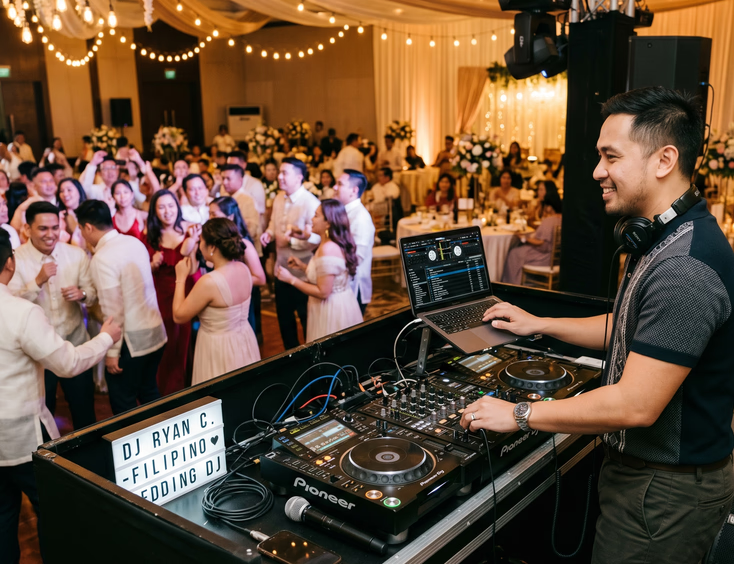
Most couples know they need a wedding DJ. Few know what that DJ does beyond playing music. At a Filipino wedding reception, the DJ's job spans sound engineering, program coordination, crowd management, and split-second music cues for over a dozen traditions and segments.
This is the person who keeps your 4-hour reception moving without dead air, awkward silences, or volume problems. Understanding the full scope of the role helps you hire the right wedding DJ for your Filipino celebration.
Managing the Sound for Your Entire Reception
Your DJ controls every sound your guests hear from the moment they walk into the venue. That includes background music during cocktails, microphone levels for speeches and toasts, audio playback for your SDE video, and the volume balance between conversation-friendly segments and dance-floor moments.
Filipino wedding receptions shift between quiet and loud multiple times in a single night. Your guests need to hear the best man's toast without feedback. Ten minutes later, the same speakers need to fill the room for the first dance. Your DJ adjusts EQ settings, microphone gain, and speaker output for each transition.
A venue's built-in sound system cannot do this on its own. Someone needs to operate it, monitor it, and troubleshoot it in real time. That person is your DJ. If your venue includes speakers and you are wondering whether that is enough, read our breakdown on whether you need a wedding DJ if your venue has a sound system.
Coordinating With Your Emcee and Wedding Planner
Your DJ does not work in isolation. A Filipino wedding reception involves tight coordination between the DJ, the emcee, and the wedding coordinator. These three people run your program together.
The emcee announces each segment. The coordinator signals when the next segment is ready. The DJ plays the corresponding track, adjusts the volume, and manages transitions. If the emcee calls the newlyweds for their first dance, your DJ needs that song cued and ready within seconds. If the coordinator signals a 10-minute delay because the photo booth line is long, your DJ fills that gap with background music that keeps the energy alive without competing with conversation.
Before the wedding day, your DJ should attend a planning meeting or at least a call with your emcee and coordinator. They review the program flow, confirm song choices for each segment, and agree on cue signals. A DJ who skips this meeting will spend your reception guessing. Some couples ask their DJ to handle emcee duties too. That setup has tradeoffs worth considering, and we cover them in our guide on whether your wedding DJ can also be your emcee.
Cueing Music for Filipino Wedding Traditions
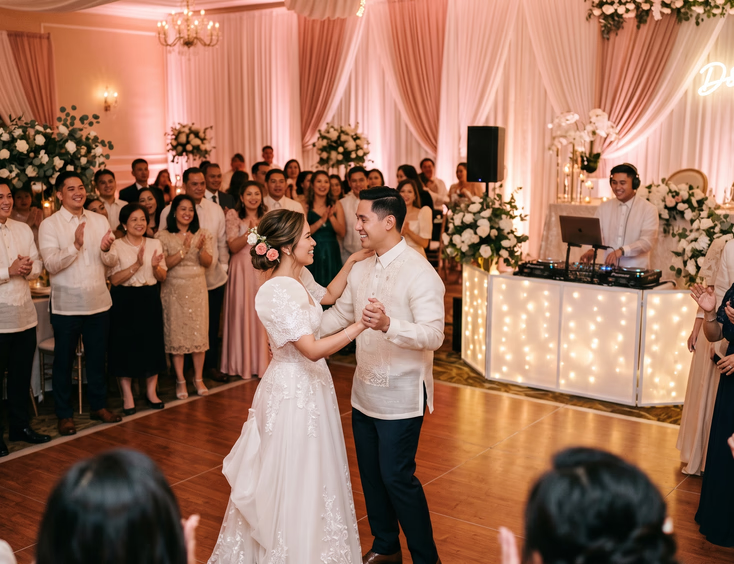
Filipino receptions follow a specific sequence of traditions, and each one requires a precise music cue. Your DJ manages the soundtrack for all of them.
Grand entrance. You and your entourage walk into the reception to a high-energy track. Your DJ times the song to match your entrance choreography if you have one. The volume, the beat drop, the moment you step through the doors: your DJ controls all of it.
First dance. Your DJ plays your chosen song at the right moment, fades it in clean, and can edit the track live if you want a shorter version. Some couples rehearse their first dance to a specific cut of the song. Your DJ matches that version.
Parent dances. The father-daughter and mother-son dances need smooth transitions from the first dance. Your DJ crossfades between tracks so there is no awkward pause while the next pair takes the floor.
Money dance (sabitan ng pera). Guests pin cash on the couple while upbeat music plays. Your DJ keeps the energy high and the tempo steady for 10 to 15 minutes while the line of guests cycles through.
Cake cutting and champagne toast. Your DJ plays a short musical accent or a chosen song while you cut the cake, then adjusts for the toast segment where the microphone takes priority over the music.
Bouquet and garter toss. Two separate moments, each with their own track. Your DJ builds anticipation with the music, times the toss to a beat, and keeps the crowd engaged between the two tosses.
SDE video playback. Your same-day edit video plays through the venue's speakers. Your DJ manages the audio feed from the videographer's laptop, balances the volume, and makes sure the video audio comes through clean without distortion.
Open dancing. After the formal program wraps, your DJ shifts into party mode. This is where reading the crowd matters most. Your DJ watches the dance floor and adjusts the genre mix based on who is dancing and who is sitting down.
Reading the Room and Managing Energy
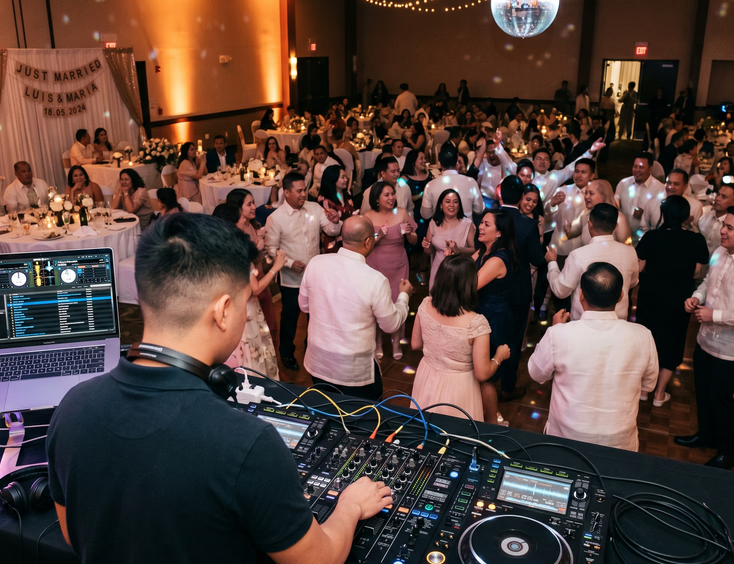
A playlist on shuffle cannot do what a live DJ does. Your DJ watches the room and makes decisions in real time.
Guests sit down after dinner. Energy drops. Your DJ recognizes the shift and transitions to a familiar OPM hit or a crowd-favorite dance track to pull people back to the floor. A group of titos and titas fills the dance floor during a classic song. Your DJ extends that vibe with two more tracks from the same era before transitioning to something for the younger guests.
This is the difference between a DJ and a sound system. A sound system plays the next track on the list. A DJ makes a judgment call every three to four minutes about what the room needs. Filipino receptions mix multiple generations, from lolas and lolos to college friends. Your DJ balances music preferences across all of them throughout the night.
Setting Up and Testing Equipment
Your DJ arrives at the venue hours before your guests do. Setup includes positioning speakers for optimal coverage, running cables, setting up the DJ console and laptop, testing microphones, and doing a sound check with the venue's acoustics.
Every venue sounds different. A garden reception in Tagaytay handles bass differently than a hotel ballroom in Makati. Your DJ adjusts speaker placement, EQ settings, and volume levels based on the room size, ceiling height, and surface materials. A professional DJ tests the setup with music and a microphone before the first guest arrives.
If your DJ brings lighting (uplights, dance floor lights, or a monogram projector), that setup happens during this window too. Some wedding DJ suppliers in the Philippines include lighting as part of their package. Others charge it as an add-on.
Handling Problems You Will Not Notice
Equipment fails at weddings. A microphone cuts out during a speech. A laptop freezes mid-song. A cable comes loose when someone trips over it near the DJ booth. Your DJ troubleshoots these problems on the spot so your guests never notice.
A professional DJ carries backup gear: an extra microphone, a backup laptop or USB drive with the playlist, spare cables, and adapters for different audio inputs. The videographer needs to plug into the sound system for the SDE playback. The coordinator needs a wireless mic for announcements. Your DJ manages all of these inputs through a single mixing board.
You will not see most of this work. That is the point. A good wedding DJ solves problems before they become visible to you or your guests.
What a Wedding DJ Does Not Do
Your DJ is not your event planner. A DJ follows the program your coordinator provides. If your program has gaps or unclear transitions, your DJ can fill time with music, but the structure of the reception is not the DJ's responsibility.
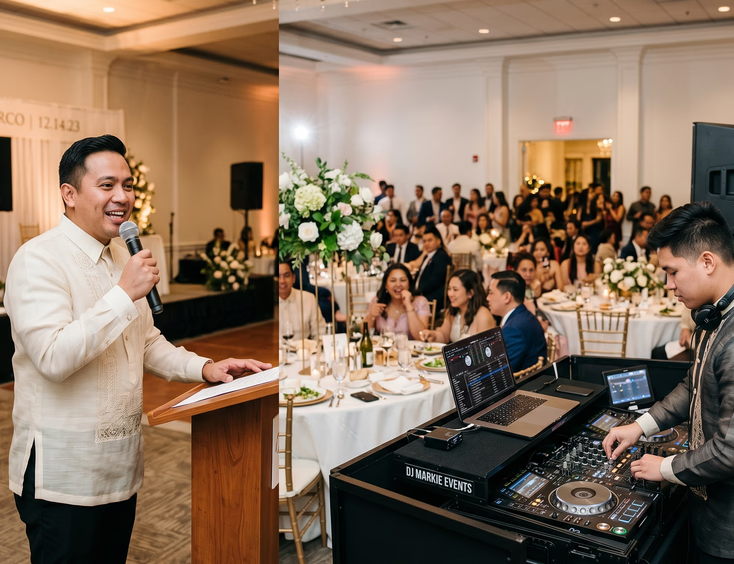
Your DJ is not your emcee by default. Some DJs offer emcee services, but the two roles require different skills. Mixing tracks and hosting a crowd demand separate attention. Combining them works for some DJs and falls flat for others.
Your DJ is not a sound system rental. You hire a DJ for their skill, judgment, and preparation. The equipment is part of the package, but the value comes from the person operating it. This is the core distinction between an events DJ and a wedding specialist DJ.
Hiring a DJ Who Can Handle All of This
A wedding DJ at a Filipino reception juggles music, sound engineering, coordination, and crowd management for 4 to 6 hours straight. The traditions, the multi-generational guest list, and the detailed program flow make Filipino weddings one of the more demanding gigs for any DJ.
Ask your DJ candidates about their experience with Filipino receptions. Ask how they coordinate with emcees and planners. Ask about their backup equipment. The answers tell you whether they can handle the full scope of the job.
Browse our directory of wedding DJs in the Philippines to find professionals who specialize in Filipino wedding receptions.
Still Searching for a Right Match?
Find Your Perfect Wedding Supplier Today!
Discover trusted wedding suppliers across the Philippines in our complete directory. Compare services and connect with the ones that fit your dream celebration.
Browse Wedding SuppliersFeatured Blog Posts

Filipino Wedding Entourage - Roles, Order of March, and Modern Etiquette
6 mins readCivil Weddings in the Philippines - Requirements, Costs, and Step-by-Step Process
9 mins readCivil Wedding Requirements in the Philippines - Complete Checklist
6 mins readCost of Wedding in the Philippines - 5 Essential Things You Need to Know
7 mins readPrincipal Sponsors (Ninong/Ninang) - How Many, How to Ask, What They Really Do
4 mins readVeil, Cord, Candle & Coins - Roles, Options, and When They Happen
4 mins readEntourage for a Traditional Pinoy Wedding - Complete Roles and Guide
6 mins readComplete List of Civil Wedding Requirements in the Philippines
8 mins readHow to Choose Wedding Ninongs and Ninangs - Ask Yourself These 3 Important Questions
5 mins read