


Can Your Wedding DJ Also Be Your Emcee: What Filipino Couples Should Know
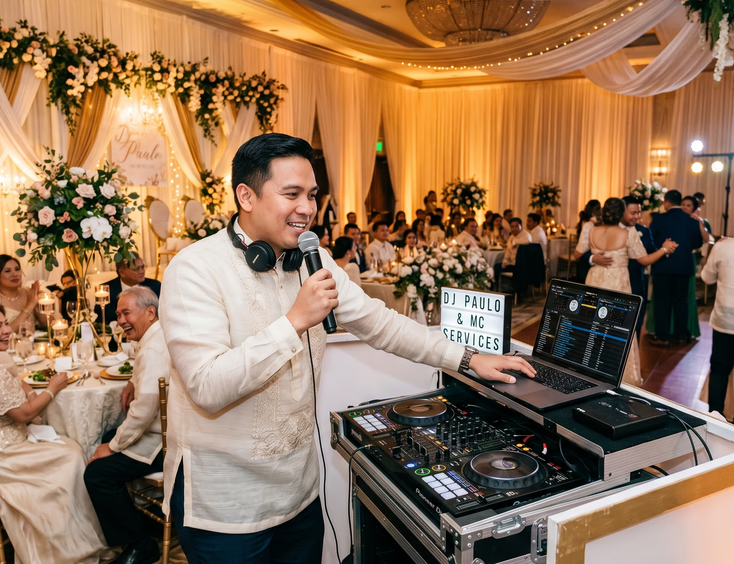
Some Filipino couples book one person to handle both DJ and emcee duties at their reception. The logic makes sense: fewer suppliers to coordinate, one less line item on the budget, and a single person controlling both the music and the microphone.
The arrangement works in some situations and falls apart in others. Before you combine both roles into one hire, understand what each role demands and where the overlap creates problems. For a broader look at the DJ hiring process, start with our guide on hiring a wedding DJ in the Philippines.
What a Wedding DJ Does During the Reception
Your DJ operates the sound system, manages music playback, and controls audio for every segment of the reception. That includes cueing tracks for the grand entrance, first dance, parent dances, money dance, SDE video, bouquet toss, garter toss, and open dancing.
Between segments, your DJ adjusts microphone levels for speakers and toasters, balances audio inputs from the videographer's laptop during the SDE, monitors volume across the room, and crossfades between tracks so transitions feel seamless.
This work happens at the console. Your DJ watches a laptop screen, adjusts the mixer, monitors speaker output, and listens through headphones to preview the next track. Their hands stay on the equipment for most of the night. For a full breakdown of these responsibilities, read our guide on what a wedding DJ does at a Filipino wedding reception.
What a Wedding Emcee Does During the Reception
Your emcee stands in front of your guests and runs the program. They announce each segment, introduce speakers, narrate key moments, keep the energy alive between transitions, and guide the crowd through traditions.
A Filipino wedding emcee does more than read a script. They crack jokes that land with titos and titas. They calm a nervous best man before his toast. They stretch a segment when the coordinator signals a delay. They pronounce every name in the entourage without stumbling. They hold the attention of 100 to 300 guests across multiple generations for 4 to 6 hours.
This work happens on the floor, near the stage, beside the couple, in front of the crowd. The emcee moves around the venue, makes eye contact with guests, and reacts to what is happening in the room. Their attention stays on people, not equipment.
Where the Two Roles Conflict
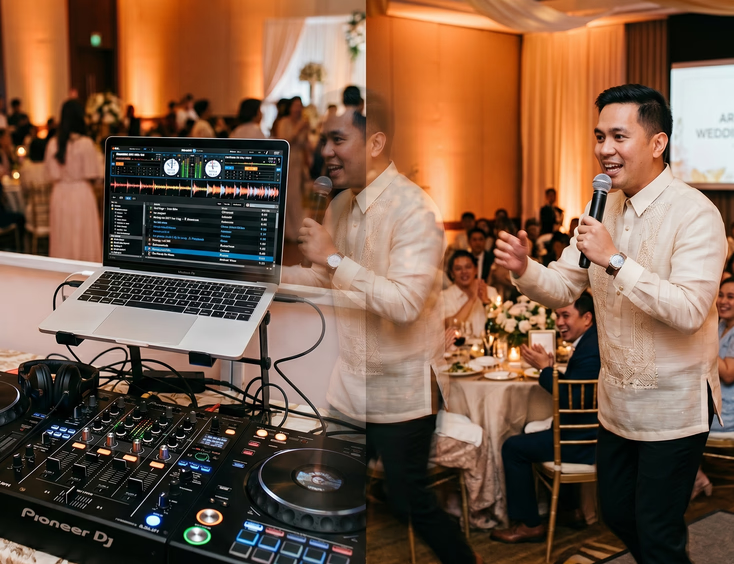
The DJ works at the console. The emcee works on the floor. These two positions pull a person in opposite directions throughout the night.
Physical location. Your DJ needs to stand behind the mixer to cue tracks, adjust levels, and manage inputs. Your emcee needs to stand near the dance floor or stage to address the crowd. A DJ-emcee toggles between the console and the microphone all night. Every time they step away from the mixer to address the crowd, nobody monitors the audio. Every time they return to the console to cue a track, the crowd loses their host.
Split attention. Your emcee introduces the father-daughter dance. While speaking to the crowd, they also need to cue the song on the laptop, set the right volume, and fade in the track at the precise moment. Doing both at once means one task gets less attention. The introduction feels rushed, or the song starts a beat too late.
Crowd engagement suffers. A dedicated emcee watches the room during every segment. They notice when guests look confused about what is happening next. They spot the lola who needs help finding her table. They see the bridesmaids gathering for the bouquet toss and start building excitement. A DJ-emcee looking at a laptop screen misses these moments.
Audio management gaps. During toasts and speeches, your DJ monitors microphone levels and adjusts gain in real time. If the DJ is also the one introducing the next toaster, nobody sits at the mixer to catch feedback or fix a low mic signal. The audio quality dips during the segments that matter most.
Recovery from delays. Filipino wedding programs run behind schedule. The coordinator signals a 15-minute delay. A dedicated emcee fills that time with banter, a quick game, or crowd interaction while the DJ plays background music that supports the mood. A DJ-emcee has to fill dead air with conversation while also selecting and mixing the right tracks. One of those tasks gets shortchanged.
When a DJ-Emcee Combination Works
The dual role succeeds under specific conditions. Not every reception needs separate people for each job.
Short, simple programs. A reception with 6 to 8 segments (entrance, dinner, toasts, first dance, open dancing) has fewer transitions and less coordination. The DJ-emcee has breathing room between segments to switch between roles without rushing.
Small guest counts. A reception with 50 to 80 guests in a restaurant or garden venue requires less crowd management. The emcee does not need to project personality across a 300-person ballroom. A DJ-emcee can address a smaller room from near the console without losing connection.
Casual reception format. Some couples skip the formal program structure and host a relaxed party with dinner, a few toasts, and dancing. The emcee role becomes light: a few announcements between songs. A DJ handles that without sacrificing audio management.
Experienced DJ-emcees. Some professionals have spent years doing both roles at Filipino weddings. They develop systems: pre-programmed transitions that run on autopilot while they address the crowd, wireless mic setups that let them move from the console to the floor, and rehearsed timing that minimizes the gap between roles. These DJs charge premium rates because the skill combination is rare and hard to execute well.
When You Need Separate Professionals
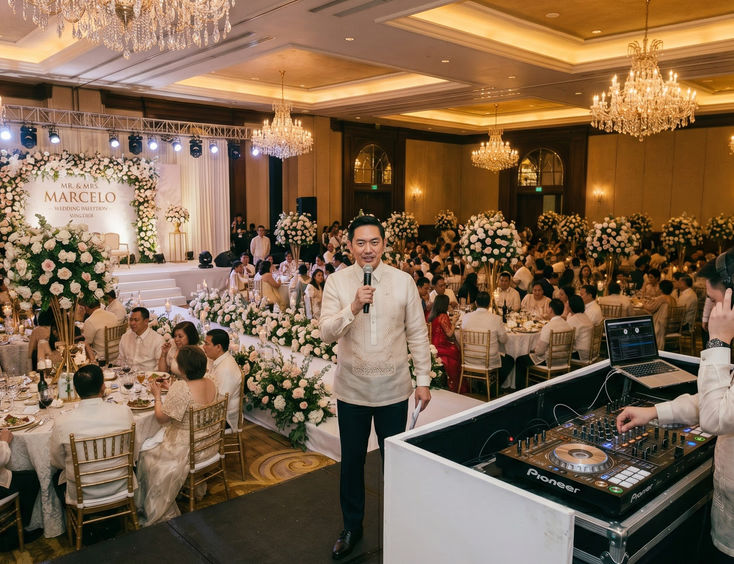
Book a dedicated emcee and a separate DJ if your reception matches two or more of these conditions:
- Guest count above 120
- Full formal program with 10 or more segments
- Filipino traditions including money dance, SDE, parent dances, bouquet and garter toss
- Multiple speeches and toasts from the entourage
- Large venue requiring strong stage presence from the emcee
- Complex sound setup with multiple microphone inputs and audio feeds
At this scale, the coordination between emcee and DJ becomes a two-person operation. Your emcee announces the money dance. Your DJ plays the track and manages the volume for 10 to 15 minutes while the line of guests cycles through. Your emcee keeps the crowd entertained with commentary and encouragement. Both people work at the same time on different tasks. One person cannot do both with the same quality.
Cost Comparison
Combining both roles saves money. Hiring separate professionals costs more but delivers a different level of execution.
| Setup | Typical Cost Range |
|---|---|
| DJ-emcee (one person) | ₱15,000 to ₱40,000 |
| Separate DJ + separate emcee | ₱25,000 to ₱80,000 combined |
The price gap is significant. For couples on a tight budget, a DJ-emcee frees up ₱10,000 to ₱40,000 for other wedding expenses. That money covers a better photographer, additional floral arrangements, or a larger food spread.
The question is whether the savings affect guest experience. A 60-person garden reception with a casual format loses nothing from a DJ-emcee setup. A 250-person hotel ballroom reception with a 15-segment program feels the difference when one person manages both roles.
How to Evaluate a DJ-Emcee
If you decide to hire one person for both roles, vet them with these questions.
How do you handle transitions between hosting and mixing? Listen for specific systems: pre-programmed cue points, a wireless mic that lets them move between the console and the floor, a tablet controller that gives them remote access to the playlist. Vague answers ("I just go back and forth") signal someone who wings it.
Can I watch you work a live wedding? Seeing a DJ-emcee at an actual reception reveals whether they manage both roles smoothly or scramble between them. A demo reel only shows highlights.
Who manages the sound during your emcee segments? If nobody monitors the mixer while the DJ-emcee addresses the crowd, audio quality drops during announcements and toasts. Some DJ-emcees pre-set levels before stepping away. Others bring an assistant who watches the board. Ask how they handle it.
What happens if the program runs 30 minutes behind? A DJ-emcee needs to fill time with crowd engagement while also adjusting the music plan for a compressed timeline. Their answer tells you whether they have handled this before or are guessing.
How many weddings have you worked as both DJ and emcee in the past year? This tells you whether the dual role is their specialty or an occasional add-on. A DJ who emcees twice a year is not the same as someone who does it every weekend.
The Coordination Factor
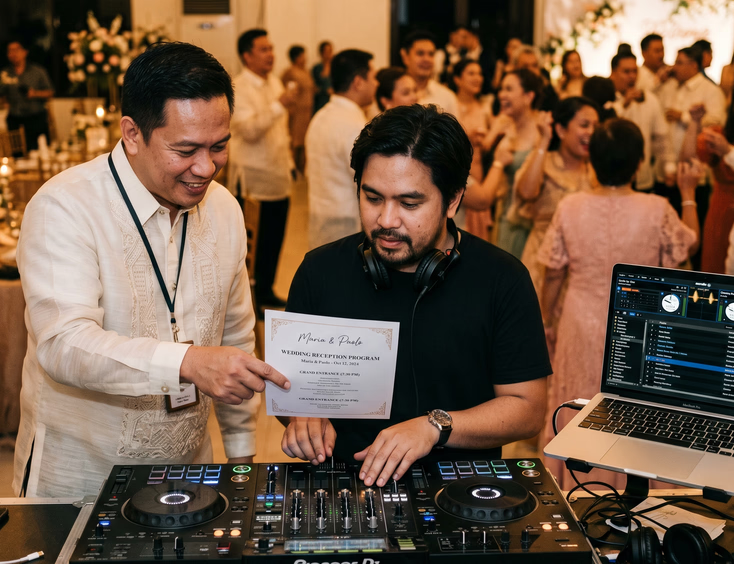
A point that couples overlook: when you hire separate professionals, your DJ and emcee coordinate with each other. They develop a rhythm during the planning meeting. The emcee signals the DJ before each announcement. The DJ watches the emcee for cues. Two people cover each other's gaps.
When one person fills both roles, that coordination layer disappears. Nobody watches the room while the DJ-emcee focuses on the mixer. Nobody monitors the crowd while the DJ-emcee speaks. The safety net of two professionals backing each other up does not exist.
This matters most during high-stakes moments. The grand entrance song needs to hit as the doors open while the emcee builds the crowd's energy. The SDE video needs clean audio while the emcee sets up the emotional context. A wedding specialist DJ working alongside a dedicated emcee handles these moments with a cushion. A DJ-emcee handles them alone.
Making the Decision
Map your reception program on paper. Count the segments. Note where the emcee speaks while the DJ needs to cue music at the same time. If those overlapping moments are fewer than five, a skilled DJ-emcee handles it. If the overlaps stack up across 10 or more transitions, separate professionals give you cleaner execution.
Consider your venue size, your guest count, and the formality of your program. A casual 70-person reception pairs well with a DJ-emcee. A formal 200-person celebration with every Filipino tradition in the program needs two people.
Whatever you decide, book someone with proven experience at Filipino wedding receptions. The traditions, the multi-generational crowd, and the detailed program flow demand a professional who has handled it before.
Browse our directory of wedding DJs in the Philippines to find professionals who offer DJ-only, emcee-only, or combined packages for your reception.
Still Searching for a Right Match?
Find Your Perfect Wedding Supplier Today!
Discover trusted wedding suppliers across the Philippines in our complete directory. Compare services and connect with the ones that fit your dream celebration.
Browse Wedding SuppliersFeatured Blog Posts

Filipino Wedding Entourage - Roles, Order of March, and Modern Etiquette
6 mins readCivil Weddings in the Philippines - Requirements, Costs, and Step-by-Step Process
9 mins readCivil Wedding Requirements in the Philippines - Complete Checklist
6 mins readCost of Wedding in the Philippines - 5 Essential Things You Need to Know
7 mins readPrincipal Sponsors (Ninong/Ninang) - How Many, How to Ask, What They Really Do
4 mins readVeil, Cord, Candle & Coins - Roles, Options, and When They Happen
4 mins readEntourage for a Traditional Pinoy Wedding - Complete Roles and Guide
6 mins readComplete List of Civil Wedding Requirements in the Philippines
8 mins readHow to Choose Wedding Ninongs and Ninangs - Ask Yourself These 3 Important Questions
5 mins read