


Do You Really Need a Wedding DJ if Your Venue Has a Sound System
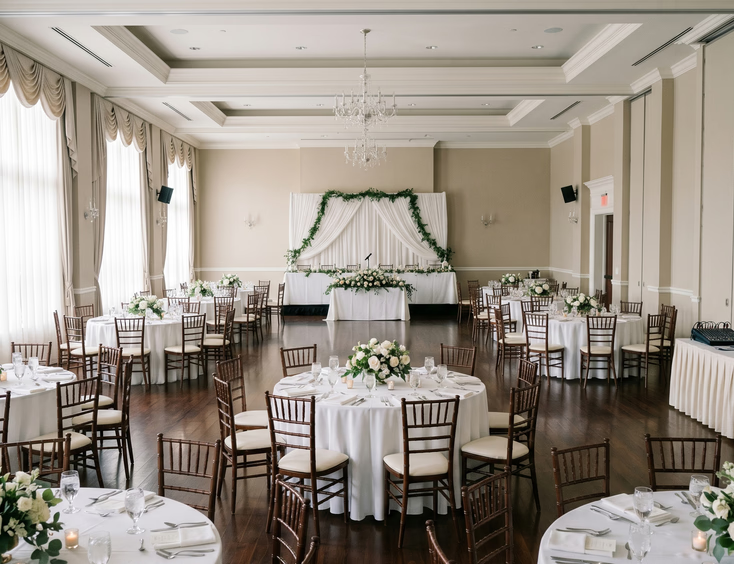
Your venue includes a sound system. The sales coordinator mentioned it during the site visit. Speakers mounted on the walls, a basic mixer, two wireless microphones. You are now wondering if you can skip hiring a DJ and save ₱15,000 to ₱30,000 from your wedding budget.
The short answer: a sound system and a wedding DJ solve two different problems. A sound system is hardware. A DJ is the person who operates that hardware, manages your music, coordinates your program flow, and makes real-time decisions about what your guests hear for 4 to 6 hours straight.
Before you cut the DJ line item from your budget, understand what your venue's sound system can and cannot do for your Filipino wedding reception. For a full overview of the DJ hiring process, start with our guide on hiring a wedding DJ in the Philippines.
What Your Venue's Sound System Includes
Most wedding venues in Metro Manila, Tagaytay, Cebu, and other popular locations include a basic sound setup as part of the rental. The typical package covers wall-mounted or ceiling-mounted speakers, a basic mixing board, one to two wireless microphones, and an auxiliary input for a phone or laptop.
Some higher-end hotel ballrooms include a more advanced setup with stage monitors, a dedicated sound booth, and a technician on standby. Garden venues and restaurant function rooms tend to offer simpler setups with fewer speakers and limited coverage.
The key distinction: your venue provides equipment. The equipment sits there until someone operates it. A speaker does not decide when to lower the volume for a toast. A mixer does not crossfade between your first dance song and the father-daughter dance. An aux cable plugged into a phone does not adjust the EQ when the emcee's voice feeds back through the monitors.
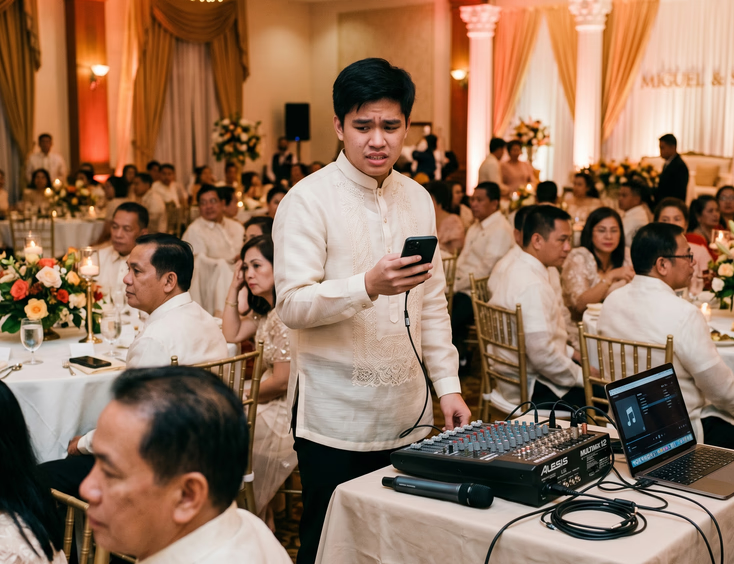
What a Sound System Cannot Do Without a DJ
Your venue's sound system handles playback. Plug in a device, press play, and sound comes out of the speakers. A Filipino wedding reception demands far more than playback.
Transition between segments. A typical Filipino reception moves through 10 to 15 segments: grand entrance, opening prayer, toasts, first dance, parent dances, money dance, games, SDE video, bouquet toss, garter toss, cake cutting, open dancing. Each segment needs a specific track cued at the right second. Without a DJ, someone in your entourage is fumbling with a phone, scrolling through a Spotify playlist, and pressing play three seconds too late while 200 guests wait in silence.
Manage microphone levels. Your best man gives a toast. He holds the mic too close and his voice distorts. Your maid of honor speaks next. She holds the mic at her waist and nobody past the third row can hear her. A DJ monitors these levels and adjusts gain in real time. A sound system on its own does nothing to fix this.
Handle the SDE video. Your videographer needs to feed audio from a laptop into the venue's sound system for the same-day edit playback. Someone needs to connect the feed, set the input level, balance the video audio with the room acoustics, and switch back to music after the video ends. This takes a person at the mixer, not a playlist on autoplay.
Read the crowd. Dinner ends. Guests finish eating. The dance floor is empty. A DJ watches this moment and plays a track that pulls people out of their seats. A Spotify playlist moves to the next song in the queue regardless of what is happening in the room. For a full picture of how a DJ manages crowd energy, read our breakdown of what a wedding DJ does at a Filipino wedding reception.
Fill unexpected gaps. Your photo booth runs 20 minutes longer than planned. The cake arrives late. The SDE video is not ready when the coordinator expected it. A DJ fills these gaps with music that keeps the mood alive. A pre-made playlist has no way to respond to schedule changes.
The DIY Playlist Approach and Why It Breaks Down
Some couples plan to connect a phone or laptop to the venue's sound system and run a pre-arranged playlist. This approach looks simple on paper. In practice, it creates problems at every stage of the reception.
Someone has to operate it. You designate a friend or family member to press play, pause, skip, and adjust volume throughout the night. That person now has a job instead of enjoying your wedding. They miss the toasts because they are cueing the next song. They miss the first dance because they are adjusting the volume. They spend 4 hours tethered to a mixer instead of celebrating with you.
Timing falls apart. Your grand entrance track needs to hit the beat drop as you walk through the doors. Your playlist operator does not know the exact second to press play. The song starts too early or too late. The moment you planned for weeks lands flat.
Notifications and interruptions. A phone connected to an aux cable plays every notification sound through the venue speakers. A text message dings over your first dance song. A call comes through and cuts the music. Airplane mode solves this, but someone has to remember to enable it. If the phone locks, the music stops.
No mixing or crossfading. A playlist plays one song, stops, and starts the next. The gap between tracks creates silence that breaks momentum. A DJ crossfades between songs so the energy never drops. The transition from your parent dances into the money dance should feel seamless. A playlist with gaps between tracks cannot deliver that.
No volume management. Your emcee speaks and the background music is too loud. The dinner segment needs soft background volume. The open dancing segment needs full volume. Someone has to walk to the mixer and adjust the level for each change. A DJ makes these adjustments from the console without interrupting the flow.
When a Venue Sound System Is Enough
A venue sound system without a DJ works in a narrow set of situations.
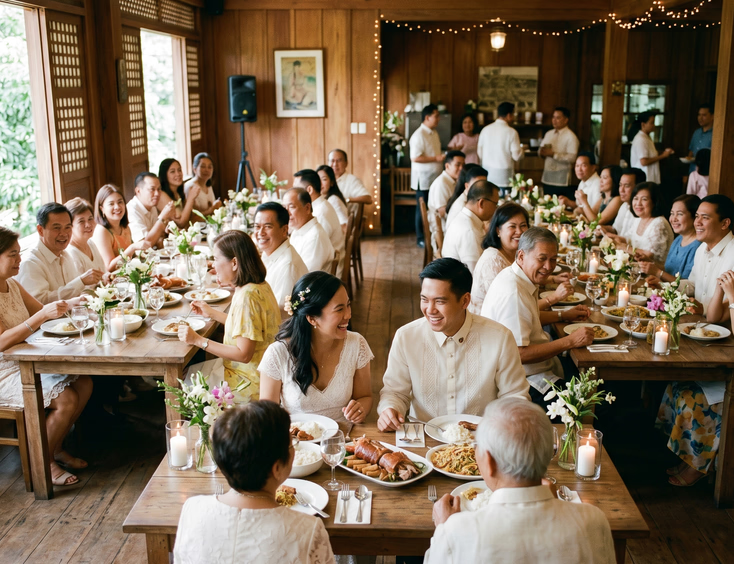
Very small, casual receptions (under 50 guests). An intimate lunch reception at a restaurant with a short program and no formal traditions. You play background music during the meal and skip the structured program flow. The sound system handles background playback and a microphone for a few short speeches.
After-party only. Your formal reception with a DJ ends at 10 PM. You move to a smaller space for an after-party. The venue's system plays a party playlist while guests dance and drink. The stakes are lower and the format is casual.
Ceremony sound only. Some couples use the venue's system for the church or garden ceremony (processional music, microphone for the officiant) and hire a DJ for the reception. The ceremony has fewer audio demands and a simpler flow.
If your reception includes a formal program with Filipino wedding traditions, multiple speeches, an SDE video, and open dancing for 100 or more guests, a sound system alone will not cover it.
The Cost of Skipping a DJ
Couples skip the DJ to save money. The savings look good on a spreadsheet. The consequences show up on the wedding day.
Your coordinator cannot run the program smoothly without someone managing the music and microphones. Your emcee makes announcements into a mic that feeds back because nobody adjusted the gain. Your SDE video plays with distorted audio because the input level was too high. Your grand entrance song starts 10 seconds late. Your open dancing segment fizzles because nobody reads the room and adjusts the playlist.
These moments do not ruin a wedding. But they chip away at the experience you spent months planning. A mid-range wedding DJ in the Philippines costs ₱15,000 to ₱30,000 for 4 to 6 hours of coverage with equipment. That is a fraction of what most couples spend on flowers, food, or photography.
Compare that cost against the value of seamless transitions, clean audio for every speech, professional SDE playback, and a dance floor that stays full past midnight. For most couples, the math favors hiring a professional.
What to Do If Your Budget Is Tight
If you cannot afford a full-service wedding DJ, you still have options that fall between a DIY playlist and a premium DJ package.
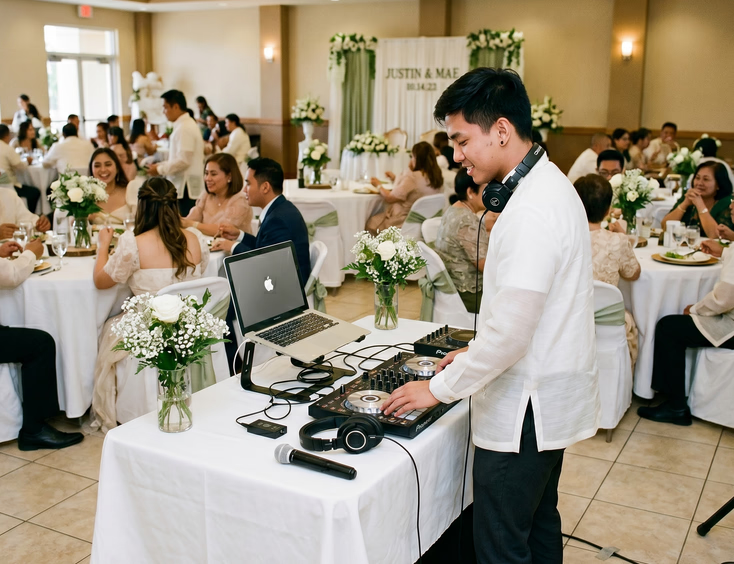
Hire a sound technician. Some companies rent out a technician with the sound system. The tech handles microphone levels, SDE audio, and basic playback. You provide the playlist. This costs less than a full DJ package but gives you a trained person at the mixer.
Book a newer DJ. DJs building their portfolio charge less than established wedding specialists. You get a professional behind the console at a lower rate. Ask for references and watch them at a live event before booking. We explain the differences in our comparison of events DJs vs. wedding specialist DJs in the Philippines.
Split the coverage. Hire a DJ for the formal program (2 to 3 hours) and switch to a pre-made playlist for the after-party. You get professional management for the structured portion and save on the less critical late-night hours.
Negotiate with your venue. Some venues offer a sound technician as an add-on to the rental. Ask what that costs compared to hiring an outside DJ. If the venue tech has experience with weddings, this can work as a budget alternative.
Making the Right Call for Your Reception
Walk through your reception program segment by segment. Count the number of music cues, microphone changes, and audio transitions. If that number is higher than 15, you need someone managing the sound. A playlist on a phone cannot handle that load.
If your reception includes Filipino traditions like the money dance, a formal first dance, parent dances, an SDE video, and open dancing, a professional DJ gives you the coverage and flexibility to keep the night running clean. Your venue's sound system supports the DJ. It does not replace one.
Browse our directory of wedding DJs in the Philippines to find professionals who match your budget and reception style.
Still Searching for a Right Match?
Find Your Perfect Wedding Supplier Today!
Discover trusted wedding suppliers across the Philippines in our complete directory. Compare services and connect with the ones that fit your dream celebration.
Browse Wedding SuppliersFeatured Blog Posts

Filipino Wedding Entourage - Roles, Order of March, and Modern Etiquette
6 mins readCivil Weddings in the Philippines - Requirements, Costs, and Step-by-Step Process
9 mins readCivil Wedding Requirements in the Philippines - Complete Checklist
6 mins readCost of Wedding in the Philippines - 5 Essential Things You Need to Know
7 mins readPrincipal Sponsors (Ninong/Ninang) - How Many, How to Ask, What They Really Do
4 mins readVeil, Cord, Candle & Coins - Roles, Options, and When They Happen
4 mins readEntourage for a Traditional Pinoy Wedding - Complete Roles and Guide
6 mins readComplete List of Civil Wedding Requirements in the Philippines
8 mins readHow to Choose Wedding Ninongs and Ninangs - Ask Yourself These 3 Important Questions
5 mins read