

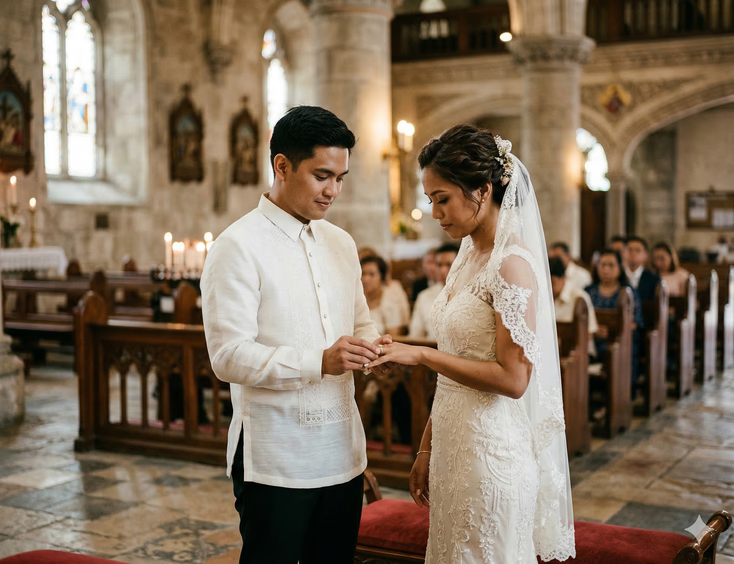
Stackable Wedding Rings: The Modern Filipino Bride's New Favorite Trend
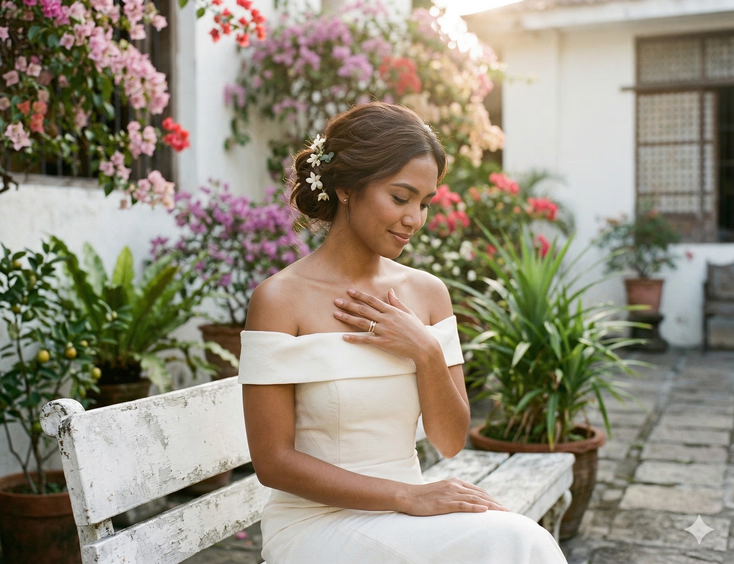
Something has quietly changed about the way Filipino brides think about their wedding rings.
It used to be a single decision: one ring, chosen once, worn forever. The engagement ring went on the finger at the proposal. The wedding band joined it on the wedding day. End of story. The set was complete and stayed complete — the same two rings, in the same configuration, for the rest of the marriage.
That model still exists, and there is nothing wrong with it. But a growing number of Filipino brides in their 20s and 30s are approaching the wedding ring differently — not as a fixed, finished object but as something that grows and evolves alongside the marriage itself. They are building stacks.
A stacked ring set is exactly what it sounds like: multiple rings worn on the same finger simultaneously, layered together to create a combined look that is more interesting, more personal, and more flexible than any single ring could be alone. The concept is not new in Western jewelry culture, but it has arrived in the Philippines with real force over the past few years — driven by social media, by a generation of brides who approach jewelry with more design literacy than their predecessors, and by a fundamental shift in how younger Filipino women think about adornment.
This guide is for Filipino brides who are curious about the stacking trend — what it actually involves, how to do it well, what it costs, where to find the right pieces, and whether it is genuinely right for you or simply an appealing idea that doesn't match your actual life.
What Stacking Actually Means — and What It Doesn't
Before anything else, let's be precise about what a stacked ring set is, because the term gets used loosely in ways that can mislead.
Stacking is:
- Wearing two or more rings on the same finger at the same time
- Combining rings that were designed to work together (a purpose-built stack set) or rings that were curated individually over time
- A deliberate aesthetic choice about how to wear rings — not just how many to buy
Stacking is not:
- Simply wearing an engagement ring and a wedding band together — that is standard bridal practice, not stacking in the trend sense
- Wearing rings on multiple fingers — that is a separate styling choice
- Buying the most rings possible — a thoughtful two-ring stack is more considered and often more beautiful than a chaotic six-ring pile
The distinction matters because the Filipino brides embracing this trend are not doing so impulsively or excessively. They are thinking carefully about combination, proportion, meaning, and wearability. The stack is a curated collection — not an accumulation.
Why Filipino Brides Are Embracing the Stack
The stacking trend has taken hold among Filipino brides for reasons that go beyond aesthetics. Understanding those reasons helps clarify whether the trend is right for you specifically.
It Solves the Engagement Ring and Wedding Band Coordination Problem
One of the most common jewelry frustrations Filipino brides face is the question of how to wear the engagement ring and the wedding band together after the ceremony. Many engagement rings — particularly those with prominent solitaire settings or elaborate side stones — do not sit flush against a standard wedding band. The gap between them, or the way one ring pushes the other at an awkward angle, bothers some brides enormously.
The stacking approach reframes this problem entirely. Instead of trying to find one wedding band that perfectly complements the engagement ring, the bride thinks about her full finger as a compositional space and chooses rings — potentially two, three, or four — that work together as a deliberate group. The engagement ring becomes part of a stack rather than the fixed center of a two-piece set.
It Allows Meaning to Accumulate Over Time
Perhaps the most genuinely Filipino appeal of the stacking approach is the opportunity it creates to add rings at meaningful moments throughout the marriage.
A wedding band on the wedding day. A thin band added on the first anniversary. Another on the fifth. A ring gifted at the birth of a child, or to mark a milestone. Each addition to the stack carries its own story, its own date, its own weight of memory. The finger becomes a kind of wearable diary of the marriage — visible only to the couple, but deeply meaningful to them.
This idea resonates powerfully with Filipino family culture, where objects that carry memory and history are treasured across generations. A stack built over thirty years of marriage tells a story that a single ring, however beautiful, simply cannot.
It Offers Daily Flexibility
A well-designed stack can be worn in different configurations depending on the occasion. Three rings together for a formal event; just the wedding band on an ordinary workday; the delicate pavé band added for a dinner out. This flexibility appeals to Filipino brides who live active, varied lives and want their jewelry to adapt with them rather than impose a single fixed look.
It Is Instagram-Legible
This is a real factor and worth naming honestly. Stacked rings photograph extraordinarily well. The layered texture, the interplay of different metals and finishes, the visual richness of multiple bands on one finger — all of this reads beautifully in the flat-lay photographs and ring shots that Filipino brides share on social media. The stack is a photogenic choice, and there is nothing wrong with finding visual appeal in your jewelry.
The Anatomy of a Good Stack: What Goes Into It
Not all combinations of rings on one finger constitute a good stack. The difference between a deliberately composed stack and a random collection of rings is visible immediately — and the principles behind a good stack are learnable.
Proportion and Width
The most important variable in a stack is the width of the individual rings relative to each other and to the finger wearing them. A few principles:
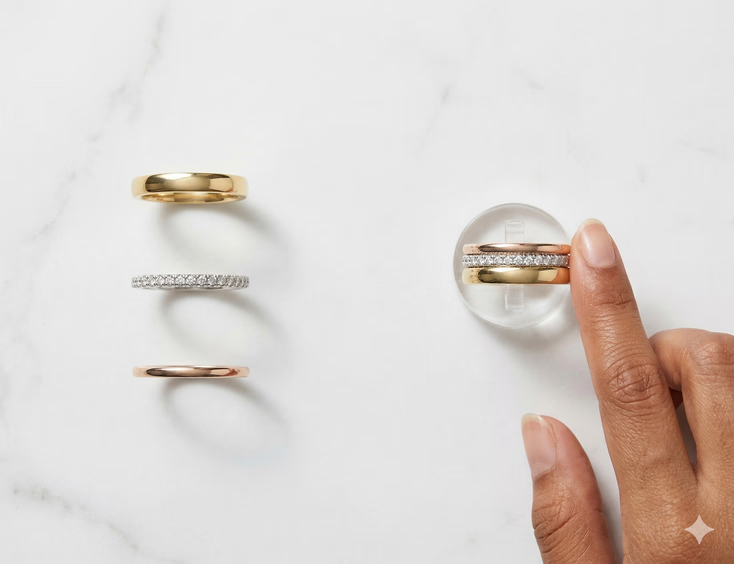
- Vary the widths deliberately. A stack of three identical 2mm bands looks monotonous. A stack combining a 2mm band, a 1.5mm band, and a 3mm band creates visual rhythm.
- Consider the total width of the stack. Three rings that are each 2mm wide produce a total stack of roughly 6mm — the width of a single standard wedding band. That is a starting point; some brides go wider, some narrower.
- Match width scale to hand size. Filipino women with slender fingers generally find that stacks built from narrower bands (1.5mm–2.5mm each) look more proportional than those built from wider pieces.
Metal and Finish Combinations
The question of whether to mix metals within a stack — combining yellow gold, white gold, and rose gold on the same finger — is one of the most discussed aspects of the stacking trend.
The honest answer: mixing metals in a stack can be beautiful when done with intention, but it requires more thought than a single-metal stack.
What works:
- Rose gold and yellow gold together — both are warm-toned metals that harmonize naturally; this combination is particularly flattering against morena and kayumanggi Filipino skin tones
- Yellow gold with a single white gold band — the contrast is intentional and striking; works best when the white gold piece has a distinct visual purpose (e.g., it is the pavé band, the stone band)
- All the same metal in different finishes — a high-polish yellow gold band next to a matte yellow gold band next to a hammered yellow gold band creates texture interest without the complexity of metal mixing
What requires more care:
- White gold and rose gold together — can feel visually busy; requires a very deliberate compositional reason
- Three different metals — often tips from "curated" into "busy"; approach with caution unless you have a clear design rationale
The Role of Stones in a Stack
A stack does not need stones to be beautiful — some of the most stunning stacks are entirely plain bands. But stones can play specific roles in a stack:
- The pavé band as light source: One band of tiny pavé diamonds among otherwise plain bands creates a concentrated line of sparkle that gives the whole stack life without overpowering it
- The single-stone accent: A thin band with one small flush-set stone — barely noticeable alone — becomes a meaningful detail within a stack
- The colored stone band: A band with a small sapphire, emerald, or morganite stone introduces color into an otherwise metal-only stack; a subtle way to incorporate a meaningful stone without making it the centerpiece
Stone setting choices for stacked rings: In a stack, setting height matters even more than in a standalone ring. High prong settings and prominent bezel settings do not stack comfortably — they create gaps between rings, push adjacent bands off-center, and can scratch against each other. For stacking, flush settings, very low bezels, and channel settings work best.
Three Stack Configurations Filipino Brides Are Actually Wearing
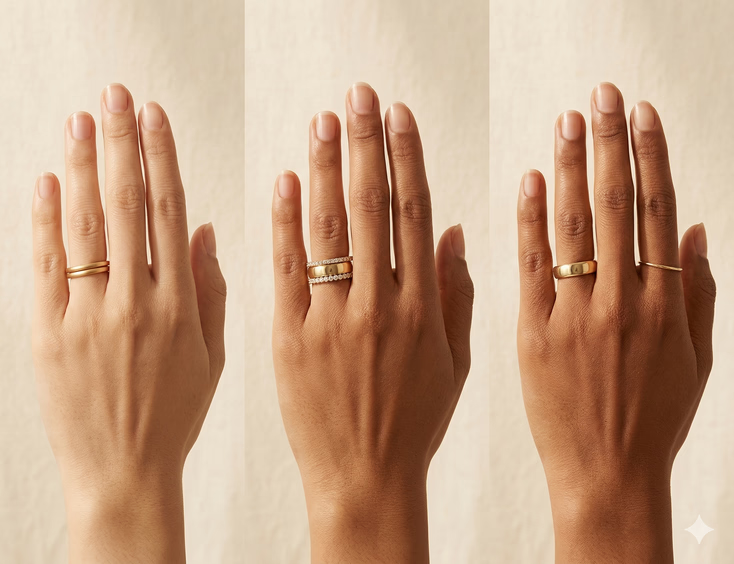
Rather than abstract principles, here are three specific stack configurations that Filipino brides are choosing right now — with honest notes on who each suits best.
The Everyday Minimalist Stack
The configuration: Two or three ultra-slim plain bands in the same metal — perhaps one 2mm high-polish yellow gold band and one 1.5mm matte yellow gold band, with a third 1mm band engraved with a wedding date or meaningful word.
Who it suits: Brides who want the visual interest of a stack without departing from a fundamentally minimalist aesthetic. Professionals who need their jewelry to read as understated. Brides who love the idea of bands with different finishes and surface characters sitting beside each other.
The appeal: Each band is simple enough to be worn alone on an ordinary day; together they create something more interesting without being elaborate. The engraved band adds meaning that is invisible to others but deeply present for the wearer.
Price range: ₱8,000–₱30,000 for the full set of three, depending on metal quality and jeweler.
The Classic-Plus Stack
The configuration: A traditional wedding band (4mm plain yellow gold) paired with a delicate pavé band (2mm, small diamonds or moissanite) and a very thin plain band on the other side. The plain band sandwiches the pavé band between two plain pieces, framing its sparkle.
Who it suits: Brides who want some sparkle but feel a full solitaire is too prominent for their lifestyle. Those who love the look of a diamond band but want the flexibility of a stack. Brides transitioning from a traditional aesthetic toward something more contemporary.
The appeal: The pavé band provides the brilliance; the flanking plain bands ground it. The stack reads as polished and bridal from across the room but has more design complexity than a standard two-ring set. This configuration also photographs particularly well.
Price range: ₱20,000–₱65,000 for the full set, depending on stone quality and metal choice.
The Storytelling Stack
The configuration: A wedding band worn alone on the wedding day, with the deliberate intention of adding rings over time — on anniversaries, milestones, or meaningful occasions. The stack starts with one or two rings and is built gradually over years.
Who it suits: Couples who are budget-conscious at the time of the wedding but want the romance of a richer ring story over time. Brides who find meaning in objects that accumulate history. Couples who want their rings to grow with their marriage rather than being fully formed on day one.
The appeal: This is the most genuinely Filipino of the three configurations in some ways — it honors the value of pagtitiyaga (patience and perseverance) and the idea that the best things in a marriage are built slowly, not purchased all at once. The stack at the twenty-fifth anniversary tells a story that no day-one purchase ever could.
Price range: Start with ₱5,000–₱20,000 for the initial wedding band; budget for additions over time.
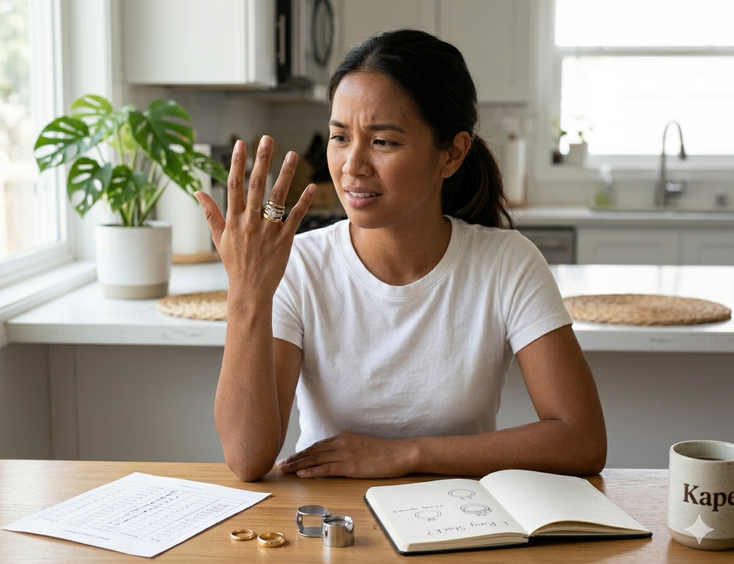
What to Watch Out For: Stacking Done Badly
The stacking trend produces beautiful results when approached thoughtfully. It produces uncomfortable, impractical, or visually chaotic results when it is not.
Common mistakes Filipino brides make with stacked rings:
Buying a pre-made "stack set" without trying it on. Many jewelry shops now sell three or four-ring stack sets as a package. These look beautiful in promotional photos. They do not always look or feel right on actual Filipino fingers. Try the full set on your specific hand before buying.
Ignoring comfort. Four rings on one finger is significantly more material than one ring. That weight and bulk is perceptible over a full day. Filipino brides who work with their hands, type extensively, or live physically active lives should try wearing their intended stack configuration for several hours before committing.
Mixing too many competing elements. Different metals, different stone shapes, different finishes, different widths — a stack that tries to do everything simultaneously does nothing well. Edit ruthlessly. If three elements are competing for attention, remove one.
Buying all rings from different jewelers without checking compatibility. Rings from different jewelers may vary slightly in their exact finger circumference, which means they may not sit flush against each other. If you're building a multi-ring stack, ideally source all pieces from the same jeweler — or at minimum, bring existing rings to any new jeweler and test the fit together before purchasing.
Not accounting for sizing across a stack. When rings are worn together, the effective size needed can shift slightly — the cumulative width of multiple bands can make the overall fit feel tighter. Size each ring in the context of the full stack, not individually.
The Stacking Trend and Filipino Wedding Tradition: Do They Fit Together?
A reasonable question for Filipino Catholic couples: does the stacking approach sit comfortably alongside the sacramental weight of the wedding ring?
The answer is yes — and the reasoning is straightforward.
The Rite of Marriage requires the exchange of rings as a sacramental sign. It does not prescribe a specific number of rings to be worn afterward, nor does it specify that the wedding band must be worn alone. The ring exchanged at the altar — whatever it looks like — carries the full sacramental meaning of that moment. Additional rings added to the same finger are personal adornment choices that neither add to nor subtract from the covenant made in the ceremony.
Many Filipino Catholic brides have worn both an engagement ring and a wedding band simultaneously for decades without any theological concern — the stack simply extends this established practice with more intentionality and more rings.
What matters, in the Catholic understanding of the wedding ring, is the meaning of the exchange and the faithfulness of the wearing — not the specific configuration of metal on the finger.
For a deeper understanding of what the wedding ring means within Filipino Catholic ceremony, our guide on the meaning of wedding rings in Filipino Catholic weddings covers the theology and tradition in full.
Where to Find Stackable Wedding Rings in the Philippines
The market for stackable rings in the Philippines has expanded significantly in recent years, but quality varies widely. Here is where Filipino brides are finding the best pieces:
Independent custom jewelers are the strongest option for a curated, high-quality stack. A good custom jeweler will work with you to design rings that are proportionally compatible, sit flush against each other, and can be sized consistently. This is particularly important for a stack being built all at once.
BGC and Makati boutiques have responded to the trend by stocking more delicate, stackable pieces alongside traditional bridal sets. The service level in these shops tends to support the kind of consultation that building a stack requires.
Instagram and Facebook jewelry makers who specialize in delicate jewelry often have excellent stackable pieces — thin bands, tiny-stone accents, minimalist designs that stack beautifully. The due diligence requirements are the same as for any social media jeweler: see completed work, verify reviews, never pay in full upfront.
Shopee and Lazada have expanded stackable ring options, but quality control is inconsistent. For a standalone fashion ring, online purchasing is manageable. For a wedding ring stack you will wear daily for decades, the inability to assess metal quality, finish quality, and sizing accuracy in person is a significant limitation.
Browse verified jewelry and accessories suppliers in the Philippines to find trusted jewelers who can help you design and source a stack that will hold up to Filipino daily life — in the heat, the humidity, and every ordinary and extraordinary day of a marriage.
Starting Your Stack: A Simple Decision Framework
If you are genuinely considering the stacking approach for your own wedding rings, here is a simple framework for making the decision:
Start by asking: Do I actually enjoy wearing multiple rings, or does the idea appeal more than the reality? If you have never worn more than one ring at a time and find jewelry generally uncomfortable, a stack may not be right for you regardless of how beautiful it looks in photographs.
Then ask: Is there a natural beginning point — a ring I already have or love — around which I can build? The best stacks have an anchor piece. Usually this is the wedding band itself, or an engagement ring the bride already owns and loves.
Then ask: Do I want the stack to be complete on my wedding day, or am I comfortable starting with one or two rings and building over time? Both approaches are valid. The storytelling stack requires patience and a long view; the curated day-one stack requires more upfront investment and planning.
Finally ask: What is my actual daily life like, and will a stack genuinely fit into it? Not your life on your wedding day — your life on a random Wednesday six months after the honeymoon.
If the answers to these questions point toward the stack, pursue it thoughtfully and with the right jeweler. If they point elsewhere, let this trend be someone else's perfect choice and find yours.
For the complete picture on every wedding ring style, budget, and buying option in the Philippines, our pillar guide covers everything: The Complete Filipino Couple's Guide to Wedding Rings & Bands in the Philippines.
Still Searching for a Right Match?
Find Your Perfect Wedding Supplier Today!
Discover trusted wedding suppliers across the Philippines in our complete directory. Compare services and connect with the ones that fit your dream celebration.
Browse Wedding SuppliersFeatured Posts




Wedding Reception Ideas that Honor Tradition and Wow Your Guests
4 mins readFilipino Wedding Dress Guide for Style Traditions and Smart Shopping
6 mins readFilipino Wedding Cost Guide - Realistic Budgets, Percentages, and Price Drivers by Region
9 mins readPhilippines Honeymoon Guide - Best Islands, Resorts, Costs & 7–14 Day Itineraries
9 mins readFilipino Wedding Games - Traditions, Modern Twists, and Crowd-Pleasers for Every Reception
8 mins read