


Should Crew Meals Be Part of Your Catering Contract or Handled Separately?
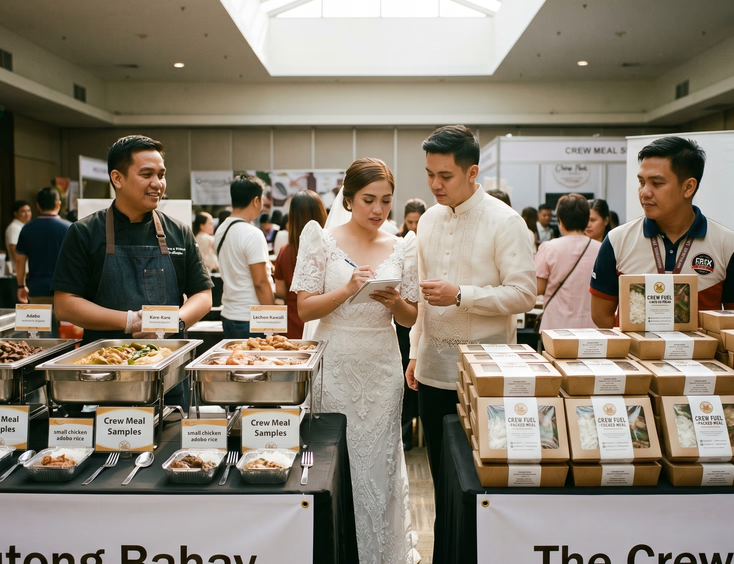
Your wedding crew needs to eat. You have two ways to make that happen. Bundle the crew meals into your main catering contract, or source them separately from a different vendor. Both work. They cost different amounts, demand different levels of coordination, and produce different outcomes on the wedding day.
Filipino couples often default to bundling because it feels simpler. The simplicity carries a price tag of 25 to 35 percent compared to separate sourcing. Whether the convenience is worth it depends on your wedding scale, your venue location, and your tolerance for managing multiple vendors.
What Bundling Looks Like
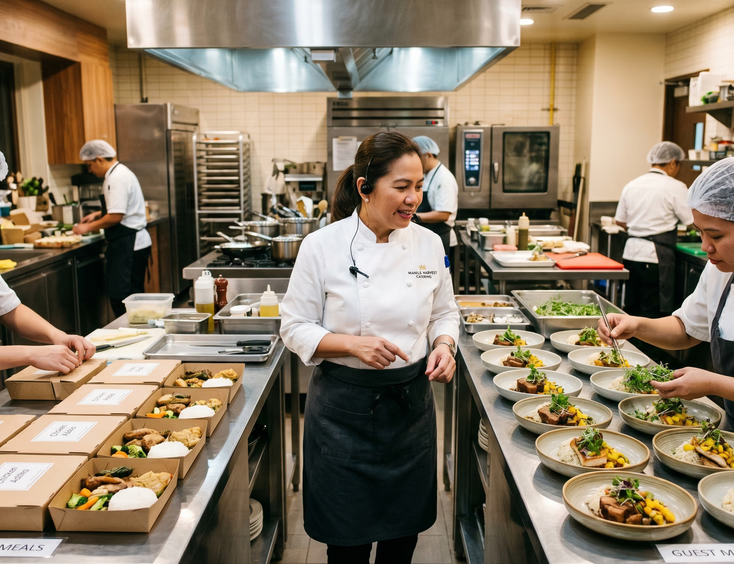
Bundling means your main caterer handles both the guest menu and the crew meals as part of one contract. They prepare both menus in their kitchen, deliver them together, and bill you on a single invoice. Communication runs through one point of contact.
A 200-pax Manila wedding with 40 crew members bundled with the main caterer typically pays ₱350 to ₱450 per head for crew meals at Tier 2 quality. The premium reflects the caterer's overhead, kitchen prep allocation, and the convenience of single-vendor management.
The bundling rate also includes service charge, VAT, and standard packaging by default. Some caterers throw in basic drinks. The all-in pricing makes budgeting cleaner, even at higher per-head rates.
What Separate Sourcing Looks Like
Separate sourcing means you hire a dedicated crew meal vendor independent of your main caterer. Local turo-turo specialists, lutong-bahay catering services, and crew meal specialists handle this category. They prepare the crew menu in their own kitchens, deliver to the venue, and bill you separately.
The same 40-crew booking through a specialist vendor runs ₱220 to ₱280 per head at the same Tier 2 quality. Savings range from ₱5,200 to ₱6,800 against the bundled rate, even before considering bundled hidden costs.
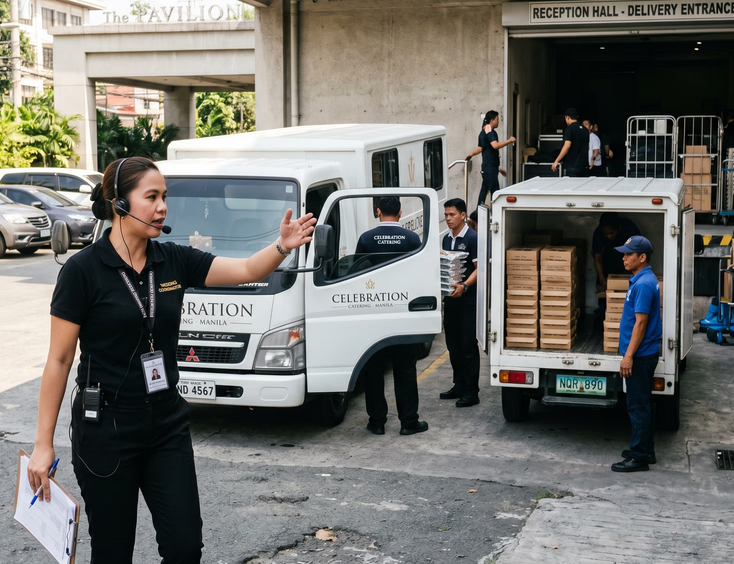
The trade-off is coordination. You manage two delivery windows, two contact points, and two payment schedules. You also handle the venue logistics for accepting two separate food deliveries.
When Bundling Makes Sense
Bundling works well for couples in three situations.
Premium weddings with high catering budgets. If you're already paying ₱2,000 per head for guest catering at a luxury venue, the ₱150 markup on crew meals barely registers in your overall budget. The single-vendor simplicity is worth the convenience.
Destination weddings with logistical complexity. Boracay, Palawan, Cebu, and Bohol weddings often have limited local crew meal vendor options. Bundling with your main caterer who's already traveling to the venue avoids sourcing emergency local options.
Weddings without a dedicated coordinator. If you don't have a wedding planner managing vendor logistics, fewer vendors means fewer points of failure. Bundling reduces the day-of coordination load.
When Separate Sourcing Makes Sense
Separate sourcing works better in three other situations.
Budget-conscious weddings. Couples watching every line item save ₱5,000 to ₱12,000 by sourcing crew meals separately. The savings translate to better photography, an upgraded HMUA, or guest favor budget without compromising crew meal quality.
Manila, Cebu, and Tagaytay weddings. These wedding hubs have established crew meal specialists with strong delivery infrastructure. Sourcing locally produces better food at lower rates than the main caterer's marked-up crew menu.
Weddings with a strong coordinator. Coordinators who handle multiple vendors regularly absorb the extra logistics easily. They've worked with crew meal specialists before. They know which vendors deliver on time.
The Quality Comparison
Quality varies by vendor more than by sourcing method. Premium specialist crew meal vendors often produce better food than mid-tier main caterers' crew menus. Mid-tier specialists produce comparable food to mid-tier main caterers.
Where bundling tends to fall short: main caterers prioritize guest meal prep over crew prep. Your crew meals get assembled by junior staff after the guest menu is finished. The food sits longer before delivery. Hot dishes arrive lukewarm.
Where separate sourcing tends to fall short: coordination failures cause meal delays. The specialist vendor arrives at the wrong gate. The delivery sits in traffic. The packaging arrives short of the head count. Single-vendor weddings don't have these problems.
The decision factor isn't which method produces better food. It's which method produces better food given your specific vendors and venue setup.
The Coordination Reality
Bundling reduces coordination by one vendor. That's all. You still need to manage your photographer, videographer, coordinator, HMUA, band, florist, and venue separately. Adding one more vendor for crew meals doesn't dramatically increase your workload.
Separate sourcing requires three additional touchpoints. You confirm head counts with the vendor two weeks out. You confirm delivery logistics with your coordinator one week out. You handle final payment on the wedding day or shortly after.
A coordinator can absorb these touchpoints without strain. A couple managing the wedding directly will feel the extra load.
How Caterers Charge Differently
Most Filipino catering contracts handle crew meals one of three ways.
Inclusive packages. The caterer includes a set number of crew meals at no additional cost. Usually capped at 10 to 15 percent of the guest count. Premium caterers offer this to compete on perceived value.
Discounted line item. The caterer prices crew meals at 60 to 70 percent of the guest menu rate. A wedding with ₱1,200 per head guest meals would see ₱720 to ₱840 per head crew meals. The discount looks generous but still runs 50 to 80 percent above specialist vendor pricing.
Separate menu tier. The caterer offers a dedicated crew meal menu at lower pricing, usually ₱300 to ₱450 per head. This is the cleanest bundling option because the crew menu is purpose-built rather than a discounted guest menu.
Confirm which structure your caterer uses before signing. The structure determines whether bundling actually saves money compared to separate sourcing. Our breakdown of how Filipino wedding suppliers typically write crew meal clauses in their contracts covers these contract patterns.
The Hybrid Approach
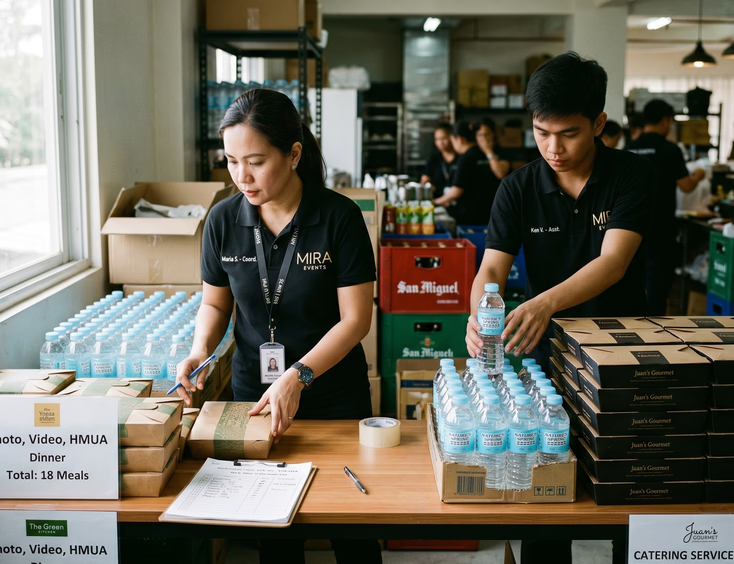
Some couples bundle partially. They include crew meals for the catering service staff in the main contract (since those workers are already at the venue) and source separately for the visual team, coordinator team, and HMUA.
The hybrid model works when your catering crew makes up a significant portion of your total crew count. A 200-pax wedding with 20 service staff and 25 external suppliers can save ₱3,000 to ₱5,000 by bundling only the service staff.
It adds coordination complexity though. You manage two vendors and need to track which suppliers eat which meals. Most couples skip this approach and pick one method or the other.
What This Means for Your Contract
Your decision affects how you structure both the main catering contract and any separate crew meal arrangements. Bundled contracts need clear language on crew meal inclusion, head count flexibility, and packaging. Separate sourcing means two contracts, each with their own delivery and payment terms.
The contract checklist for either approach lives in our guide on what to include in your contract about crew meals.
The question of which party carries responsibility also depends on this choice. Bundled contracts shift logistical responsibility to the caterer. Separate sourcing keeps it with the couple or coordinator. The full breakdown lives in our analysis of who really handles crew meals in the Philippines.
The Final Math
A 200-pax Filipino wedding with 40 crew members and two meal services typically lands here:
Bundled: ₱28,000 to ₱36,000 total, with single-vendor convenience
Separate sourcing: ₱18,000 to ₱24,000 total, with two-vendor coordination
The ₱10,000 to ₱12,000 difference is the cost of convenience. Whether that's worth it depends on your overall budget and coordination capacity.
Finding the Right Vendor for Either Approach
If you're leaning toward bundling, ask your main caterer for their crew menu pricing structure before signing. If you're sourcing separately, browse verified Filipino crew meal specialists across Manila, Cebu, Tagaytay, and major wedding destinations through our wedding crew meals supplier directory.
For the complete planning framework on crew meals, read our pillar guide on wedding crew meals in the Philippines and everything couples need to know.
Still Searching for a Right Match?
Find Your Perfect Wedding Supplier Today!
Discover trusted wedding suppliers across the Philippines in our complete directory. Compare services and connect with the ones that fit your dream celebration.
Browse Wedding SuppliersFeatured Blog Posts



Filipino Wedding Entourage - Roles, Order of March, and Modern Etiquette
6 mins readCivil Weddings in the Philippines - Requirements, Costs, and Step-by-Step Process
9 mins readCivil Wedding Requirements in the Philippines - Complete Checklist
6 mins readCost of Wedding in the Philippines - 5 Essential Things You Need to Know
7 mins readPrincipal Sponsors (Ninong/Ninang) - How Many, How to Ask, What They Really Do
4 mins readVeil, Cord, Candle & Coins - Roles, Options, and When They Happen
4 mins readEntourage for a Traditional Pinoy Wedding - Complete Roles and Guide
6 mins readComplete List of Civil Wedding Requirements in the Philippines
8 mins readHow to Choose Wedding Ninongs and Ninangs - Ask Yourself These 3 Important Questions
5 mins read