


What to Include in Your Contract About Crew Meals: A Checklist for Filipino Couples

Your caterer said they'd include crew meals. You shook hands. You moved on. Three months later, the final invoice shows a ₱15,000 line item labeled "Supplier Meals — Additional Charge." When you call to clarify, the caterer doesn't remember the conversation. The booking agent who promised inclusion no longer works there. You pay the charge or fight a battle you'll lose.
Filipino wedding contracts have to spell out crew meal arrangements in writing because verbal agreements don't survive vendor staff turnover, scope creep, or honest miscommunication. Couples who skip this step learn the hard way during invoice reconciliation.
A complete crew meal contract clause runs 200 to 400 words. The space is worth the protection it provides. Every couple should walk into contract signing with a checklist of what needs to appear in writing.
The Head Count Specification
The first clause specifies how many crew meals the contract covers. Vague language like "crew meals provided" creates dispute potential. Specific language locks in expectations.
Required elements:
- Exact number of confirmed crew meals (example: "40 crew meals included")
- Buffer percentage for last-minute additions (example: "additional 10% above confirmed count at standard rate")
- Pricing for additions beyond the buffer (example: "₱300 per head for additions beyond the buffer")
- Cut-off date for adjusting the head count (example: "head count locked 7 days before event")
Without these elements, head count disputes appear when suppliers bring additional crew. The contract should specify what happens at that moment instead of leaving it to a wedding-day phone call.
The full breakdown of typical Filipino wedding crew sizes by supplier category appears in our guide on who counts as wedding crew and everyone you need to feed on your big day.
The Menu Specification
The second clause locks in the meal menu, quality tier, and portion expectations.
Required elements:
- Specific menu items (example: "Chicken adobo, steamed rice, sauteed vegetables, banana, bottled water")
- Portion size or weight (example: "300g rice meal per serving")
- Substitution policy (example: "menu substitutions require client approval in writing")
- Meal tier classification (example: "Tier 2 crew meal package per vendor menu")
Generic language like "hot meal provided" lets vendors deliver lower-quality alternatives without contract violation. Specific menu items prevent this. The contract should also address what happens if the agreed menu items run out, since some Filipino caterers swap dishes on the day without notice.
The Timing and Delivery Specification
The third clause covers when and how crew meals arrive at the venue.
Required elements:
- Number of meal services (example: "lunch and dinner crew meal service")
- Specific service times (example: "lunch service at 11:30 AM, dinner service at 5:30 PM")
- Delivery method (example: "boxed meals delivered to designated venue crew meal area")
- Late-service policy (example: "delays beyond contracted times incur ₱500 per hour rush fee")
Timing failures cause more crew meal complaints than food quality issues. Suppliers who eat at 2 PM when they were expecting lunch at noon work poorly through the afternoon. The contract should hold vendors to specific delivery windows.
The Packaging Specification
The fourth clause defines packaging standards and presentation.
Required elements:
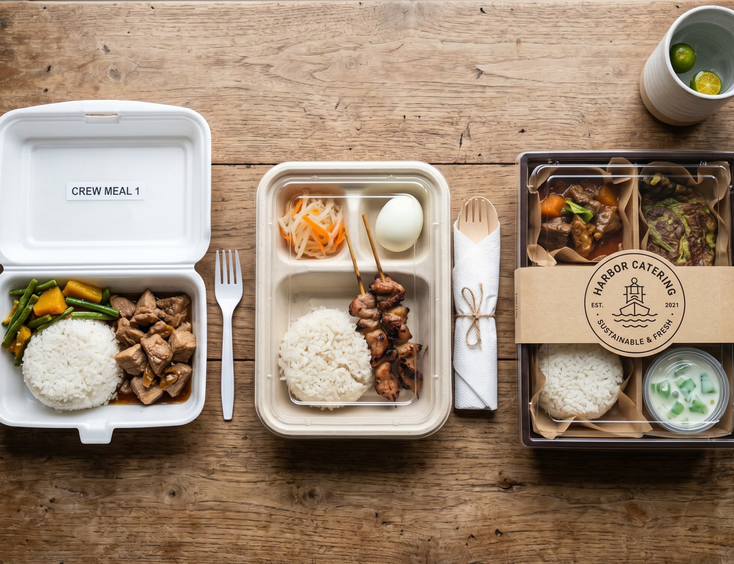
- Container type (example: "sealed bagasse bento boxes with paper liners")
- Utensil inclusion (example: "wooden utensils and napkins included per meal")
- Drink packaging (example: "bottled water 500ml per crew member per meal service")
- Labeling requirements (example: "vegetarian and halal meals labeled clearly")
Cheap packaging undoes good food. Couples who don't specify packaging end up with meals served in containers that leak, stain uniforms, or arrive cold. The packaging specification costs nothing extra to include in the contract and protects supplier perception of the meals.
The Dietary Requirements Specification
The fifth clause handles vegetarian, halal, vegan, and allergen-affected crew members.
Required elements:
- Number of special dietary meals (example: "3 vegetarian meals, 2 halal meals included")
- Substitute menu items for each diet (example: "vegetarian meal: tofu sisig, rice, vegetables, fruit")
- Allergen accommodation policy (example: "nut-free, dairy-free, and shellfish-free options available with 14-day notice")
- Pricing for additional dietary requests (example: "additional special meals at +₱40 per head")
Filipino caterers default to mainstream menus that don't accommodate dietary restrictions. Without specific clauses, halal-observing crew members get pork-based meals they can't eat. Vegetarian crew members get token salads instead of actual meals. The contract prevents this.
The Service Charge and Cost Inclusion Specification
The sixth clause clarifies which costs the quoted rate covers.
Required elements:
- Service charge inclusion (example: "10% service charge included in quoted rate")
- VAT inclusion (example: "12% VAT included in quoted rate")
- Delivery fee inclusion (example: "venue delivery within Metro Manila included")
- Transportation surcharges (example: "destinations outside Metro Manila incur additional fees per published rates")
This clause prevents the most common hidden cost surprise: discovering at invoice time that the quoted ₱280 per head was actually ₱340 after service charge and VAT. The full breakdown of hidden costs appears in our guide on hidden costs in wedding crew meals that Filipino couples often overlook.

The Payment Terms Specification
The seventh clause defines when and how crew meal payments flow.
Required elements:
- Deposit requirement (example: "30% deposit required upon contract signing")
- Final payment timing (example: "balance due 14 days before event")
- Last-minute addition payment (example: "additional crew meal charges payable within 7 days of event")
- Refund policy for unused meals (example: "no refunds for confirmed crew meals not consumed on event day")
Filipino wedding caterers structure payments differently from each other. Some require full payment upfront for crew meals. Others bill at event completion. The contract should specify the exact schedule to prevent surprise invoices.
The Setup and Service Area Specification
The eighth clause covers the physical crew meal service setup.
Required elements:
- Service location (example: "crew meal area set up at venue back-of-house space")
- Setup responsibilities (example: "vendor provides serving table, client provides crew meal area access")
- Equipment included (example: "chafing dishes, serving utensils, drink station included")
- Cleanup responsibilities (example: "vendor handles cleanup within 1 hour of dinner service completion")
Without this clause, couples discover on the wedding day that no one set up the crew meal area. The food arrives, but there's no table, no seating, no organized space. Suppliers eat standing in hallways. The contract should designate setup responsibility explicitly.
The Failure and Refund Specification
The ninth clause addresses what happens when service fails.
Required elements:
- Late delivery refund policy (example: "deliveries more than 1 hour late refund 25% of crew meal cost")
- Food quality issue resolution (example: "documented quality issues credited toward future bookings or refunded at vendor discretion")
- Force majeure clauses (example: "vendor not liable for delays caused by natural disasters or government restrictions")
- Dispute resolution process (example: "disputes resolved via written notice within 30 days of event")
This clause matters most for high-stakes wedding scenarios. Vendors who underperform should face contractual consequences. Without specific refund and resolution language, you have no recourse beyond complaints.
The Communication and Confirmation Specification
The tenth clause defines pre-event communication requirements.
Required elements:
- Final head count confirmation date (example: "client confirms final head count 10 days before event")
- Menu confirmation date (example: "menu locked 14 days before event")
- Delivery coordination contact (example: "vendor coordinates with [coordinator name] for day-of delivery logistics")
- Emergency contact protocols (example: "vendor provides 24-hour emergency contact 48 hours before event")
Communication failures cause wedding day disasters. The contract should specify when each party owes information to the other and through what channels.

Sample Clause Language
A complete crew meal clause built from this checklist reads roughly:
"VENDOR shall provide 40 crew meals to CLIENT for service at the wedding event. Crew meals consist of Tier 2 menu items (chicken adobo, steamed rice, sauteed vegetables, banana, bottled water 500ml) served at lunch (11:30 AM) and dinner (5:30 PM) on the event date. Meals will be delivered in sealed bagasse bento boxes to the designated crew meal area at the venue. Three (3) vegetarian and two (2) halal meals are included in the head count. The quoted rate of ₱280 per head per service is inclusive of 10% service charge and 12% VAT. Additional crew meals beyond the confirmed count are available at ₱300 per head with 7 days advance notice. Final head count locks 10 days before the event. 30% deposit due upon signing; balance due 14 days before event. Late deliveries beyond 1 hour from scheduled service times incur a 25% credit refund."
This single paragraph covers ten of the most common dispute points in Filipino crew meal arrangements.
Confirming the Contract Before You Sign
Three questions surface contract gaps before signing.
First, ask: "What's not included in this contract that I should know about?" Good vendors answer honestly. Vendors who deflect are signaling future surprise charges.
Second, ask: "What happens if my head count grows by 20 percent two weeks before the event?" The answer reveals their late-addition policy and pricing.
Third, ask: "Can we walk through each clause together?" Vendors who can't explain their own contract language are usually vendors who interpret ambiguity in their favor.
Our breakdown of how Filipino wedding suppliers typically write crew meal clauses in their contracts helps you recognize standard clause patterns versus problematic vendor language.
Negotiating Better Contract Terms
Most crew meal contract terms are negotiable. Vendors will adjust head count buffers, payment schedules, and pricing structures when couples push back with reasonable counter-offers.
Our guide on how to negotiate crew meal inclusions with your wedding caterer gives you the full framework for getting better contract terms without breaking the booking relationship.
The bundling decision also affects contract structure. Bundled contracts integrate crew meal clauses into the main catering agreement. Separate sourcing means two parallel contracts. The trade-offs live in our analysis of whether crew meals belong in your catering contract or handled separately.
Finding Vendors With Clear Contract Practices
Vendors with clear, complete contracts usually operate professionally across other dimensions of their service. The contract quality often predicts the day-of execution quality.
Browse verified Filipino crew meal vendors with transparent contract practices across Manila, Cebu, Tagaytay, Davao, and major wedding destinations through our wedding crew meals supplier directory.
For the complete planning guide on crew meals, read our pillar piece on wedding crew meals in the Philippines and everything couples need to know.
Still Searching for a Right Match?
Find Your Perfect Wedding Supplier Today!
Discover trusted wedding suppliers across the Philippines in our complete directory. Compare services and connect with the ones that fit your dream celebration.
Browse Wedding SuppliersFeatured Blog Posts








Filipino Wedding Entourage - Roles, Order of March, and Modern Etiquette
6 mins readCivil Weddings in the Philippines - Requirements, Costs, and Step-by-Step Process
9 mins readCivil Wedding Requirements in the Philippines - Complete Checklist
6 mins readCost of Wedding in the Philippines - 5 Essential Things You Need to Know
7 mins readPrincipal Sponsors (Ninong/Ninang) - How Many, How to Ask, What They Really Do
4 mins readVeil, Cord, Candle & Coins - Roles, Options, and When They Happen
4 mins readEntourage for a Traditional Pinoy Wedding - Complete Roles and Guide
6 mins readComplete List of Civil Wedding Requirements in the Philippines
8 mins readHow to Choose Wedding Ninongs and Ninangs - Ask Yourself These 3 Important Questions
5 mins read