


Off-Season Strategies for Filipino Wedding Suppliers to Keep Income Flowing

Filipino wedding suppliers face a predictable rhythm. The peak season from October to May produces strong bookings, packed weekends, and steady income. Then June arrives. The bookings slow. The income drops. The supplier stares at empty months and wonders how to bridge the gap until the next peak season begins. The pattern repeats year after year. The financial stress damages the business and the supplier behind it.
The off-season does not have to be a slow death period. Filipino wedding suppliers who build off-season strategies generate income through different channels, position themselves for stronger peak seasons, and protect their financial stability year-round. The suppliers who treat off-season as wasted months struggle. The suppliers who treat off-season as opportunity build sustainable businesses.
This guide walks Filipino wedding suppliers through the off-season strategies that keep income flowing. Diversify revenue streams. Capture off-season weddings. Build seasonal services. Strengthen the business foundation. Position for peak season growth. The framework helps suppliers transform the off-season from financial stress into strategic opportunity.
Understand the Filipino Wedding Off-Season
Filipino wedding suppliers should understand the specific patterns of the off-season before building strategies for it.
Three patterns shape the Filipino off-season.
Pattern one: June to September decline. The rainy season produces fewer outdoor weddings. Couples typically avoid these months for major outdoor celebrations.
Pattern two: January through early March slowdown. The post-holiday period sees fewer weddings as couples recover from Christmas and New Year spending and prepare for the upcoming year.
Pattern three: timing variations by region and supplier category. Beach destination suppliers in Boracay or Palawan may experience different patterns than Manila photographers. Specialty suppliers like florists serving Valentines Day events may have different seasonal dips.
Map your own seasonal patterns based on three years of booking data. Identify your specific slow months. The data drives the strategic decisions.
The framework sits inside the wider business sustainability strategy you built through the complete guide to getting more wedding clients in the Philippines. Strong businesses sustain themselves across seasons.
Strategy One: Capture Off-Season Wedding Bookings
Filipino wedding suppliers often assume off-season means no weddings. The assumption is wrong. Off-season weddings exist and can be captured through strategic positioning.
Three patterns produce off-season weddings.
Pattern one: indoor and covered venue weddings. Couples planning hotel ballroom, indoor restaurant, or covered garden weddings can still proceed during rainy months. Suppliers serving these venues can book off-season weddings.
Pattern two: intimate civil ceremonies. Small weddings of 20 to 50 guests often happen year-round. Civil ceremonies are not constrained by traditional wedding season patterns.
Pattern three: destination weddings to dry-season locations. Filipino couples planning weddings in Cebu, Bohol, or international destinations during Philippine rainy season can still proceed. The destination remains favorable.
Capture off-season bookings through three approaches.
Approach one: market specifically for off-season weddings. Adjust your marketing during peak season to mention off-season availability. "Now booking weddings for July through September. Limited slots available." The visibility plants the idea.
Approach two: offer modest off-season pricing incentives. A 10 to 20 percent discount during slow months can attract couples who would otherwise hold off. Frame the incentive as a strategic opportunity, not a desperation discount.
Approach three: highlight off-season strengths. Less crowded venues. Lower stress. More personal attention from suppliers. The benefits resonate with certain couples.
The framework pairs with how to handle pwede pa bang bumaba ang price without losing the booking. Strategic off-season pricing protects positioning while capturing bookings.
Strategy Two: Diversify Into Adjacent Wedding-Related Services
Filipino wedding suppliers can diversify into adjacent services that produce income during slow wedding months.
Five diversification options work across supplier categories.
Option one: engagement and prenup shoots. Filipino couples plan engagement and prenup sessions throughout the year. Photographers and videographers can market these services aggressively during off-season months. The shoots produce income and pre-establish relationships with couples who will later book full weddings.
Option two: anniversary and family portrait shoots. Past clients celebrating anniversaries or family milestones become recurring revenue. Photographers can build packages specifically for these recurring needs.
Option three: corporate events and gatherings. Many Filipino corporations host events year-round. Wedding florists, photographers, and coordinators can expand into corporate work without diluting wedding positioning.
Option four: lifestyle and personal branding shoots. Influencers, professionals, and entrepreneurs need professional photography year-round. The market exists in Filipino major cities and grows steadily.
Option five: speaking, teaching, and content creation. Established suppliers can monetize their expertise through workshops, courses, speaking engagements, and content sponsorships during off-season months.
Choose diversification options that align with your brand and skills. Forcing yourself into work you do not enjoy produces poor results.
The framework pairs with positioning yourself as a premium wedding supplier in a budget-conscious market. Diversification should reinforce, not damage, premium positioning.

Strategy Three: Build Recurring Revenue Through Past Clients
Filipino wedding suppliers can generate consistent off-season income by serving past clients in ongoing ways.
Three past client revenue streams work.
Stream one: anniversary celebration shoots. Past couples celebrating one-year, five-year, or ten-year anniversaries can book commemorative photography or videography. Build a system that reaches out to past clients at meaningful intervals.
Stream two: family growth photography. Past wedding clients often become families. Maternity shoots, newborn sessions, family portraits, and milestone celebrations follow naturally. The supplier who maintains the relationship captures the bookings.
Stream three: print sales and album upgrades. Past clients sometimes want additional prints, second albums for parents, or expanded photo packages months or years after the wedding. Active outreach can produce significant supplemental income.
The framework pairs with how to get repeat referrals from past wedding clients. Strong past client relationships produce both referrals and recurring revenue.
Build the systems that maintain past client relationships year-round. The investment in those relationships produces returns during off-season.
Strategy Four: Pursue Pre-Booked Peak Season Inquiries
Filipino wedding suppliers should use off-season months for pre-booking peak season inquiries. The work pays off in the months ahead.
Three pre-booking activities matter.
Activity one: focused marketing during inquiry research months. Filipino couples often begin wedding research during slow months. Strong marketing during these months captures inquiries that will book for the upcoming peak season.
Activity two: discovery calls and consultations. Off-season provides time for detailed discovery calls with couples planning weddings 9 to 18 months out. The longer conversations during slow months build stronger relationships than rushed peak-season calls.
Activity three: contracts and deposits for future weddings. Couples booking weddings 12 to 18 months in advance often sign contracts and pay deposits during off-season. The financial cushion comes during slow months.
The framework pairs with how to respond to wedding inquiries so couples actually book you and the discovery call script that books wedding clients. Strong inquiry systems during off-season produce strong peak season bookings.
Use off-season inquiry conversations to position yourself for couples ready to commit.
Strategy Five: Invest in Marketing and Brand Building
Filipino wedding suppliers can use off-season months for the marketing and brand building activities that fill peak season pipelines.
Six marketing activities produce strong off-season returns.
Activity one: portfolio refresh and curation. Update your portfolio with the strongest weddings from the previous peak season. The framework pairs with professional portfolio tips for wedding suppliers without a big budget.
Activity two: real wedding feature blog posts. Document the strongest weddings as polished blog features. The framework pairs with how to showcase real weddings on your website and socials.
Activity three: SEO-focused content development. Write blog content targeting search terms couples use during planning research. The framework pairs with blog topics wedding suppliers should write to attract couples organically.
Activity four: pitch publications and influencers. Off-season is the ideal time to pitch real weddings to Filipino wedding publications. The editors have more bandwidth. The framework pairs with how to get featured by Filipino wedding pages and influencers.
Activity five: refresh trust signals. Review and update your reviews, testimonials, and trust signals across all channels. The framework pairs with trust signals Filipino couples look for before booking a supplier.
Activity six: build content libraries for peak season. Create batches of social media content, email sequences, and marketing assets to deploy during peak season. The off-season preparation prevents peak season burnout.
The marketing work during off-season fills the peak season pipeline. Suppliers who skip this work struggle in peak season.

Strategy Six: Strengthen Business Systems and Infrastructure
Filipino wedding suppliers can use off-season months to build and improve business systems. The investment pays back across all future peak seasons.
Four system investments matter.
Investment one: tool implementation. Set up or upgrade booking systems, CRM tools, contract platforms, and payment processors. The framework pairs with booking systems and tools every Filipino wedding supplier should use.
Investment two: process documentation. Document every business process. Inquiry handling. Contract management. Wedding day operations. Delivery workflows. Documentation enables future delegation and team scaling.
Investment three: pricing review and adjustment. Off-season provides time to review pricing structures and announce changes for the upcoming year. The framework pairs with how to price your wedding services in the Philippines without underselling.
Investment four: team development. If you have team members, off-season is the time for training, professional development, and process improvements. The investment improves peak season performance.
Off-season systems work compounds. Each year of improvement produces a stronger business for the next peak season.
Strategy Seven: Develop New Service Lines
Filipino wedding suppliers can develop new service lines during off-season to expand offerings for upcoming peak seasons.
Three service expansion options work.
Option one: premium package additions. Develop new add-on services that justify higher pricing. Same-day edits. Premium album packages. Destination wedding capabilities. Specialty session types.
Option two: niche specialization. Focus on a specific niche within your service category. Heritage Filipino weddings. Multi-cultural Filipino weddings. Intimate destination weddings. Specific style specializations.
Option three: complementary services. Expand into adjacent services. A photographer adding videography. A coordinator adding stationery design. A florist adding event design. The expansions increase per-wedding revenue.
Off-season provides time to develop these new services. Training. Skill development. Equipment investment. The expansion launches during peak season produce strong returns.
Strategy Eight: Pursue Education and Skill Development
Filipino wedding suppliers can invest in education during off-season months. The investment produces stronger craft and competitive advantages.
Three education paths work.
Path one: industry conferences and workshops. National and international wedding industry events. Photography, videography, floral design, coordination, and other specialty workshops.
Path two: online courses and self-paced learning. Filipino suppliers can access global online courses through platforms like Skillshare, MasterClass, and industry-specific learning sites.
Path three: peer mentorship and supplier coaching. Established Filipino wedding suppliers sometimes offer coaching or mentorship programs. The investment produces accelerated growth.
Budget for education yearly. Even modest investments in skill development compound across years.
The framework pairs with networking events every Filipino wedding supplier should attend. Strong education combined with strong networks produces compound returns.

Strategy Nine: Build a Financial Buffer
Filipino wedding suppliers should maintain financial buffers that protect against off-season volatility.
Three financial practices matter.
Practice one: build a savings buffer during peak season. Save 20 to 30 percent of peak season income for off-season expenses. The buffer prevents financial stress during slow months.
Practice two: track expenses by season. Understand your monthly cash flow needs. Plan off-season income strategies that cover those needs.
Practice three: invest in revenue diversification. The strategies above produce diversified income that smooths seasonal patterns. The diversification reduces dependence on peak season bookings.
The financial discipline transforms off-season from a stress period into a stable business phase.
Strategy Ten: Take Strategic Time Off
Filipino wedding suppliers often work themselves to exhaustion during peak season. Off-season provides the only natural opportunity for meaningful rest. The rest is essential for sustained career performance.
Three time off practices matter.
Practice one: schedule a real vacation. Take at least two to three consecutive weeks off during off-season. The break recovers the supplier and supports long-term sustainability.
Practice two: protect personal time during off-season months. Maintain reasonable working hours. Avoid filling every off-season day with work just because the bookings have slowed.
Practice three: invest in personal wellbeing. Health appointments. Fitness routines. Family time. Hobbies. The off-season provides space for these often-neglected priorities.
The supplier who returns to peak season rested, refreshed, and recharged outperforms the supplier who worked through every off-season trying to fill empty months.
Strategy Eleven: Strengthen Supplier Network Relationships
Filipino wedding suppliers can use off-season months to deepen supplier network relationships. The investment produces referrals during the next peak season.
Three relationship-building activities work.
Activity one: in-person meetings with key partners. Coffee meetings. Studio visits. Casual dinners. Strong supplier relationships need consistent personal investment.
Activity two: collaborative styled shoots. Off-season provides time for multi-supplier styled shoots. The shoots produce content and deepen relationships simultaneously.
Activity three: supplier events and gatherings. Attend industry mixers, supplier-only events, and networking gatherings during off-season. The presence keeps you visible and engaged.
The framework pairs with how to build supplier partnerships that send you wedding referrals monthly. Strong supplier relationships produce consistent referrals year-round.
Strategy Twelve: Plan the Upcoming Peak Season
Filipino wedding suppliers should use the late off-season to plan the upcoming peak season strategically.
Three planning activities matter.
Activity one: capacity planning. Decide how many weddings you can sustainably take. Set a booking cap if needed.
Activity two: pricing strategy. Finalize pricing for the upcoming peak season. Announce changes in advance if needed.
Activity three: operational readiness. Make sure systems, team members, and processes are ready for peak volume.
The planning prevents reactive scrambling during peak season. Strong off-season planning produces smooth peak season operations.
Common Filipino Wedding Supplier Off-Season Mistakes
Filipino wedding suppliers repeat the same off-season mistakes.
Treating off-season as wasted months.
Failing to plan diversification strategies in advance.
Refusing to lower prices for off-season weddings strategically.
Failing to invest in marketing and brand building during slow months.
Skipping skill development and education.
Refusing to take time off.
Letting financial pressure damage decision quality.
Ignoring past client revenue opportunities.
Failing to build pre-booking systems for peak season inquiries.
Letting supplier relationships go cold during off-season.
Hiring decisions made under off-season financial pressure.
Refusing to develop new service lines.
Failing to track which off-season strategies actually produce returns.
Treating each off-season identically without learning from previous patterns.
Letting off-season anxiety produce desperate marketing that damages positioning.
Where Off-Season Strategy Fits in Your Wider Business
Off-season strategy determines whether the Filipino wedding business is sustainable across years. Strong off-season strategies smooth income, build pipeline, and protect the supplier. Weak off-season strategies produce financial crisis and burnout.
For the full marketing and booking framework, see the complete guide to getting more wedding clients in the Philippines.
Understand the Filipino wedding off-season. Capture off-season wedding bookings. Diversify into adjacent wedding-related services. Build recurring revenue through past clients. Pursue pre-booked peak season inquiries. Invest in marketing and brand building. Strengthen business systems and infrastructure. Develop new service lines. Pursue education and skill development. Build a financial buffer. Take strategic time off. Strengthen supplier network relationships. Plan the upcoming peak season. Filipino wedding suppliers who treat off-season as opportunity rather than crisis build businesses that produce steady income year-round, sustain their craft and career, and create the foundation for compound growth that solo-season hustling cannot match.
Join the Philippines' Trusted Wedding Network
Connect With Couples Ready to Book Your Services
Showcase your wedding business to engaged Filipino couples searching for trusted suppliers. Build your portfolio presence, grow your bookings, and stand out in your category.
List Your BusinessFeatured Blog Posts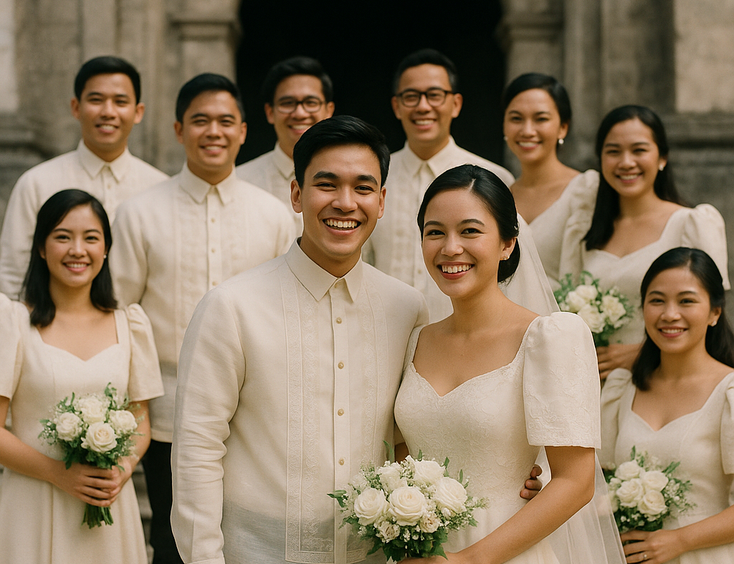



Filipino Wedding Entourage - Roles, Order of March, and Modern Etiquette
6 mins readCivil Weddings in the Philippines - Requirements, Costs, and Step-by-Step Process
9 mins readCivil Wedding Requirements in the Philippines - Complete Checklist
6 mins readCost of Wedding in the Philippines - 5 Essential Things You Need to Know
7 mins readPrincipal Sponsors (Ninong/Ninang) - How Many, How to Ask, What They Really Do
4 mins readVeil, Cord, Candle & Coins - Roles, Options, and When They Happen
4 mins readEntourage for a Traditional Pinoy Wedding - Complete Roles and Guide
6 mins readComplete List of Civil Wedding Requirements in the Philippines
8 mins readHow to Choose Wedding Ninongs and Ninangs - Ask Yourself These 3 Important Questions
5 mins read