


Documentary vs. Traditional Wedding Photography: What Filipino Couples Should Know
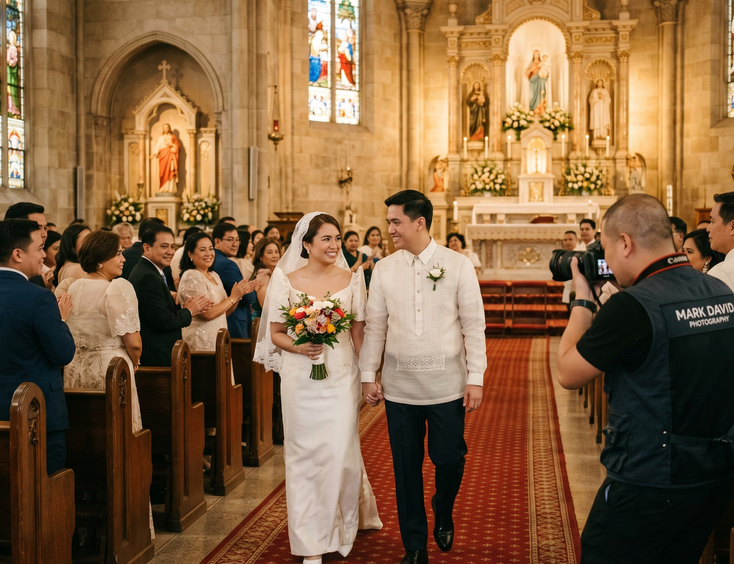
You'll hear photographers describe their style as "documentary" or "traditional" within the first few minutes of a consultation. These aren't interchangeable labels. They represent two different philosophies about what wedding photos should do, how the photographer works during your event, and what your final gallery looks like.
Filipino weddings carry specific demands that make this choice more consequential than it might be elsewhere. Your ceremony involves layered Catholic rituals. Your reception runs long with a structured program. Your family expects group photos with the full entourage. The style you choose determines whether your photographer prioritizes capturing moments as they unfold or directing them for the camera.
Both approaches produce strong results when matched to the right couple and the right wedding. This guide breaks down what separates them so you can make a confident decision when hiring a wedding photographer in the Philippines.
What Traditional Wedding Photography Looks Like
Traditional wedding photography is structured, directed, and posed. The photographer takes charge of key moments, positions people for group shots, and creates compositions with clean backgrounds and deliberate framing.
If you've flipped through your parents' wedding album, you've seen traditional coverage. The couple at the altar, facing the camera. The full entourage lined up on the church steps. The bride and groom cutting the cake, angled toward the photographer. Each image is composed with intention.
Filipino weddings generate long shot lists. You have principal sponsors, secondary sponsors, coin bearers, veil sponsors, cord sponsors, both sets of parents, the bridal party, college friends, work friends, and extended family. Traditional photography handles this volume through organized group sequences, often after the ceremony or during the reception.
A traditional photographer acts as a director. They tell you where to stand, how to angle your face, when to smile. They manage the lighting and background. They produce photos that look polished, balanced, and formal.
Strengths of this approach for Filipino weddings:
- You get guaranteed group shots with every sponsor and family group
- Your parents and grandparents receive the formal images they expect
- The photographer controls lighting and composition, producing consistent output
- Religious ceremonies with specific visual moments are covered methodically
Trade-offs:
- Posing takes time, which can eat into your reception schedule
- Spontaneous moments between family members may go uncaptured while the photographer stages the next group shot
- The final gallery can feel uniform in tone and composition
What Documentary Wedding Photography Looks Like
Documentary wedding photography borrows from photojournalism. The photographer observes and captures moments as they happen without intervening. No posing, no directing, no staging. The goal is an honest record of the day as it unfolded.
A documentary photographer watches your lola wipe tears during the ceremony. They catch your groom's face when the church doors open. They photograph the flower girl tugging her dress during the homily. These are the images you didn't plan for and can't recreate.
This style demands a different skill set. The photographer reads the room, anticipates moments, and positions themselves to capture expressions and interactions without disrupting the flow. They shoot more frames and edit down to the strongest images.
Filipino celebrations are rich with documentary material. The loud, joyful arrival of the groom's family. The ninang who cries during the veil ceremony. The cousins sneaking lumpia from the buffet before the program starts. A documentary photographer thrives in this energy because Filipino weddings generate emotion at a volume that makes observation rewarding.
Strengths of this approach for Filipino weddings:
- Captures genuine emotion during Catholic rituals without interrupting the ceremony
- Documents the energy of Filipino receptions, including the spontaneous moments between program segments
- Produces images that feel personal and unrepeatable
- Works well during fast-moving events where pausing for poses would break the flow
Trade-offs:
- You won't get directed group shots unless you build in time for them
- The final gallery may include fewer "perfect" compositions since the photographer works with available light and positioning
- Family members who expect formal photos may feel the coverage is incomplete
Understanding why wedding photography is taken so seriously in Filipino culture will help you weigh these trade-offs against your family's expectations.
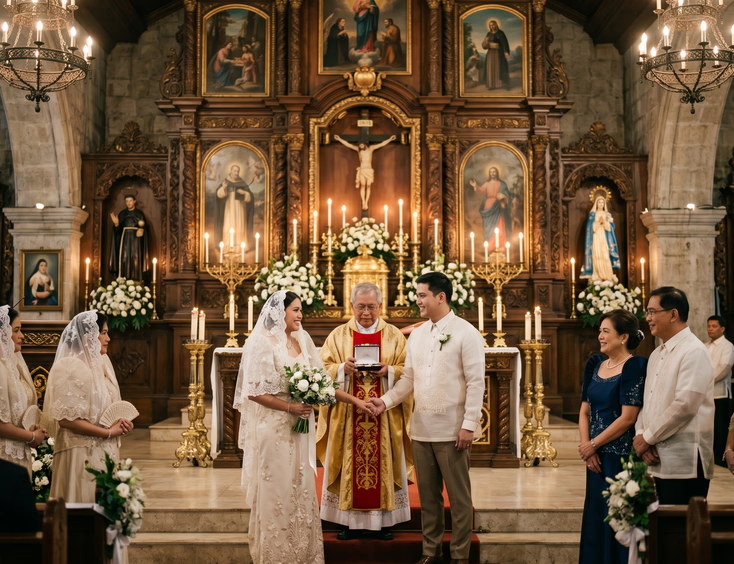
How Catholic Ceremonies Affect Your Choice
Most Filipino weddings follow the Catholic rite, which creates a defined sequence of ritual moments: the processional, the exchange of vows, the ring exchange, the arras (13 coins), the veil ceremony, the cord ceremony, the unity candle, and the blessing from sponsors.
Each moment lasts between 30 seconds and two minutes. Some overlap. The veil and cord sponsors approach the altar in sequence. The arras exchange involves small coins passed between hands. The unity candle requires positioning near the altar, often in dim light.
A traditional photographer knows this sequence and prepares angles in advance. They may coordinate with the priest or the wedding coordinator to ensure clear sightlines. The results are clean, well-lit images of each ritual.
A documentary photographer captures these same moments without direction, relying on anticipation and positioning. The images may include more of the surrounding context: the pew full of family watching, the altar server adjusting the candle, the priest's hands over the coins. The trade-off is less control over framing and lighting.
Filipino churches vary in their rules about photographer movement during Mass. Some restrict movement to the back of the church. Others allow the photographer near the altar. Ask your photographer about their experience with your specific church. A photographer who has shot at San Agustin Church in Intramuros will approach the space differently from one used to open-air chapel ceremonies in Tagaytay.
The Entourage Factor
Filipino wedding entourages are large. A typical entourage includes 4 to 12 principal sponsors (ninongs and ninangs), secondary sponsors for the veil, cord, coins, and candle, parents of both the bride and groom, the best man, maid of honor, groomsmen, bridesmaids, flower girls, ring bearers, coin bearers, and bible bearers.
Getting organized group photos of this many people requires a traditional approach. A documentary photographer won't line everyone up. If formal group shots matter to your family, you need a plan.
Most Filipino couples handle this by building a 30-to-45-minute window for group photos after the ceremony or before the reception. Some couples schedule it during cocktail hour while guests move to the reception venue.
Your photographer should provide a shot list template or ask you for one. Map out every grouping in advance: couple with bride's parents, couple with groom's parents, couple with all sponsors, couple with bridal party, couple with each family group. A seasoned Filipino wedding photographer will move through this sequence in 20 to 30 minutes without losing the energy of the day.
Reception Coverage Reveals the Bigger Differences
Filipino receptions follow a program. The couple enters. The host introduces them. The first dance happens. The parents' message plays. The SDE video screens. The cake cutting, the bouquet toss, the garter toss, the money dance, the speeches, the games. This program can run three to four hours, and some receptions continue well past midnight.
A traditional photographer covers program highlights with clean compositions. The couple cutting the cake, framed from the waist up. The first dance, shot from a low angle. The speeches, with the speaker centered and the couple reacting in the background. These are polished, predictable images.
A documentary photographer covers the same moments but widens the lens. The best man's hand shaking during his speech. The bride's mother gripping her husband's arm during the parents' message. The ring bearer asleep in a chair at 10 PM. These are the photos you didn't know you wanted.
Filipino receptions generate a specific kind of energy that rewards documentary coverage. The money dance gets loud and chaotic. Guests rush the dance floor. Grandparents get pulled into group photos by grandchildren. A documentary photographer captures the atmosphere. A traditional photographer captures the milestones.
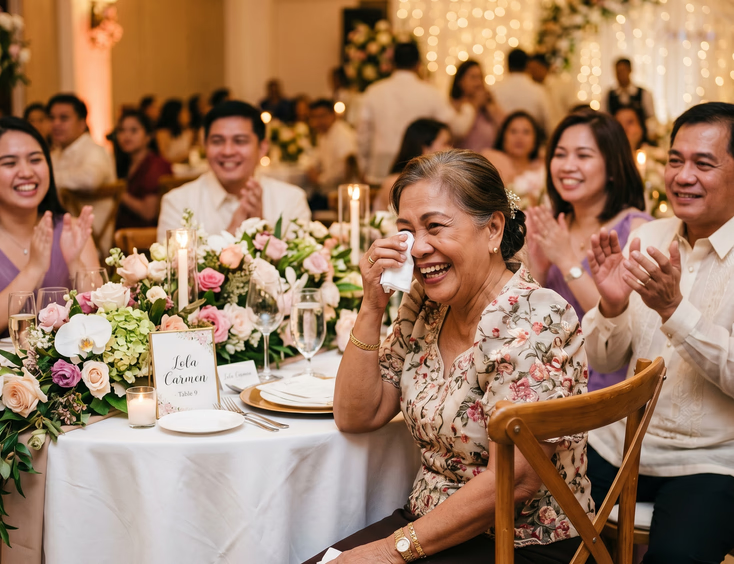
Candid Photography Sits Close to Documentary
Candid wedding photography at Filipino celebrations overlaps with the documentary approach. Both prioritize unscripted moments. The distinction is subtle: documentary photographers commit to non-intervention as a philosophy, while candid photographers may occasionally prompt a moment or guide a couple into better light before stepping back.
For most Filipino couples, the practical difference is small. If you value unposed, emotion-driven images, both candid and documentary photographers will deliver that feel. The label matters less than the portfolio. Look at full wedding galleries, not highlight reels, to judge whether a photographer's candid work is consistent.
You Don't Have to Choose One
Most Filipino wedding photographers offer a blended approach. They shoot documentary-style during the ceremony and preparation, then switch to traditional direction for group photos and key reception moments.
This hybrid model works well for Filipino weddings because the event structure demands both. You need someone who can disappear during the church rite and then step forward to organize 30 people on the steps outside.
When you meet with photographers, ask how they split their time between directed and observed coverage. Ask what percentage of a typical gallery is posed versus candid. Ask whether they bring a second shooter to cover spontaneous moments while they handle group shots.
A second shooter is valuable at Filipino weddings. While the lead photographer directs the formal group sequence, the second shooter captures guests greeting each other, the groom loosening his tie, the flower girl chasing her brother across the parking lot. Two perspectives give you a complete record.

How Style Affects Your Final Gallery
Traditional coverage produces galleries that feel cohesive. Colors are consistent. Compositions follow a visual rhythm. Every person looks their best because the photographer controlled the moment.
Documentary coverage produces galleries that feel alive. The emotional range is wider. Some images are quiet. Others are chaotic. The lighting varies because the photographer worked with what was available.
Filipino couples who value consistency and formality gravitate toward traditional. Couples who value emotion and storytelling gravitate toward documentary. Couples who want both hire photographers who can shift between modes throughout the day.
Your style preference may also connect to the visual treatment you want. Light and airy photography pairs well with both approaches but lends itself to the romantic, sun-drenched feel many Filipino couples love. Dark and moody photography creates drama that suits documentary coverage in dim churches and candlelit receptions.
Fine art wedding photography blends elements of both traditional and documentary, with the photographer curating moments like an artist composing a gallery. Editorial style coverage leans traditional in its use of direction but adds a fashion-forward edge to posing and composition.
Make the Decision Based on Your Wedding, Not a Trend
Start with your venue. A dim, ornate Catholic church with strict photography rules may favor a traditional approach with controlled flash and pre-planned angles. An open-air garden ceremony in Batangas with natural light everywhere gives a documentary photographer room to work.
Then consider your family. If your parents expect formal portraits with every sponsor group, build time for traditional coverage. If your family is relaxed and you'd rather spend reception time on the dance floor than posing, lean documentary.
Talk to your photographer about the specific sequence of your wedding day. Walk them through the ceremony, the gap between church and reception, the reception program, and the after-party. Ask how they'd cover each segment and where they'd switch between directed and observed shooting.
You can browse trusted wedding photographers in the Philippines to compare portfolios across both styles. Look at full galleries, ask about their approach to Filipino wedding rituals, and confirm whether they offer a hybrid option that covers your family's expectations and your personal taste.
Still Searching for a Right Match?
Find Your Perfect Wedding Supplier Today!
Discover trusted wedding suppliers across the Philippines in our complete directory. Compare services and connect with the ones that fit your dream celebration.
Browse Wedding SuppliersFeatured Blog Posts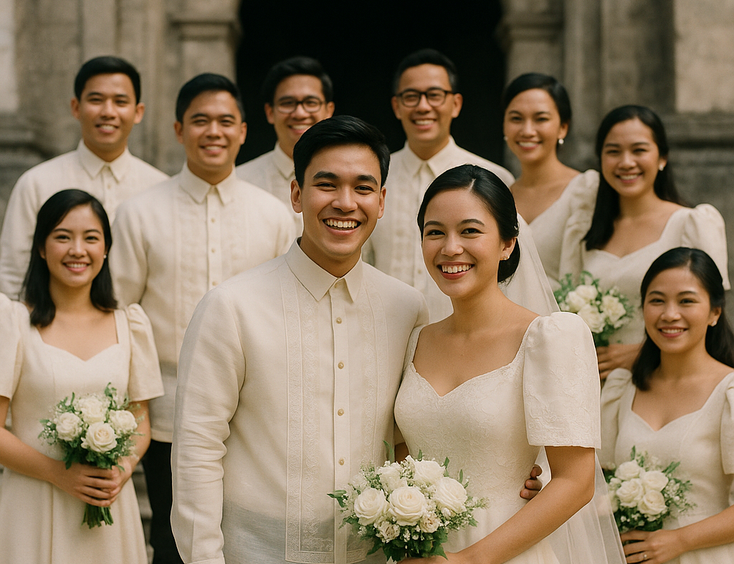

Filipino Wedding Entourage - Roles, Order of March, and Modern Etiquette
6 mins readCivil Weddings in the Philippines - Requirements, Costs, and Step-by-Step Process
9 mins readCivil Wedding Requirements in the Philippines - Complete Checklist
6 mins readCost of Wedding in the Philippines - 5 Essential Things You Need to Know
7 mins readPrincipal Sponsors (Ninong/Ninang) - How Many, How to Ask, What They Really Do
4 mins readVeil, Cord, Candle & Coins - Roles, Options, and When They Happen
4 mins readEntourage for a Traditional Pinoy Wedding - Complete Roles and Guide
6 mins readComplete List of Civil Wedding Requirements in the Philippines
8 mins readHow to Choose Wedding Ninongs and Ninangs - Ask Yourself These 3 Important Questions
5 mins read