


DJ vs. Live Musician for Filipino Weddings: The Debate Every Couple Needs to Settle Before Booking
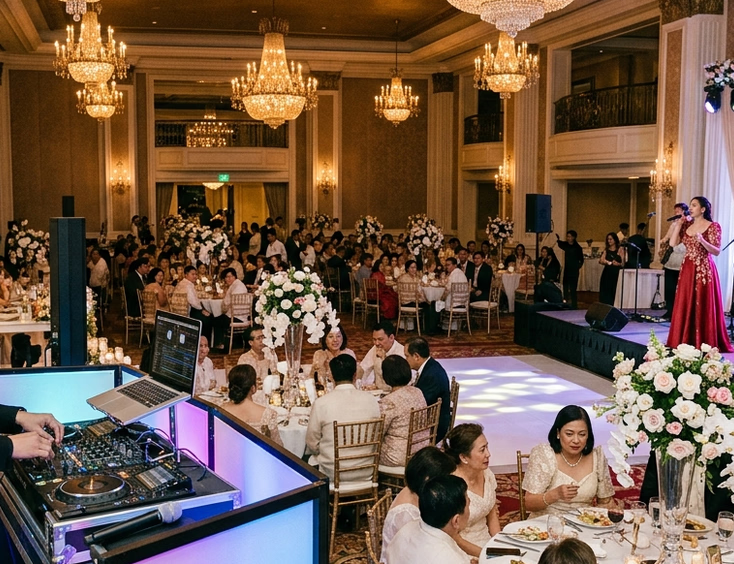
You and your partner start building your reception playlist. One of you wants a live band covering OPM hits. The other wants a DJ who can mix tracks and keep the dance floor packed until midnight. Both options cost real money, and you can only book one.
This decision shapes the entire mood of your reception. The music determines when guests dance, how long they stay, and what they remember about your wedding six months later.
For couples hiring wedding musicians in the Philippines, this is one of the first and most debated choices on the checklist. The answer depends on your venue, your crowd, your budget, and the kind of party you want to throw.
What a DJ Brings to a Filipino Wedding Reception
A wedding DJ in the Philippines plays pre-recorded tracks, manages transitions between songs, and controls the energy of the room through sequencing and volume. A good DJ reads the crowd and adjusts in real time.
Song variety without limits. A DJ can play any genre, any era, and any artist back to back. Your lola's "Dahil Sa Iyo" can transition into your barkada's favorite SB19 track without a pause. No rehearsal needed. No arrangement required.
Seamless transitions between program segments. Filipino receptions follow a packed timeline: grand entrance, first dance, parent dances, games, bouquet toss, money dance, open dancing. A DJ handles audio for all of these, including microphone feeds for the emcee and background music during meals.
Consistent volume and sound quality. A DJ works through a sound system calibrated to the venue. The output stays clean and controlled regardless of song complexity.
Smaller footprint. A DJ setup requires less space than a band. One table, a laptop, a mixer, and speakers. For smaller venues or tight reception layouts, that footprint matters.
What a Live Musician Brings to a Filipino Wedding Reception
A live musician or band performs songs in real time with acoustic or amplified instruments. The music is happening in the room, not coming from a file.
Energy that recorded music cannot match. A live band feeds off the crowd. When your guests cheer, the band pushes harder. When the singer locks eyes with the bride during a ballad, the room feels it. That exchange between performer and audience creates emotional peaks a speaker system cannot replicate.
Visual entertainment. A band on stage gives your guests something to watch. Filipino wedding receptions can stretch four to five hours. Live performers fill the visual space between program segments and keep attention in the room instead of on phones.
Customized arrangements. A live band can rearrange your first dance song, extend a chorus for the money dance, or slow down a track for the parent dance. These adjustments happen on the fly based on what the moment needs.
Prestige and formality. Live music carries a sense of occasion. A string quartet during dinner or a jazz band during cocktails signals a level of curation that elevates the reception beyond a standard party.
Sound Quality: Studio Polish vs. Live Texture
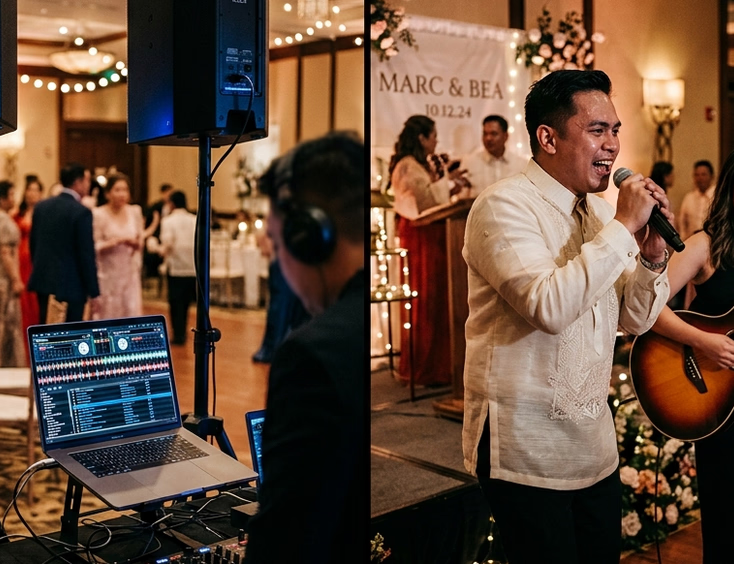
A DJ plays mastered recordings. Every note is clean, balanced, and produced to studio standards. The sound your guests hear is identical to what they hear on Spotify. For couples who want their reception to sound like a curated playlist, a DJ delivers that precision.
A live musician introduces texture. A vocalist's slight rasp on a high note. A guitarist's string buzz during a quiet verse. These imperfections give the music character. Some couples love that raw quality. Others find it distracting, especially if the band struggles with a song outside their comfort zone.
Ask yourself: do you want your reception music to sound polished or felt? The answer steers your decision.
Song Range and Repertoire Flexibility
A DJ has access to every recorded song in existence. Your playlist can jump from Whitney Houston to Eraserheads to Taylor Swift within three tracks. No rehearsal, no limits.
A live band works from a repertoire. Most wedding bands in the Philippines carry 80 to 150 songs they can perform well. If your must-play song falls outside their list, the band needs time to learn and rehearse it. Submit requests at least one month before the wedding.
Some genres translate better live than others. OPM ballads, acoustic pop, jazz standards, and classic rock sound great with a live band. EDM, hip-hop, and heavily produced pop tracks lose their punch without studio production. If your playlist leans toward the second category, a DJ serves those songs better.
The Filipino Reception Timeline and How Each Option Handles It
Filipino wedding receptions pack a lot into four to five hours. The right music provider needs to handle every segment without dead air or awkward transitions.
Grand entrance: A DJ drops your chosen walk-in track at full volume the second the emcee announces your names. A live band plays a cover or original fanfare. Both work. The DJ version is more predictable. The band version is more dramatic.
First dance: A DJ plays the exact version of your song, note for note. A live band performs their interpretation. If you want Rivermaya's "214" to sound like the recording, go with a DJ. If you want a stripped-down acoustic version with a vocalist who can stretch the final chorus while you dip your partner, go with a band.
Dinner: Background music during meals is easier for a DJ. Low volume, long playlist, no breaks. A live musician can cover this segment too, but a strolling violinist or an acoustic duo handles dinner music better than a full band at low volume.
Games and audience interaction: A DJ manages audio for the emcee, plays sound effects, and keeps the pacing tight during games. A live band sits idle during these segments or provides short musical stings between games. The DJ has the edge here.
Open dancing: This is where preference splits hardest. A DJ can mix tracks, build energy through sequencing, and keep the dance floor going without breaks. A live band brings raw energy and stage presence but needs short breaks between sets. Filipino guests who grew up dancing at family reunions respond well to both. Your crowd's personality determines which format keeps them on the floor longer.
Budget Comparison for Filipino Weddings
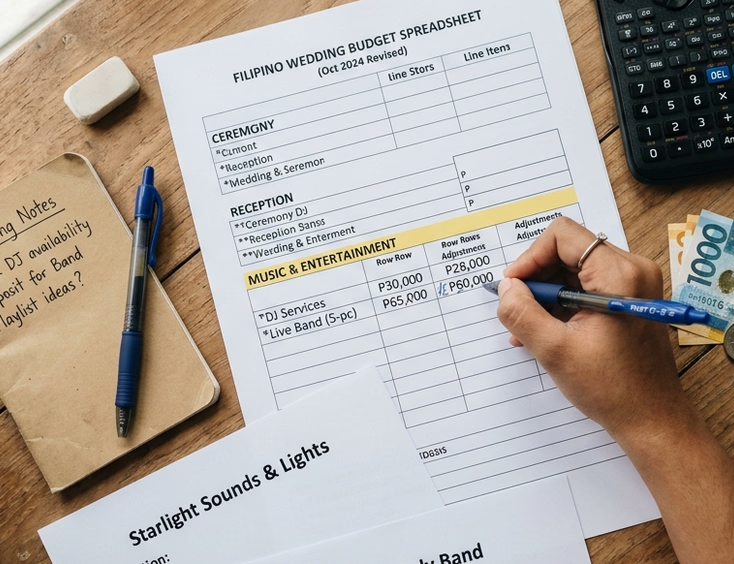
A wedding DJ in the Philippines typically costs between 8,000 PHP and 30,000 PHP depending on experience, equipment, and performance hours. This usually includes a sound system, lighting, and microphone feeds for the emcee.
A live wedding musician or band costs between 15,000 PHP and 60,000 PHP or more. A solo performer or duo sits at the lower end. A five to seven piece band with a vocalist, full backline, and sound engineer sits at the higher end. Some bands charge additional fees for overtime, travel outside Metro Manila, and special song requests.
If budget is tight, a DJ gives you more hours of music for less money. If you have room in the budget and want the atmosphere that live performance creates, a band or musician is worth the premium.
A middle option exists: hire a DJ for the full reception and add a solo live musician for specific moments. A pianist during cocktails or a saxophonist during dinner paired with a DJ for dancing gives you the best of both formats without doubling the cost.
Venue and Logistics
Your venue affects this decision more than most couples realize.
Hotel ballrooms: These venues can accommodate both a DJ setup and a full band stage. Most hotel ballrooms in Metro Manila have in-house sound systems that support either option. Confirm with your venue coordinator what equipment is provided and what your musician or DJ needs to bring.
Garden and outdoor venues: Wind, ambient noise, and open-air acoustics challenge live musicians more than DJs. A band needs a sound engineer who can adjust levels for outdoor conditions. A DJ works through a PA system that handles outdoor projection more predictably. If your reception is in Tagaytay, Batangas, or any open-air venue, factor in sound coverage when choosing.
Beach weddings: Sand, humidity, and salt air affect instruments. A DJ setup is easier to protect from the elements. A live band at a beach reception needs covered staging and may charge extra for the risk to their equipment.
Small or intimate venues: Restaurants, private homes, and boutique venues with 50 to 80 guests favor acoustic performers or a DJ at low volume. A full band can overwhelm a small space. A solo musician or duo matches the intimacy of the setting.
The Hybrid Option: DJ and Live Musician Together
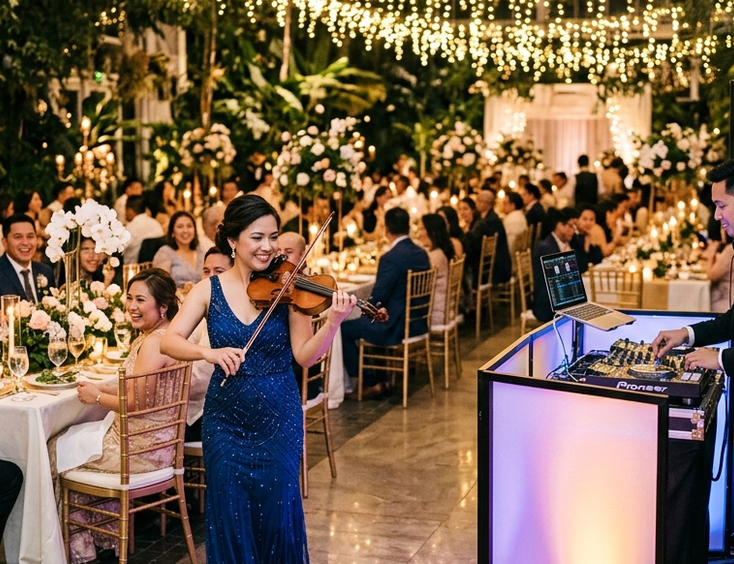
Many Filipino couples skip the either-or debate and book both. This hybrid format is becoming more common at receptions in Metro Manila, Cebu, and Davao.
A typical hybrid setup looks like this:
- A solo musician or small ensemble plays during the ceremony and cocktail hour
- A DJ takes over for the reception program, dinner music, games, and open dancing
- The live musician returns for one or two spotlight moments: a serenade during dinner or an acoustic set between DJ sets
This approach costs more than a single booking but less than a full band for the entire reception. It also solves the genre problem. Your live musician handles ballads, OPM classics, and acoustic sets. Your DJ handles everything else.
Coordinate the handoffs between the two. Your wedding coordinator or emcee should know the exact moments when the DJ stops and the live musician starts. Rehearse these transitions during your final planning meeting.
Questions to Ask Before You Book
For a DJ:
- Do you bring your own sound system and lighting, or do you rely on the venue's equipment?
- Can you handle microphone feeds for the emcee and speakers during the program?
- How do you handle song requests from guests during the reception?
- Do you have experience with Filipino wedding reception timelines?
- What is your overtime rate per hour?
For a live musician or band:
- Can I hear a demo or attend a live performance before booking?
- How many songs are in your wedding repertoire?
- How far in advance do you need special song requests?
- Do you provide your own sound equipment and engineer?
- How long are your sets and breaks?
- Do you have experience performing at my venue or a similar one?
Both providers should give you a contract that specifies performance hours, overtime rates, equipment inclusions, travel fees, cancellation terms, and meal provisions. Standard practice at Filipino weddings is to provide a meal or a 500-peso meal allowance per performer.
How Your Guests Can Help You Decide
Think about who will be in the room. A reception with 300 guests spanning three generations has different needs than a 60-person dinner party.
Older Filipino guests (parents, titos, titas, lolos, lolas) appreciate live music. They grew up watching bands at fiestas, hotel lounges, and family celebrations. A live performer playing "Sana Maulit Muli" or "Kung Ako Na Lang Sana" connects with that generation on a personal level.
Younger guests (your barkada, college friends, work colleagues) respond to high-energy DJ sets. They want seamless mixing, familiar pop tracks, and a dance floor that doesn't stop for band breaks.
If your guest list skews older, lean toward live music. If it skews younger, lean toward a DJ. If it's an even split, the hybrid option covers both audiences.
Make the Decision That Fits Your Wedding
No format is better than the other. A DJ gives you consistency, variety, and value. A live musician gives you atmosphere, emotion, and spectacle. The right choice depends on your priorities, your venue, your guest list, and your budget.
Book early. Peak wedding months in the Philippines fill fast. Whether you choose a DJ, a live band, a solo musician, or a hybrid setup, secure your provider 6 to 12 months before your wedding date.
Browse our wedding musicians directory to compare live musicians, bands, and other wedding entertainment options available across the Philippines.
Still Searching for a Right Match?
Find Your Perfect Wedding Supplier Today!
Discover trusted wedding suppliers across the Philippines in our complete directory. Compare services and connect with the ones that fit your dream celebration.
Browse Wedding SuppliersFeatured Blog Posts

Filipino Wedding Entourage - Roles, Order of March, and Modern Etiquette
6 mins readCivil Weddings in the Philippines - Requirements, Costs, and Step-by-Step Process
9 mins readCivil Wedding Requirements in the Philippines - Complete Checklist
6 mins readCost of Wedding in the Philippines - 5 Essential Things You Need to Know
7 mins readPrincipal Sponsors (Ninong/Ninang) - How Many, How to Ask, What They Really Do
4 mins readVeil, Cord, Candle & Coins - Roles, Options, and When They Happen
4 mins readEntourage for a Traditional Pinoy Wedding - Complete Roles and Guide
6 mins readComplete List of Civil Wedding Requirements in the Philippines
8 mins readHow to Choose Wedding Ninongs and Ninangs - Ask Yourself These 3 Important Questions
5 mins read