


Creating Tiered Wedding Packages That Couples Find Easy to Choose From

Filipino wedding suppliers often present pricing in ways that make couples disengage. A single price with no options feels rigid. A long list of services with separate fees overwhelms. Custom quotes for every couple slow down decisions and lose bookings. The supplier who designs clear, well-structured package tiers wins bookings faster than the one who treats pricing as an open conversation.
Tiered packages do more than display prices. They guide couples toward decisions. They filter inquiries by budget. They anchor what value looks like at different price points. They reduce the friction of saying yes. The Filipino wedding supplier who masters tiered packaging builds a booking system that closes faster, attracts the right couples, and produces stronger revenue per wedding.
This guide walks Filipino wedding suppliers through the framework for creating tiered packages that couples find easy to choose from. The right number of tiers. The right gap between tiers. The right inclusions at each level. The right anchoring strategies. The right ways to communicate the structure. Strong tiered packaging transforms hesitant couples into confident bookings.
Why Tiered Packages Outperform Single Prices and Custom Quotes
Filipino wedding suppliers fall into three pricing structures. Each produces different results.
Single price. One package, one price, no options. The structure feels simple but eliminates flexibility. Couples whose budgets sit slightly below or slightly above your single rate disengage entirely.
Custom quotes for every couple. The structure feels personalized but slows decisions. Couples receive different prices for similar weddings, which damages trust when they compare notes with friends. Suppliers spend hours building custom proposals that often go nowhere.
Tiered packages. Two to four pre-built options at clear price points. Couples self-select into the tier that matches their budget. The structure speeds decisions and produces predictable revenue.
Three patterns explain why tiered packages outperform.
Couples want clear options. Filipino couples making wedding decisions appreciate seeing structured choices. The visible options reduce decision anxiety.
Tiered packaging anchors value perception. Couples see three prices and naturally evaluate which delivers the best value. The middle option often feels like the obvious choice.
Tiered packaging speeds the booking conversation. Couples ready to book can choose a tier and move forward. The reduced friction increases conversion rates.
The tier framework sits inside the wider pricing system you built through how to price your wedding services in the Philippines without underselling. Strong pricing strategy uses tiered packaging as its primary structure.
Step One: Choose the Right Number of Tiers
Filipino wedding suppliers experimenting with tiers sometimes go too few or too many. Both extremes hurt conversion.
Two tiers. The structure forces a binary choice. Couples whose budget sits between your two prices feel constrained.
Five or more tiers. The structure overwhelms couples. Decision paralysis sets in. Couples disengage rather than choose.
Three tiers. The optimal structure for most Filipino wedding suppliers. Three options provide enough variety without overwhelming. The middle tier becomes the natural anchor point.
Four tiers. The structure works for premium suppliers with diverse couple types. The fourth tier accommodates couples whose needs sit clearly above the standard mid tier.
Choose three tiers as your default. Add a fourth only when your business genuinely serves couples at four distinct price points.
The choice of three tiers aligns with how couples think about decisions. Couples comparing options instinctively look at three. More than three becomes work. Fewer than three feels limiting.
Step Two: Define the Purpose of Each Tier
Filipino wedding suppliers sometimes build tiers without clear purposes. The structure becomes random rather than strategic.
Each tier should serve a specific purpose.
Entry tier purpose. To accommodate couples whose budgets are constrained but who still meet your minimum quality standards. The entry tier acts as a filter. Couples who cannot afford it are not your target market. Couples who book it represent the baseline of your service quality.
Mid tier purpose. To anchor as the obvious choice. The mid tier should feel like the best value across your packages. Strong inclusions. Reasonable price. Clear positioning as the right balance.
Premium tier purpose. To accommodate couples wanting the full experience. The premium tier signals what your top quality looks like and captures couples with the budget to pay for it.
If you build a fourth tier, its purpose should be either ultra-budget filtering or ultra-premium positioning. Avoid placing a fourth tier in the middle. The clutter blurs the mid tier's anchor role.
The purpose of each tier shapes the inclusions. Inclusions follow strategy, not the other way around.

Step Three: Build Meaningful Price Gaps Between Tiers
Filipino wedding suppliers sometimes build tiers with small price gaps. The structure dilutes the anchor effect.
Build price gaps that feel meaningful.
A 30 to 50 percent jump between tiers works well for most Filipino wedding suppliers.
If your entry tier is PHP 65,000, your mid tier should fall between PHP 85,000 and PHP 100,000.
If your mid tier is PHP 95,000, your premium tier should fall between PHP 125,000 and PHP 145,000.
The price gap creates contrast. Couples comparing tiers can clearly see the differences in pricing and inclusions. The contrast strengthens the mid tier's anchor effect.
Smaller gaps blur differences. A PHP 75,000 entry tier and PHP 85,000 mid tier feel too similar to differentiate clearly.
Larger gaps create distance. A PHP 50,000 entry tier and PHP 250,000 premium tier feel disconnected. Couples cannot see themselves making the leap.
The 30 to 50 percent range produces meaningful gaps without creating disconnection.
Step Four: Design Mid Tier Inclusions That Feel Like the Best Value
Filipino wedding suppliers should pack the mid tier with inclusions that make it feel like the obvious choice.
Three techniques build mid tier value.
Include features the entry tier excludes. The mid tier should clearly upgrade what couples receive. Additional hours of coverage. A second supplier on the team. Premium deliverables. Extended editing time.
Match price-per-feature math. Calculate the per-feature value at each tier. The mid tier should produce the most favorable per-feature ratio. Couples doing the math see the mid tier as the smartest choice.
Include "wow" features at the mid tier. A complimentary engagement session. A printed album. A premium delivery package. The wow features create emotional excitement that justifies the higher price.
A sample tier design for a Filipino wedding photographer.
Entry tier. Six hours of coverage. One photographer. 400 edited photos. Online gallery. PHP 65,000.
Mid tier. Eight hours of coverage. Two photographers. 600 edited photos. Online gallery. USB drive with high-resolution files. Complimentary engagement session. PHP 95,000.
Premium tier. Ten hours of coverage. Two photographers and one videographer. 800 edited photos. Online gallery. USB drive. Printed wedding album. Engagement session and bridal session. Save-the-date video. PHP 145,000.
The mid tier offers significantly more than the entry tier. The premium tier offers full-service luxury. The mid tier reads as the obvious value.
The framework pairs with crafting a wedding package pricing sheet Filipino couples understand. The pricing sheet displays tiers in their full marketing context.
Step Five: Name Each Tier Strategically
Filipino wedding suppliers sometimes name tiers with weak labels like Package A, B, C. The names fail to differentiate the tiers psychologically.
Name tiers with intentional language.
Three naming approaches work.
Quality-tier naming. Essential. Signature. Premium. Or Basic. Standard. Luxury. The labels clearly position each tier on a quality scale.
Brand-anchored naming. Use words tied to your brand identity. A floral designer might use Bloom. Garden. Wildwood. A photographer might use Storyteller. Documentary. Heirloom.
Aspirational naming. Names that suggest aspiration. Forever. Lasting. Timeless. The aspirational layer adds emotional weight.
Avoid alphabetical labels. Package A and Package B feel transactional. Named tiers feel intentional.
Match the naming to your brand voice. Premium brands need premium-feeling names. Approachable brands need warmer names. Match the tone consistently.
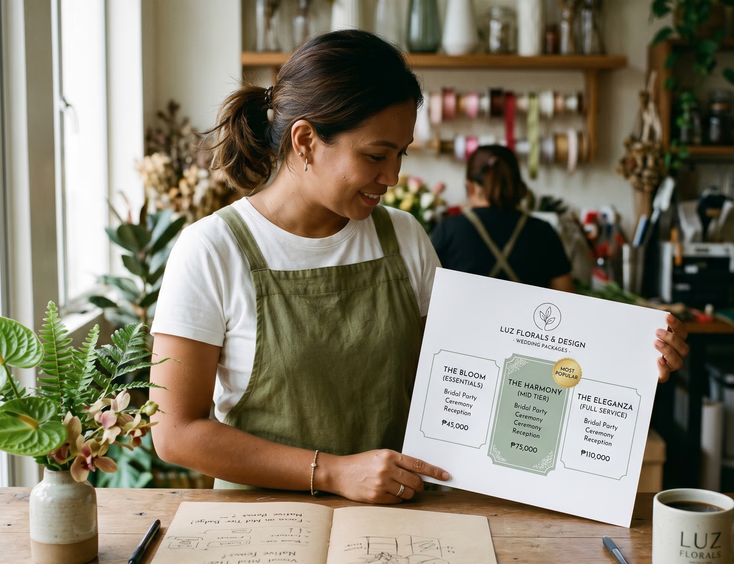
Step Six: Display the Tiers in a Visual Hierarchy
Filipino wedding suppliers can shape couple decisions through how the tiers appear visually. The mid tier should be visually prominent.
Three visual techniques anchor the mid tier.
Center the mid tier. Place the mid tier between the entry and premium tiers. Center placement signals the natural balance.
Highlight the mid tier visually. Use a slight color treatment, a "Most Popular" badge, or a subtle border to draw attention to the mid tier.
Use larger text for the mid tier price. The visual weight signals importance.
The visual hierarchy supports the strategic anchoring. Couples scanning the pricing page or document naturally focus on the mid tier.
The display framework integrates into the pricing sheet design covered in crafting a wedding package pricing sheet Filipino couples understand.
Step Seven: List Inclusions in a Consistent Format
Filipino wedding suppliers often list inclusions inconsistently across tiers. The inconsistency makes comparison harder for couples.
List inclusions in a consistent format.
Use the same order across all tiers. Hours of coverage. Number of suppliers on team. Number of edited photos. Delivery format. Bonus services.
Use checkmarks or visual indicators. A clean checkmark for included items and an X or blank for excluded items makes comparison instant.
Use specific numbers. "Eight hours of coverage" reads better than "Full day coverage." Specific numbers feel concrete. Vague language feels uncertain.
Group similar inclusions. List all coverage-related items together. Then all deliverables. Then all bonus services. The grouping makes the comparison cleaner.
The consistency helps couples evaluate tiers side by side. Inconsistent listings force couples to work to understand differences, which slows decisions.
Step Eight: Anticipate Common Add-On Requests
Filipino wedding suppliers should include common add-on requests in their tier design rather than forcing couples to ask for each one separately.
Three add-on patterns appear consistently.
Extra coverage hours. Many couples want more hours than the base package includes. Include hourly rates for add-on coverage transparently.
Additional deliverables. Albums, prints, USB drives, save-the-date videos. List the standard add-ons with clear pricing.
Travel and accommodation. For destination or out-of-town weddings, list travel and accommodation rates.
Display add-ons in a clear section after the main tiers. The structure tells couples that customization is possible without disrupting the core tier framework.

Step Nine: Address Couples Who Want to Customize
Filipino wedding suppliers sometimes face couples who want to mix and match across tiers or build fully custom packages. The pattern can damage the tier structure if handled poorly.
Three approaches work.
Hold the tier structure firmly. The tiers exist for a reason. Mixing across tiers undermines the strategy. Explain that the tiers reflect carefully balanced inclusion sets and that custom mixes are not offered.
Allow strategic add-ons only. Couples can add specific add-ons (extra hours, additional deliverables, premium services) on top of any tier. The add-on structure provides flexibility without breaking the tiers.
Offer custom quotes only for genuinely complex weddings. Multi-day weddings, large destination productions, or unusual scope requirements may justify custom quotes. The exception should be rare, not routine.
Communicate the tier framework confidently. Couples who push for custom pricing often respond well when the supplier explains the structure clearly. The clarity signals professionalism.
The framework aligns with how to handle pwede pa bang bumaba ang price without losing the booking. Holding tier structure prevents the negotiation pressure that erodes pricing.
Step Ten: Update Tier Pricing and Inclusions Quarterly
Filipino wedding suppliers often hold tier structures static for years. The pattern lets costs, market conditions, and growing expertise outpace the pricing.
Review tier pricing and inclusions quarterly.
Three review questions matter.
Are bookings spreading correctly across tiers? If too many couples book the entry tier, the entry tier may be priced too high relative to the mid tier. If too few couples book the mid tier, the inclusions may not feel valuable enough.
Are the inclusions still profitable? Rising costs may have eroded margins on specific inclusions. Adjust the inclusions or raise pricing.
Is the market positioning still appropriate? As your brand grows and reputation builds, the tier structure should grow accordingly.
Make modest adjustments at each review. Small refinements compound over years.
The review framework pairs with the wider pricing review process in how to price your wedding services in the Philippines without underselling.
Step Eleven: Track Tier Performance Carefully
Filipino wedding suppliers who track tier performance learn how to refine the structure over time.
Track three metrics quarterly.
Distribution of bookings across tiers. The ideal distribution often centers around the mid tier. A typical distribution might be 25 percent entry, 55 percent mid, and 20 percent premium. Significant deviations signal that the tier structure needs adjustment.
Revenue per booking by tier. Calculate the average revenue per booking for each tier. The data informs strategic decisions about which tiers to emphasize.
Inquiry-to-booking conversion by tier. Some tiers may convert better than others. Track the patterns to refine the structure.
The wider tracking framework fits inside tracking your numbers: KPIs every wedding supplier should watch.
Common Filipino Wedding Supplier Tier Design Mistakes
Filipino wedding suppliers repeat the same tier design mistakes.
Too few tiers. Binary choices lose bookings.
Too many tiers. Decision paralysis kills conversions.
Small price gaps between tiers. The structure dilutes the anchor effect.
Inconsistent inclusion listings. Couples cannot compare easily.
Weak mid tier inclusions. The mid tier fails to feel like the obvious choice.
Generic tier names. Package A and B lack personality.
No visual hierarchy in display. The mid tier does not stand out.
Failing to anticipate add-on requests. Couples have to ask for each customization.
Allowing custom packages too freely. The custom pattern undermines the tier strategy.
Holding tier structures static for years. The pricing falls behind costs and market.
Failing to track tier performance. Without data, refinements become guesswork.
Building tiers without clear purposes. Random tiers produce random results.
Using alphabetical labels. Package A and B feel transactional.
Hiding the premium tier. Some suppliers fear showing premium pricing. The pattern misses bookings from couples wanting full-service experiences.
Treating tiers as static templates. Strong tiers evolve with the business.
Where Tiered Packages Fit in Your Wider Booking System
Tiered packages are the structural foundation of your pricing strategy. They affect every other part of the booking system. The packages couples see shape what they expect. The pricing structure determines what you earn. The tier design influences which couples book.
For the full marketing and booking framework, see the complete guide to getting more wedding clients in the Philippines.
Choose three tiers as your default. Define the purpose of each tier. Build meaningful price gaps. Design mid tier inclusions that feel like the best value. Name each tier strategically. Display tiers in a visual hierarchy. List inclusions in a consistent format. Anticipate common add-on requests. Address couples who want to customize. Update tier pricing and inclusions quarterly. Track tier performance. Filipino wedding suppliers who treat tiered packaging as strategy build pricing structures that produce predictable revenue, faster bookings, and the kind of business growth that comes from strategic decisions rather than guesswork.
Join the Philippines' Trusted Wedding Network
Connect With Couples Ready to Book Your Services
Showcase your wedding business to engaged Filipino couples searching for trusted suppliers. Build your portfolio presence, grow your bookings, and stand out in your category.
List Your BusinessFeatured Blog Posts



Filipino Wedding Entourage - Roles, Order of March, and Modern Etiquette
6 mins readCivil Weddings in the Philippines - Requirements, Costs, and Step-by-Step Process
9 mins readCivil Wedding Requirements in the Philippines - Complete Checklist
6 mins readCost of Wedding in the Philippines - 5 Essential Things You Need to Know
7 mins readPrincipal Sponsors (Ninong/Ninang) - How Many, How to Ask, What They Really Do
4 mins readVeil, Cord, Candle & Coins - Roles, Options, and When They Happen
4 mins readEntourage for a Traditional Pinoy Wedding - Complete Roles and Guide
6 mins readComplete List of Civil Wedding Requirements in the Philippines
8 mins readHow to Choose Wedding Ninongs and Ninangs - Ask Yourself These 3 Important Questions
5 mins read