


Building Relationships With Venues, Churches, and Garden Reception Sites
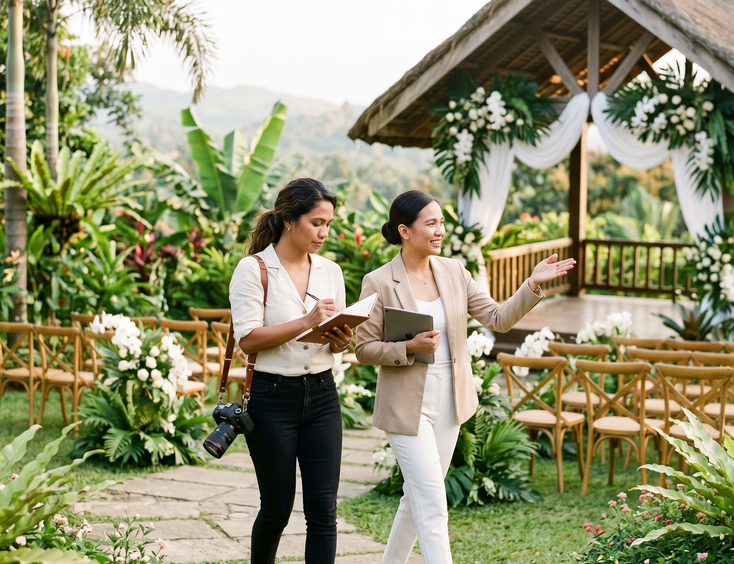
Filipino wedding suppliers who build strong relationships with venues, churches, and garden reception sites book more weddings than those who treat venues as backdrops. Venues sit at the center of every wedding. They host the ceremony, the reception, or both. They see hundreds of weddings each year. They know which suppliers deliver and which ones cause problems. When a venue trusts you, they recommend you to every couple who books with them. The pipeline becomes consistent.
Yet most Filipino wedding suppliers ignore venue relationships. They show up on the wedding day, handle their work, and leave. They never introduce themselves to the venue staff. They never follow up after the wedding. They never offer the venue any value beyond their own service. They miss one of the strongest, most renewable referral sources in the Filipino wedding industry.
This guide walks Filipino wedding suppliers through the system for building real relationships with venues, churches, and garden reception sites. The kind of relationships that produce referrals month after month and put you on the preferred vendor lists that drive sustained booking growth.
Why Venue Relationships Matter More Than Filipino Suppliers Realize
Filipino couples book their venue first more often than any other supplier. The wedding date follows the venue. Other supplier bookings follow the venue. The venue is the anchor decision around which the rest of the wedding takes shape.
This sequence makes venues extraordinarily valuable referral partners.
Three patterns produce the value.
They speak to couples earlier than other suppliers. A coordinator might meet the couple six to nine months before the wedding. A venue often books a year or more in advance. That early conversation shapes which suppliers the couple considers.
They maintain preferred vendor lists. Many Filipino wedding venues, especially established hotels, gardens, and event spaces, recommend specific photographers, florists, coordinators, caterers, and other suppliers to their clients. Inclusion on these lists drives consistent bookings without ongoing sales effort.
They see suppliers deliver across many weddings. Venues observe suppliers in real time, week after week. They know which suppliers arrive on time, work cleanly, treat staff well, and finish strong. The pattern recognition shapes their referrals.
The relationship sits inside the wider supplier partnership system you built through how to build supplier partnerships that send you wedding referrals monthly. Venues are one of the strongest supplier categories within that system.
Step One: Map the Venues in Your Service Area
Filipino wedding suppliers waste effort trying to build relationships with venues that do not match their target couples. The fix is to map the venues that serve your kind of couple first.
Build a venue list in three tiers.
Tier one venues. Spaces where your target couples already book frequently. A photographer specializing in Tagaytay garden weddings should list every notable garden venue in Tagaytay and the surrounding region. A coordinator focused on luxury hotel weddings in Manila should list the major BGC, Makati, and Ortigas hotels.
Tier two venues. Spaces where your target couples sometimes book but are not your primary focus. A garden photographer might include a few intimate Manila venues, a few Cavite garden sites, and a few Batangas destinations. Relationships in tier two diversify your booking pipeline.
Tier three venues. Spaces aligned with future expansion. If you want to grow into destination weddings, list venues in Cebu, Bohol, or Palawan. If you want to grow into church wedding specialization, list the major heritage churches in your region.
Aim for 10 to 25 venues in your initial list. The number should feel manageable. Building five or six deep relationships beats spreading attention across 50 venues with no meaningful traction.
Update the list quarterly. New venues open. Some venues become unfit for your work. The list should reflect the current market.
Step Two: Research Each Venue Before Reaching Out
Filipino wedding suppliers fail to build venue relationships by approaching venues without research. The first conversation feels generic. The venue staff disengages.
Research each venue carefully.
Visit their website. Note their preferred wedding style, their featured weddings, their pricing tier, and any preferred vendor program they advertise.
Search their social media. See which suppliers they tag in posts. See how they describe their ideal couples. The patterns reveal what kind of suppliers they value.
Find their key staff. Most Filipino wedding venues have an events manager, a sales coordinator, or a bridal manager. These are the people who recommend suppliers. Find their names through social media or industry connections.
Check their reviews. Read past wedding reviews. Couples often mention the supplier-venue dynamic in their reviews. The pattern reveals what venues prioritize.
Identify any preferred vendor lists. Established Filipino wedding venues often publish their preferred vendor lists publicly or share them with engaged couples. Knowing who is already on the list tells you whether the venue is open to new suppliers.
The research takes 15 to 20 minutes per venue. The targeted outreach that follows produces meaningful conversations rather than generic introductions.

Step Three: Introduce Yourself Through the Right Channel
Filipino wedding suppliers approach venues incorrectly more often than not. Some send generic LinkedIn messages. Some show up unannounced at the venue. Some message random Instagram accounts. The wrong channel kills the relationship before it begins.
Use the channel each venue prefers.
For established hotels and event venues. Email the events manager directly. Most venues publish events manager emails on their websites or through industry directories. A polished email opens more doors than a generic message.
For garden venues and boutique spaces. Direct messages on Instagram or Facebook often work. These venues often run leaner teams. Personal outreach feels more natural.
For churches. The conversation is different. Most Philippine wedding churches have administrative offices that handle wedding logistics. The conversation focuses on understanding wedding day requirements, photography or videography restrictions, and parish protocols rather than supplier preferences.
For venues with preferred vendor programs. Follow the application process publicly stated by the venue. Some venues require a formal portfolio submission, a meeting, or a fee.
Write a tailored introduction message.
A sample message for a photographer to a Tagaytay garden venue.
"Hi [Events Manager Name],
I am [Your Name], a Manila-based wedding photographer specializing in garden weddings in Tagaytay. I have been admiring the work you do at [Venue Name] for years. The Lorraine and Karlo wedding featured on your Instagram in March was a beautiful example of what I love about your space.
I would love to introduce myself properly and learn about how you work with photographers serving your couples. Would you be open to a short meeting or studio visit in the next few weeks?
I have attached a brief portfolio of recent garden weddings I have shot. I am happy to share more or set up a video call at your convenience.
Looking forward to connecting.
Warm regards, [Your Name] [Studio Name] [Contact Details]"
The message is personal, specific, and respectful. It avoids hard-selling. It opens the door to a deeper conversation.
Step Four: Visit the Venue Before Asking for the Relationship
Filipino wedding suppliers often try to build venue relationships entirely through messaging. The approach has limits. Venues build trust through in-person interactions more than through screens.
Visit the venue when possible.
For local venues. Schedule a site visit. Walk through the space. Meet the events manager in person. Get a feel for the venue's flow, lighting, and amenities. Bring your portfolio or a thoughtfully prepared introduction document.
For destination venues. If the venue is in Cebu, Bohol, Palawan, or another destination region, plan visits when you have weddings in the area. Combine your business travel. Most Filipino wedding suppliers cannot afford to fly to every venue immediately.
During the visit. Take notes about the venue's strengths, the unique features that affect supplier work, and the staff dynamics. The notes inform how you work with the venue on future weddings.
Bring a small gesture. A small token like a printed portfolio book, a small bouquet for the events manager, or a thoughtful card. The gesture differentiates you from suppliers who show up empty-handed.
Ask thoughtful questions. What do photographers and other suppliers usually need to know about working at the venue? What are common challenges? What makes a supplier easy or difficult to work with from the venue's perspective? The questions show respect and curiosity.
The visit takes one to two hours. The relationship that follows often lasts years.
Step Five: Deliver Exceptional Work at the Venue
Filipino wedding suppliers earn venue referrals primarily through how they work at the venue. The wedding day is the most important moment in the relationship.
Six behaviors matter most.
Arrive early. Filipino traffic shapes wedding day timelines. Arriving 30 to 60 minutes early provides a buffer that protects everyone.
Treat venue staff with respect. The setup crew. The catering staff. The cleaners. The security. They notice how suppliers behave. Word travels fast within venue teams.
Respect venue policies. Many venues have rules about photography angles, restricted areas, lighting, music volume, or alcohol handling. Suppliers who push against the rules damage relationships.
Communicate proactively with venue staff. Check in with the events manager when you arrive. Confirm your setup needs. Ask if anything has changed. The proactive communication signals professionalism.
Leave the space clean. Whether you are a florist, caterer, or coordinator, leave the space in the condition you found it or better. Venues notice cleanup more than any other behavior.
Handle problems calmly. Things go wrong at weddings. Power outages, sudden rain, equipment failures, vendor delays. Suppliers who handle issues calmly without dramatizing earn permanent trust.
The wider work standards align with the conduct described in working with wedding planners and coordinators in the Philippines: a supplier's guide. Venues notice the same professional behaviors planners do.

Step Six: Send a Thank-You After Each Wedding
Filipino wedding suppliers often disappear after working a wedding at a venue. The opportunity to reinforce the relationship vanishes.
Send a thank-you within a week of every wedding at a venue.
A sample message.
"Hi [Events Manager Name],
Just wanted to send a quick thank-you for the smooth coordination at Anna and Mark's wedding last Saturday. Your team handled the setup beautifully and made the day easier for everyone. I am attaching a few highlight photos from the wedding for your portfolio if you would like to use them. Let me know if you need anything more.
Looking forward to the next wedding we work together.
Warm regards, [Your Name]"
The thank-you message does four things. It signals professionalism. It deepens the personal relationship. It provides usable content for the venue. It positions you for future referrals.
Include high-quality photos that showcase the venue. Venues love when suppliers help promote their space. A photographer who consistently provides venue-ready images becomes a favorite vendor.
For florists, send styled shots of your installations at the venue. For coordinators, share the final timeline or behind-the-scenes content. The pattern is to give the venue value beyond the wedding day itself.
Step Seven: Stay Top of Mind Between Weddings
Filipino wedding suppliers who only contact venues when they have a wedding fade quickly. The fix is staying connected between events.
Three touchpoints work well.
Quarterly check-ins. A short message every few months. "Hi [Events Manager Name], hope your team has had a great quarter. Anything new at the venue worth knowing? I have a Tagaytay wedding coming up in November and wanted to check in."
Share useful industry news. Filipino wedding industry updates, new trends, or content that might help the venue. The pattern positions you as a resource, not just a vendor.
Engage on social media. Comment on the venue's posts. Repost their content to your stories with credits. Tag them when you feature weddings shot at their space. The visibility matters.
Send small gestures during holidays. Christmas cards. Filipino holiday greetings. Anniversary acknowledgments. The gestures cost little and produce lasting goodwill.
Visit again when possible. Site visits do not have to be one-time events. Returning to walk through changes, attend their open house, or meet new staff strengthens the relationship.
Step Eight: Help the Venue Promote Their Space
Filipino wedding suppliers who help venues promote their space build relationships that produce referrals for years.
Three practical ways to help.
Share wedding feature content with the venue. After every wedding, give the venue access to a curated gallery. Many venues use these images on their own marketing.
Tag the venue in your real wedding features. Every post, blog feature, and social share that mentions a venue you worked at sends them traffic and recognition.
Refer engaged couples to venues that fit them. When you talk to couples whose wedding date and style fit a particular venue, recommend it. The venue notices when suppliers send qualified leads.
Collaborate on styled shoots at the venue. The framework sits inside hosting open houses and styled shoots that bring in new bookings. Styled shoots produce content for both the supplier and the venue.
Speak well about the venue publicly and privately. Filipino wedding industry circles are small. Suppliers who badmouth venues damage relationships fast. Suppliers who consistently recommend a venue become trusted ambassadors.
The pattern is generosity. Venues remember which suppliers help them grow.
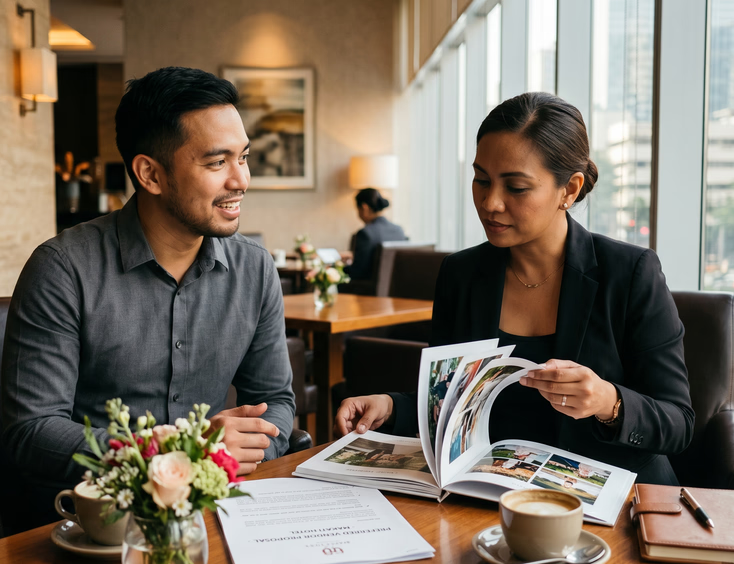
Step Nine: Earn a Spot on the Preferred Vendor List
Filipino wedding suppliers who earn spots on venue preferred vendor lists secure consistent booking pipelines. The list is the highest-value outcome of any venue relationship.
Earn the spot through three behaviors.
Deliver consistently. Across multiple weddings at the same venue. Show up on time. Work cleanly. Treat staff well. Handle problems calmly. The pattern across many weddings makes you a known quantity.
Maintain the relationship outside of weddings. The check-ins, thank-yous, and visits matter. Suppliers known only through wedding days have weaker positioning than those known personally.
Ask directly when the moment is right. After working with the venue for six to twelve months, raise the conversation. "I have loved working at [Venue Name] over the past year. Would you consider me for your preferred vendor list?" The direct ask, paired with the relationship and the track record, often produces a yes.
Be patient. Preferred vendor lists have limited slots. A venue that already has three preferred photographers may not have room. Stay on the relationship even when the list is closed. Lists rotate. New venues open.
Step Ten: Work With Churches Differently Than Hotels and Gardens
Filipino wedding suppliers often handle churches the same way they handle hotels or gardens. The approach misses the unique cultural and operational dynamics of Filipino wedding churches.
Churches differ in three ways.
Most Filipino wedding churches are Catholic. They follow specific liturgical protocols that shape the wedding ceremony. Suppliers must understand the order of service, the readings, the sponsorship traditions, and the role of the priest.
Churches have strict photography and videography restrictions. Many heritage churches do not allow flash photography. Some restrict movement during the ceremony. Some require pre-approval for video equipment. Suppliers who violate the restrictions damage relationships with both the church and the couple.
Churches usually operate through parish offices. The wedding coordinator at the parish, the priest, and the sacristan handle different parts of the wedding day. Knowing who to communicate with for which decision speeds up coordination.
Approach churches with deeper respect than other venues. Visit the church before the wedding. Walk through the ceremony space. Meet the parish wedding coordinator. Understand the church's photography and videography rules in detail. Confirm what is and is not allowed.
During the wedding. Dress respectfully. Move quietly. Stay out of restricted areas. Avoid any behavior that disrupts the ceremony. Filipino Catholic weddings are sacred ceremonies, not just photo opportunities.
After the wedding. Send a thank-you note to the parish wedding coordinator or the priest if you interacted closely. Acknowledge the church positively in your real wedding features.
Churches do not maintain preferred vendor lists the way hotels do. The referral pipeline from churches works differently. Filipino couples planning Catholic weddings often ask the parish wedding coordinator for supplier recommendations. Strong relationships with parish staff produce introductions to couples who fit your service.
Step Eleven: Work With Garden Reception Sites Carefully
Filipino wedding suppliers serving Tagaytay, Antipolo, Cavite, and other garden regions often work with outdoor venues that present unique challenges. The relationships matter, but the work is logistically more complex.
Three garden-specific considerations.
Weather contingencies. Outdoor weddings depend on weather. Suppliers must coordinate with the venue on backup plans. Suppliers who arrive with no flexibility damage the wedding when weather shifts.
Equipment and power. Garden venues often have limited power. Suppliers must plan for portable lighting, generators, and equipment logistics. Strong relationships with garden venues help suppliers understand what is and is not available.
Logistics. Some garden venues require carrying equipment across uneven terrain. Setup times are longer. Cleanup is harder. Suppliers who underestimate the logistics frustrate venue staff.
Approach garden venues with detailed planning. Visit each garden multiple times if you work weddings there frequently. Understand the venue's quirks. Build setup plans that account for the unique conditions.
Garden venues often have closer relationships with suppliers than larger hotels because the teams are smaller and the wedding days are more intimate. Strong garden venue relationships can produce referrals as steady as those from hotels.
Common Filipino Wedding Supplier Venue Relationship Mistakes
Filipino wedding suppliers repeat the same mistakes with venues.
Treating venues as backdrops. Suppliers who never engage with venue staff miss the relationship opportunity entirely.
Showing up late on the wedding day. Filipino traffic shapes timelines. Suppliers who arrive late damage every relationship in the wedding ecosystem, including the venue.
Disrespecting venue staff. The setup crew, catering team, and cleaners notice how suppliers treat them. Negative behavior gets reported up.
Pushing against venue policies. Suppliers who try to bend or break venue rules become known as difficult.
Forgetting to communicate proactively. Showing up without checking in, making changes without notifying the venue, or leaving without saying goodbye damages relationships.
Skipping the thank-you. The opportunity to deepen the relationship fades within days of the wedding. Sending a thank-you within a week reinforces the connection.
Failing to share content with venues. Venues love when suppliers provide images of weddings hosted at their space. Suppliers who never share weaken their positioning.
Not engaging on social media. Suppliers who never tag or repost the venue miss easy goodwill gestures.
Treating every venue identically. A heritage church is not a luxury hotel. A garden venue is not a ballroom. Each venue requires a tailored approach.
Forgetting to maintain the relationship between weddings. Showing up only when you have a wedding at the venue feels transactional.
Aggressively pursuing preferred vendor lists. Begging for the list or pushing too hard backfires. Patience and consistent work produce the spot naturally.
Where Venue Relationships Fit in Your Wider Booking System
Strong venue relationships produce consistent referrals, fill your booking calendar with qualified couples, and deepen the partnerships that sustain a Filipino wedding business for years.
For the full marketing and booking framework, see the complete guide to getting more wedding clients in the Philippines.
Map the venues in your service area. Research each one before reaching out. Introduce yourself through the right channel. Visit the venue when possible. Deliver exceptional work at the venue. Send thank-yous after each wedding. Stay top of mind between weddings. Help the venue promote their space. Earn spots on preferred vendor lists. Work with churches and garden venues with care. Filipino wedding suppliers who treat venues as partners rather than backdrops build referral pipelines that fill calendars with consistent, qualified weddings month after month.
Join the Philippines' Trusted Wedding Network
Connect With Couples Ready to Book Your Services
Showcase your wedding business to engaged Filipino couples searching for trusted suppliers. Build your portfolio presence, grow your bookings, and stand out in your category.
List Your BusinessFeatured Blog Posts


Filipino Wedding Entourage - Roles, Order of March, and Modern Etiquette
6 mins readCivil Weddings in the Philippines - Requirements, Costs, and Step-by-Step Process
9 mins readCivil Wedding Requirements in the Philippines - Complete Checklist
6 mins readCost of Wedding in the Philippines - 5 Essential Things You Need to Know
7 mins readPrincipal Sponsors (Ninong/Ninang) - How Many, How to Ask, What They Really Do
4 mins readVeil, Cord, Candle & Coins - Roles, Options, and When They Happen
4 mins readEntourage for a Traditional Pinoy Wedding - Complete Roles and Guide
6 mins readComplete List of Civil Wedding Requirements in the Philippines
8 mins readHow to Choose Wedding Ninongs and Ninangs - Ask Yourself These 3 Important Questions
5 mins read