


Working With Wedding Planners and Coordinators in the Philippines: A Supplier's Guide

Filipino wedding planners and coordinators sit at the center of every wedding they manage. They speak to the couple every week. They guide vendor selection. They shape the timeline. They control who shows up on the wedding day and who gets recommended at the next one. Suppliers who learn to work well with planners and coordinators book more weddings, deliver better service, and build the relationships that fuel referrals for years.
Yet many Filipino wedding suppliers struggle in this relationship. They treat coordinators as gatekeepers to be tolerated. They push back on timeline requests. They go silent until the wedding day, then complain about logistics. They damage potential referral pipelines without realizing it. This guide walks Filipino wedding suppliers through how to work well with wedding planners and coordinators, build the trust that produces consistent referrals, and deliver work that makes everyone look good on the wedding day.
Why Planners and Coordinators Matter More Than Filipino Suppliers Realize
Filipino wedding planners and coordinators are the single largest source of supplier referrals in the wedding industry. They see hundreds of weddings. They watch suppliers deliver good and bad work in real time. They become the trusted advisors couples lean on when picking vendors.
Three patterns make planners and coordinators uniquely valuable.
They book multiple suppliers per wedding. A planner managing 20 weddings a year coordinates 100 to 200 supplier bookings. The volume across photographers, florists, caterers, and other suppliers is significant. Strong planner relationships compound fast.
They see suppliers across many weddings. Planners can compare your work to dozens of other photographers, florists, or coordinators. They know who delivers consistently. They know who creates problems. The pattern recognition shapes their recommendations.
They influence couples' decisions. Couples who hire a planner often trust the planner's suggestions over their own research. A planner saying "I have worked with this photographer five times and they always deliver" carries more weight than any Instagram feed.
The relationship sits inside the wider partnership system you built through how to build supplier partnerships that send you wedding referrals monthly. Planners and coordinators are the highest-leverage partnerships within that system.
Understand the Difference Between Planners and Coordinators
Filipino wedding suppliers often use planner and coordinator interchangeably. The two roles differ significantly. Understanding the difference shapes how you work with each.
Wedding planners. Full-service. They work with couples from the engagement to the wedding day. They handle budget, vendor selection, design direction, timeline, family management, and logistics over many months. The relationship is long. The supplier influence is high.
Wedding coordinators. Day-of or partial coordination. They step in closer to the wedding to manage the timeline, vendor communication, and execution on the wedding day. Some coordinators handle the final one to three months. Others manage the wedding day exclusively.
Both roles are valuable. The difference shapes the conversation.
A photographer pitching to a wedding planner has a chance to be referred across multiple future weddings the planner books. The planner conversation focuses on long-term partnership.
A photographer pitching to a wedding coordinator focuses on the execution of an already-booked wedding. The conversation is more tactical, focused on the specific event and how the supplier will deliver on the day.
Treat both with care. Build relationships with both. Each delivers different value over time.
Step One: Make Yourself Easy to Work With
Filipino wedding planners and coordinators recommend suppliers who make their jobs easier. They avoid suppliers who create friction, complain, or require constant management.
Be easy to work with through five behaviors.
Reply quickly to messages. Planners and coordinators message you with questions throughout the planning process. Slow replies frustrate them. Fast replies build trust.
Respect their timeline. When a coordinator says vendor meetings happen on Tuesdays at 3pm, show up on Tuesday at 3pm. When the planner asks for your supplier sheet by Friday, deliver it by Thursday.
Stay flexible without being a pushover. Wedding logistics change. Weather shifts. Couples change their minds. Suppliers who adapt without dramatic reactions earn coordinator respect. Hold your boundaries on contract terms but stay flexible on the details.
Communicate clearly and proactively. Update the coordinator on your status without being asked. Confirm receipt of the timeline. Confirm your arrival time. Confirm you have the venue address. Coordinators appreciate suppliers who report in.
Solve problems instead of creating them. When something goes wrong, suppliers who immediately suggest a solution earn permanent coordinator trust. Suppliers who panic, complain, or wait for the coordinator to figure it out lose future bookings.
The five behaviors compound over time. Coordinators remember suppliers who were easy to work with. They refer them to the next couple, then the next.

Step Two: Communicate Like a Professional
Filipino wedding planners and coordinators expect professional communication. Suppliers who treat the relationship casually damage their partnership potential.
Three communication standards matter.
Use email or a project management tool for important matters. Long-thread conversations on Messenger or Viber get buried. Important details should live in email or in the planner's preferred project management system.
Confirm in writing. Verbal agreements at supplier meetings should be confirmed in writing afterward. "Just to confirm, we agreed that I will arrive at the venue at 1pm for prep, and the ceremony starts at 4pm." The written confirmation prevents misunderstandings later.
Speak the planner's language. Use the planner's terms for wedding day events. If the planner uses "first look" and "grand entrance," use the same terms. If the planner refers to roles like "primary photographer" or "lead coordinator," use the same labels. Aligned language signals professional respect.
Address the planner or coordinator by name. Personal recognition matters in Filipino business culture. Calling the coordinator "po" or by name signals respect.
The standards apply across every wedding. Once you set the bar high, it stays there.
Step Three: Bring Solutions, Not Problems
Filipino wedding planners deal with countless small problems on every wedding. Suppliers who add to the problem list damage the relationship. Suppliers who solve problems earn trust.
When you spot an issue, lead with the solution.
Example. The wedding venue has limited lighting. Instead of saying "the lighting is bad here," say "the lighting will be a challenge after sunset. I can bring two additional portable lights to manage this."
Example. The timeline is tight between ceremony and reception. Instead of saying "this timeline is impossible," say "the 30-minute window between ceremony and reception is tight for cocktail hour photos. Can we move the entrance back by 15 minutes, or should I prioritize family portraits over the full guest group?"
Example. A vendor failed to deliver. Instead of saying "this is not my problem," say "the florist did not deliver the centerpieces. I can suggest two backup options if you want my help."
Solutions over complaints. Suppliers who consistently bring solutions become the planners' go-to suppliers. They book more weddings without any sales effort.
Step Four: Deliver Beyond the Contract Where It Counts
Filipino wedding planners notice suppliers who go slightly above their contracted scope. They also notice suppliers who do the bare minimum.
Going beyond does not mean working for free or sacrificing margin. It means doing the small things that make the wedding day smoother.
Small extras that matter.
Arriving 15 to 30 minutes early. The buffer lets you adjust to unexpected setup needs without rushing.
Bringing backup equipment without making a fuss about it. A coordinator who sees you set up a second camera without being asked feels reassured.
Helping carry items when it makes sense. Filipino wedding setups often require manual labor. Photographers who help move a chair or florists who help carry centerpieces ease the entire team's workload.
Offering minor adjustments on the day. A bridesmaid's dress has a small tear. A florist who has scissors and tape and can help quickly earns respect. The pattern is generosity, not obligation.
Sending the coordinator a quick thank-you text the day after. The gesture stands out. Coordinators remember suppliers who appreciated their work.
The extras are small. The cumulative impact is significant. Coordinators remember suppliers who made their wedding day easier.
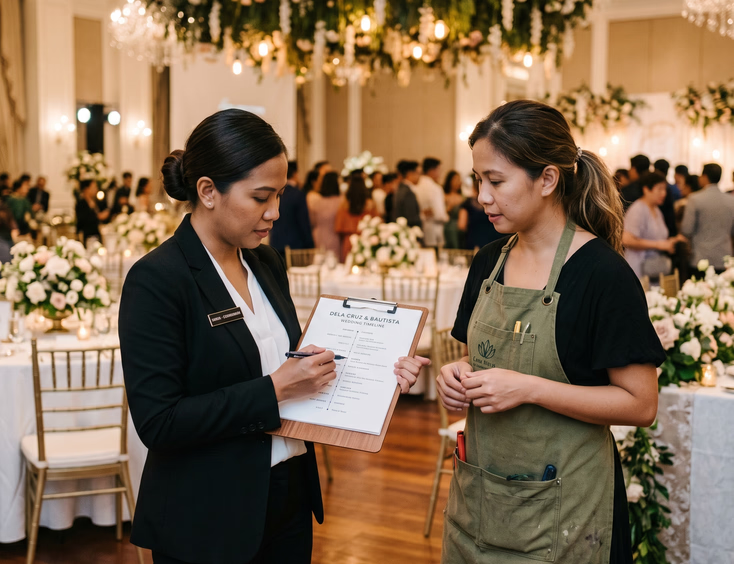
Step Five: Respect the Coordinator's Authority on the Day
Filipino wedding suppliers sometimes undermine coordinators by acting independently on the wedding day. They change timelines without consulting. They make decisions for the couple. They speak over the coordinator. The behavior damages the coordinator's role and the relationship.
Respect the coordinator's authority.
Defer to their timeline. If the coordinator says the entrance happens at 7:30pm, do not push it to 7:00pm because the lighting is better.
Route couple requests through the coordinator. If the bride asks you to do something outside the scope, tell her you will check with the coordinator first. The coordinator manages the overall flow.
Avoid contradicting the coordinator in front of guests or the couple. If you disagree, pull the coordinator aside privately to discuss.
Communicate before adjusting. If you need to extend coverage time, change a location, or move equipment, tell the coordinator before doing it. They may have logistics you do not see.
Coordinators who feel respected on the wedding day refer suppliers who treated them well. Coordinators who felt undermined remember.
Step Six: Build the Relationship Outside of Weddings
Filipino wedding suppliers who only engage with planners and coordinators during weddings miss the relationship-building moments that produce referrals.
Engage outside the weddings.
Send a follow-up message after each wedding. Thank them. Share a highlight photo from the day. Acknowledge their work.
Attend their open houses, styled shoots, and supplier events. Show up consistently. Filipino wedding industry circles are small. Attendance signals investment.
Send referrals back. When you meet couples who fit a particular planner's style, refer them. The reciprocity creates lasting partnerships.
Acknowledge their wins. When a planner wins an award, lands a feature, or hits a milestone, send a message. Comment publicly on the win.
Meet for coffee or video calls. A 30-minute conversation outside the wedding pressure builds connection in ways that texts cannot.
Send seasonal greetings. Holidays, birthdays, business anniversaries. Small gestures matter.
The investment is modest. The return is significant. Coordinators and planners refer the suppliers they like personally, not just the ones who deliver good work.
Step Seven: Set Clear Expectations About Your Pricing and Process
Filipino wedding planners often face frustration when suppliers behave unexpectedly. The supplier's pricing changes. The supplier's deliverables shift. The supplier's process is unclear.
Set expectations upfront.
Share your standard rates with planners. Some planners refer suppliers consistently because they know the pricing range fits their typical couples. Hiding pricing creates friction during inquiry conversations.
Document your scope clearly. Hours of coverage. Number of deliverables. Turnaround times. The planner needs to set expectations with the couple. Vague scope creates conflicts.
Communicate your booking process. How does inquiry flow into booking? Down payment amount? Payment schedule? Contract turnaround? Planners want to know how their referrals will be handled.
Explain your wedding-day operating standards. What time do you arrive? Do you bring a team? Do you eat with the wedding party or in a separate area? Filipino weddings have varied supplier protocols. Aligning early prevents misunderstandings.
The clarity helps planners refer with confidence. They know what their couples will get.

Step Eight: Be Selective About Which Planners You Partner With
Filipino wedding suppliers sometimes try to partner with every planner who reaches out. The approach spreads effort thin and produces few real referrals.
Be selective.
Look for planners whose couples fit your work. A Tagaytay garden specialist should partner with planners who book garden weddings, not planners whose work is mostly hotel ballroom.
Look for planners with strong reputations. The planner's reputation transfers to you. Avoid planners known for difficulty, late payments, or low-quality client management.
Look for planners with steady booking volume. A planner managing two weddings a year produces fewer referrals than one managing 15. Volume matters.
Look for planners whose style matches yours. Personality compatibility shapes the working relationship. A casual, warm supplier may not fit with a formal, rigid planner. Style alignment makes the partnership smoother.
Prioritize three to four strong planner partnerships. Build depth before breadth. The pattern produces consistent referrals month after month.
Step Nine: Handle Difficult Coordinator Situations Diplomatically
Filipino wedding suppliers occasionally work with coordinators who are difficult, unprofessional, or unfair. The way you handle the situation shapes whether the relationship recovers or ends.
Three common difficult situations.
The coordinator changes the timeline last minute without consulting you. Address it calmly. "The new timeline will mean we have less time for portraits. I can adjust if you can give me 10 extra minutes between the ceremony and reception."
The coordinator blames you for a problem that was not your fault. Avoid public defense. Pull them aside privately. Explain your side. Document the situation in writing afterward.
The coordinator delivers a poor working experience. After the wedding, send a calm written message expressing concerns. "I wanted to share some feedback from the wedding. The communication on the timeline could have been clearer. I hope we can work together more smoothly next time."
Filipino wedding industry circles are small. Aggressive responses to difficult coordinators travel fast and damage your reputation. Calm, professional handling of conflict separates suppliers who last from those who burn bridges.
Some coordinator relationships will not work out. Recognize when the partnership is unsustainable and end it gracefully. Avoid publicly badmouthing. Move on quietly.
Step Ten: Treat the Coordinator's Couples as Your Own
Filipino wedding suppliers sometimes treat referred couples with less care than direct inquiries. The pattern damages the coordinator relationship and your reputation.
Treat the coordinator's couples as if they came directly to you.
Reply with the same speed and warmth.
Deliver the same quality of work.
Honor the same pricing structure (no discounts unless that is your standard practice for referred couples).
Send the coordinator updates throughout the booking process.
Acknowledge the coordinator in your wedding feature posts.
The couple's experience reflects on the coordinator. A bad supplier experience makes the coordinator look bad. A great experience builds the coordinator's reputation. Treat every referral like a chance to make the coordinator look good.
Step Eleven: Track Your Coordinator Relationships
Filipino wedding suppliers who track their coordinator relationships build a stronger referral system over time.
Track three metrics per coordinator.
Number of referrals received per quarter. Active coordinators refer regularly. Quiet ones may need a relationship refresh.
Number of bookings closed from referrals. Of the couples a coordinator refers, how many book? Strong matches produce 50% or more conversion. Mismatched referrals signal style or budget gaps.
Personal touchpoints per quarter. Did you message, meet, or attend an event with each coordinator? Relationships fade without periodic investment.
Review the tracking quarterly. Adjust where needed. Some coordinators may need more attention. Others may need to be deprioritized.
The wider tracking framework fits inside tracking your numbers: KPIs every wedding supplier should watch.
Common Filipino Wedding Supplier Coordinator Mistakes
Filipino wedding suppliers repeat the same coordinator mistakes.
Treating coordinators as gatekeepers. The framing breeds resentment. Coordinators are partners, not obstacles.
Skipping vendor meetings. Some suppliers think they do not need to attend planning meetings. Their absence frustrates coordinators and damages communication.
Pushing back on every timeline detail. Coordinators build timelines for reasons. Suppliers who fight every adjustment exhaust the relationship.
Going silent until the wedding day. Coordinators expect updates leading up to the event. Silence creates uncertainty.
Charging coordinators for inquiries. Some suppliers expect commission from coordinators when their couples book. The expectation is unusual in the Filipino wedding industry and damages relationships.
Undercutting other suppliers in front of the planner. Filipino wedding industry gossip travels fast. Speaking poorly of competitors makes you look unprofessional.
Refusing to recommend a backup. When coordinators ask for supplier recommendations, suppliers who refuse to help damage the relationship. Generosity builds partnerships.
Ignoring smaller weddings. Some suppliers prioritize only big weddings. Coordinators often refer smaller weddings as a test before sending larger ones. Treat every referral with care.
Forgetting to thank coordinators. A quick thank-you note after a booking goes a long way. Forgetting it signals indifference.
Trying to bypass the coordinator to talk to the couple directly. The pattern undermines the coordinator's role and damages trust permanently.
Where Coordinator Relationships Fit in Your Wider Booking System
Strong coordinator and planner relationships produce consistent referrals, fill your booking calendar with qualified couples, and build the long-term partnerships that sustain a wedding business for years.
For the full marketing and booking framework, see the complete guide to getting more wedding clients in the Philippines.
Make yourself easy to work with. Communicate professionally. Bring solutions instead of problems. Deliver beyond the contract where it counts. Respect the coordinator's authority. Build the relationship outside of weddings. Set clear expectations. Be selective about partnerships. Handle difficult situations diplomatically. Treat the coordinator's couples as your own. Track your relationships. Filipino wedding planners and coordinators who trust you and like working with you will refer you again and again, filling your calendar with weddings that fit your work and grow your reputation in the industry.
Join the Philippines' Trusted Wedding Network
Connect With Couples Ready to Book Your Services
Showcase your wedding business to engaged Filipino couples searching for trusted suppliers. Build your portfolio presence, grow your bookings, and stand out in your category.
List Your BusinessFeatured Blog Posts







Filipino Wedding Entourage - Roles, Order of March, and Modern Etiquette
6 mins readCivil Weddings in the Philippines - Requirements, Costs, and Step-by-Step Process
9 mins readCivil Wedding Requirements in the Philippines - Complete Checklist
6 mins readCost of Wedding in the Philippines - 5 Essential Things You Need to Know
7 mins readPrincipal Sponsors (Ninong/Ninang) - How Many, How to Ask, What They Really Do
4 mins readVeil, Cord, Candle & Coins - Roles, Options, and When They Happen
4 mins readEntourage for a Traditional Pinoy Wedding - Complete Roles and Guide
6 mins readComplete List of Civil Wedding Requirements in the Philippines
8 mins readHow to Choose Wedding Ninongs and Ninangs - Ask Yourself These 3 Important Questions
5 mins read