


Wellness and Leadership-Focused Team Building Programs
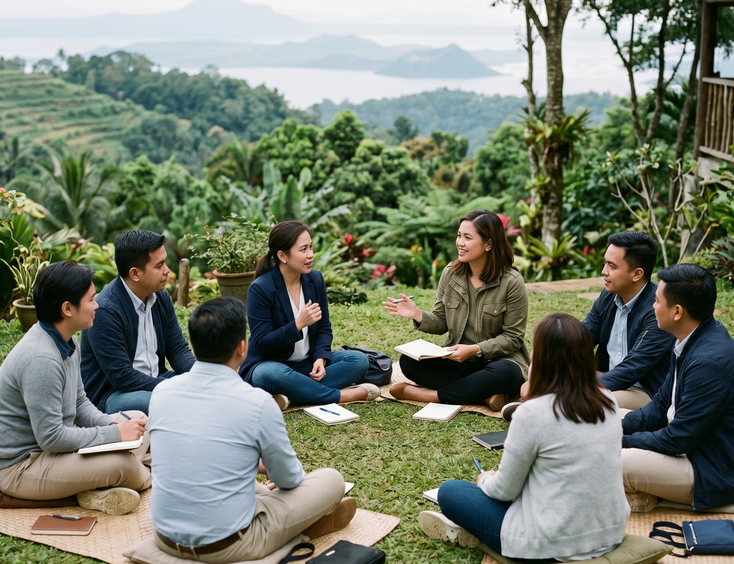
Most team building chases fun. Wellness and leadership programs chase something harder: a team that handles stress better, communicates without friction, and grows leaders from within. These programs trade the relay race for the slower work of building real capacity in people. Run for a burned-out team or a leadership pipeline that needs depth, they do what a fun day out cannot.
When Your Team Needs More Than a Fun Day
A games day lifts the mood for a week. It does little for a team buckling under chronic stress, a department where managers freeze in conflict, or a company that promotes strong individual performers into leadership and watches them flounder. These problems need programs built to address them directly.
Read the signs before you plan. Rising burnout, quiet resignations, managers who avoid hard conversations, teams that work in silos: these call for wellness and leadership work, not another obstacle course. The activity should match the problem you actually have, not the one that photographs well.
Set a real goal. "Reduce burnout in the operations team," "build conflict-handling skills in new managers," "develop our next layer of leaders." A clear outcome shapes the program and gives you a way to know whether it worked. Vague goals produce vague days that change nothing.
Wellness-Focused Programs
Wellness programs restore a team running on empty. A mindfulness or meditation session, led by a trained facilitator, teaches people to manage stress and reset during a hard week. Done as a series rather than a one-off, it builds a habit the team carries back to the desk.
Physical wellness anchors many of the best programs. A yoga retreat, a guided hike, a movement workshop, or a fitness challenge gets people out of their chairs and into their bodies. The shared physical effort bonds the group while teaching habits that outlast the event. A Tagaytay or Batangas venue for corporate retreats gives you the cool air and quiet setting these programs need.
Mental health deserves direct attention, not a euphemism. A workshop with a licensed professional on stress, boundaries, and burnout signals that the company takes wellbeing seriously. Pair it with practical support, flexible hours after a crunch, a quiet room, a genuine workload review, so the program reads as real care rather than a checkbox. A wellness day followed by the same crushing workload teaches employees the company does not mean it.
Leadership Development Programs
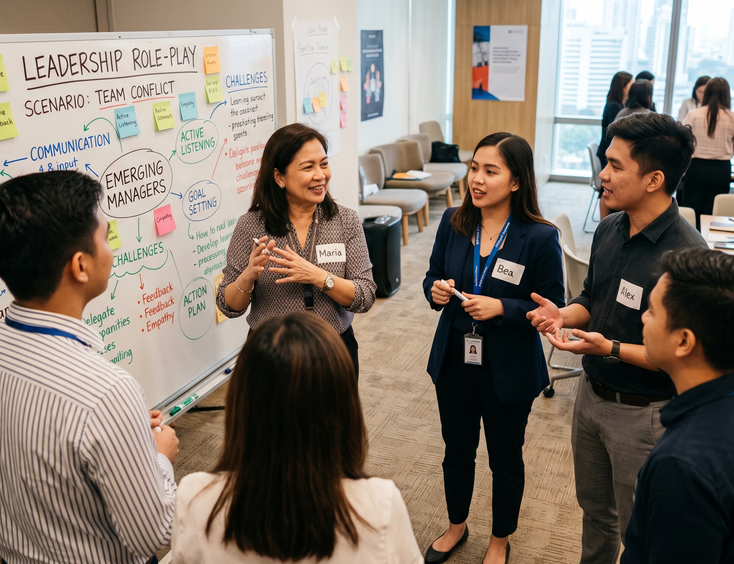
Leadership programs build the skills that promotions assume but rarely teach. A workshop on giving feedback, handling conflict, or running a team turns a strong individual contributor into someone ready to lead. Hands-on practice, role-plays, and real scenarios beat a slideshow of leadership principles every time.
Simulation-based activities reveal how people lead under pressure. A complex group challenge, a business simulation, or a problem with no clear answer forces emerging leaders to make calls, delegate, and own the result. The debrief afterward, where the group unpacks what happened, teaches more than the activity itself.
Mentorship and peer-coaching programs grow leaders over months, not a single day. Pair senior leaders with rising managers, give them a structure and a cadence, and let the relationship build judgment over time. These programs cost little and develop the depth a one-day workshop cannot reach.
Programs That Combine Both
Wellness and leadership reinforce each other, so the strongest programs weave them together. A leader who cannot manage their own stress cannot steady a team through a hard quarter. A wellness program that builds self-awareness also builds the foundation good leadership stands on.
A multi-day retreat lets you blend the two. Mornings for leadership workshops and group challenges, afternoons for wellness sessions and reflection, evenings for the informal bonding where real trust forms. The rhythm develops the whole person rather than a single skill.
Resilience-focused programs sit squarely in the overlap. They teach teams to handle setbacks, adapt to change, and support each other through pressure, skills that serve both wellbeing and leadership. A team that bounces back together trusts each other in a way no trust-fall exercise produces.
Choosing the Right Facilitator
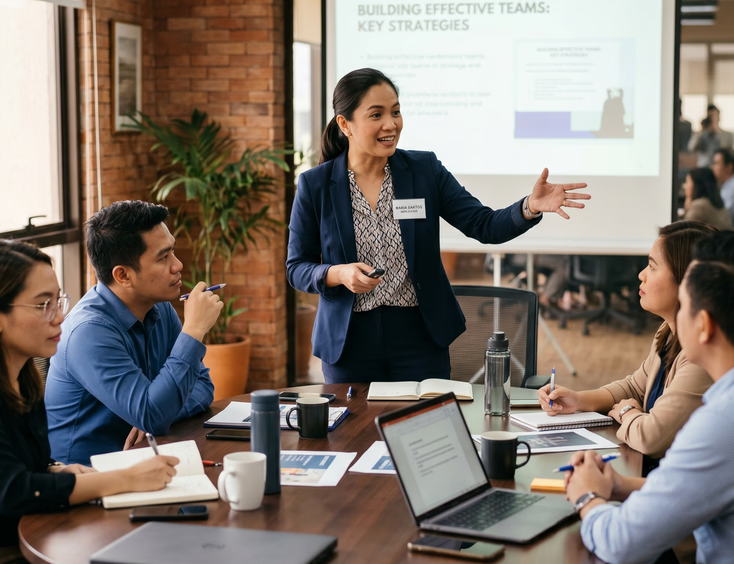
These programs live or die on the facilitator. A mindfulness session needs someone trained, not a manager who watched a video. A mental health workshop needs a licensed professional. A leadership program needs a facilitator with real experience leading teams, not just a deck of theories.
Vet them as carefully as any supplier. Ask about their background, their approach, and the outcomes other companies saw. Request references and, where you can, sit in on a sample session. A skilled facilitator reads the room, adjusts on the fly, and pulls in the skeptics; a weak one reads slides while the team checks their phones. The event organizer for your company can often connect you with vetted wellness and leadership facilitators if you do not know where to start.
Match the facilitator to your team's culture. A high-energy speaker suits a sales force; a calm, reflective guide suits a drained team that needs rest. The right fit makes the program land; the wrong one wastes the day no matter how qualified the person looks on paper.
Make the Change Stick
A single program rarely changes a team for good. The day plants a seed; what happens afterward decides whether it grows. Plan the follow-through before you run the event, or watch the gains fade within weeks.
Build in reinforcement. A follow-up session a month later, a shared practice the team adopts, a manager who models the new behavior, all keep the lesson alive. Leadership skills especially need repeated practice, not a single exposure, before they become instinct.
Tie the program to how you run the company day to day. Wellness work means nothing if the culture still rewards burnout. Leadership training means nothing if the company never gives new managers room to lead. Measure what changed using the same rigor you bring to any event, drawing on how you measure the success of a corporate event, and feed what you learn into the next program.

The Wellness and Leadership Program Checklist
Run through this before you commit:
- Real problem named, with a clear outcome to aim for
- Program type matched to the problem, wellness, leadership, or both
- Qualified facilitator vetted, with references checked
- Setting chosen to suit the work and the team's energy
- Practical support lined up to back the program's message
- Follow-up and reinforcement planned before the event
- A way to measure what changed built in from the start
These programs ask more of you than a fun day, and they give back more. A team that manages stress, communicates cleanly, and grows its own leaders carries the company through pressure that breaks teams built only on good vibes. Invest in the deeper work and the returns outlast any single celebration.
For the full picture on running corporate functions in the Philippines, from venues to suppliers to themes, see the complete guide to corporate events in the Philippines.
Still Searching for a Right Match?
Find Your Perfect Wedding Supplier Today!
Discover trusted wedding suppliers across the Philippines in our complete directory. Compare services and connect with the ones that fit your dream celebration.
Browse Wedding SuppliersFeatured Blog Posts




Filipino Wedding Entourage - Roles, Order of March, and Modern Etiquette
6 mins readCivil Weddings in the Philippines - Requirements, Costs, and Step-by-Step Process
9 mins readCivil Wedding Requirements in the Philippines - Complete Checklist
6 mins readCost of Wedding in the Philippines - 5 Essential Things You Need to Know
7 mins readPrincipal Sponsors (Ninong/Ninang) - How Many, How to Ask, What They Really Do
4 mins readVeil, Cord, Candle & Coins - Roles, Options, and When They Happen
4 mins readEntourage for a Traditional Pinoy Wedding - Complete Roles and Guide
6 mins readComplete List of Civil Wedding Requirements in the Philippines
8 mins readHow to Choose Wedding Ninongs and Ninangs - Ask Yourself These 3 Important Questions
5 mins read