


The 18 Candles Ceremony: Choosing Your Speakers and Wishes
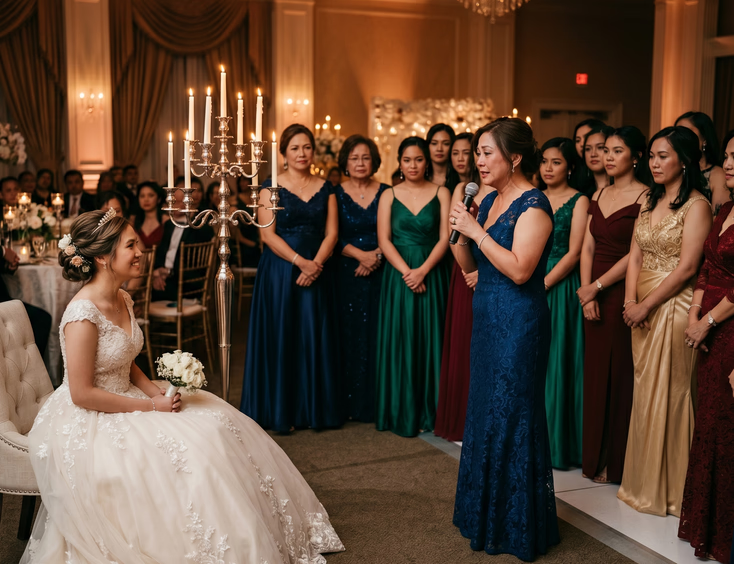
The 18 Candles ceremony is the part of the debut where guests reach for tissues. Eighteen women you love stand one by one, light a candle, and share what they wish for your future. The room goes quiet. Your mom cries. You cry. The photos from this moment become some of the most powerful of your life.
Or, if you choose the wrong speakers and skip the briefing, the ceremony stretches into an awkward 45-minute monologue marathon that drains your guests' energy.
This guide walks you through the meaning of the tradition, how to pick the right 18 women, how to brief them properly, and how to design a ceremony that delivers the emotional impact it deserves.
The Meaning Behind 18 Candles
While 18 Roses honors the men who shaped you, 18 Candles honors the women whose love, wisdom, and presence influenced who you've become. Each candle represents a wish for the path ahead: career, marriage, friendships, faith, family, health, dreams.
The candles together form a flame that lights your way into adulthood. As each woman shares her wish, she gives you part of the wisdom she's gathered from her own life. By the end, your candelabra glows with the collective hopes of the women who matter most.
The ceremony works because it pairs symbolism with vulnerability. Eighteen women stand up and speak honestly about their hopes for you. That kind of moment doesn't happen often outside of weddings and funerals.
For the broader picture of all traditional ceremonies, see the complete Filipino debut guide.
Who to Include in Your 18 Candles
Pick women whose words you'd actually want to hear. Not women your parents want included for politeness. Not titas who barely know your name. Women whose wishes carry weight because they know you.
Common picks:
Mother. Always lights the first candle. The most emotional speaker of the night.
Grandmothers. From both sides, if living.
Sisters. Older or younger, depending on your bond.
Aunts (Titas). The ones who watched you grow up and stayed present.
Godmothers (Ninangs). Choose the ones who acted as second mothers, not just names on a baptismal certificate.
Female cousins. The ones you grew up with or stayed close to.
Best friends. The women who walked with you through high school, hardships, and milestones.
Mentors. Teachers, coaches, advisers, youth pastors, choir directors.
Mother figures. A best friend's mom, a tita who isn't blood-related but feels like family, a former neighbor who watched you grow up.
Sisters of close family friends. Women whose families are intertwined with yours.
The Traditional Order
The order builds emotion as the ceremony progresses. A typical structure:
1st candle: Mother. Always opens the ceremony. Sets the tone.
2nd to 4th candles: Grandmothers and elder aunts. The matriarchs of the family.
5th to 9th candles: Sisters, female cousins, and younger aunts. Family women of various generations.
10th to 13th candles: Godmothers and family friends. Women outside the bloodline who became family.
14th to 17th candles: Best friends and mentors. The women you chose to bring into your life.
18th candle: The closer. Often the maid of honor of your friend group, your closest sister, or someone whose words carry the most personal weight. Sometimes the ceremony ends with the mother's second message, completing the emotional circle.
The order isn't fixed. Some debutantes group by family side. Some alternate generations to vary the tone. Some end with the grandmother for a generational arc.
For tips on selecting people for related ceremonies, see the 18 roses tradition explained: meaning, order, and modern twists and the 18 treasures symbolism: gift ideas and their meaning.

How to Choose Your 18
This selection matters more than your gown. A poorly chosen lineup turns the most emotional ceremony into the most awkward.
Start with non-negotiables. Mother, grandmothers, sisters, closest best friends. These names fill themselves in.
Add by relationship depth, not obligation. A tita who lives abroad and calls twice a year doesn't belong in your candles lineup. A college friend who's been there through every rough night does.
Consider speaking ability. Some people communicate better in writing than aloud. If a beloved cousin freezes in public, find another way to honor her (write a letter into the AVP, mention her in a closing speech).
Plan for absences. Have 2 to 3 backup names ready. Life happens. People cancel. Confirm attendance early.
Avoid surprise nominations. Reach out 6 months ahead. Explain the role. Give them time to prepare.
Be deliberate about cultural mix. If you have close ties across generations, regions, or communities, your lineup can reflect that diversity.
What Happens During the Ceremony
The format runs smoothly when planned well:
1. Emcee announces the ceremony. Sets the emotional tone with a brief introduction.
2. The candelabra is brought out. Usually placed at the center of the stage or near the debutante's chair.
3. Music plays softly. A gentle instrumental or meaningful song.
4. The first speaker is called. Usually your mother.
5. She walks to the stage. Lights her candle from a central source (the debutante's candle or a master flame).
6. She speaks her wish. 1 to 2 minutes maximum.
7. She hugs the debutante. Returns to her seat.
8. The next speaker is called. The cycle repeats 17 more times.
9. The ceremony closes with the 18th speaker. Often the most personal moment.
The full ceremony takes 30 to 60 minutes depending on speech length and music transitions.
Briefing Your Speakers Properly
This single step makes or breaks the ceremony. Without it, speakers ramble, freeze, joke inappropriately, or speak for 8 minutes when 90 seconds was the plan.
Send each speaker a briefing document 6 to 8 weeks before your event. Include:
1. The basic logistics.
- Event date, venue, and call time
- Dress code
- Order of speakers (so they know when to walk up)
- Where to sit, where to stand when called
2. The time limit.
- 1 to 2 minutes maximum
- Around 150 to 250 words
- Roughly the length of a short letter
3. What to cover.
- A specific wish for your future (career, family, faith, health, friendships, growth, dreams)
- A memory or story that informs the wish
- A short blessing or encouragement to close
4. What to avoid.
- Inside jokes that won't translate to a mixed audience
- Stories about exes, breakups, or family drama
- Anything that might embarrass the debutante or her family
- Going off-topic into their own life experiences for more than 30 seconds
5. Format options.
- Write it down and read it aloud
- Memorize a few key points and speak naturally
- Use note cards as a backup
6. Practical tips.
- Speak slowly and clearly
- Pause for breath
- Make eye contact with the debutante
- Hold the microphone close to your mouth
Share 18 roses and 18 candles speech examples that will make her cry with them so they have a starting framework.

Speech Themes That Work
Give your speakers specific themes to anchor their wishes around. Open-ended prompts ("share a wish") cause speakers to freeze. Specific prompts ("wish her courage in her career") give them direction.
Distribute themes when you send your briefing document. Each speaker gets a different theme so the ceremony covers a full spectrum of hopes.
Theme ideas:
- Faith and spiritual growth
- Career and ambition
- Marriage and love
- Friendships and chosen family
- Health and wellness
- Travel and adventure
- Creativity and expression
- Wisdom and self-knowledge
- Resilience and strength
- Joy and happiness
- Service and generosity
- Patience and grace
- Confidence and self-worth
- Forgiveness and peace
- Family and home
- Curiosity and learning
- Identity and authenticity
- Gratitude and presence
Assign themes thoughtfully. Your mom might cover faith. Your best friend might cover friendships. Your career mentor might cover ambition. Your grandmother might cover wisdom.
Music That Sets the Mood
Music shapes the emotional tone of the ceremony.
Soft instrumentals during transitions. Piano arrangements, harp pieces, acoustic guitar.
A consistent background track. Lower volume music plays throughout to maintain atmosphere without competing with speakers.
A meaningful song at the end. A ballad your mother loves, a hymn that matters to your family, or a song that captures the night's spirit.
Avoid upbeat tracks. Save the dance music for the party portion. Candle ceremony music should be gentle, slow, and reverent.
Coordinate with your DJ or live band so the volume drops cleanly when each speaker takes the microphone. For full music guidance, see live band or DJ: choosing the right music supplier for your debut.
Modern Twists on the Tradition
Filipina debutantes adapt the 18 Candles in creative ways that keep the meaning intact while making it feel personal.
The Letter Format. Each woman writes her wish in a letter handed to the debutante to read later. The candles still get lit. The speeches get skipped. Removes pressure on shy speakers.
The Audio Recording. For absent or out-of-country speakers, pre-recorded audio plays during their candle lighting. A representative lights the candle on their behalf.
The Video Wish. Recorded videos play on screen as the candle is lit. Useful for grandmothers who can't travel or for international relatives.
The Symbolic Object. Each speaker brings a small object representing her wish. A book for wisdom. A locket for love. A stone for strength. The objects become a memory display.
The Group Candles. For intimate debuts, the lineup shrinks to 9 women who light double candles. Keeps the ceremony shorter while preserving meaning.
The Two-Generation Pairing. A mother-daughter, grandmother-granddaughter, or aunt-niece pair light a single candle together and share a joint wish.
The Faith-Centered Ceremony. Each wish is paired with a scripture verse or spiritual passage. Common in religious families.
The Multilingual Touch. Speakers share wishes in different languages: English, Tagalog, Cebuano, or other dialects. Honors family heritage.
The Wish in Art. Some speakers paint, sketch, or write calligraphy during their wish. The art becomes a keepsake displayed at the debut.
The Mother-Closing. Some ceremonies start and end with the mother. She lights the first candle. She closes the ceremony by relighting her candle and offering a final blessing.
Handling Absent or Deceased Loved Ones
Not every debutante has all her important women available.
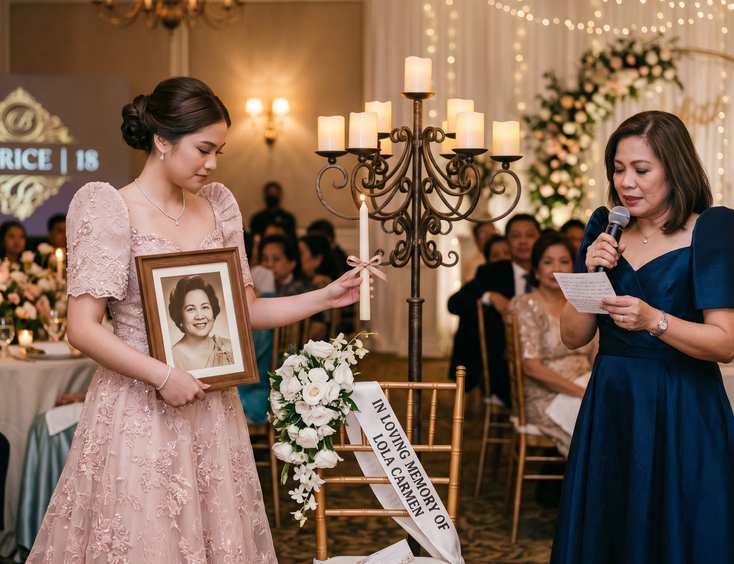
Deceased mothers or grandmothers. A photo, an unlit candle, or an empty chair acknowledges their presence. Sometimes the mother figure (a tita or grandmother) lights a candle on her behalf and shares a wish she would have wanted spoken.
Estranged relationships. Skip them. The ceremony depends on emotional sincerity. A forced speech from someone you're distant from reads as awkward.
Out-of-country speakers. Pre-recorded videos or audio messages work well. Or a family member lights the candle and reads a letter on their behalf.
Speakers who back out late. Pull from your backup list. A debutante's planning sister or best friend should always have backup names ready.
What to Avoid
Some common mistakes drain the ceremony's energy.
No time limits. Without guidance, speakers go long. The 6th speaker has the room's attention. The 14th speaker is losing them. By the 17th, guests are checking phones.
Choosing speakers for politics. Your mom's office friend has no business sharing a wish for your future. Pick only women who know you.
Skipping the briefing. Speakers who don't know the format default to nervous rambling. Briefing documents and rehearsal coaching prevent this.
Bad lighting. Candle ceremonies need warm, dim ambient lighting that lets the candle flames stand out. Harsh overhead lights kill the mood.
Music that competes with voices. Background music should never overpower the speaker. Test sound levels in advance.
Forgetting candle safety. Have a stage manager or coordinator watch for fire hazards, especially with long gowns and flowing fabric near open flames.
No photographer coverage. Some of the most emotional shots happen during candle ceremonies. Confirm your photographer is positioned correctly. For shot list guidance, see must-have shots for your debut photographer to capture.
For other planning pitfalls to dodge, see common debut planning mistakes every debutante should avoid.
How the 18 Candles Fits Into Your Program
The ceremony typically happens after the 18 Roses and before the 18 Treasures or cotillion.
A typical sequence:
- Cocktails and registration
- Grand entrance
- Opening remarks
- Dinner
- AVP screening
- 18 Roses
- 18 Candles
- 18 Treasures
- Cotillion
- Cake cutting
- Father-daughter dance
- Party portion
- Final thanks
For a full timeline template, see sample debut program flow from entrance to last dance.
Decor and Setup for the Ceremony
The candelabra and surrounding stage shape the ceremony's visual impact.
The candelabra. A traditional 18-candle holder, an arrangement of individual candle stands, or a tiered floral display with embedded candles. Coordinate with your stylist for theme alignment.
The candle type. Real flames create the most powerful visual. LED candles are venue-safe but lack the glow. Some venues require LED for fire safety.
The seating. Place the candelabra where the debutante can sit or stand nearby, and where speakers have a clear walk-up path. Avoid placing it in the corner where guests can't see.
The lighting. Dim ambient lighting with a soft spotlight on the speaker. Warm tones photograph better than cool.
The bouquet. Some debutantes hold a small bouquet or wear flower accessories during the ceremony. Coordinate with the 18 Roses bouquet for consistency.
For broader styling direction, see trending debut theme ideas for the modern Filipino debutante.
After the Ceremony
The candle ceremony creates emotional momentum that carries into the rest of the program. Don't waste it.
Allow a brief pause. Let the room breathe before moving into the next segment.
Acknowledge the speakers in your final thanks. A line during your closing speech recognizing the wishes shared deepens the moment's lasting impact.
Send personal thank-you notes. A handwritten card to each speaker mentioning her specific wish carries weight. Many debutantes treasure the speeches and remember the exact words years later.
Preserve the candles. Some debutantes keep the candles as keepsakes. Others use them on future milestone birthdays.
Frame a photo from the ceremony. A candid shot of you with each speaker mid-speech becomes a treasured display.
What Speakers Wish They'd Known
Common feedback from women who've given 18 Candles speeches:
- "I wish I'd written it down. I lost my train of thought."
- "I wish I'd known the order. I was nervous waiting for my turn."
- "I wish I'd practiced out loud. My speech sounded different in my head."
- "I wish I'd kept it shorter. I went on too long and felt the room shift."
- "I wish I'd shared a memory instead of generic wishes. The personal stuff hit harder."
Share these notes with your speakers in your briefing document. Hearing it from past speakers helps yours prepare better.
The Heart of the Ceremony
The 18 Candles ceremony works because it's intimate, vulnerable, and personal. The candles are symbolic. The flame is symbolic. But the real power comes from 18 women standing up and saying what they hope for you.
Choose them with care. Brief them with detail. Build a flow that gives each woman space to be heard. The ceremony becomes one of the most emotional moments of your debut, the kind your family revisits in photos and stories for years.
For how every traditional ceremony connects to your full celebration plan, return to the complete Filipino debut guide. For your full booking schedule that supports a smooth ceremony, see debut planning timeline month-by-month checklist for debutantes.
Your 18 Candles ceremony is 18 women lighting the way into your adulthood. Make it one worth carrying with you.
Still Searching for a Right Match?
Find Your Perfect Wedding Supplier Today!
Discover trusted wedding suppliers across the Philippines in our complete directory. Compare services and connect with the ones that fit your dream celebration.
Browse Wedding SuppliersFeatured Blog Posts


Filipino Wedding Entourage - Roles, Order of March, and Modern Etiquette
6 mins readCivil Weddings in the Philippines - Requirements, Costs, and Step-by-Step Process
9 mins readCivil Wedding Requirements in the Philippines - Complete Checklist
6 mins readCost of Wedding in the Philippines - 5 Essential Things You Need to Know
7 mins readPrincipal Sponsors (Ninong/Ninang) - How Many, How to Ask, What They Really Do
4 mins readVeil, Cord, Candle & Coins - Roles, Options, and When They Happen
4 mins readEntourage for a Traditional Pinoy Wedding - Complete Roles and Guide
6 mins readComplete List of Civil Wedding Requirements in the Philippines
8 mins readHow to Choose Wedding Ninongs and Ninangs - Ask Yourself These 3 Important Questions
5 mins read